
区域协作

Search documents
条条“路”里话信心(评论员观察)
Ren Min Ri Bao· 2025-12-08 22:10
Core Insights - The article emphasizes the importance of regional collaboration in driving high-quality development in China, highlighting various infrastructure projects that connect different regions and stimulate economic growth [1][2]. Group 1: Infrastructure Development - The construction of over 30,000 bridges in Guizhou has transformed the region, allowing for better connectivity and economic opportunities despite its mountainous terrain [1]. - China is referred to as the "kingdom of bridges," with over 1 million bridges facilitating development across the country [2]. Group 2: Digital Economy - Guizhou has established itself as a leader in the digital economy by creating the first national big data comprehensive pilot zone and the world's first big data exchange, achieving rapid growth in this sector for nine consecutive years [2]. Group 3: Cultural Integration and Social Development - The article highlights the integration of various ethnic groups in Guizhou, with 36.44% of the population being from minority backgrounds, showcasing the region's commitment to inclusive development [3]. - The success of poverty alleviation efforts in Guizhou is noted, with 1.92 million people relocated from mountainous areas, emphasizing the promise of "no ethnic group left behind" [3]. Group 4: Future Aspirations - The article calls for continued efforts to overcome challenges in reform, market unification, and achieving common prosperity, with a focus on practical actions to ensure progress on the path to modernization [4].
2024年川渝共办理环境损害司法鉴定案件2516件
Zhong Guo Xin Wen Wang· 2025-12-02 12:13
Core Insights - In 2024, the Sichuan-Chongqing region handled a total of 2,516 environmental damage judicial appraisal cases, reflecting a significant focus on environmental protection and judicial cooperation [1][2]. Group 1: Mechanism Construction - Sichuan and Chongqing signed a cooperation agreement to enhance the "Chengdu-Chongqing Economic Circle," establishing a collaborative mechanism for resource sharing, standard unification, and information exchange [2]. - The two regions are working on a standardized appraisal system, detailing processes for soil, water, and ecosystem damage assessments, promoting cross-regional case reporting and result recognition [2]. Group 2: Talent Development - The regions are enhancing the mutual recognition of professional qualifications for environmental damage appraisers, allowing them to participate in training programs across both areas [2]. - A joint evaluation mechanism for appraisal institutions and personnel is being established to improve professional standards and practices [2]. Group 3: Governance Promotion - Environmental damage appraisal institutions are being integrated into public legal service centers to provide balanced professional consultation and guidance [3]. - A cross-departmental collaborative enforcement mechanism is being developed to address key issues in environmental damage cases [3]. - The announcement included ten typical cases of environmental damage, showcasing the effectiveness of judicial appraisal and regional collaboration in addressing various environmental issues [3]. Group 4: Future Directions - The Sichuan-Chongqing region aims to deepen regional cooperation, enhance technological empowerment, and improve service efficiency to promote the concept of "environmental value and accountability for damage" [3].
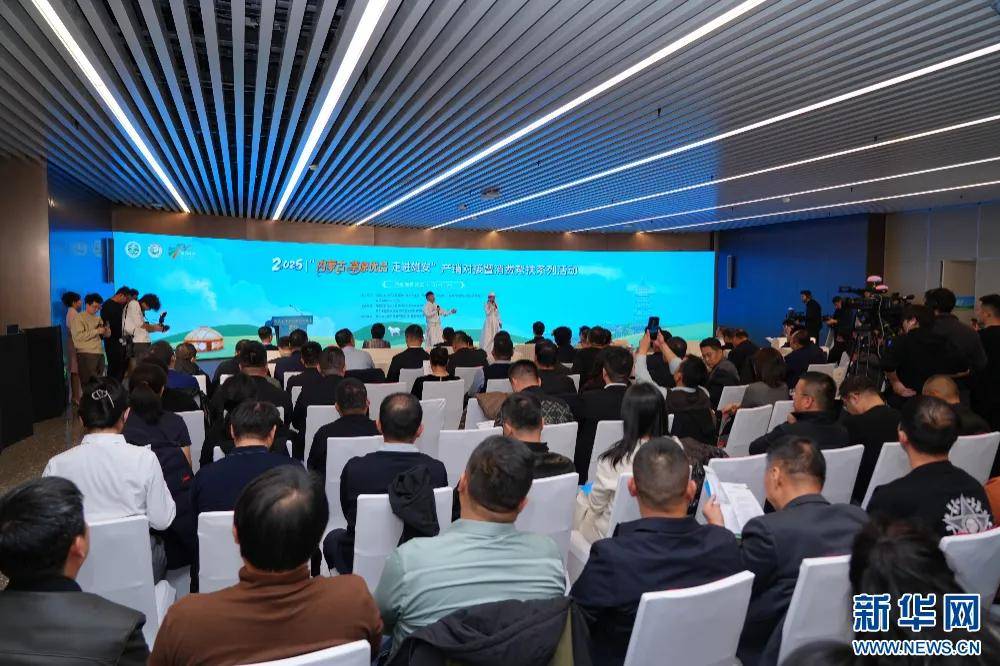
“草原优品”走进雄安 “蒙”字号加速“链”上京津冀
Sou Hu Cai Jing· 2025-11-23 20:41
Core Points - The event "2025 Inner Mongolia Grassland Quality Products Enter Xiong'an Supply and Demand Connection" was launched to promote over 400 high-quality agricultural and livestock products from Inner Mongolia, facilitating connections between enterprises in the Beijing-Tianjin-Hebei region and Inner Mongolia [1] - The collaboration aims to deepen regional cooperation and promote industrial development, leveraging the resource advantages of Inner Mongolia to meet the growing demand for green and high-quality agricultural products in Xiong'an [2][3] Group 1: Event Overview - The event was organized by various governmental bodies, including the Inner Mongolia Autonomous Region Government and the Ordos Municipal Government, to build a supply and demand bridge [1] - The initiative is part of a broader strategy to enhance cooperation between Inner Mongolia and Xiong'an, focusing on both livelihood and industrial synergy [2] Group 2: Strategic Measures - Xiong'an plans to implement three major measures to deepen cooperation: upgrading long-term platforms, enhancing logistics collaboration, and expanding industrial dimensions [2] - The establishment of a marketing center for Inner Mongolia's quality agricultural products in Xiong'an is set for May 2024, with six major brands expected to achieve regular supply [2] Group 3: Agricultural Strengths - Inner Mongolia is recognized as a significant agricultural production base, contributing to national supplies of various products, including 1/5 of the country's sheep meat and 1/6 of its milk [10] - The region has developed a marketing matrix that integrates online and offline channels, achieving an annual sales volume of 500 billion yuan [4] Group 4: Brand Promotion - The event featured brand promotions for "Warm City Multi-Taste," "Xing'an League Rice," and "Chifeng Flavor," along with the launch of an online marketplace for these products [7] - Ordos City has certified 328 green and organic agricultural products, with a projected total industrial chain output value exceeding 56 billion yuan in 2024 [7]

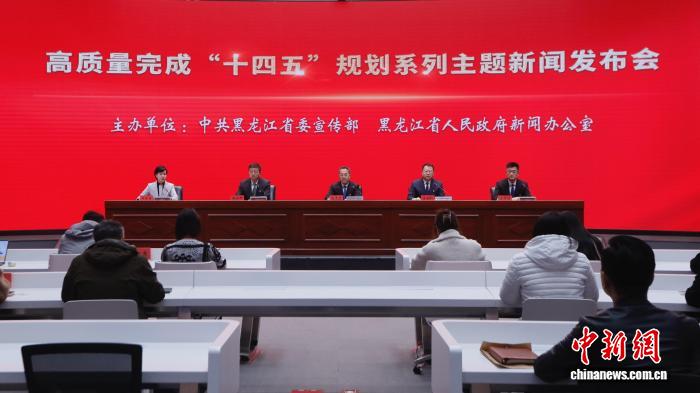
黑龙江省坚持“破立并举” 持续优化市场环境
Zhong Guo Xin Wen Wang· 2025-11-07 17:50
Core Points - During the "14th Five-Year Plan" period, Heilongjiang Province has actively integrated into and served the national unified market construction, establishing policies and systems conducive to the competitive development of business entities, resulting in significant achievements [1][3] - The number of business entities in Heilongjiang Province increased by 28% compared to the end of the "13th Five-Year Plan," with enterprises growing by 34.9% [1] Group 1 - Heilongjiang Province has established a provincial-level anti-monopoly and anti-unfair competition committee, innovating the "three letters and two documents" system for fair competition review, correcting 168 policy measures that violated fair competition standards, and abolishing 1,702 local standards [3] - The province has handled 609 cases of monopoly and unfair competition, effectively breaking local protectionism and market segmentation, thereby continuously optimizing the market competition ecology [3] Group 2 - In terms of regional cooperation, Heilongjiang Province has actively promoted collaboration among the three northeastern provinces and one region in areas such as administrative law enforcement, enterprise credit, food safety, standard certification, and inspection and testing, establishing a linkage mechanism for "same standards in different places" [3] - The province initiated and jointly handled 224 cases and released 13 regional standards, while also deepening cooperation with Guangdong Province to help more advantageous agricultural and forestry products from Heilongjiang enter the Guangdong-Hong Kong-Macao Greater Bay Area market [3] Group 3 - Moving forward, Heilongjiang Province will continue to strengthen comprehensive governance of competitive order, further optimize the market environment, and focus on enhancing product quality to inject new momentum for high-quality development [3]
中国—东盟行政院校和智库研讨会举办
Ren Min Ri Bao· 2025-11-03 22:20
Group 1 - The seminar themed "National Governance and Asian Civilization" was held in Nanning, Guangxi, with participation from various government officials, scholars, and representatives from ASEAN countries [1] - Foreign guests praised China's contributions to national, regional, and global governance, highlighting the seminar as a significant step in enhancing cooperation between China and ASEAN in governance and policy-making [1] - The seminar included four parallel sessions focusing on topics such as "National Governance and Asian Society," "Digital Intelligence Era and Governance Efficiency," "Regional Cooperation and Sustainable Development," and "Global and Regional Governance in Asian Context" [1] Group 2 - The event aimed to implement the outcomes of the China-ASEAN Leaders' Meeting and strengthen the cooperation network among administrative institutions and think tanks [1] - Discussions at the seminar emphasized modernizing governance systems and capabilities in Asia, leveraging digital intelligence for governance, and enhancing regional collaboration frameworks [1] - The seminar provided a platform for broad ideological consensus and intellectual support for building a closer China-ASEAN community of shared destiny [1]
从制造业到食品、时尚……中韩产业链深度合作 为区域发展注入强劲动力
Yang Shi Wang· 2025-10-31 08:31
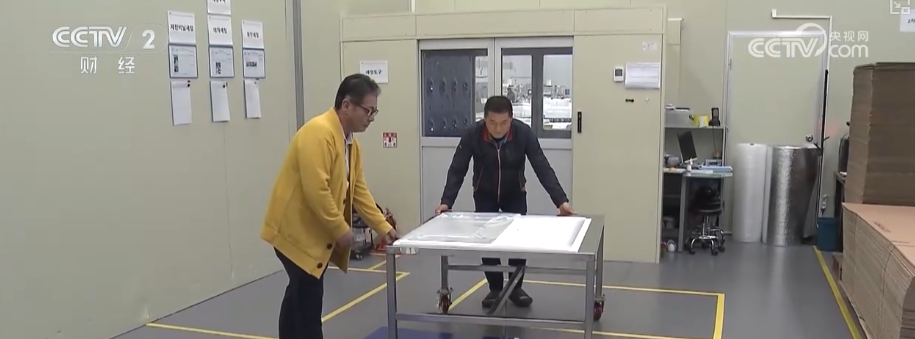
Core Insights - The focus of the 2025 APEC meeting will be on maintaining stable and smooth industrial chains and promoting regional cooperation, with the complementary and collaborative development of Chinese and Korean enterprises in the supply chain being a significant aspect of cooperation in the Asia-Pacific region [1] Group 1: Trade and Economic Cooperation - The bilateral trade volume between China and South Korea is projected to reach $328.08 billion in 2024, reflecting a year-on-year growth of 5.6%, with China being South Korea's largest trading partner for 21 consecutive years [9] - Since the implementation of the China-South Korea Free Trade Agreement in 2015, trade has continued to grow, significantly expanding investment and industrial cooperation [12] - As of September 2024, nearly 29,000 South Korean companies have entered the Chinese market, indicating a strong presence and investment in China [12] Group 2: Industry Collaboration - South Korean companies, particularly in the semiconductor and battery sectors, have formed a highly complementary relationship with Chinese suppliers, with some core raw materials still heavily reliant on imports from China [7] - A South Korean small and medium-sized enterprise reported that the raw materials sourced from Chinese companies have an average defect rate of less than 1% per month, highlighting the quality of Chinese products [5] - South Korean enterprises in various sectors, including food, fashion, and retail, are actively expanding into the Chinese market, establishing long-term cooperation agreements with Chinese companies to explore diverse and stable collaboration models [15] Group 3: Technological Advancements - China has made significant advancements in science and technology, particularly in robotics, where it possesses world-class capabilities, indicating potential areas for collaboration despite increasing competition [9] - The collaboration between Chinese and South Korean companies in high-end manufacturing and technological innovation is continuously expanding [7]
奋发有为,锐意进取!湛江城乡集团成功获评AA主体信用评级!
Nan Fang Nong Cun Bao· 2025-10-27 12:41
Core Viewpoint - The establishment of the first AA-rated state-owned enterprise in Mazhang District, Zhanjiang City, marks a significant transformation from "blood transfusion" to "blood production" in regional cooperation efforts [1][2]. Group 1: Credit Rating Achievement - Zhanjiang Urban-Rural Group achieved an AA credit rating in its first evaluation, indicating a new stage in its development and highlighting the success of regional cooperation in nurturing market entities [1][2]. - The AA credit rating serves as a "pass" for entering the capital market and is a key indicator of the company's overall strength and creditworthiness [2]. Group 2: Support from Baiyun District - Baiyun District's experience in park co-construction, industrial collaboration, and state-owned enterprise reform has significantly supported the rapid development of Zhanjiang Urban-Rural Group [4]. - The credit rating achievement aligns with Zhanjiang Urban Development Group's AA+ rating in August 2023, indicating a comprehensive acceleration in the credit system construction of Zhanjiang's state-owned enterprises [4]. Group 3: Development Journey - Since its operationalization in 2024, Zhanjiang Urban-Rural Group has successfully completed key tasks such as asset injection and credit rating under the support of Baiyun District, showcasing excellent management capabilities and high-quality development [5]. - Baiyun District's support team has actively introduced reform experiences from developed regions to help optimize the group's core business sectors [5]. Group 4: Project Implementation - Specific projects, such as the Mazhang District Forestry Industry Park infrastructure and public smart charging pile projects, are progressing rapidly, reflecting the practical outcomes of regional cooperation [6][8]. Group 5: Financing Opportunities - The AA credit rating will provide Zhanjiang Urban-Rural Group with substantial financing advantages, marking a transition from "giving fish" to "teaching to fish" in the support efforts [8]. - The successful AA rating enhances the group's visibility and influence in the financial market, facilitating broader financing channels and reducing costs [8]. - The support team has established a platform for bank-enterprise connections and introduced various financial tools to create favorable conditions for state-owned enterprise financing [8]. Group 6: Future Directions - Zhanjiang Urban-Rural Group aims to leverage the credit rating as an opportunity to focus on project construction, investment financing, and urban operations under the continued support of Baiyun District [8]. - Future cooperation between Baiyun and Mazhang will emphasize cultivating the core competitiveness of local enterprises through market-oriented transformation and industrial development [8][9].
“蹦跳路”成了共富路
Ren Min Ri Bao· 2025-10-23 22:42
Core Insights - The S219 road has transformed from a difficult route to a vital connection for urban-rural integration and economic development in Pujiang County, Zhejiang Province, significantly reducing the income gap between urban and rural residents [1][2][3] Group 1: Economic Development - Pujiang County's operational income for all administrative villages exceeded 500,000 yuan last year, with the urban-rural income disparity reduced to below 1.86 [1] - The county has seen a 2.4 times increase in collective economic income since 2017, with over 70% of villages previously earning less than 50,000 yuan [2] - The grape industry in Pujiang has achieved an annual output value exceeding 1.4 billion yuan, with a 35% increase in product premium rates due to direct sales to urban markets [3] Group 2: Tourism and Employment - The New Light Village, with over 300 years of history, has become a popular tourist destination, attracting over 10,000 visitors daily during the National Day holiday, contributing to a collective income exceeding 1 million yuan for four consecutive years [2] - The S219 road connects various tourist attractions and has enabled local residents to benefit from tourism-related income [2][3] - Employment opportunities have been created through agricultural projects, with over 300 jobs provided and an average monthly income increase of over 3,500 yuan for surrounding farmers [1] Group 3: Regional Collaboration - The establishment of the "S219 Three-Region Common Prosperity Alliance" aims to enhance tourism resource sharing and collaborative economic development among Pujiang, Tonglu, and Jiande [3] - Initiatives include cross-county public transport, employee wellness programs, and unified tourism branding, expected to generate an additional 200 million yuan in rural tourism revenue this year [3]
"粤桂连心 鱼跃湾区”——"广西库库魚”区域公用品牌深圳发布会成功举办
Nan Fang Nong Cun Bao· 2025-10-20 02:00
Core Viewpoint - The event held on October 18 in Shenzhen marked the launch of the "Guangxi Kuku Fish" regional public brand, aiming to connect high-quality ecological aquatic products from Guangxi with the Greater Bay Area's consumer market, promoting collaboration between Guangdong and Guangxi [7][10]. Group 1: Brand Development and Quality Assurance - The "Guangxi Kuku Fish" brand is based on 1.05 million acres of ecological aquaculture, adhering to strict ecological farming standards and implementing a traceability mechanism to ensure transparency from farming to consumer [13][14]. - The brand emphasizes quality with features such as "zero fishy taste, firm texture, and green safety," supported by a dual-code quality control system [15][16]. Group 2: Cultural and Tourism Integration - The event integrated cultural and tourism elements, showcasing the cultural significance and tourism value behind the "Guangxi Kuku Fish" brand, promoting immersive experiences like fishing and local culinary traditions [19][21]. - Three cultural tourism routes were highlighted, aiming to enhance the synergy between fishing and tourism [22]. Group 3: Product Presentation and Market Potential - A product demonstration featured a video showcasing the versatility of "Guangxi Kuku Fish" through various cooking methods, illustrating its market potential and adaptability across different cuisines [25][28]. - The event successfully facilitated partnerships between "Guangxi Kuku Fish" suppliers and several well-known restaurants and supply chain companies in Shenzhen, with a projected signing amount of 20 million yuan [36][38]. Group 4: Future Development and Collaboration - The promotion of the "Guangxi Kuku Fish" brand is seen as a starting point for deeper cooperation, with plans to expand into prepared dishes and leisure foods while leveraging cultural tourism for a comprehensive marketing strategy [51][53]. - The initiative aims to enhance brand value and establish a robust presence in the Greater Bay Area market, reflecting a commitment to regional coordinated development [55][56].

刘宁到浉河罗山潢川调研时强调:牢记嘱托推动革命老区振兴发展 更好统筹高质量发展和高水平安全
He Nan Ri Bao· 2025-10-18 10:43
Group 1 - The article discusses the establishment of Luwei Kaiteng (Guangzhou) Consumer Equity Investment Fund Partnership, which is a private equity fund focused on equity investment, investment management, and asset management activities, requiring registration with the China Securities Investment Fund Association before commencing operations [1][3][4] - The fund has a registered capital of 94,001 million RMB, with a business duration starting from October 30, 2024, and no fixed end date [1][3][4] - The partnership includes several contributors, with the largest being Hainan Investment Partnership (Limited Partnership) holding 55.95% of the shares, followed by Guangdong-Hong Kong-Macao Greater Bay Area Cultural Industry Investment Fund Management Co., Ltd. with 29.64% [1][3][4] Group 2 - The article highlights the importance of urban safety and development, emphasizing the need for a systematic approach to fire safety and building security in urban planning and management [2] - It mentions the ongoing efforts to enhance agricultural practices, including the promotion of early-maturing and cold-resistant crop varieties to ensure safe wintering [5][6] - The article also discusses the strategic development of the Yudongnan High-tech Zone, focusing on leveraging its geographical advantages to foster new industries and enhance regional cooperation [5][6]
