
反身性理论

Search documents
索罗斯反身性理论:穿透市场迷雾的投资哲学
Sou Hu Cai Jing· 2025-07-08 11:42
Group 1 - The core idea of the articles revolves around George Soros's reflexivity theory, which emphasizes the dynamic interaction between market participants' perceptions and market realities, leading to cycles of feedback that can significantly distort prices from their fundamental values [2][3][5] - Soros's successful shorting of the British pound during the 1992 crisis exemplifies the practical application of reflexivity, where he identified a critical point of imbalance between the pound's valuation and the underlying economic conditions, triggering a market panic [3][4] - The articles highlight that investors should adopt a perspective of observing trends rather than adhering strictly to traditional value investing principles, as market emotions can lead to prolonged deviations from intrinsic value [3][4] Group 2 - Entrepreneurs are encouraged to understand the "cognitive shaping power" within reflexivity, recognizing that market demand is not static but can be influenced and guided through effective branding and consumer engagement [4] - The case of Tesla illustrates how reshaping consumer perceptions about electric vehicles through innovative marketing and product development can create new demand, demonstrating the practical implications of reflexivity in business [4] - The ultimate message of reflexivity theory is to respect the complexity of markets, acknowledging that there are no eternal equilibria, only evolving cycles influenced by the interplay of cognition and reality [5]


17家企业新进展,半导体IPO狂飙240亿
Sou Hu Cai Jing· 2025-07-07 02:33
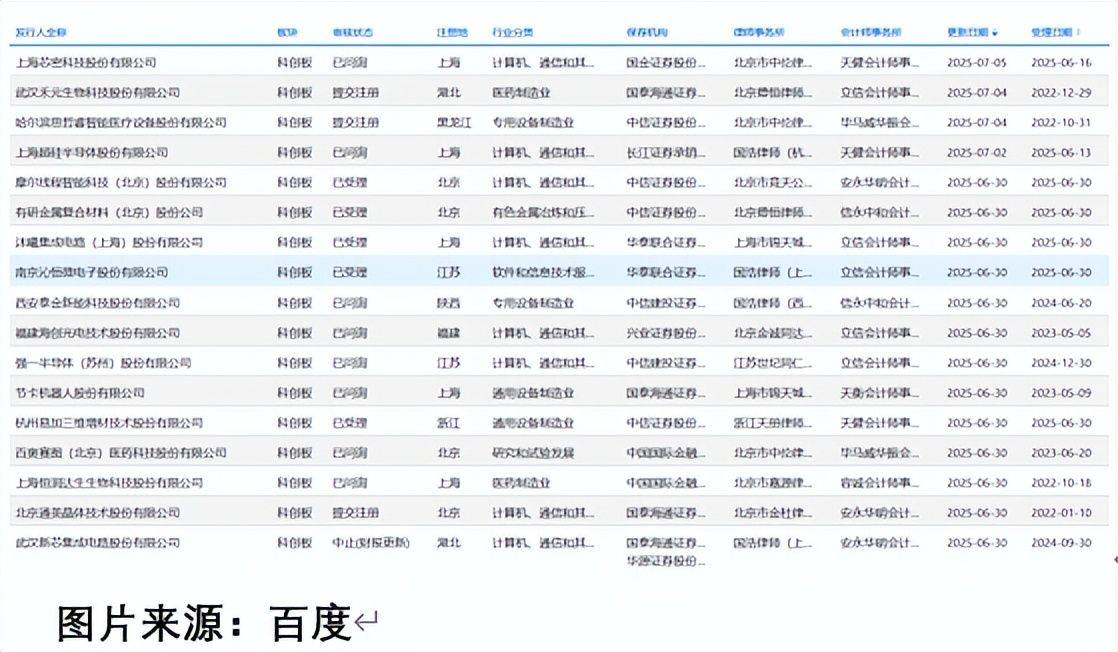
Group 1: Semiconductor IPO Trends - The recent surge in IPOs on the STAR Market has seen 17 companies update their progress, with the semiconductor sector leading, raising a total of 24.1 billion yuan from 6 companies [1] - Notably, Moer Thread's fundraising of 8 billion yuan and a staggering 208% compound annual growth rate in revenue have drawn significant attention [1] - The excitement surrounding these IPOs may mask underlying investment logic, reminiscent of the internet bubble in 2000 where unprofitable companies had inflated valuations [3] Group 2: Market Dynamics - The current market is characterized by an external leverage-driven environment, where news plays a dominant role in short-term trading, often reinforcing price movements rather than guiding them [4] - The interaction between stock prices and news can lead to a "Matthew Effect," where strong performers continue to excel, while the "mean reversion" theory suggests that prices will eventually oscillate around their intrinsic value [4] Group 3: Investment Pitfalls for Retail Investors - Retail investors often struggle to differentiate between "virtual declines" and "empty rises," leading to panic during price drops and chasing after false rebounds [5][12] - Understanding the underlying capital movements is crucial, as the essence of stock trading is a struggle for pricing power, which is predominantly held by institutional investors [8] Group 4: Quantitative Thinking and Data Utilization - The importance of quantitative thinking is emphasized, as retail investors tend to focus on superficial market trends rather than the underlying data [15] - Moer Thread's significant fundraising is contrasted with its 3.8 billion yuan R&D investment, indicating a company genuinely engaged in development, while other companies may not have the same depth [15] - Retail investors are encouraged to utilize data-driven tools to navigate the market effectively, especially in an era of information overload [19]
中金缪延亮:不同寻常的美元周期
中金点睛· 2025-06-22 23:46
Core Viewpoint - The article discusses the unusual characteristics of the current dollar cycle, highlighting its resilience and divergence from historical patterns, suggesting that the dollar may have entered a downward cycle since 2025 due to structural changes in the U.S. economy and global dynamics [1][46]. Historical Review of Dollar Cycles - Since the collapse of the Bretton Woods system in 1973, the dollar has experienced three major appreciation cycles, with significant increases in the DXY index during each period [2][5]. - The current dollar appreciation cycle began in 2008, lasting 17 years and resulting in a 40% increase, marking it as the longest cycle since the Bretton Woods system's dissolution [3][5]. Current Characteristics of the Dollar Cycle - The dollar's peak values have shown a downward trend over the years, indicating a decreasing relative strength of the U.S. economy globally [6]. - The current cycle exhibits three unusual divergences: a decline in the dollar's share of global reserves, a lack of impact from expanding fiscal and trade deficits, and a strong dollar despite rising inflation in the U.S. [7][10][12]. Threefold Analysis Framework - The dollar's exchange rate is fundamentally influenced by the relative performance of the U.S. economy compared to other major economies [15]. - Monetary policy from the Federal Reserve significantly impacts the dollar's strength, with tight monetary policies historically supporting dollar appreciation [20]. - Capital flows are closely linked to the dollar index, with geopolitical factors also playing a crucial role in influencing these flows [21]. Feedback Mechanisms - The dollar's appreciation has asymmetric effects on the global economy, increasing financing costs for other countries while benefiting the U.S. economy [21][22]. - Positive feedback mechanisms exist where dollar appreciation leads to worsening debt burdens for other economies, further driving capital flows into the U.S. [22]. Current Trends and Future Outlook - Since 2025, there are signs that the dollar may be entering a downward cycle due to weakening relative advantages of the U.S. economy and declining risk appetite for dollar assets [34][38]. - The structural changes in the U.S. asset and liability landscape suggest a strong motivation for the U.S. to seek dollar depreciation to manage its growing net liabilities [35][36]. - Market sentiment is shifting, with a notable decrease in net long positions on the dollar, indicating a growing bearish outlook [38][40]. Conclusion - The current dollar cycle is characterized by unprecedented features, with the potential for a downward trend driven by both domestic and international factors, including the competitive landscape in technology and economic policies [45][46].

五一阅读:致敬每一位平凡而伟大的劳动者
戴康的策略世界· 2025-05-02 01:41
Group 1 - The core viewpoint of the article emphasizes the importance of understanding the dynamic nature of financial markets through the lens of human behavior and biases, as articulated in George Soros's "reflexivity theory" [4] - The article highlights that traditional economic models often overlook the interplay between participants' perceptions and objective reality, which can lead to market distortions that reinforce biases [4] - It discusses how Soros's insights have allowed him to successfully predict market movements and financial crises, suggesting that markets are influenced by human emotions and not merely mathematical calculations [4] Group 2 - The article presents a global perspective on China's development logic and diplomatic strategies, as analyzed in "China's Choice" by Singaporean author Ma Kai-shuo [6] - It notes that the book provides a thorough analysis of China's rise, focusing on its institutional resilience, cultural genes, and governance wisdom, while addressing Western misconceptions [6] - The text emphasizes the practical outcomes of China's strategies, such as the Belt and Road Initiative and the concept of a "community with a shared future for mankind," supported by economic data and case studies on improving livelihoods [6]