可再生能源体系

Search documents
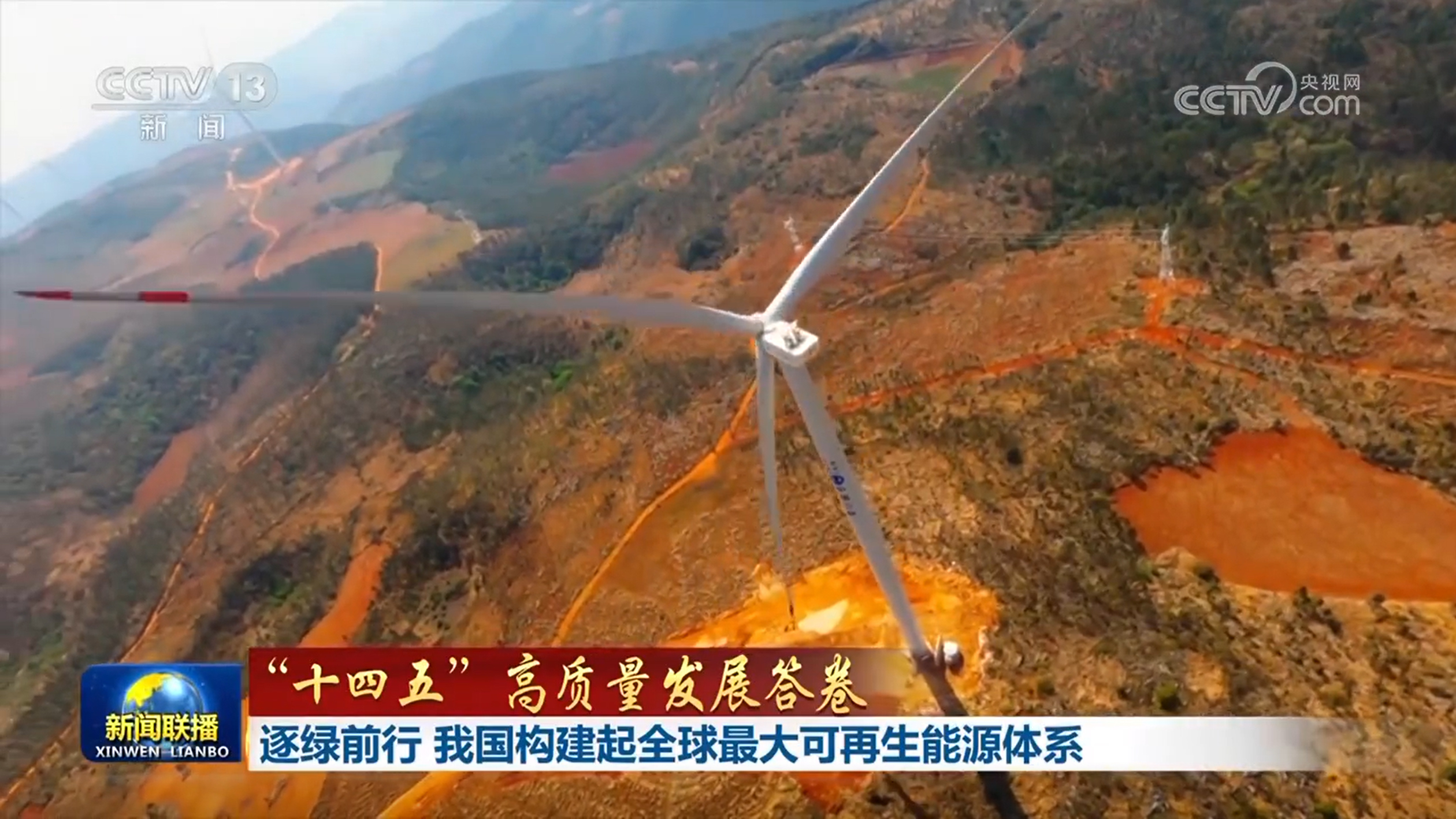
【“十四五”高质量发展答卷】逐绿前行 我国构建起全球最大可再生能源体系
Yang Shi Wang· 2025-10-20 12:29
Group 1 - The article highlights China's significant progress in green energy transformation since the "14th Five-Year Plan," showcasing the vast development of renewable energy sources across the country [1][5] - China has achieved an annual electricity generation exceeding 10 trillion kilowatt-hours, accounting for one-third of global production, with one-third of the electricity consumed coming from renewable sources [5][10] - The construction of large-scale clean energy corridors, particularly in the western regions, has transformed previously barren lands into extensive solar and wind energy bases [6][10] Group 2 - The "14th Five-Year Plan" includes the development of 19 ultra-high voltage transmission lines, enhancing the ability to transport clean energy across regions, with a 70% increase in clean energy transmission from west to east [8] - New energy storage technologies, such as gravity storage and compressed air, have been integrated into the energy grid, playing a crucial role in managing peak electricity demand [8] - The completion of the target for non-fossil energy consumption, which is set at 20% for the "14th Five-Year Plan," indicates the establishment of the world's largest and most comprehensive renewable energy industry chain in China [10]

“十四五”时期中国对世界经济增长年均贡献率保持在30%左右
Zhong Guo Xin Wen Wang· 2025-10-20 08:32
Core Insights - During the "14th Five-Year Plan" period, China's contribution to global economic growth averages around 30%, making it a crucial driver of world economic development [1][2] - China's GDP has surpassed 110 trillion, 120 trillion, and 130 trillion yuan, with an average annual real growth rate of 5.5%, significantly higher than the global average of 3.9% [1] - The average contribution rate of domestic demand to China's economic growth from 2021 to 2024 is 86.8%, with final consumption expenditure contributing 59.9%, an increase of 11.1 percentage points compared to the "13th Five-Year Plan" period [1] Economic Achievements - By the end of 2024, the contribution rate of agricultural science and technology progress is expected to reach 63.2%, placing China among the world's top ranks in agricultural technology innovation [2] - From 2021 to 2024, the added value of large-scale equipment manufacturing and high-tech manufacturing industries is projected to grow at average annual rates of 8.2% and 9.2%, respectively [2] - The average annual growth rate of the service industry from 2021 to 2024 is expected to be 5.9%, contributing an average of 60.6% to economic growth [2] Urbanization and Income Distribution - By the end of 2024, China's urbanization rate is projected to reach 67.00%, an increase of 3.11 percentage points from the end of 2020 [2] - The ratio of per capita disposable income between urban and rural residents is expected to decrease from 2.56 in 2020 to 2.34 by 2024 [2] Renewable Energy and Innovation - China has established the world's largest and fastest-growing renewable energy system, with the share of non-fossil energy consumption in total energy consumption rising from 16.0% in 2020 to 19.8% in 2024 [2] - The production of new energy vehicles is expected to increase more than eightfold from 2020 levels by 2024, maintaining the highest global production and sales for ten consecutive years [2]
我国清洁能源领域发展传捷报 能源强国建设“枝繁叶茂”
Yang Shi Wang· 2025-10-17 08:52
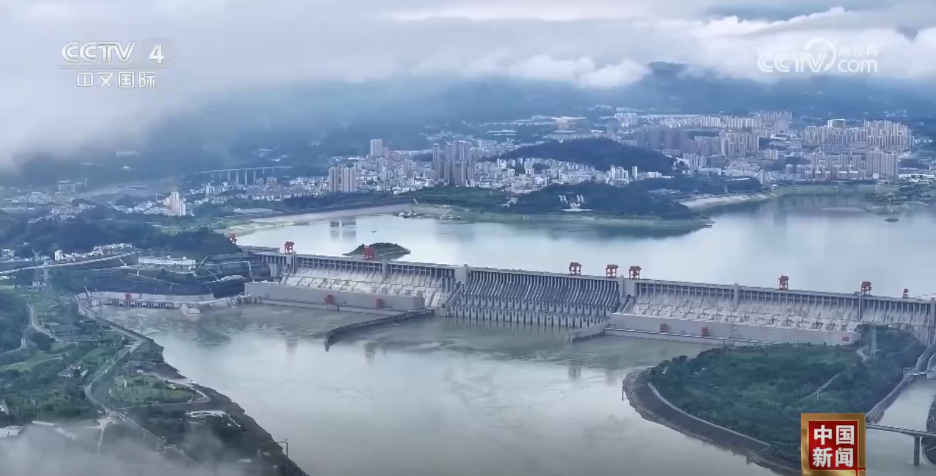
Core Viewpoint - The latest data from the Three Gorges Group indicates that the "world's largest clean energy corridor" has surpassed a cumulative power generation of 4 trillion kilowatt-hours, with 235.1 billion kilowatt-hours generated in the first three quarters of this year, sufficient to meet the electricity needs of the general public in China for approximately 62 days [1][3]. Group 1: Clean Energy Corridor - The clean energy corridor consists of six large power stations: Wudongde, Baihetan, Xiluodu, Xiangjiaba, Three Gorges, and Gezhouba, spanning 1,800 kilometers with a total installed capacity of 71.695 million kilowatts [3]. - The average annual power generation of this corridor is about 300 billion kilowatt-hours, playing a significant role in promoting national grid interconnection and ensuring energy security [3]. Group 2: Solar Thermal Power Project - The Qinghai 350 MW tower solar thermal power project has officially commenced construction, marking it as the largest single-unit solar thermal power project globally [5]. - This project utilizes domestically developed tower molten salt storage technology and is expected to be fully operational by the end of September 2027, enhancing the flexibility and peak power supply capacity of the local power system [7]. Group 3: Energy Development Achievements - Since the "14th Five-Year Plan," China has made significant progress in energy development, becoming a key player in global energy transition and ensuring energy security for over 1.4 billion people [8]. - The total installed capacity of clean energy and new energy in Qinghai has reached 77.2852 million kilowatts, with clean energy and new energy accounting for 93.46% and 72.25% of the total installed capacity, respectively, both ranking first in the country [7]. Group 4: Electricity Supply Stability - In July and August of this year, the total electricity consumption exceeded 1 trillion kilowatt-hours, setting new records and demonstrating the stability and resilience of energy supply [10]. - The stability of electricity supply provides certainty for economic development, allowing industries to operate without concerns about power shortages [12]. Group 5: Renewable Energy System - China has built the world's largest and fastest-growing renewable energy system during the "14th Five-Year Plan," with significant contributions to energy savings and emissions reduction [17]. - Currently, one-third of the electricity consumed in China is generated from renewable sources, with a substantial portion of power for data centers coming from green energy [19]. Group 6: Future Energy Outlook - Looking ahead to the "15th Five-Year Plan," China aims to establish large-scale "new energy + storage" bases in desert areas and enhance the density of power transmission channels [21]. - The development of offshore wind power and nuclear fusion projects is expected to play a crucial role in China's energy landscape, contributing to global energy transition efforts [21].
打通能源“动脉” “电”点亮美好生活 我国“十四五”能源高质量发展成绩斐然
Yang Shi Wang· 2025-10-17 04:24
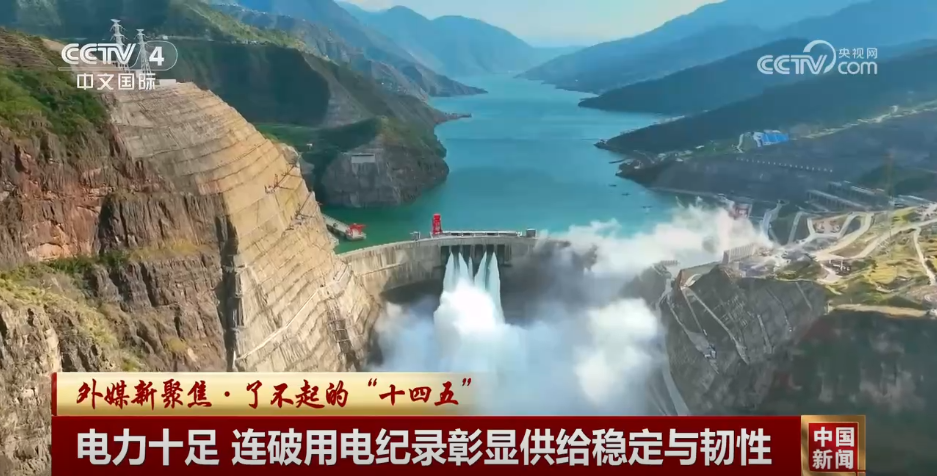
Core Insights - China's energy sector has achieved significant breakthroughs and historical accomplishments since the "14th Five-Year Plan," becoming a key player in global energy transition and ensuring energy security for over 1.4 billion people [1] Group 1: Energy Supply and Demand - In July and August, China's total electricity consumption exceeded 1 trillion kilowatt-hours, setting new records and demonstrating the stability and resilience of energy supply [4] - The 1 trillion kilowatt-hours of electricity consumption is equivalent to the annual electricity usage of Japan or ASEAN countries, and it has doubled compared to over 500 billion kilowatt-hours in July 2015 [4] Group 2: Economic Impact - The stability of electricity supply provides valuable certainty for China's economic development, allowing manufacturing sectors to operate smart production lines without concerns of power shortages [6] - Emerging industries such as artificial intelligence, robotics, and new energy vehicles are heavily reliant on electricity, making it a crucial foundation for the fourth technological revolution and industrial transformation [6] Group 3: Renewable Energy Development - China has constructed the world's largest and fastest-growing renewable energy system during the "14th Five-Year Plan," with wind turbines generating nearly 1.9 million kilowatt-hours of electricity every minute [10] - Each day, over 1 million kilowatts of new photovoltaic capacity is added, equivalent to installing the world's largest hydroelectric generator [10] - Renewable energy contributes to one-third of total electricity consumption, with 80% of the power used by data centers coming from renewable sources [10] Group 4: Future Outlook - Looking ahead to the "15th Five-Year Plan," China plans to establish large-scale "new energy + storage" bases in desert areas and enhance electricity transmission channels [14] - Offshore wind power development is set to expand into deeper waters, and the nuclear fusion project BEST is expected to be completed in two years [14] - China's clean energy technology and engineering capabilities are anticipated to provide more solutions for global energy transition, promoting worldwide green and low-carbon transformation [14]
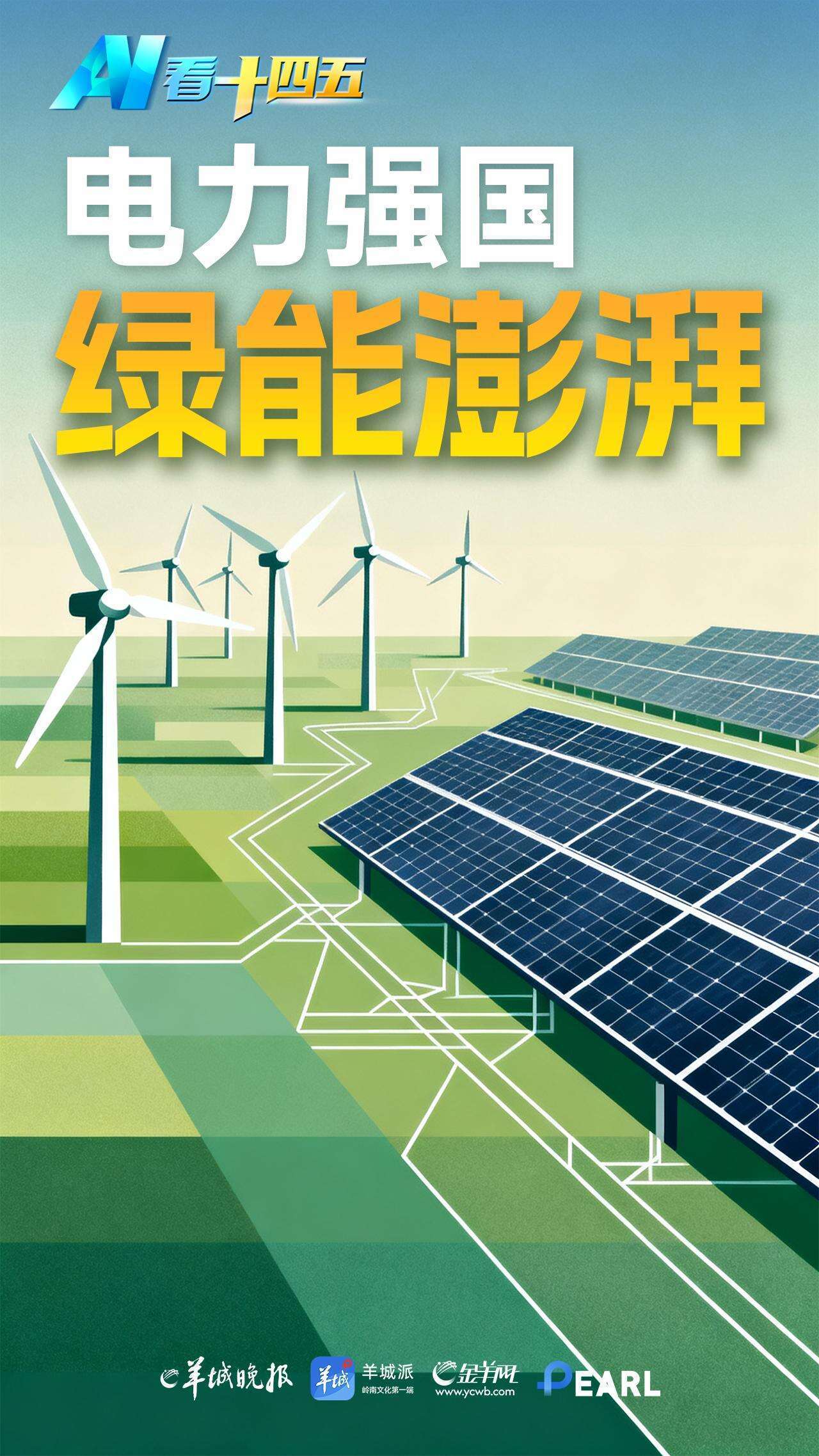
【海报】绿色动能撑起“电力强国”丨AI看十四五
Sou Hu Cai Jing· 2025-10-02 04:40
Group 1 - China is set to generate over 10 trillion kilowatt-hours of electricity in 2024, accounting for one-third of global production, surpassing the combined output of the US, EU, and India [3] - During the 14th Five-Year Plan period, China's expected increase in electricity consumption will exceed the annual consumption of the EU [3] - China has established the world's largest and fastest-growing renewable energy system, with the share of renewable energy generation capacity rising from 40% to approximately 60% [3] Group 2 - Guangdong province, with the longest coastline in China, is leading in offshore wind energy development, with the Yangjiang floating wind power demonstration project set to operate in 2024 featuring the world's largest dual-head unit [6] - By August 2025, Guangdong's cumulative grid-connected capacity for renewable energy is expected to exceed 81 million kilowatts, with offshore wind power capacity reaching approximately 12.5 million kilowatts, ranking first in the country [6] - Since the 14th Five-Year Plan, Guangdong's offshore wind power has consistently added over 1 million kilowatts of new grid-connected capacity annually for four consecutive years [6]
“十四五”期间中国二氧化碳排放强度持续下降
Zhong Guo Xin Wen Wang· 2025-09-19 13:37
Core Points - During the "14th Five-Year Plan" period, China's carbon dioxide emission intensity has been continuously decreasing [1] - The Ministry of Ecology and Environment is actively promoting climate change responses and carbon peak and neutrality efforts [1][2] - China has established the world's largest and fastest-growing renewable energy system, achieving its 2030 national contribution target for wind and solar power capacity ahead of schedule [1] - The Ministry has implemented stricter controls on non-carbon dioxide greenhouse gas emissions, including methane and industrial nitrous oxide [1] - Over 100 carbon footprint accounting standards for products have been released, aiding companies in addressing international carbon trade barriers [1] Future Directions - The Ministry will continue to implement national strategies for climate change, advancing carbon peak and neutrality goals [2] - Efforts will focus on building a more effective and internationally influential carbon market and enhancing product carbon footprint accounting standards [2] - The aim is to promote green and low-carbon transformation, increasing the "green content" of economic development [2]
高质量完成“十四五”规划丨“十四五”期间我国二氧化碳排放强度持续下降
Xin Hua She· 2025-09-19 13:06
Core Viewpoint - The Chinese government is actively promoting high-quality development through ecological and environmental protection, with significant progress in carbon emission reduction and the establishment of a comprehensive carbon market [2][3][4] Group 1: Carbon Emission Reduction - During the "14th Five-Year Plan" period, China's carbon dioxide emission intensity has continuously decreased, with the country achieving its renewable energy installation targets ahead of schedule [2] - The total installed capacity of wind and solar power has already met the 2030 national contribution goals [2] Group 2: Carbon Market Development - China has established the world's largest carbon trading market, effectively managing over 60% of the national carbon dioxide emissions [3] - As of September 18, 2025, the cumulative trading volume of carbon emission allowances reached 714 million tons, with a total transaction value of 48.961 billion yuan [3] Group 3: Climate Change Adaptation - The implementation of the "National Climate Change Adaptation Strategy 2035" has been initiated, outlining long-term goals for climate change adaptation [3] - The development of 39 climate-adaptive city pilot projects is underway, focusing on enhancing climate resilience in key vulnerable areas [3] Group 4: Future Initiatives - The government plans to continue implementing a proactive national strategy for climate change, advancing carbon peak and carbon neutrality goals, and enhancing the effectiveness and international influence of the carbon market [4] - There will be a focus on improving product carbon footprint accounting standards and promoting green low-carbon transformation to increase the "green content" of economic development [4]
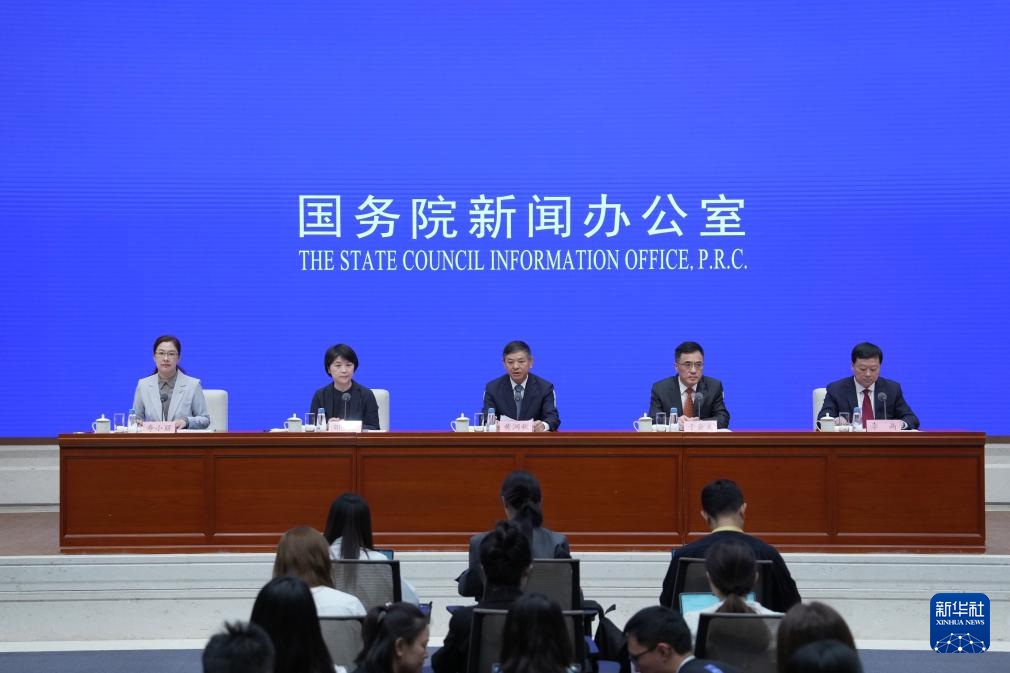
今年夏天不缺电|年中能源观察
2 1 Shi Ji Jing Ji Bao Dao· 2025-08-27 03:51
Core Insights - The article highlights China's unprecedented electricity consumption, with July's total surpassing 1 trillion kilowatt-hours for the first time, indicating a significant economic recovery and increased demand from various sectors [2][3]. Electricity Consumption Trends - In the first seven months of the year, China's total electricity consumption reached approximately 5.86 trillion kilowatt-hours, continuously setting world records [3]. - The electricity consumption is seen as a barometer of economic activity, with the growth driven by high temperatures and economic recovery, leading to increased demand from residential and industrial sectors [3][4]. Future Projections - By 2025, China's total electricity consumption is expected to reach 10 trillion kilowatt-hours, with a projected annual growth rate of 5% to 6% [6]. - The installed power generation capacity has already surpassed 360 million kilowatts, marking an 18.8% year-on-year increase, with renewable energy sources playing a crucial role in this growth [7][13]. Renewable Energy Contributions - Renewable energy installations, particularly solar power, have significantly increased, with solar capacity additions exceeding 9 million kilowatts in a single month, raising the share of renewable energy to 57.9% of total capacity [8]. - In the first half of the year, renewable energy accounted for 39.7% of total electricity generation, highlighting its growing importance in the energy mix [14]. Energy Supply Stability - This summer, China successfully avoided power shortages, with the electricity supply remaining stable despite record-high demand, thanks to improved generation capacity and stable fuel supply [12][13]. - The maximum electricity load reached historical highs multiple times in July, with 19 provinces experiencing record-breaking demand [11]. Economic and Industrial Impacts - The electricity consumption patterns reflect China's economic transformation, with significant growth in sectors such as high-tech manufacturing, electric vehicle production, and digital services [15][16]. - The rapid growth in electricity demand from emerging industries indicates a shift in energy consumption structure, promoting a green transition in energy production [16]. Future Energy Goals - The focus is shifting from merely ensuring electricity availability to optimizing electricity usage, with plans to enhance grid stability and expand capacity to meet rising demand [17].
人民日报丨“量足价稳”,这是我国能源保障的底气
国家能源局· 2025-08-27 03:06
Core Viewpoint - The article discusses the achievements and developments in China's energy sector during the "14th Five-Year Plan" period, highlighting the significant growth in energy consumption, production, and renewable energy infrastructure. Group 1: Energy Consumption and Production - During the "14th Five-Year Plan," China's new electricity consumption is expected to exceed the annual electricity consumption of the European Union [5] - By 2024, China's total electricity generation is projected to surpass 10 trillion kilowatt-hours, accounting for one-third of global electricity generation [7] - The energy production during this period is estimated to reach approximately 5 billion tons of standard coal, representing a significant portion of global energy production [8] Group 2: Infrastructure Development - The energy infrastructure network has become more comprehensive, connecting eastern and western regions and facilitating energy transfer through major projects like "West-East Electricity Transmission" and "North Coal South Transport" [12] - As of July 2023, the number of charging infrastructure units in China reached 16.696 million, ten times the number at the end of the "13th Five-Year Plan," making it the largest in the world [15] Group 3: Renewable Energy Growth - The share of renewable energy generation capacity is expected to increase from 40% to around 60% during the "14th Five-Year Plan" [18] - Wind and solar power installations are projected to grow significantly, with annual additions of 10 million kilowatts and 20 million kilowatts, respectively, showcasing unprecedented development speed [18] - The number of new energy patents in China accounts for over 40% of the global total, indicating strong innovation in the sector [19] Group 4: Environmental Impact - China's exports of wind and solar products have contributed to a reduction of approximately 4.1 billion tons of carbon emissions in other countries [24]
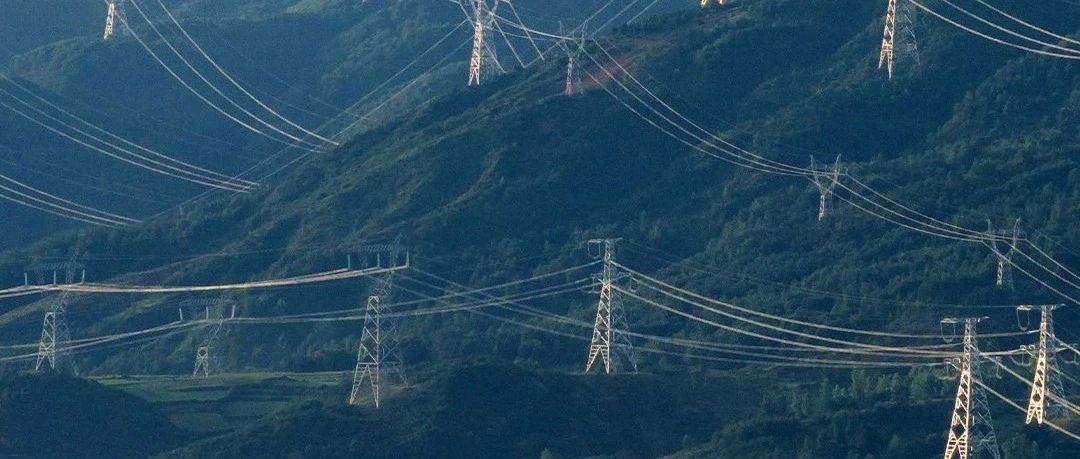
新华社丨向“绿”向“新”,数说“十四五”能源发展新突破
国家能源局· 2025-08-27 02:06
Core Viewpoint - The article highlights the significant progress and historical achievements in China's energy sector since the implementation of the "14th Five-Year Plan," emphasizing the completion of key energy production capacity and non-fossil energy targets [4]. Group 1: Energy Supply and Production - The energy supply in China is becoming more robust, with a projected national electricity generation exceeding 10 trillion kilowatt-hours by 2024, accounting for one-third of global production [5]. - The total energy production is estimated to be around 5 billion tons of standard coal, representing over one-fifth of global energy production [5]. - More than 90% of the increase in domestic energy consumption is expected to come from domestic sources [5]. Group 2: Renewable Energy Development - Nearly 50% of the new electricity generation capacity in the country is attributed to renewable energy sources [6]. - The total supply of non-fossil energy is projected to grow by nearly 50% [6]. - China has established the world's largest electric vehicle charging network, with two charging stations for every five electric vehicles [6]. - The share of renewable energy generation capacity has increased from 40% to approximately 60% [6]. Group 3: Technological Innovation and Market Growth - China holds over 40% of global renewable energy patents, with continuous improvements in solar conversion efficiency and offshore wind turbine capacity [7]. - By mid-2025, the installed capacity of new energy storage in China is expected to reach approximately 95 million kilowatts, a nearly 30-fold increase over five years [8]. - The hydrogen production and consumption scale in China is projected to exceed 36 million tons by 2024, ranking first in the world [8]. Group 4: Market Dynamics - The volume of electricity traded in the market has increased from 10.7 trillion kilowatt-hours during the "13th Five-Year Plan" to 23.8 trillion kilowatt-hours [10]. - The number of registered market participants in the electricity sector has reached 970,000, five times that of 2020 [10]. - A significant portion of photovoltaic equipment manufacturers and over 60% of wind turbine manufacturers are private enterprises [10].