可再生能源投资

Search documents
迈为股份:子公司拟出资1000万美元参与投资基金
Zheng Quan Shi Bao Wang· 2025-12-12 10:17
人民财讯12月12日电,迈为股份(300751)12月12日公告,公司全资子公司新加坡迈为与Sparkedge Energy Management Ltd.(简称"普通合伙人")签署了《Subscription Agreement》(简称"认购协议"),新加 坡迈为作为有限合伙人以自有资金认缴出资1000万美元,参与认购Sparkedge Development Fund One L.P. 的基金份额。该基金将重点投资于可再生能源基础设施建设,投资周期涵盖开发与施工阶段,其战略目 标是通过项目竣工后的资产增值实现资本回报。 ...

专访丨中国精准扶贫经验对发展中国家具有重要借鉴意义——访联合国资本发展基金执行主任顾明达
Xin Hua She· 2025-12-12 03:01
Core Viewpoint - China's experience in targeted poverty alleviation is considered a significant reference for developing countries according to the Executive Director of the United Nations Capital Development Fund [1][3]. Group 1: Organization Overview - The United Nations Capital Development Fund (UNCDF) was established by the UN General Assembly in 1966 as a mixed institution aimed at promoting development and facilitating financing [3]. - The organization focuses on providing blended financing solutions in high-risk markets, particularly in least developed countries, small island developing states, and fragile, conflict-affected nations [3]. Group 2: China's Role and Experience - China's long-term investment strategy, renewable energy investment strategy, and poverty reduction strategy are highlighted as important experiences that can be learned from and introduced to other countries [3]. - Many countries aiming to reduce poverty are actively studying and adopting China's effective methods [3]. Group 3: Future Collaboration - The Executive Director expresses eagerness to meet with Chinese representatives to learn from their experiences and hopes to encourage Chinese partners to support investments in other developing countries [3].


丹麦公司宣布在智新建光伏项目
Shang Wu Bu Wang Zhan· 2025-12-10 18:23
智利《三点钟报》12月5日报道,丹麦哥本哈根基础设施合作伙伴(CIP)公司宣 布将在智利北部安托法加斯塔市投资建设科尔拉马(Ckoirama)太阳能光伏电站项目。 该项目计划建设并运营一座装机容量为420.6兆瓦(MW)的太阳能光伏电站,将向智 利国家电力系统注入300兆瓦交流电。预计投资额为5亿美元,将于2027年12月开工建 设。根据智利环境评估系统(Seia)的数据,该项目是今年提交审批的同类项目中投资 额最大的项目之一。CIP公司成立于2012年,是一家全球性基金管理公司,专注于可再 生能源领域绿地项目的开发与投资。根据其官方信息,该公司目前管理着12只基金, 已从全球180多家国际机构投资者处募集了约350亿欧元资金。该公司在全球设有12个 办公室,拥有约600名员工。 (原标题:丹麦公司宣布在智新建光伏项目) ...
摩洛哥可再生能源领域吸引外资居阿拉伯国家第二位
Shang Wu Bu Wang Zhan· 2025-11-25 05:59
Core Insights - Morocco ranks second among Arab countries in attracting foreign direct investment in the renewable energy sector, following Egypt, with a share of 45.9% [1] - From 2003 to 2024, Morocco attracted $38.1 billion in foreign investment in renewable energy, accounting for 11% of the total foreign investment in this sector across Arab countries [1] - The country has implemented 55 key projects in renewable energy, creating 12,267 jobs [1] Energy Production - Morocco's projected electricity generation for 2025 is 43 billion kilowatt-hours, ranking ninth among Arab countries [1] - Despite thermal power (oil, natural gas, and coal) being the primary source of energy, accounting for 28.7 billion kilowatt-hours, renewable energy has gained significant importance [1] - Wind power generation is notable at 9.2 billion kilowatt-hours, solar power at 3.7 billion kilowatt-hours, and hydropower at 1.2 billion kilowatt-hours [1] Energy Access and Consumption - Morocco has achieved 100% coverage in energy service accessibility, joining 12 other Arab countries in ensuring universal electricity access [1] - The annual electricity consumption in Morocco is 39.2 billion kilowatt-hours, also ranking ninth among Arab countries [1] - It is projected that electricity consumption will increase to 44.3 billion kilowatt-hours by 2030, with per capita electricity consumption at a moderate level of 1,100 kilowatt-hours per person, significantly lower than the Arab average of 8,600 kilowatt-hours per person [1]
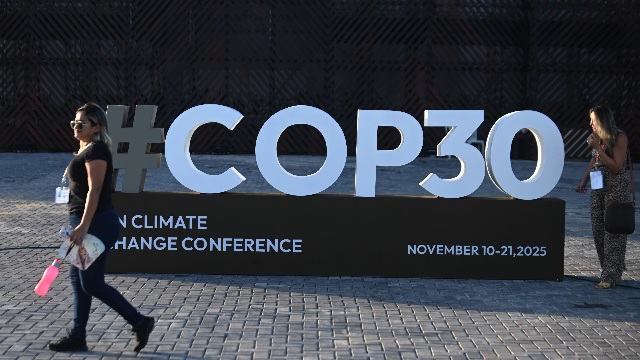
美国缺席COP30,气候资金如何增加两倍
Di Yi Cai Jing· 2025-11-24 13:48
Core Points - COP30 has integrated trade issues into its outcome documents, marking a significant development in climate negotiations [1] - The conference emphasized the urgent need for increased climate financing, particularly for developing countries, with a commitment to double adaptation funding by 2035 [4][5] - The absence of the U.S. federal government at COP30 is notable, as it is the first time since the inception of the UN climate conferences that the U.S. did not send a high-level representative [7] Climate Financing - The final document from COP30 calls for developed countries to double their adaptation funding to developing nations by 2025 compared to 2019 levels, and to triple it by 2035 [1][4] - A target of mobilizing at least $1.3 trillion annually for climate funding by 2035 was established, with developed countries expected to contribute at least $300 billion each year [5] Trade Issues - The conference highlighted the importance of sustainable development for developing countries and warned against unilateral actions that could create unfair trade barriers [5] - A new dialogue aimed at enhancing international cooperation on trade was initiated, involving various countries and organizations like the WTO [5] Renewable Energy Investment - Investment in renewable energy has surpassed that in fossil fuels, with renewable investments now being twice that of fossil fuel investments [8] - The commitment to achieving net-zero emissions has been made by over 80% of global economies, indicating a strong shift towards sustainable energy [7] Future Actions - While there was consensus on accelerating the implementation of the Paris Agreement, no specific plans were made to phase out fossil fuels [9] - The next climate conference (COP31) will be hosted by Turkey, with Australia taking a leadership role in negotiations [9]
IEA:非洲可再生能源和油气投资增加
Zhong Guo Hua Gong Bao· 2025-11-24 03:18
Core Insights - The International Energy Agency (IEA) projects an increase in oil and gas investments in Africa, with oil production expected to remain stable at 7% to 8% of global output by 2035 [1] - Emerging exporting countries like Uganda and Senegal are expected to start production, while Namibia's output is also set to increase [1] - Natural gas production in Algeria and Egypt is currently stable, but Mozambique's LNG project is anticipated to double the country's gas output, contributing to over 5% of global natural gas production by 2035 [1] - Global natural gas demand is expected to continue growing, with increased liquefaction capacity anticipated in the Middle East and Africa by 2030 [1]
【一带一路·观察】印尼可再生能源投资机遇分析
Sou Hu Cai Jing· 2025-11-14 10:21
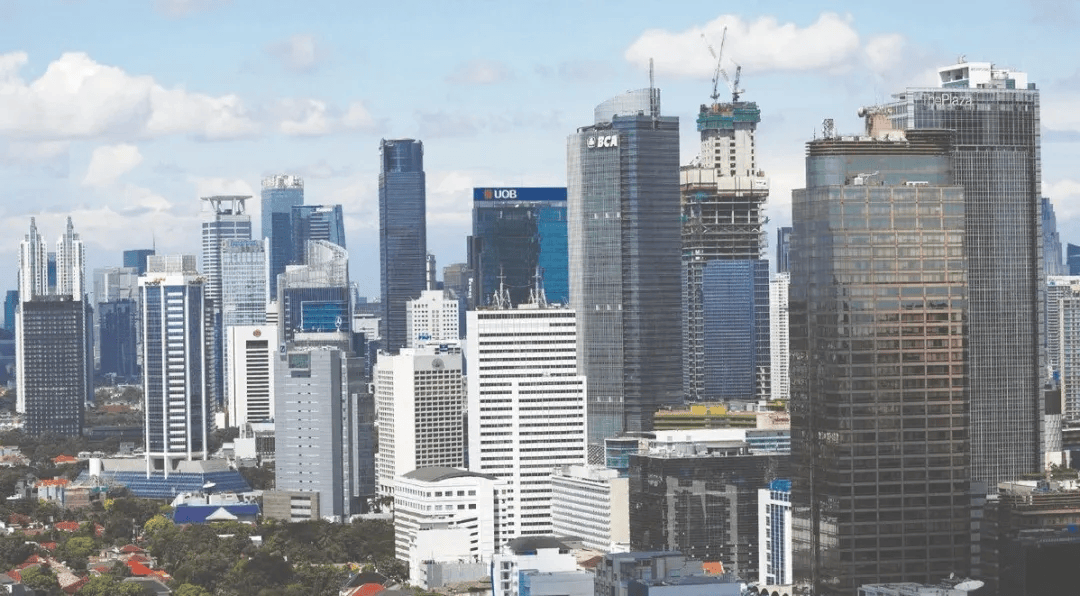
Core Insights - Indonesia, with a population of approximately 280 million, is the fourth most populous country in the world and the largest economy in ASEAN, maintaining an average GDP growth rate of over 5% in recent years [2] - As the world's largest exporter of thermal coal and the third-largest coal producer, Indonesia's energy structure has been predominantly fossil fuel-based, but it is accelerating its energy transition to address climate change challenges [2] - The article analyzes the current state of Indonesia's electricity market, renewable energy investment policies, and the main challenges faced, aiming to provide insights for Chinese enterprises looking to invest in renewable energy in Indonesia [2] Electricity Market Overview - The electricity governance in Indonesia involves multiple institutions, including legislative, policy execution, and regulatory coordination roles, creating a collaborative framework [3] - The Ministry of Energy and Mineral Resources (MEMR) oversees the electricity sector, with the Electricity Bureau and New Renewable Energy Bureau responsible for regulation and policy implementation [3][4] - As of 2024, Indonesia's total installed capacity is 100.65 GW, with traditional energy sources (coal and natural gas) accounting for 78.5% and renewable energy only 14.2%, indicating significant growth potential [5] Electricity Planning System - Indonesia's electricity capacity planning follows a centralized management model, guided by a series of hierarchical policies and planning documents, including the National Energy Policy (KEN) and the National Electricity General Plan (RUKN) [7][8] - The RUPTL (Electricity Supply Business Plan) outlines a 10-year commercial plan detailing investment needs and forecasts for electricity demand and production [9] Renewable Energy Development Goals - The RUPTL 2025-2034, approved in May 2025, plans to add 69.5 GW of new generation capacity over the next decade, with a focus on diversifying energy sources and significantly increasing renewable energy capacity [10] - Total investment for this plan is estimated at $185.5 billion, with approximately 73% expected to be funded by Independent Power Producers (IPPs) [10] Renewable Energy Investment Policies - The Indonesian government has relaxed foreign investment restrictions in the electricity sector, allowing 100% foreign ownership for projects over 1 MW, facilitating market entry for Chinese enterprises [13] - The electricity pricing structure has been clarified to enhance predictability for renewable energy projects, detaching from coal pricing constraints [14] - The procurement process for renewable energy projects has been simplified, allowing for direct appointments and selections based on technical pre-assessment and lowest bid [15] Challenges in Renewable Energy Investment - Policy execution risks exist due to lengthy approval processes and complex coordination among multiple government departments, which can delay project development [21] - The financing environment is challenging, with local banks offering limited support for green energy projects, leading to high financing costs and currency mismatch risks [22] - Localization policies pose challenges for foreign enterprises, particularly in the solar sector, where local component efficiency and supply chain issues can impact project viability [23] - Land acquisition is complicated by high privatization levels and disputes over land rights, increasing project uncertainty [24] - The low interconnection of Indonesia's electricity grid limits the capacity to absorb renewable energy, posing risks to project feasibility and operational stability [25] Conclusion - Indonesia presents significant opportunities for renewable energy investment, supported by a growing market demand and clear policy direction, but challenges related to execution, financing, localization, land acquisition, and grid stability must be carefully assessed [27]
北方国际:公司“十五五”期间将积极拓展投资业务
Zheng Quan Ri Bao Wang· 2025-11-06 12:42
Core Viewpoint - The company, Northern International (000065), announced its strategic focus on expanding investment activities during the 14th Five-Year Plan period, emphasizing international engineering transformation and green energy investments [1] Investment Directions - The company aims to promote the transformation and upgrading of international engineering by developing advantageous resource-based and risk-controlled concession projects [1] - The company plans to seek investment and acquisition opportunities in the renewable energy sector, aligning with the trend of green development [1] - The company intends to explore overseas investments to extend and integrate its industrial chain, leveraging its existing business segments to move towards higher value-added areas [1]

阿布扎比国家能源公司出售印度电厂
Shang Wu Bu Wang Zhan· 2025-11-03 17:03
Core Insights - Abu Dhabi National Energy Company (TAQA) sold its entire stake in an Indian power company for $105 million, which operates a 250 MW lignite power plant [1] Group 1: Company Strategy - The sale is part of TAQA's strategy to adjust its power generation portfolio [1] - TAQA plans to focus on low-carbon gas power generation and renewable energy investments in the future [1]
欧洲告急,各国已损失接近5000亿,中国突然接到了大量商品订单
Sou Hu Cai Jing· 2025-10-17 08:47
Core Insights - The energy crisis in Europe, exacerbated by the Russia-Ukraine conflict, led to significant increases in natural gas and electricity prices, causing economic strain across the region [2][3][5] - The European Union (EU) implemented substantial energy subsidies, totaling approximately €397 billion, to mitigate the impact on households and businesses [3][5] - The crisis prompted a shift in energy sourcing, with increased coal imports from countries like India and Australia, and a push for renewable energy investments [3][9] Energy Prices and Economic Impact - Natural gas prices surged from around €20 per MWh at the beginning of 2022 to over €300 per MWh by August [2][5] - Electricity prices in Germany and the UK saw dramatic increases, with UK household electricity bills tripling for some families [3][5] - The EU's GDP growth rate dropped from an expected 2% to just 0.2% in Q3 2022, with inflation reaching 10%, largely driven by energy costs [5] Government Responses and Subsidies - EU governments allocated nearly €500 billion in total to subsidize energy costs for households and businesses, with specific measures like energy vouchers for low-income families in France [2][3] - The UK and other countries also faced rising energy costs, leading to business closures and increased unemployment [5][6] Shifts in Energy Supply and Demand - The EU's reliance on Russian energy sources prompted a search for alternative suppliers, with the US agreeing to increase LNG exports to Europe by 50 billion cubic meters annually [3][8] - Coal consumption rose significantly, with a 20% increase in usage, and countries like Germany delayed the closure of coal-fired power plants [3][9] Market Adjustments and Future Outlook - By early 2023, natural gas prices fell below €50 per MWh, stabilizing electricity supply and reducing household energy expenditures [9] - The EU's energy ministers agreed to accelerate renewable energy investments, with a 40% increase in solar panel installations and a streamlined process for wind energy projects [9] - The overall economic situation is expected to improve gradually, with the EU aiming to reduce dependency on Russian energy by 2027 through initiatives like the REPowerEU plan [5][9]