可重复使用运载火箭

Search documents
年产1000颗!我国卫星超级工厂即将投产 多枚可复用火箭将迎来首飞
Mei Ri Jing Ji Xin Wen· 2025-12-07 21:45
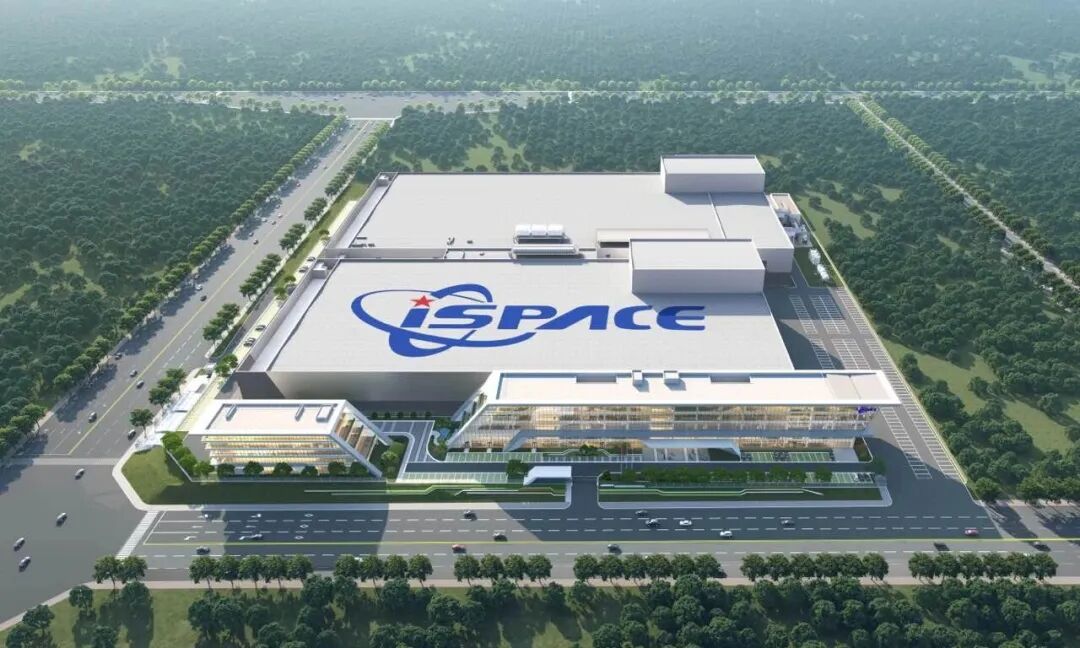
Core Viewpoint - The articles highlight the rapid development of commercial aerospace in Wenchang, China, focusing on the establishment of a comprehensive ecosystem for satellite manufacturing and rocket launching, supported by significant infrastructure investments and advancements in reusable rocket technology [1][5][7]. Group 1: Commercial Aerospace Development - Wenchang is building a new pillar industry in commercial aerospace, leveraging China's first commercial launch site to create a synergistic structure of rocket, satellite, and data chains [1]. - A super factory in Wenchang is set to produce 1,000 satellites annually, enabling seamless integration from production to launch [1]. - Over 20 companies have signed agreements to establish operations in Wenchang, enhancing the ecosystem for rocket research, satellite manufacturing, and launch control [1]. Group 2: Reusable Rocket Technology - The Xingtiangong rocket assembly and testing factory is expected to produce 24 rockets annually, with future expansions potentially increasing capacity to 36 rockets [2]. - The "Zhuque-3" rocket, which attempted a first-stage recovery, has garnered significant attention despite its unsuccessful recovery [2][3]. - Other reusable rockets in development include "Chang Zheng-12A" and "Shuangquxian-3," with plans for their first flights and recovery tests by 2025 and 2026 [3][4]. Group 3: Market Trends and Projections - The number of commercial rocket launches in China has increased from 1 in 2017 to 16 projected for 2024, with 15 launches completed by November 2025 [5]. - Analysts suggest that the shift towards low-cost, scalable, and reusable rockets will provide substantial support for space infrastructure development [7]. - The establishment of a dedicated regulatory body for commercial aerospace by the National Space Administration aims to enhance the safety and quality of the industry [7].


年产1000颗!我国卫星超级工厂即将投产,多枚可复用火箭将迎来首飞
Mei Ri Jing Ji Xin Wen· 2025-12-07 11:25
Core Insights - The articles published by People's Daily highlight the development of commercial aerospace in Wenchang, focusing on the establishment of a new pillar industry supported by the country's first commercial launch site [1] Group 1: Commercial Aerospace Development - Wenchang is working to create a new pillar industry in commercial aerospace, forming a "three-chain collaboration" structure involving rocket, satellite, and data chains [1] - A super factory capable of producing 1,000 satellites annually is set to commence operations, enabling seamless integration of satellite production and launch [1] - Over 20 upstream and downstream enterprises have signed agreements to settle in Wenchang, enhancing the ecosystem for rocket research and development, satellite manufacturing, and launch control [1] Group 2: Satellite Manufacturing and Launch Capabilities - The super factory consists of an international satellite advanced manufacturing center and an international star-rocket collaborative research center, featuring a "1+1+8" structure [1] - This facility is the only one in the country that can achieve satellite assembly and rocket integration, making it the largest satellite manufacturing base in Asia [1] - Plans are underway to establish a global satellite assembly and integration testing headquarters to support the mass production of 500-kilogram satellites [1] Group 3: Reusable Rocket Development - The Xingti Glory reusable rocket assembly and testing factory is set to be completed by October 2025, with a production capacity of 24 rockets per year, potentially increasing to 36 with future expansions [2] - The factory employs a "total assembly, total testing, and reuse" model, significantly shortening the R&D cycle and reducing launch costs [2] - The Blue Arrow Aerospace's Zhuque-3 rocket attempted the first domestic level recovery but was unsuccessful, highlighting ongoing challenges in the sector [2][4] Group 4: Future Prospects and Industry Trends - Domestic reusable rockets under development include the Chang Zheng-12A and the Double Curve-3, with the latter expected to conduct its first flight by the end of 2025 [4][5] - The commercial rocket launch frequency in China has increased from 1 in 2017 to 16 in 2024, indicating a growing trend in the industry [6] - Analysts suggest that the demand for reusable rockets will drive the development of rocket subsystems, with a focus on reducing costs through innovative technologies [8]
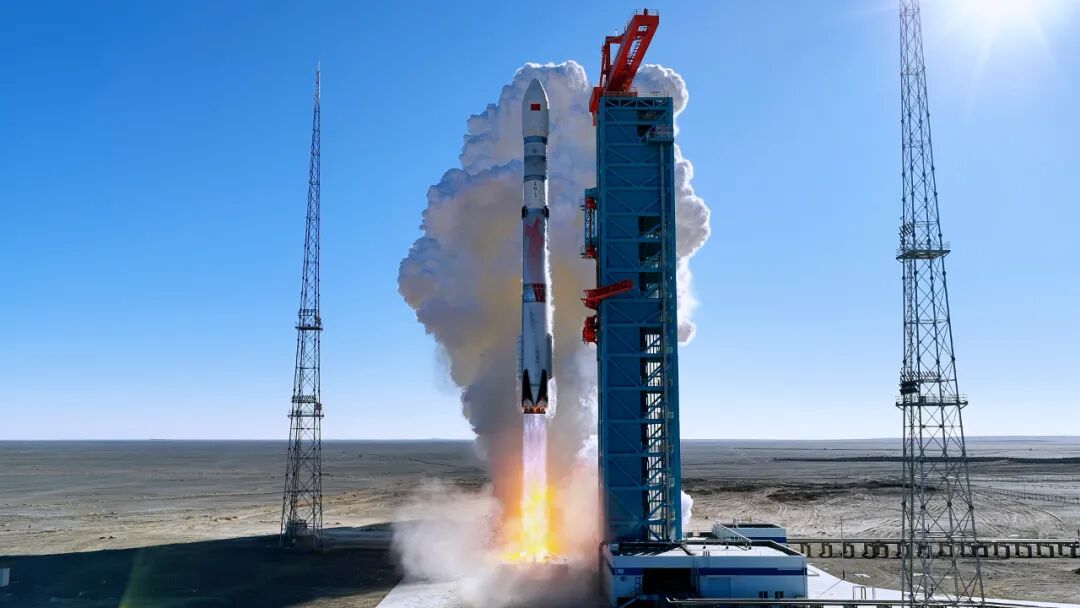
军工本周观点:继续看好商业航天产业加速-20251207
Huafu Securities· 2025-12-07 10:46
Investment Rating - The report maintains an "Outperform" rating for the defense and military industry [4]. Core Viewpoints - The report expresses optimism about the acceleration of the commercial aerospace industry, particularly following the successful launch of the Zhuque-3 rocket, which is China's first reusable liquid oxygen-methane rocket to achieve orbit. This breakthrough is expected to significantly reduce launch costs and enhance satellite deployment capabilities [44][45]. - The report highlights that the military industry is poised for strong demand recovery in 2026, driven by multiple catalysts including the nearing completion of the 14th Five-Year Plan and the centenary of the military [45]. - The report notes that the current price-to-earnings ratio (P/E) for the military industry index is 69.33, indicating a high valuation but also a strong recovery expectation for the industry [45]. Summary by Sections Industry Performance - From December 1 to December 5, the Shenwan Military Index rose by 2.82%, outperforming the CSI 300 Index, which increased by 1.28%, resulting in a relative excess return of 1.54 percentage points [8][15]. - The military index has increased by 17.8% since 2025, compared to a 16.51% rise in the CSI 300 Index, indicating a relative outperformance of 1.29 percentage points [17]. Key Developments - The successful launch of the Zhuque-3 rocket and the hosting of the 2025 Satellite Internet Industry Ecosystem Conference are significant events that have boosted the commercial aerospace sector [44]. - The report emphasizes the importance of reusable rocket technology in overcoming industry bottlenecks and transitioning from "capacity scarcity" to "scale application" [45]. Investment Opportunities - The report suggests focusing on various segments within the military industry, including: 1. Land Equipment: Tianqin Equipment, Gaode Infrared, Ligong Navigation, Baiao Intelligent, Changcheng Military [45]. 2. Stealth Materials: Jiachitech, Huaqin Technology [45]. 3. Deep Sea: Western Materials, China Marine Defense [45]. 4. Engines: Aerospace Technology, Hangya Technology, Tunan Co. [45]. 5. AI and Intelligent Systems: Xingtuxinke, Aerospace Electronics [45].
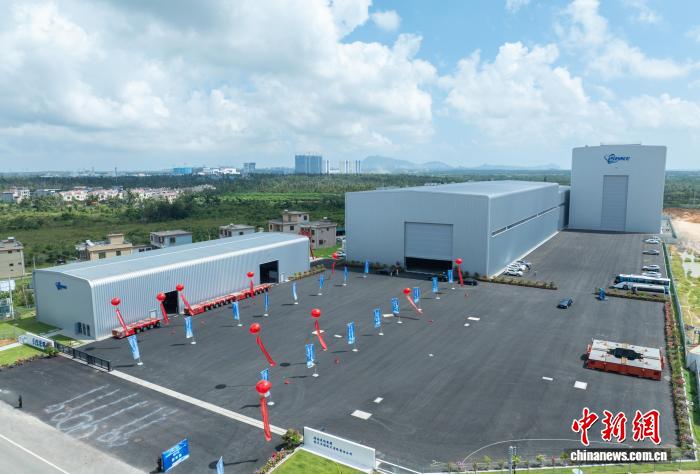
运载火箭总装总测复用工厂在海南文昌竣工
Zhong Guo Xin Wen Wang· 2025-10-09 12:35
Core Points - The completion of the Star Glory rocket assembly, testing, and reuse factory project (Phase I) in Wenchang, Hainan, marks a significant milestone for the commercial space industry [1][3] - The factory is designed to support the overall assembly, testing, and reuse of commercial rockets, with an annual production capacity of 24 rockets [3] - The factory's strategic location in Wenchang is advantageous due to its low latitude, abundant maritime resources, and the benefits of Hainan's free trade port policies [3][4] Summary by Sections Factory Details - The factory covers a total area of 18,300 square meters and includes facilities for rocket reuse, suborbital vehicles, and a single-layer machining workshop [3] - It can accommodate two companies simultaneously for rocket assembly, testing, and reuse tasks [3] Future Plans - The factory is set to receive the first reusable rocket, "Double Curve No. 3," in the fourth quarter of this year for assembly and testing [3] - Large-scale ground tests will be conducted by the end of this year to prepare for the goal of "first flight into orbit + sea recovery" [3] Industry Impact - The operation of this factory is expected to accelerate the clustering of the industry chain, attracting high-end talent, advanced technology, and innovative capital to Wenchang [4] - Star Glory plans to increase R&D investment to overcome key technologies for reusable rockets and enhance its industrial chain layout [3]
商业航天领域投融资持续活跃
Zheng Quan Ri Bao· 2025-09-29 16:27
Core Insights - The commercial aerospace sector is experiencing active investment and financing, with significant recent funding rounds completed by companies such as Beijing Xinghe Power and Interstellar Glory [1][2]. Group 1: Financing Activities - Beijing Xinghe Power successfully completed a Series D financing round totaling 2.4 billion yuan [1]. - Interstellar Glory completed the first tranche of its D+ round financing, amounting to 700 million yuan [1]. - Other companies in the commercial aerospace sector, such as Beijing Weina Starry Sky Technology and Blue Arrow Aerospace, are also preparing for IPOs this year [1]. Group 2: Investment Sources - Investors in Xinghe Power's financing include various local government funds and investment groups from Beijing and Nanjing [2]. - Interstellar Glory's financing was led by Chengdu Advanced Capital and supported by several local investment funds [2]. - The involvement of local government funds reflects a strong commitment to developing the commercial aerospace industry [2]. Group 3: Industry Trends and Developments - The demand for commercial aerospace services is becoming clearer, bolstered by the entry of state-owned telecom operators into the market [2]. - The industry is transitioning from infrastructure development to terminal operation services, which is crucial for closing the business model loop [2]. - Since July, there has been an increase in the launch frequency of low Earth orbit satellites in China, indicating a growing market [2]. Group 4: R&D Focus - The primary purpose of the recent financings is to accelerate the development of reusable launch vehicles [3]. - Xinghe Power's funds will be used to enhance the development and production capabilities of its "Zhishen Star" series and "Gushen Star No. 2" rockets [3]. - Interstellar Glory plans to use its funds for the development of the "Hyperbola No. 3" reusable rocket and the construction of production bases in Chengdu [3]. Group 5: Future Projections - The industry anticipates a 30% to 60% reduction in unit payload costs as reusable rockets enter mass production, which will alleviate capacity constraints in the satellite internet sector [3]. - Companies are preparing to meet future high-frequency launch demands, with plans to expand production capacity to support at least 20 rocket launches annually [3].

头部火箭公司,再获7亿元融资
Shang Hai Zheng Quan Bao· 2025-09-18 15:54
Core Viewpoint - The company, Space Glory, has successfully completed the first tranche of its D+ round financing, raising 700 million RMB, which will be used for the development of the reusable Hyperbola-3 rocket and the establishment of production bases in Chengdu and Mianyang [1][4]. Group 1: Financing and Investment - The D+ round financing was led by Chengdu Advanced Capital and included participation from multiple funds [1]. - The company has previously completed several rounds of financing, including a 700 million RMB C and C+ round in September 2024, with strategic investments from Sichuan government funds [4][5]. Group 2: Product Development and Production Capacity - The funds raised will accelerate the development of the Hyperbola-3 reusable liquid rocket, with plans for its first flight and sea recovery by the end of 2025 [4]. - The new production base in Chengdu will focus on the research, production, and testing of large reusable liquid rockets, aiming for an annual production capacity of 20 rockets once fully operational [2][4]. Group 3: Strategic Partnerships and Regional Development - The financing marks the beginning of a strategic partnership between Space Glory and Chengdu's Shuangliu District, enhancing the commercial aerospace ecosystem in Sichuan [1]. - The company has established a collaborative layout across Deyang, Mianyang, and Chengdu, contributing to the activation of the commercial aerospace industry in the region [1]. Group 4: Industry Outlook - The Sichuan provincial government has set ambitious goals for the aerospace industry, aiming for a scale of 50 billion RMB by 2025 and 100 billion RMB by 2030, with plans to cultivate several large-scale enterprises [5].
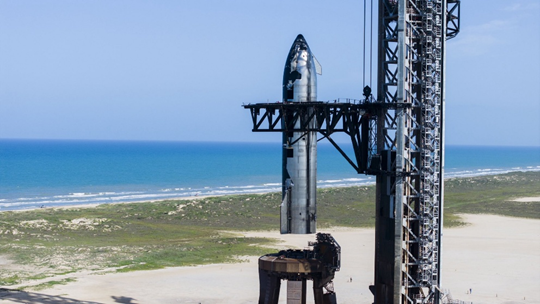
SpaceX发布新型“星舰”图:已运抵得州进行飞行前测试
Huan Qiu Wang· 2025-07-29 13:50
Core Viewpoint - SpaceX has introduced the new "V2 Starship" heavy-lift launch vehicle, which is currently undergoing pre-flight testing at its Starbase in Texas, following a series of failed test flights earlier this year [1][5]. Group 1: New Developments - The new "V2 Starship" has been transported to the Texas Starbase for a series of pre-flight tests, marking the latest advancement in the Starship series [1][3]. - Elon Musk expressed hopes that the next generation "V3" model could be launched by the end of this year [5]. Group 2: Impact and Significance - The "Starship" series is the only fully reusable heavy-lift launch vehicle developed by a private company, which could significantly impact NASA and other agencies [5]. - Successful testing and flight of the "V2 Starship" could drastically reduce orbital payload launch costs and support NASA's Artemis program for returning to the Moon and ultimately achieving human settlement on Mars [5]. Group 3: Previous Test Flight Challenges - The "Starship" has faced multiple failures in its test flights this year, including a catastrophic explosion during a static fire test while preparing for its tenth flight [6]. - Previous test flights have seen the first stage successfully land but the second stage experiencing failures, leading to self-destruction during re-entry [6].