品牌农业

Search documents
代表委员心声丨发展品牌农业 助力农业强省建设
He Nan Ri Bao· 2026-01-27 23:17
如何破题?贾辉建议,设立省级标杆企业库,每年遴选一批具有核心技术、特色产品和发展潜力的本土 企业进行重点培育,对入库企业实施"一对一"品牌诊断与战略规划辅导。同时,实施"品牌+文旅"融合 推广行动,将标杆品牌产品植入我省重点旅游线路、景区、星级酒店和"老家河南"文旅宣传活动;设 计"河南礼物"品牌系列产品,让优质农产品成为移动的河南名片,实现品牌溢价与旅游消费的双赢。 政府工作报告提出,统筹发展科技农业、绿色农业、质量农业、品牌农业。 省人大代表、河南金豆子蔬菜食品有限公司董事长贾辉对发展品牌农业高度关注。在他看来,我省是全 国重要的粮食生产和农产品加工基地,拥有丰富的特色农产品资源。然而,一个不容回避的问题是,我 省知名农业品牌的数量与影响力,与农业大省的地位不匹配,农业企业面临"有品类、无品牌,有质 量、无溢价,有产品、无销路"的困境。 "扶持本土农业企业做大做强品牌,不仅能直接带动企业增效、农民增收,更能提升整个区域的产业竞 争力,形成'企业创品牌、产业增效益、地方提形象'的良性循环,推动我省从农业大省向农业强省跨 越。"贾辉说。(记者 王斌) 责任编辑: 王靖 ...
农业农村部:统筹发展科技农业、绿色农业、质量农业、品牌农业
Xin Lang Cai Jing· 2026-01-27 14:46
Core Viewpoint - The Ministry of Agriculture and Rural Affairs emphasizes the importance of implementing Xi Jinping's directives and the decisions made during the 20th Central Commission for Discipline Inspection's fifth plenary session to ensure the successful execution of the "14th Five-Year" agricultural and rural goals [1][2] Group 1 - The meeting highlighted the need to unify thoughts and actions with Xi Jinping's important speech and the decisions from the plenary session, focusing on strict governance within the party to support agricultural and rural objectives [1] - There is a strong emphasis on political supervision and adherence to political discipline, ensuring that Xi Jinping's directives are effectively implemented [1] - The ministry aims to enhance the management of significant policies, projects, and administrative approvals, establishing a transparent and accountable system for power usage [1] Group 2 - The meeting calls for a comprehensive understanding of the spirit of the 20th Central Committee's fourth plenary session, guiding the high-quality development of the "14th Five-Year" agricultural and rural planning [2] - It stresses the importance of integrating technology, green practices, quality, and branding in agriculture while maintaining focus on food production and the sustainability of poverty alleviation efforts [2] - The ministry aims to improve capabilities in agricultural and rural work, emphasizing practical approaches and systematic planning to ensure a strong start for the "14th Five-Year" period [2]
【光明时评】从“颗粒归仓”到“舌尖盈香”
Xin Lang Cai Jing· 2026-01-25 19:17
Core Viewpoint - Food security is a top priority for the nation, with a projected grain output of 14,298 billion jin by 2025, marking an increase of 168 billion jin, maintaining stability above 14 trillion jin for two consecutive years [1] Group 1: Agricultural Development and Policies - The increase in grain production is a result of the "storing grain in the ground and technology" strategy, emphasizing the importance of technology in enhancing yield and efficiency [1] - The implementation of policies such as the "Seed Industry Revitalization Action" and "Quality Grain Project" has accelerated the promotion of high-yield, quality varieties [2] - The average taste score of rice in China has improved from 74.9 to 80.3 from 2009 to 2023, indicating significant advancements in quality across multiple dimensions [2] Group 2: Transformation in Agricultural Logic - The shift in agricultural development logic is reflected in the emphasis on a "big agriculture, big food" concept, which has been reiterated in key national documents and strategies [3] - The development of "four types of agriculture" (scientific, green, quality, and brand agriculture) is crucial for achieving deep structural changes in the agricultural sector [3][4] - Technological innovations in breeding have addressed the challenges of quality, while green agriculture ensures safety through reduced chemical use [4] Group 3: Economic Implications and Consumer Impact - The enhancement of agricultural quality has created a direct economic incentive for farmers, transforming the value chain from selling raw grain to selling branded products [4] - The definition of food has evolved from merely filling stomachs to meeting high-quality lifestyle demands, reflecting a shift in consumer expectations [4] - The focus on both quantity and quality in grain production is essential for ensuring food security and supporting economic development [5]
四川盐亭:川农大研究生团队开展县域农业高质量发展主题调研
Xin Lang Cai Jing· 2026-01-21 09:16
Core Insights - The research team from Sichuan Agricultural University conducted a field study in Yanting County to explore the internal logic and practical experiences of high-quality agricultural development [1][3] - The study aimed to clarify development fundamentals, explore innovative growth, and empower industrial upgrades through various methods such as site visits and discussions [1][3] Group 1: Agricultural Development Practices - Yanting County has developed a complete industrial chain for egg production, becoming the "number one county in the country for the egg chicken industry" by collaborating with Fengji Food Group [1][3] - The research team focused on issues such as standardized large-scale breeding, production operations, market expansion, deep processing technology of agricultural products, and models for extending the industrial chain [1][3] Group 2: Collaboration and Knowledge Sharing - The collaboration between Sichuan Agricultural University and Yanting County Agricultural and Rural Bureau aims to leverage academic expertise to systematically outline the development paths of order agriculture and the regional public brand "Lezhiwei" [3] - This partnership also serves to fulfill social responsibilities by providing a practical platform for talent cultivation and integrating theoretical research with local agricultural practices [3] Group 3: Modern Agricultural Goals - The "14th Five-Year Plan" emphasizes the modernization of agriculture and rural areas as crucial to China's overall modernization, advocating for the development of technological, green, quality, and brand agriculture [4] - The practices observed in Yanting County exemplify high-standard paradigms for modern agricultural development, enhancing the understanding of how theoretical knowledge can support local agricultural economic growth [4]


加强品牌农业建设
Xin Lang Cai Jing· 2026-01-03 02:48
Core Insights - The article emphasizes the importance of agricultural brand development in China, highlighting the cultivation of green, organic, and high-quality agricultural products to increase farmers' income and upgrade the supply-demand structure of agricultural products [1] Group 1: Agricultural Brand Development - The initiative aims to strengthen brand agriculture construction during the "14th Five-Year Plan" period, focusing on quality assurance and the establishment of a standardized agricultural product system [1] - There is a need to address shortcomings in processing technology, cold chain logistics, and quality traceability to ensure consumer confidence in purchasing agricultural products [1] Group 2: Case Study - Jilin's Zhenlai Rice - Jilin's Zhenlai rice exemplifies successful agricultural branding by turning saline-alkali land disadvantages into advantages, producing high-value products like weak-alkaline rice through deep processing [1] - The development of a benefit-sharing mechanism has facilitated the collaborative growth of farmers, enterprises, and research institutions [1] Group 3: Marketing and Sales Strategies - The article stresses the importance of effective marketing strategies, including precise positioning, brand development, and multi-dimensional marketing to achieve high-quality and high-price products [1] - It highlights the necessity for a marketing service system that cultivates versatile talents skilled in agriculture, management, and marketing to support the transition from "selling raw materials" to "selling products" and "selling brands" [1]
盐碱地上,创业村正创业(迈向“十五五”的发展图景·大国小村)
Ren Min Ri Bao· 2026-01-02 22:14
Core Viewpoint - The article highlights the transformation of a village in Jilin Province, China, through agricultural innovation and branding, leading to increased production and income for local farmers [2][3]. Group 1: Agricultural Development - The village faced significant challenges due to poor soil conditions, initially yielding only 300-500 jin (150-250 kg) of corn per hectare [2]. - The introduction of research on saline-alkali land rice cultivation by the Jilin Agricultural Academy marked a turning point for the village [2]. - The village's rice planting area expanded from 280 hectares to over 950 hectares due to successful trials and community engagement [2]. Group 2: Branding and Market Strategy - The establishment of a green agricultural brand aimed to enhance the market value of local rice, with green rice priced 20% higher than ordinary rice [3]. - The village adopted an "order agriculture" model, allowing farmers to focus on cultivation while ensuring market access [3]. - The "Zhanlai Rice" brand has achieved a public brand value exceeding 1 billion yuan, with 155,900 acres of rice cultivation in the region [3]. Group 3: Economic Impact - The village collective's financial status improved significantly, with revenues surpassing 500,000 yuan in 2025, allowing for infrastructure development and community benefits [4]. - The village plans to establish its own rice processing factory and enhance training for farmers to further improve agricultural practices and market reach [4].

走好自己的创业路
Ren Min Ri Bao· 2026-01-02 22:11
Core Viewpoint - The article highlights the transformation of saline-alkali land into productive agricultural land through perseverance, technological advancements, and community support, emphasizing the potential for profitable farming and the importance of attracting young people back to agriculture [2][3]. Group 1: Agricultural Development - The challenges of farming on saline-alkali land are acknowledged, with historical skepticism from the community regarding its viability [2]. - The increase in grain yield and income over the years is attributed to hard work, community assistance, and guidance from agricultural experts [2]. - The article discusses the importance of modern agricultural training for farmers to enhance their skills in crop management and pest control [2]. Group 2: Community and Infrastructure - Improvements in village infrastructure, such as roads and streetlights, have been made, yet some young people still perceive farming as unappealing and unprofitable [3]. - The need for large-scale operations and advanced machinery in agriculture is emphasized as a future direction for the village [3]. - The article mentions the shift towards green agriculture and brand development in the rice industry, indicating a move towards processing and sales [3]. Group 3: Youth Engagement - There is a call to attract young people back to farming by showcasing the potential for successful careers in agriculture, including professional farming and green agriculture [3]. - The narrative suggests that entrepreneurship in agriculture requires multiple attempts and a supportive community to succeed [3].
一颗柚子撑起百亿元产业
Xin Lang Cai Jing· 2025-12-19 23:34
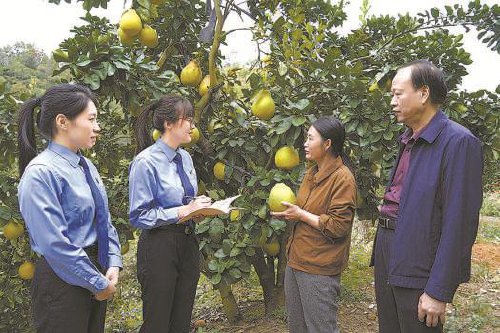
Core Viewpoint - The article highlights the successful promotion and protection of the "Meixian Pomelo" geographical indication, emphasizing its economic impact and the collaborative efforts of local authorities and farmers to enhance brand value and legal awareness [3][4][10]. Group 1: Economic Impact - The "Meixian Pomelo" brand valuation reached 11.327 billion yuan in 2023, with a cultivation area of approximately 280,000 acres, contributing over 80% of the average income for farmers in the main production towns [3][4]. - The local authorities have implemented measures to enhance the brand's value and protect its geographical indication, which has positively influenced the pomelo industry [4][10]. Group 2: Legal Protection and Awareness - A case involving a local pomelo grower highlighted the need for stronger governance in the industry, prompting the local prosecutor's office to enhance the protection of the "Meixian Pomelo" geographical indication [4][5]. - The prosecutor's office has conducted legal supervision and provided recommendations to the local pomelo association to improve the management of geographical indications [5][6]. - Initiatives such as legal education sessions and the establishment of a knowledge protection liaison point have been implemented to raise awareness among farmers and pomelo enterprises about intellectual property rights [7][8]. Group 3: Collaborative Efforts - The collaboration between the prosecutor's office and agricultural departments has led to the establishment of a mechanism for joint efforts in protecting and promoting the "Meixian Pomelo" brand [9][10]. - The local prosecutor's office has engaged in outreach activities, including legal service initiatives in pomelo orchards, to provide practical support and guidance to farmers [8][9].
从“土味”到“潮品”,农产品凭什么拿捏你的钱包?答案在这4招
Sou Hu Cai Jing· 2025-12-13 15:49
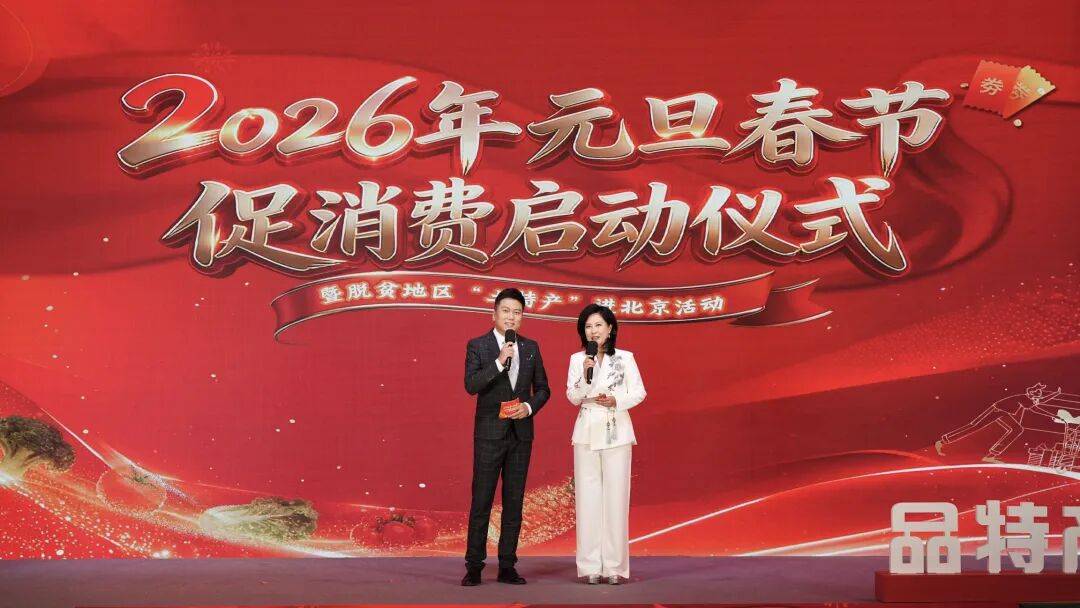
Core Viewpoint - The event "Taste Local Products, Seek New Year Flavor" aims to boost consumption during the New Year and Spring Festival through a combination of policy support and consumer engagement, highlighting a modern approach to agricultural promotion that goes beyond simple sales tactics [1][3]. Group 1: Brand Agriculture - Brand agriculture is evolving from merely selling local products to creating compelling narratives around them, transforming agricultural goods into branded experiences that resonate with consumers [5][7]. - The example of Fengjie navel oranges illustrates how storytelling can enhance product value, linking it to cultural heritage and emotional connections, resulting in a brand value exceeding 38 billion [7]. Group 2: Technology in Agriculture - Technological advancements in agriculture allow for precise customization of products based on consumer preferences, shifting from traditional farming to a model that responds directly to market demands [10]. - The case of Changping strawberries demonstrates how data-driven approaches enable farmers to cultivate specific varieties tailored to consumer tastes, enhancing transparency and trust in the production process [10]. Group 3: Quality Agriculture - Quality agriculture focuses on building consumer trust through transparency and traceability, exemplified by initiatives like "one fish, one code" for full sourcing information [12][14]. - The success of Jin Tang mushrooms showcases how stringent quality control and standardized production processes can elevate local products to national and international markets, creating a billion-dollar industry [14]. Group 4: Green Agriculture - Green agriculture emphasizes environmental sustainability as a key selling point, transforming products into symbols of ecological value and cultural significance [15][17]. - The promotion of Honghu lotus root and black bee honey highlights how narratives around natural origins and traditional practices can enhance product desirability, making consumers feel they are supporting a sustainable lifestyle [15][17]. Conclusion - The "Taste Local Products, Seek New Year Flavor" event reflects a new logic in agricultural consumption, where brand, technology, quality, and green practices work together to modernize and marketize the agricultural sector, igniting consumer engagement and revitalizing the industry [1][3].

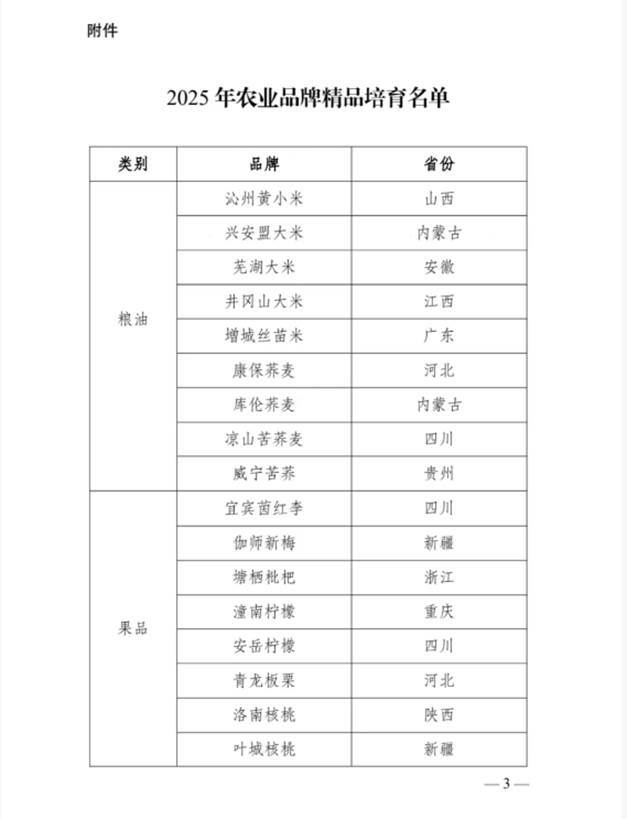
“崂山茶”喜获农业农村部精品品牌
Qi Lu Wan Bao· 2025-12-11 00:48
Core Insights - The Ministry of Agriculture and Rural Affairs has officially released the 2025 Agricultural Brand Boutique Cultivation List, with 94 regional public brands selected nationwide, including "Laoshan Tea," marking a significant recognition for Shandong's tea industry [1] Group 1: Brand Recognition - "Laoshan Tea" has achieved national-level agricultural boutique brand status, representing a breakthrough for tea brands in Shandong and northern tea regions [1] - The selection of "Laoshan Tea" highlights its unique growing environment, exceptional quality, and rich cultural heritage, placing it alongside other renowned tea brands such as Fuzhou Jasmine Tea and Wuyi Rock Tea [1] Group 2: Future Development - The recognition of "Laoshan Tea" is not only a validation of its development but also provides direction for the future growth of brand agriculture in the region [1] - Laoshan District plans to enhance the promotion of the "Laoshan Tea" brand, implement strict quality management, deepen cultural empowerment, and strengthen market promotion strategies to drive high-quality development in the tea industry [1] Group 3: Broader Impact - "Laoshan Tea" will serve as a model to optimize and upgrade other agricultural product brands, aiming to improve the overall competitiveness of brand agriculture and better support rural revitalization [1]