
四水四定

Search documents
省黄河流域生态保护和高质量发展领导小组召开会议 刘宁主持并讲话 王凯出席
He Nan Ri Bao· 2025-12-05 10:41
Core Viewpoint - The meeting focused on the ecological protection and high-quality development of the Yellow River Basin, emphasizing the importance of implementing the spirit of the 20th National Congress and the directives from General Secretary Xi Jinping regarding ecological protection and development strategies [3][4]. Group 1: Strategic Emphasis - The geographical and hydrological complexity of Henan necessitates prioritizing the governance of the middle and lower reaches of the Yellow River [3]. - The strategy emphasizes "protection first, governance second," aiming to create a harmonious relationship between people and nature while ensuring the Yellow River benefits the populace [3]. Group 2: Key Initiatives - The plan for the 14th Five-Year Plan period includes focusing on flood prevention, water resource utilization, and the protection and promotion of Yellow River culture [4]. - The approach will prioritize water conservation, systematic governance, and the construction of a modern water network to enhance water security [4]. Group 3: Environmental Protection and Development - The meeting highlighted the need for comprehensive pollution prevention and ecological restoration, advocating for a collaborative approach to environmental governance [4]. - The relationship between ecological protection and high-quality development is crucial, with a focus on modern agricultural development and the establishment of a new energy system [4]. Group 4: Action Plans - The meeting reviewed the implementation of the "Three-Year Action Plan for Ecological Protection and High-Quality Development of the Yellow River Basin (2025-2027)" and discussed the planning of tasks for the 14th Five-Year Plan period [5].

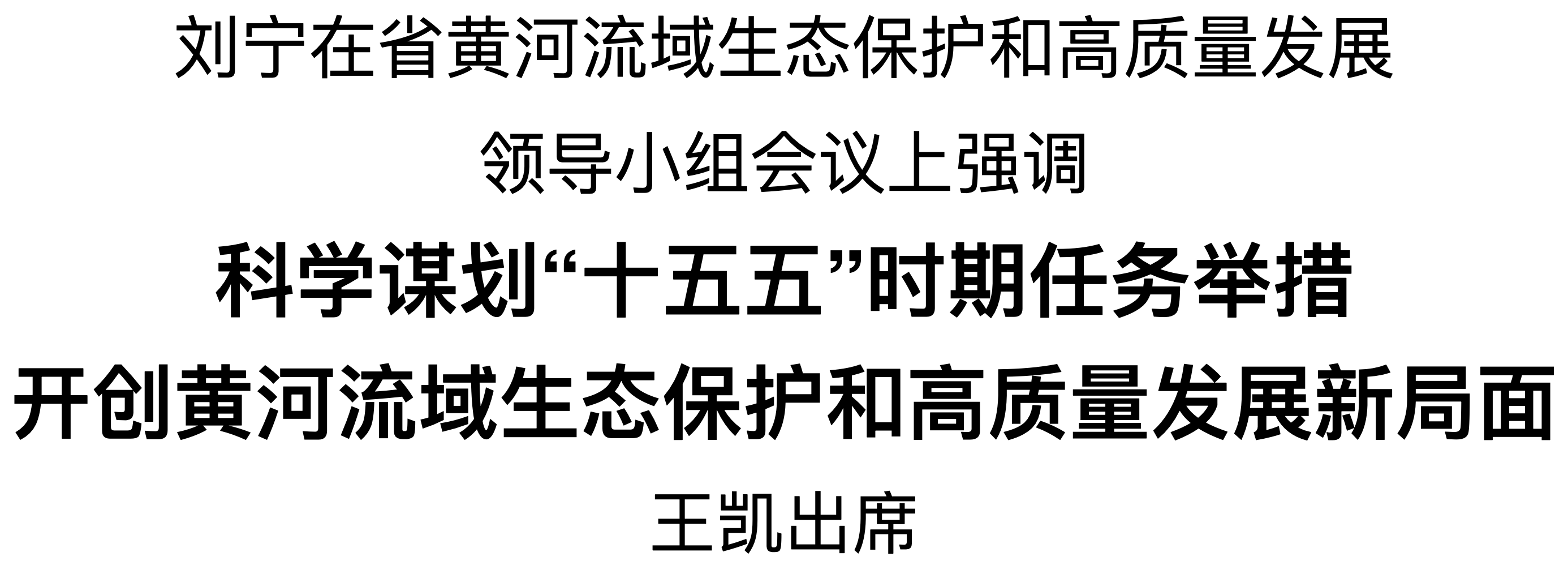
山西水利“十四五”交出亮眼答卷:古贤开工 晋泉复流 水网贯通 生态向好
Zhong Guo Fa Zhan Wang· 2025-12-05 08:09
Core Viewpoint - Shanxi Province is making significant progress in high-quality water conservancy development during the "14th Five-Year Plan" period, focusing on water resource management and infrastructure improvements [1][3]. Investment Growth - Water conservancy construction investment in Shanxi Province reached 98.6 billion yuan, a 73.3% increase compared to the "13th Five-Year Plan" [3]. - Average annual investment is expected to exceed 20 billion yuan in 2023 and 2024, indicating a sustained growth trend in water conservancy investment [3]. Key Achievements - The Huanghe Guxian Water Conservancy Hub project, which has been under discussion for 70 years, has officially commenced construction [3]. - The Jinci Spring, which had been dry for 30 years, has resumed stable flow, restoring its historical beauty [3]. - The main framework of Shanxi's modern water network, consisting of "three verticals and nine horizontals" and eight river connections, is now largely established [3]. Water Resource Management - The "Four Waters and Four Determinations" initiative is being effectively implemented, with a leadership group established to oversee its execution [4]. - By the end of 2024, water consumption per unit of GDP is projected to decrease by 21.5% compared to the end of the "13th Five-Year Plan" [4]. - The annual water supply capacity of the provincial water network has increased to 4.487 billion cubic meters, with coverage reaching 82% and benefiting over 28 million people [4]. Environmental Restoration - The area of soil erosion management has reached 28.8 million acres, with a target of achieving a soil conservation rate of 65.51% by the end of 2024 [4]. - Groundwater levels have risen by an average of 2.51 meters since 2019, with the Jinci Spring flowing continuously for 458 days [4]. Disaster Resilience - The flood control standard rate of the Fen River main embankment has improved from 65% to 95%, enhancing the province's ability to respond to extreme weather events [4]. - The total water storage in reservoirs has reached 2.068 billion cubic meters, the highest in history, ensuring a solid water supply for the upcoming year [4]. Rural Water Supply Improvement - The standardized rural water supply rate has increased to 57.9%, with tap water coverage reaching 98.6%, benefiting 22.2 million rural residents [7]. - Future plans include a comprehensive approach to water resource allocation, focusing on conservation and sustainable use of various water sources [7].
“十四五”以来黄河宁夏段标准化堤防达430公里
Zhong Guo Xin Wen Wang· 2025-10-21 07:25
Core Points - The Ningxia region has completed 430 kilometers of standardized levees along the Yellow River since the start of the 14th Five-Year Plan, enhancing flood protection [1] - A total investment of 36.7 billion yuan has been made in water conservancy projects, optimizing the layout, structure, and functionality of water infrastructure [1] - The region has improved its flood control capacity by managing 669 kilometers of river and reinforcing 74 reservoirs over the past five years [1] - A comprehensive rainwater monitoring and forecasting system has been established, consisting of 13 meteorological radars, 2,352 rain gauge stations, 272 hydrological stations, and 311 water level stations [1] Future Plans - During the 15th Five-Year Plan, Ningxia aims to enhance its water network through the "Four Waters and Four Determinations" strategy, optimize project layouts, restore river and lake ecosystems, and strengthen digital water management [2]
连云港推广“四水四定”亮点经验 谱写水资源“约束”变“保障”新篇章
Xin Hua Ri Bao· 2025-10-16 21:04
Group 1 - The core viewpoint is that Lianyungang City is transforming water resource constraints into water resource guarantees through the implementation of effective water management practices in Donghai County and Ganyu District [1][2] - Donghai County has implemented a tailwater recycling project that has saved approximately 5 million cubic meters of fresh water while addressing severe drought conditions [1] - The city has developed a detailed implementation plan for agricultural tailwater recycling, covering over 200,000 acres, significantly reducing total water usage and improving water efficiency [2] Group 2 - Lianyungang Port Group has signed an agreement with China Everbright Water (Lianyungang) Co., Ltd. to transport treated recycled water for various uses, including industrial applications [2] - The construction of a high-quality recycled water treatment project in Xuwei New Area is underway, which will supply desalinated water to the Tianwan Nuclear Power Plant upon completion [2] - The city is focusing on enhancing water resource allocation and promoting structural adjustments in agriculture to improve drought resistance and water supply capabilities in the western Gangling area [3]

连云港推广“四水四定”亮点经验 ——谱写水资源“约束”变“保障”新篇章
Yang Zi Wan Bao Wang· 2025-09-23 13:57
Group 1 - The core viewpoint is that Lianyungang City is transforming water resource constraints into water resource guarantees through innovative practices in water management [1][5] Group 2 - Donghai County has implemented a tailwater recycling irrigation project, saving approximately 4.5 million cubic meters of fresh water through the use of tailwater for irrigation [2] - In 2024, Donghai County will invest 37.6 million yuan in a pilot project for agricultural tailwater management, incorporating advanced irrigation facilities [2] - The area covered by agricultural tailwater recycling in Lianyungang City has exceeded 200,000 acres, significantly reducing total water usage and enhancing water efficiency [3] Group 3 - Lianyungang Port Group has signed an agreement with China Everbright Water to supply treated reclaimed water, with an initial capacity of 40,000 tons per day, expanding to 80,000 tons in the future [4] - The city is developing a network for reclaimed water utilization, which will alleviate the pressure on conventional water sources [4] Group 4 - The Western Gangling area faces challenges in water resource allocation, prompting the city to conduct research and propose solutions to enhance irrigation capacity and promote efficient water use [5] - The approach combines both "opening up" new water sources and "saving" through efficient irrigation techniques, aligning with the principle of "water determines land" [5]
水利部:推进黄河流域生态保护和高质量发展工作
Zheng Quan Shi Bao Wang· 2025-09-20 01:17
Core Insights - The meeting led by Li Guoying emphasizes the ongoing flood risk as the primary threat to the Yellow River basin, highlighting the need for improved water-sand regulation and flood disaster reduction systems [2][2] Group 1: Flood Risk and Water Management - Flood risk remains the biggest threat in the Yellow River basin, with the imbalance of water-sand relationships identified as a key issue [2] - There is a call to accelerate the improvement of water-sand regulation and flood disaster reduction systems, including the establishment of a comprehensive flood control engineering system and monitoring systems for rainfall and flood disasters [2] Group 2: Water Resource Management - Water resource scarcity is the most prominent contradiction in the Yellow River basin, necessitating strict adherence to the "Four Waters and Four Determinations" principle [2] - A total water usage control system covering the entire basin is to be established to enhance the efficient and economical use of water resources [2] Group 3: Ecological Protection - The ecological fragility of the Yellow River basin requires strengthened water ecological protection and management, including unified water quantity scheduling and ecological flow management [2] - There is a focus on comprehensive governance in areas with high concentrations of coarse sediment, particularly in the Loess Plateau [2] Group 4: Water Rights and Legal Framework - The meeting advocates for deepening water conservancy reforms and exploring the regulation of water rights trading [2] - The implementation of the Yellow River Protection Law and enhanced cross-regional and cross-departmental law enforcement collaboration is emphasized [2]
山西省高位推动全力构建“四水四定”政策体系
Shui Li Bu Wang Zhan· 2025-09-07 03:20
Core Viewpoint - Shanxi Province is implementing a rigid water resource constraint system and promoting comprehensive river protection and governance, aligning with national policies and setting specific targets for water resource management by 2025 and 2030 [1][2]. Group 1: Policy Implementation - Shanxi Province has introduced the "Four Waters and Four Determinations" policy framework, which includes a main implementation plan and six supporting measures aimed at enhancing water resource management and ecological protection [1][3]. - The "Four Waters and Four Determinations" framework includes specific tasks and responsibilities for 11 cities and 22 provincial departments, focusing on water allocation and usage efficiency [2][4]. Group 2: Specific Measures - The province has outlined 82 specific tasks across six categories to achieve water management goals, including total water usage, urban development boundaries, and agricultural irrigation areas [2]. - Key measures include the development of a groundwater management plan for 32 counties, a water rights trading management approach, and an ecological compensation mechanism for the Fen River basin [3]. Group 3: Financial and Structural Support - Financial support will be increased through agricultural water price subsidies and incentives for water-saving practices, aimed at enhancing agricultural productivity and restoring irrigation areas [3]. - The province is accelerating the construction of key water supply projects and reforming water pricing mechanisms to ensure sustainable water resource management [3].
巴彦淖尔黄河水“滴”出塞外粮仓新图景
Nei Meng Gu Ri Bao· 2025-05-27 01:48
Group 1 - The core viewpoint of the articles highlights the transformation in irrigation practices in agricultural regions, particularly through the adoption of drip irrigation technology, which significantly enhances water efficiency and crop yield [1][2] - In Wuyuan County, the implementation of drip irrigation has led to a 30% reduction in water usage and a 40% reduction in fertilizer usage, while increasing crop yield by 10% to 15%, reaching approximately 1000 pounds per acre [1] - The agricultural area in Wuyuan County is strategically planned, with a total of 659,000 acres dedicated to grain cultivation, supported by a water supply of 84,198.5 million cubic meters from the Yellow River for the upcoming harvest [1] Group 2 - Bayannur City, as a core area of the Hetao Irrigation District, has integrated the "Four Waters and Four Determinations" strategy into its agricultural transformation, focusing on optimizing water allocation and saving water [2] - The expected planting area for crops in Bayannur by 2025 is over 12 million acres, with a planned irrigation water supply of 2.11 billion cubic meters for the spring and summer irrigation season this year [2] - Drip irrigation technology in Bayannur is projected to save 66 cubic meters of water per acre, with an estimated total water savings exceeding 80 million cubic meters annually by 2025 [2]
赵一德在全省河湖长制林长制工作会议上强调以更强责任担当治水兴水治林兴林 不断推动美丽陕西建设迈出新步伐
Shan Xi Ri Bao· 2025-05-24 00:25
Group 1 - The meeting emphasized the importance of implementing the river and lake chief system and forest chief system to enhance ecological protection and restoration in Shaanxi province [1][2] - The provincial leadership highlighted the achievements made in ecological protection and environmental governance, particularly in the Qinling, Yellow River basin, and the South-to-North Water Diversion Project areas [2] - Future efforts will focus on integrated protection and systematic governance of mountains, waters, forests, fields, lakes, grasslands, and deserts, with a strong emphasis on resource conservation and ecological restoration [2] Group 2 - The meeting called for a collaborative approach to enhance ecological safety and address issues related to pollution prevention and ecological protection in the Qinling region [2] - Responsibilities were assigned to various levels of river and lake chiefs to ensure effective implementation of ecological protection measures and disaster prevention strategies [2] - The leadership stressed the need for ongoing public awareness and engagement to support large-scale ecological protection and governance efforts [2]
黄河流域“四水四定”关键技术集成与示范项目启动
He Nan Ri Bao· 2025-05-21 00:06
Core Viewpoint - The "Four Waters and Four Determinations" key technology integration and demonstration project in the Yellow River Basin has officially launched, aiming to address water resource management and ecological protection in the region [1][2]. Group 1: Project Overview - The project is part of the national key R&D plan for the 14th Five-Year Plan, focusing on comprehensive management of water resources and the environment in key river basins, including the Yellow River [2]. - Led by the Yellow River Water Resources Research Institute, the project involves collaboration with several institutions, including Zhengzhou University and the Nanjing Institute of Water Resources and Hydropower Research [2]. Group 2: Objectives and Goals - The project aims to study the spatial and temporal evolution of water resources, socio-economic factors, and ecological environments in the Yellow River Basin, analyzing the interactions among water, cities, land, population, production, and green development [2]. - It seeks to innovate the theory and methodology of the "Four Waters and Four Determinations" to provide technical support for ecological protection and high-quality development in the region [2]. Group 3: Current Status - The "Four Waters and Four Determinations" initiative is currently in its early stages, with pilot programs being developed in Ningxia Hui Autonomous Region and Ordos City [2].