
场景

Search documents
新场景大规模应用,交通运输、林业草原等领域如何推动
Di Yi Cai Jing· 2025-11-12 02:10
Core Insights - The recent issuance of the "Implementation Opinions on Accelerating Scene Cultivation and Open Promotion for Large-Scale Application of New Scenes" marks the first systematic deployment at the national level for scene cultivation and openness, generating significant public interest and discussion [1] Group 1: Transportation Sector - The transportation sector is transitioning from isolated breakthroughs to system integration and from technology validation to large-scale application, with six major innovative projects being deployed during the 14th Five-Year Plan period [2] - The Ministry of Transport has initiated the "AI + Transportation 'Ten Hundred Thousand' Innovation Action," focusing on ten key areas including intelligent driving and smart logistics, with over a hundred pilot demonstrations planned [2] - The goal is to create replicable and scalable solutions that support the construction of a strong transportation nation [2] Group 2: Marine Development - The marine development sector is experiencing historic opportunities, particularly in deep-sea biological manufacturing, which is seen as a new source of innovation for emerging industries [3] - The Xiamen area is establishing a deep-sea biological manufacturing industry chain, with a fundraising target of €2 billion and a 10 billion RMB fund to invest in sustainable blue economy sectors [3] Group 3: Smart Logistics - China has built 52 automated container and bulk cargo terminals, leading the world in automated port construction [4] - The scale of unmanned delivery vehicles is rapidly expanding, with SF Express deploying over 800 vehicles across 38 cities, and JD Logistics operating unmanned vehicles in nearly 30 cities [5] Group 4: Mining Safety - The mining safety sector is transitioning to full-process intelligence, with over 1,800 intelligent mining faces established and more than 50% of coal mining capacity now automated [8] - In open-pit mining, significant advancements have been made with the deployment of unmanned trucks, achieving a 20% increase in operational efficiency [8] Group 5: Forestry and Grassland - The forestry and grassland sector is developing an integrated monitoring system, utilizing AI for rapid detection and response to forest fires and pest infestations [8][9] - The Northeast Tiger and Leopard National Park has established a modern intelligent monitoring system for wildlife, enabling real-time data transmission and dynamic monitoring [9]


赋能新质生产力发展 加快推动场景落地应用
Jing Ji Ri Bao· 2025-11-12 00:14
Core Viewpoint - The State Council has issued an implementation opinion to accelerate the cultivation and large-scale application of new scenarios, which has become a significant focus in the technology, industry, and capital sectors [2][8]. Group 1: Definition and Importance of Scenarios - The term "scenario" is defined as a specific context for systematically verifying the industrial application of new technologies, products, and business models, serving as a bridge between technology and industry [3][4]. - Scenarios are crucial for enabling the development of new productive forces, as they transition innovation from traditional laboratory settings to real market environments [4]. Group 2: Challenges in Scenario Supply - Insufficient effective scenario supply has become a major obstacle to the transformation of new industries and models, with many technological breakthroughs lacking applicable scenarios [2][5]. - Three main reasons for the insufficient supply of scenarios include unclear revenue distribution mechanisms, local protectionism, and the need for policy coordination among departments [6][7]. Group 3: Strategies for Scenario Development - The implementation opinion emphasizes expanding the supply of production, work, and life scenarios, promoting fair and efficient allocation of scenario resources, and facilitating large-scale application of new scenarios [8][9]. - The National Development and Reform Commission plans to explore a market-oriented mechanism for scenario resource allocation and establish standards and rules for the application of new technologies and products [9].
供给不足,场景短板如何补
Xin Hua Wang· 2025-11-11 23:37
Core Viewpoint - The State Council has issued an implementation opinion to accelerate the cultivation and large-scale application of new scenarios, which has become a significant focus for the technology, industry, and capital sectors [2][8]. Group 1: Definition and Importance of Scenarios - The term "scenario" is defined as a specific context for systematically verifying the application of new technologies, products, and business models, serving as a bridge between technology and industry [3][4]. - Scenarios are crucial for enabling the development of new productive forces, as they transition innovation from traditional laboratory settings to real market environments [4]. Group 2: Challenges in Scenario Supply - Insufficient effective scenario supply is a major obstacle to the transformation of new industries and models, with many technological breakthroughs lacking applicable scenarios [2][5]. - Three primary reasons for the insufficient supply of scenarios include unclear profit distribution mechanisms, local protectionism, and the need for policy coordination [6][7]. Group 3: Strategies for Scenario Development - The implementation opinion emphasizes expanding the supply of production, work, and life scenarios, promoting the open resource allocation of scenarios, and facilitating large-scale application of new scenarios [8][9]. - The National Development and Reform Commission plans to explore market-oriented mechanisms for scenario resource allocation and establish standards for the application and opening of new technologies and products [9].
供给不足 场景短板如何补
Jing Ji Ri Bao· 2025-11-11 22:11
Core Viewpoint - The State Council has issued an implementation opinion to accelerate the cultivation and large-scale application of new scenarios, which has become a significant topic in the technology, industry, and capital sectors [2][3]. Group 1: Definition and Importance of Scenarios - The term "scenario" is defined as a specific context for systematically verifying the industrial application of new technologies, products, and business models, serving as a bridge between technology and industry [3][4]. - Scenarios are crucial for enabling the development of new productive forces, as they transition innovation from traditional laboratory settings to real market environments, acting as a "touchstone" for technological feasibility [4]. Group 2: Challenges in Scenario Supply - There is a notable lack of effective scenario supply, which hinders the transformation of new industries and models [2][5]. - Three main reasons for the insufficient supply of scenarios include unclear revenue distribution mechanisms, local protectionism, and the need for policy coordination among departments [6][7]. Group 3: Strategies for Scenario Development - The implementation opinion emphasizes expanding the supply of production, work, and life scenarios, promoting the open allocation of scenario resources, and ensuring fair and efficient resource distribution [8]. - The opinion outlines three strategic directions for scenario cultivation and opening, focusing on new fields, high-value niche scenarios, and cross-regional integrated scenarios [8][9]. Group 4: Future Directions - The National Development and Reform Commission plans to explore a market-oriented mechanism for scenario resource allocation and establish standards and rules for the application of new technologies and products [9]. - The emphasis is on creating a platform for both state-owned and private enterprises to participate equally in scenario innovation and development [9].
让场景更好赋能高质量发展
Xin Hua Ri Bao· 2025-11-11 00:20
Core Viewpoint - The State Council has issued an implementation opinion to accelerate the cultivation and opening of application scenarios, marking a systematic deployment at the national level for the first time [1] Group 1: Definition and Importance of Scenarios - Scenarios are defined as specific contexts for the innovative application of new technologies, products, and business models, serving as a bridge between technology and industry [2] - The cultivation of scenarios is aimed at leveraging China's large market and diverse application scenarios to create experimental fields for new technologies and products, thus accelerating their industrialization [2] Group 2: Multi-Party Efforts in Scenario Cultivation - The Ministry of Industry and Information Technology has supported 46 cities in promoting digital and green technologies, and has implemented insurance compensation policies for major technological equipment [3] - Anhui Province plans to establish nearly 300 application scenarios by the end of this year and aims for 1,000 by 2027, focusing on quantum information [3] Group 3: Role of Central Enterprises - Central enterprises are seen as a rich source for scenario supply, providing over 400 pilot services and collaborating with various entities to enhance technological innovation and industrial renewal [4] Group 4: Future Directions and Mechanisms - The Ministry of Science and Technology will focus on key core technology breakthroughs and the efficient transformation of major technological achievements to drive new industrial momentum [6] - The State-owned Assets Supervision and Administration Commission aims to enhance the supply of high-value scenarios and broaden the scope of scenario opening, encouraging participation from various business entities [6] Group 5: Implementation and Coordination - Effective implementation of the opinion requires strengthening collaboration, highlighting key areas, and improving mechanisms to support the establishment of a diverse scenario cultivation system [7]
连接技术和产业!国办发布重磅文件,涉及人工智能、低空经济
2 1 Shi Ji Jing Ji Bao Dao· 2025-11-07 13:40
Core Viewpoint - The State Council of China has issued an implementation opinion focusing on cultivating and opening up new application scenarios across various sectors, including digital economy, artificial intelligence, and manufacturing, to support high-quality economic development [1][4][9] Group 1: Key Areas of Focus - The implementation opinion identifies 22 key areas for scenario cultivation and opening, covering both emerging sectors like low-altitude economy and traditional industries undergoing transformation [2][5] - It emphasizes the importance of integrating technology, industry, and society through scenario-based approaches, addressing the gap between technological innovation and market application [2][9] Group 2: Specific Sector Applications - In the digital economy, the opinion encourages the exploration of technologies such as the metaverse, virtual reality, and intelligent computing to enhance data utilization and service offerings [4][5] - The artificial intelligence sector is highlighted for its potential in developing high-value application scenarios that meet diverse needs across technology, industry, and governance [4][5] Group 3: Industry Transformation - The manufacturing sector is urged to adopt smart, green, and service-oriented manufacturing practices, with a focus on flexible production lines and digital parks [5][6] - The opinion also addresses the need for innovation in logistics, agriculture, and emergency response systems, promoting the use of unmanned systems and smart technologies [6][7] Group 4: Policy and Structural Support - The opinion calls for enhancing the capacity for scenario application and ensuring fair and efficient resource allocation, alongside policy support and management system improvements [7][9] - It positions scenarios as critical for validating new technologies and products, serving as a bridge between research and market application [9][10]

是否会拆股、下调年度目标? 贵州茅台回应热点话题
Shang Hai Zheng Quan Bao· 2025-09-12 18:42
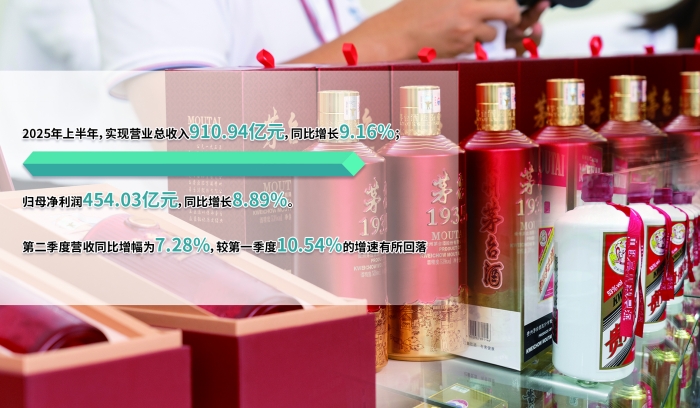
Core Viewpoint - Guizhou Moutai is facing challenges due to industry cycle adjustments and changing consumer trends, but it aims to maintain stable growth through optimized market strategies and product placements [3][4]. Financial Performance - In the first half of 2025, Guizhou Moutai achieved total revenue of 91.094 billion yuan, a year-on-year increase of 9.16%, and a net profit attributable to shareholders of 45.403 billion yuan, up 8.89% year-on-year [2]. - The company's revenue growth rate in Q2 2025 was 7.28%, down from 10.54% in Q1 2025 [2]. Market Dynamics - The overall production of major Chinese liquor companies decreased by 5.8% year-on-year in the first half of 2025, indicating a downward trend in the industry since its peak in 2016 [2]. - The terminal market showed signs of recovery in August 2025, with significant month-on-month growth in sales since the end of August [2]. Stock Split Discussion - There is ongoing debate among shareholders regarding a potential stock split, with some believing it could enhance trading volume and attract new investments, while others argue it may increase stock price volatility [5][6]. - The company is considering the implications of a stock split carefully, weighing the long-term interests of shareholders and the company's sustainable development [5][6]. Strategic Initiatives - Guizhou Moutai is focusing on transforming customer engagement, market scenarios, and service offerings to adapt to changing consumer behaviors [8]. - The company plans to innovate marketing strategies and expand consumption scenarios for its strategic product, Moutai 1935, to meet rational consumption trends [9].

周云杰:家庭服务机器人——未来家庭的必然进化
Xin Lang Cai Jing· 2025-07-30 02:04
Core Viewpoint - The development of household service robots requires a comprehensive and ecological layout, with a focus on cloud-based large models, intelligent agents at home, and AI terminals on the ground [1] Group 1: Development Stages - The evolution of household service robots can be divided into three stages: mechanical stage, tool interaction stage, and physical intelligence stage [1] Group 2: Key Focus Areas - The development of household service robots should emphasize three key concepts: scenarios, ecology, and evolution [1]
