
多资产策略

Search documents
单年破万!私募新发产品环比增幅99.54% 量化产品增速114%
Cai Jing Wang· 2026-01-08 12:25
Group 1 - In 2025, the private securities product registration surged, with a total of 12,645 products registered, representing a 99.54% increase from 6,337 in 2024 [1] - Equity strategies remain the preferred choice for private institutions, with 8,328 equity strategy products registered, accounting for 65.86% of all registered products [1] - Multi-asset strategies and futures and derivatives strategies ranked second and third in registration numbers, with 1,806 and 1,274 products respectively, representing 14.28% and 10.08% of the total [1] Group 2 - In 2025, the number of registered quantitative private equity products reached 5,617, a 114.31% increase from 2,621 in 2024, making up 44.42% of the total [2] - Among quantitative products, equity strategy quantitative products dominated with 4,077 registered, representing 72.58% of the total quantitative products [2] - The quantitative long strategy was particularly notable, with 2,746 registrations, accounting for 48.89% of the quantitative product total [2] Group 3 - Multi-asset quantitative strategies, bond quantitative strategies, and combination funds registered 594, 100, and 73 products respectively, forming a multi-dimensional quantitative ecosystem [3] - The registration data indicates a clear concentration among leading private equity firms, with 26 out of 29 firms having over 10 billion in assets under management [3] - Quantitative investment has become the main focus for leading firms, with 24 out of 29 firms employing quantitative strategies [3] Group 4 - The private securities product registration data indicates three major development trends: the solidification of equity strategies, the rapid rise of multi-asset and derivative strategies, and the increasing focus on quantitative investment among leading firms [4] - The steady growth of the private securities industry is attributed to the deepening of capital market reforms and continuous improvements in strategy innovation and risk management [4] - The private securities industry is expected to move towards a higher quality development stage, providing investors with more diverse asset allocation options [4]
2023年来各年收益排名均居上游有多难?明汯、茂源、翰荣等私募旗下产品做到了!
私募排排网· 2025-12-28 03:04
Core Viewpoint - The article emphasizes the challenges of consistently outperforming in the private equity market, particularly in the context of the rapidly changing capital market environment since 2023, highlighting the importance of fund managers' research capabilities and strategy adaptation [2]. Summary by Strategy Quantitative Long-Only - A total of 16 quantitative long-only products have consistently ranked in the top tier from January to November 2023, 2024, and 2025, with notable contributions from firms like Minghong, Maoyuan, and Hanrong [2]. - As of November 2025, there are 640, 462, and 325 quantitative long-only products reported for the years 2023, 2024, and 2025 respectively, with only 16 products making it to the top 30% in all three years [3]. - The top five cumulative return products since 2023 are from firms including Huijing Asset, Shanghai Zijie Private Equity, and Abama Investment [3]. Subjective Long-Only - There are 14 subjective long-only products that have maintained top-tier rankings across the same periods, with notable firms like Kaishi Private Equity and Yidian Najin included [7]. - The number of subjective long-only products reported as of November 2025 is 1,089, 979, and 838 for the years 2023, 2024, and 2025 respectively, with only 14 products achieving top 30% rankings in all three years [7]. - The top five cumulative return products since 2023 are from Beiheng Fund, Ding Tai Sifang (Shenzhen), and Guangdong Guangjin [8]. CTA (Commodity Trading Advisor) - A total of 12 CTA products have consistently ranked in the top tier from January to November 2023, 2024, and 2025, with leading products from Guanjing Fund and other firms [13]. - The number of CTA products reported as of November 2025 is 256, 226, and 187 for the years 2023, 2024, and 2025 respectively, with only 12 products making it to the top 40% in all three years [13]. - The top five cumulative return products since 2023 are from Guanjing Fund, Gongqingcheng Guangju Xinghe Private Equity, and Caoben Investment [14]. Multi-Asset - There are 22 multi-asset products that have consistently ranked in the top tier from January to November 2023, 2024, and 2025, with significant contributions from firms like Luyuan and Junfu [18]. - The number of multi-asset products reported as of November 2025 is 414, 337, and 265 for the years 2023, 2024, and 2025 respectively, with only 22 products achieving top 40% rankings in all three years [18]. - The top five cumulative return products since 2023 are from Luyuan Private Equity, Henan Zhi Ying Private Equity, and Junfu Investment [18].


基金早班车丨新债中签收益率创八年新高,可转债打新难度同步升级
Jin Rong Jie· 2025-12-26 00:51
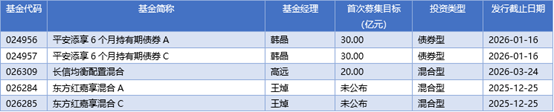
Group 1: Market Overview - The A-share market has shown signs of recovery, positively impacting the convertible bond market, with new bonds achieving record performance. The average first-day increase for convertible bonds listed in 2025 reached 37%, marking the highest yield since 2018. The subscription rate has dropped to 0.0048%, indicating a significant increase in the difficulty of new bond issuance [1] - On December 25, the Shanghai Composite Index opened lower but closed higher, recording a seven-day winning streak. The index rose by 0.47% to 3959.62 points, while the Shenzhen Component Index and the ChiNext Index increased by 0.33% and 0.3%, respectively. The total trading volume in both markets reached 19,245.23 billion yuan, an increase of 44.3 billion yuan from the previous trading day [1] Group 2: Fund News - On December 25, five new funds were launched, primarily mixed and bond funds. The Ping An Tianxiang 6-month holding period bond A fund aimed to raise 3 billion yuan. A total of 77 funds distributed dividends, with the highest dividend payout being 6.5420 yuan per 10 fund shares from the Shanghai 5-year Treasury ETF [2][4] - The bond market in 2025 is expected to have thin yields and increased volatility, highlighting the value of "fixed income +". This strategy, which includes a small equity position to hedge against rising interest rates, has yielded returns of 4%-6%, outperforming pure bond indices by over 3 percentage points [2] Group 3: Performance of Multi-Asset Strategies - As of December 12, nearly 1500 multi-asset strategy products reported an average annual return of 19.55%, with over 90% achieving positive returns. Leading institutions have consistently surpassed 30% returns for two consecutive years, indicating strong performance in this strategy [3] - Looking ahead to 2026, top private equity firms anticipate a complex macro environment with continued high volatility in stock, bond, and commodity prices. They plan to enhance strategy diversification and dynamically adjust risk budgets to capture absolute returns through various assets, including convertible bonds and REITs [3]
多资产策略迎“高光时刻”,头部私募展望新一年配置框架
Sou Hu Cai Jing· 2025-12-25 23:24
Core Insights - The average return rate of nearly 1,500 multi-asset strategy products from private equity firms reached 19.55% as of December 12, with over 90% of these products achieving positive returns [1] - First-tier private equity institutions reported product returns generally exceeding 30%, marking a satisfactory performance for the second consecutive year [1] - The macroeconomic environment in 2026 is expected to be complex, with a significant likelihood of continued price increases for certain assets [1] - Industry experts believe that the operational challenges in 2026 will be greater, emphasizing the importance of in-depth research on specific asset segments, volatility management, and execution discipline compared to the current year [1]
多资产策略迎“高光时刻”头部私募展望新一年配置框架
Zhong Guo Zheng Quan Bao· 2025-12-25 21:11
Core Insights - The average return of nearly 1,500 multi-asset strategy products reached 19.55% in 2025, with over 90% achieving positive returns, and top-tier private equity products exceeding 30% [1][2][3] Group 1: Performance Analysis - A significant portion of returns in 2025 came from commodities (60%) and equities (30%), with gold and copper being key contributors due to rising global risk aversion and re-inflation trades [2][3] - Multi-asset strategies demonstrated their effectiveness in 2025, outperforming single-asset strategies, as evidenced by the performance of leading firms like Siyue Investment [3][4] - The dual drivers of strong performance were the overall improvement in the A-share market, particularly in technology growth stocks, and the robust performance of commodity assets like precious metals [3][5] Group 2: Outlook for 2026 - Private equity firms are adopting a cautiously optimistic approach for 2026, focusing on building resilient investment portfolios rather than predicting individual asset movements [4][5] - Key areas of focus for 2026 include structural opportunities in emerging industries and traditional sector reforms, as well as continued demand for precious metals due to risk aversion [4][6] - The investment strategy will emphasize risk budgeting and scenario simulation, with a focus on managing extreme scenario risks rather than precise timing [5][6] Group 3: Industry Evolution - The strong performance in 2025 has enhanced the reputation of multi-asset strategy managers and contributed to the maturation of the domestic multi-asset strategy sector [6][7] - There is a notable shift in fundraising dynamics, with high-net-worth clients increasingly entering the multi-asset strategy space through wealth management channels [6][7] - Domestic multi-asset strategies are still developing, with significant opportunities for growth in derivative tools and hedging methods, alongside advantages in capital market dynamics and low correlation among asset classes [7][8]
多资产策略迎“高光时刻” 头部私募展望新一年配置框架
Zhong Guo Zheng Quan Bao· 2025-12-25 21:09
Core Insights - The average return of nearly 1,500 multi-asset strategy private equity products reached 19.55% in 2025, with over 90% achieving positive returns, indicating strong performance in the sector [1] - Leading private equity firms reported returns exceeding 30%, marking a second consecutive year of satisfactory results [1] - The effectiveness of multi-asset strategies has been validated, with a shift in focus from single asset predictions to building resilient investment portfolios for 2026 [3][4] Group 1: Performance and Strategy in 2025 - Multi-asset strategies demonstrated significant effectiveness in 2025, driven by flexible allocation across various asset classes, particularly equities, gold, and industrial metals [2] - The performance of the A-share market, especially in technology stocks, contributed to substantial returns in the equity segment [2] - The evolution of investment philosophy emphasizes the importance of multi-asset allocation over reliance on single asset performance [2] Group 2: Outlook for 2026 - Private equity firms exhibit a cautiously optimistic outlook for 2026, focusing on constructing resilient portfolios amid high asset prices and macroeconomic uncertainties [3] - Key investment themes for 2026 include structural opportunities in emerging industries, continued demand for precious metals, and selective opportunities in industrial metals and agricultural products [3] - The investment approach will prioritize risk management and scenario simulation to navigate potential market volatility [3][4] Group 3: Industry Evolution and Trends - The multi-asset strategy sector is maturing, with increased recognition and participation from high-net-worth individuals through wealth management channels [6] - The net subscription of multi-asset strategies has improved significantly in 2025, reflecting a deeper understanding of their value in risk reduction and adaptability [6] - Domestic private equity firms are developing unique competitive advantages by enhancing their investment capabilities and strategies, focusing on local market conditions [6][7]
为什么万家FOF能穿越波动?答案藏在“研究驱动”里
Sou Hu Cai Jing· 2025-12-25 08:57
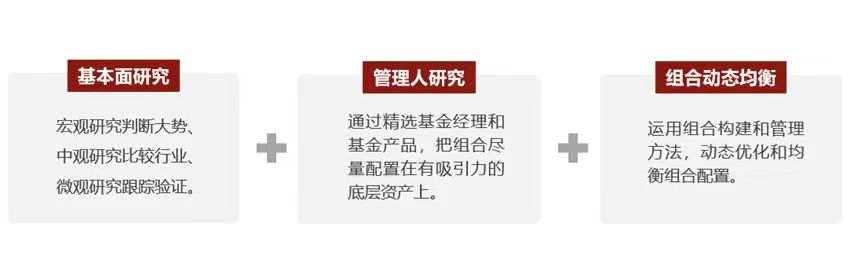
Core Insights - The concept of "free lunch" in investment refers to achieving higher returns without taking on additional risk, which is often overlooked in asset management [1] - Diversification, particularly through non-correlated assets, has been a key development in asset management over the past 30 years [1] Group 1: Low-Rate Environment and Multi-Asset Strategies - In the current low-interest-rate environment, investors are seeking alternatives to traditional bank products that yield around 1% [2] - Multi-asset strategies, particularly low-volatility Funds of Funds (FOF), have emerged as a prominent category, offering better risk-return profiles by incorporating low-correlated assets [2] - Investors with low-risk preferences prioritize limiting maximum drawdown to -1.5% and achieving positive returns within a few months [2] Group 2: Multi-Asset FOF Development - The market is increasingly accepting multi-asset strategies, with 64% of low-volatility FOFs employing this approach as of November 30, 2025 [4] - The total scale of public FOFs surpassed 233.9 billion yuan, with over 10 billion yuan added in 2025 alone [4] Group 3: Manager Selection and Performance - The success of multi-asset strategies relies heavily on the active management capabilities of fund managers, emphasizing the importance of selecting the right managers [5] - A systematic "identification" process for fund managers includes evaluating their investment philosophy, stable processes, and performance metrics [6][7] - The FOF team at Wanji Fund employs a dual approach, focusing on both asset allocation and the selection of fund managers to achieve superior returns [5][6] Group 4: Research-Driven Approach - The Wanji Fund FOF team operates on a research-driven model, integrating both fund manager research and fundamental analysis to maximize information value [9] - The team covers a wide range of sectors, ensuring comprehensive research and analysis to inform investment decisions [9][10] - The internal research system allows for detailed tracking of fund managers and industry trends, enhancing the team's ability to make informed asset allocation decisions [9][10] Group 5: New Product Launch - The Wanji Qitai Stable Three-Month Holding Period FOF is set to launch, aiming to provide stable returns through diversified asset allocation [13] - This product is part of a collaboration with China Construction Bank and is designed to navigate the challenges of the low-interest-rate environment [13]
为什么万家FOF能穿越波动?答案藏在“研究驱动”里
点拾投资· 2025-12-25 08:24
Core Viewpoint - The article emphasizes the importance of diversification in asset allocation as a means to achieve higher returns without taking on additional risk, highlighting the concept of "free lunch" in investment strategies [1][2]. Group 1: Multi-Asset Strategies - In the current low-interest-rate environment, investors are seeking alternatives to traditional bank products, leading to the rise of low-volatility multi-asset Funds of Funds (FOFs) [2][3]. - Multi-asset FOFs incorporate a variety of low-correlation assets, aiming to optimize risk-return characteristics while controlling maximum drawdown [2][3]. - The article suggests that multi-asset FOFs are among the closest tools to achieving the ideal balance of risk and return, which is perceived as the "free lunch" in investing [2]. Group 2: Investment Goals and Product Features - For low-risk investors, traditional stock-bond allocations do not meet all their needs, as they prioritize limiting maximum drawdown to -1.5% and achieving positive returns within a few months [3]. - The upcoming Wanjiatai Stable Three-Month Holding Period FOF expands asset categories beyond just stocks and bonds to include low-volatility dividends, bonds, S&P 500, and gold, enhancing the risk-return profile [3][4]. - Historical data shows that over the past 10 years, the annualized returns for low-volatility dividends, S&P 500, and gold were 9.08%, 12.91%, and 16.36% respectively [3]. Group 3: Market Acceptance and Growth - The multi-asset strategy is gaining acceptance in the market, with 64% of low-volatility FOFs adopting this approach as of November 30, 2025 [4]. - The total scale of public FOFs surpassed 233.9 billion yuan, with an increase of over 100 billion yuan in the year [4]. Group 4: Manager Selection and Research - The effectiveness of multi-asset strategies relies on the active management capabilities of fund managers, emphasizing the importance of selecting the right underlying managers to realize returns [6][7]. - A systematic approach to selecting fund managers involves evaluating their investment philosophy, process, diligence, and performance [8]. - The Wanjiatai FOF team employs a research-driven model that integrates both fund manager research and fundamental analysis, ensuring comprehensive coverage of investment opportunities [11][12]. Group 5: Team Structure and Collaboration - The Wanjiatai FOF team is characterized by a dual focus on fund manager research and fundamental analysis, with team members responsible for both micro and macro-level research [12][13]. - The team has developed a robust internal research system that allows for efficient sharing of insights and data, enhancing decision-making capabilities [12][13]. - The collaboration between team members, such as the joint management of the Wanjiatai FOF by Ren Zheng and He Jiayi, aims to leverage their respective strengths in strategy and asset selection [17].

私募年内分红超170亿元,同比增长超两倍
Zheng Quan Shi Bao· 2025-12-05 04:19
Core Viewpoint - The private equity sector in the A-share market has experienced explosive growth in dividends since 2025, with a total of 1,658 dividend distributions amounting to 17.34 billion yuan, a 236.59% increase compared to the previous year [1] Summary by Category Dividend Performance - In 2025, private equity products implemented dividends 1,658 times, totaling 17.34 billion yuan, compared to 5.15 billion yuan in the same period last year [1] - Stock strategy private equity products dominated the dividend distribution with 984 distributions, amounting to 13.22 billion yuan, representing 76.24% of the total [1] - Multi-asset strategies showed flexibility with 232 distributions totaling 1.50 billion yuan, accounting for 8.66% of the total [1] Strategy Analysis - Futures and derivatives strategies benefited from the commodity market's trends, with 204 distributions totaling 1.21 billion yuan, making up 6.97% of the total [2] - Bond strategies maintained stability with 171 distributions totaling 1.05 billion yuan, representing 6.06% [2] - Fund of funds had a smaller scale with 67 distributions totaling 0.36 billion yuan, accounting for 2.06% [2] Management Mode - There is a notable divergence in dividend performance between subjective and quantitative private equity products, with non-quantitative products achieving 1,101 distributions totaling 11.47 billion yuan, which is 66.15% of the total [2] - Quantitative products, despite strong performance, only distributed 5.87 billion yuan, accounting for 33.85% [2] Scale of Private Equity Institutions - Large-scale private equity (over 5 billion yuan) had 233 distributions totaling 7.18 billion yuan, representing 41.41% [3] - Small-scale private equity (0-1 billion yuan) had the highest number of distributions at 1,059, totaling 6.47 billion yuan, accounting for 37.31% [3] - Medium-scale private equity (1-5 billion yuan) had 366 distributions totaling 3.69 billion yuan, representing 21.29% [3] Market Insights - The explosive growth in private equity dividends is attributed to structural opportunities in the capital market and the professional development of the private equity industry [3] - The A-share market has been supported by policy dividends and industrial upgrades, leading to significant structural opportunities in core sectors and quality stocks [3]
私募11月备案产品环比激增近30% 股票策略占比超六成
Zheng Quan Shi Bao Wang· 2025-12-04 07:53
Core Insights - Despite the ongoing fluctuations in the A-share market since November, the enthusiasm for private equity product registration remains high, with a significant increase in the number of registered products [1][3] Group 1: Private Equity Product Registration - A total of 1,285 private equity securities products were registered in November, marking a 29.28% increase from 994 products in the previous month [1] - The stock strategy continues to dominate, with 849 products registered, accounting for 66.07% of the total [1] - Multi-asset strategies saw 193 products registered, representing 15.02% of the total, while futures and derivatives strategies accounted for 121 products, or 9.42% [1] Group 2: Quantitative Private Equity Products - Quantitative private equity products performed exceptionally well, with 565 products registered in November, making up 43.97% of the total [2] - Within quantitative strategies, stock strategies led with 402 products, while futures and derivatives strategies had 80 products registered [2] - The quantitative long strategy was particularly notable, with 310 products registered, representing 54.87% of quantitative products [2] Group 3: Market Sentiment and Factors - The high registration enthusiasm is driven by optimistic market expectations, as private equity institutions believe equity asset valuations are now reasonable, and economic stabilization is underway [3] - The continuous decline in risk-free interest rates has diminished the appeal of traditional fixed-income products, prompting investors to reallocate assets towards higher-yielding private equity securities [3] - The overall performance of private equity securities products has been strong this year, especially in quantitative strategies, with over 90% of products showing positive returns, boosting confidence among channels and high-net-worth clients [3]