
宽基指数投资

Search documents
A股市场快照:宽基指数每日投资动态-20251225
Jianghai Securities· 2025-12-25 07:07
- The report tracks the performance of various broad-based indices in the A-share market, noting that on December 24, 2025, all indices except the SSE 50 increased, with the CSI 2000 and CSI 1000 showing the largest gains of 1.55% and 1.54%, respectively[2] - The report compares the moving averages of the indices, highlighting that the CSI 1000 broke through the 60-day moving average, and all tracked indices are above the 5, 10, 20, and 60-day moving averages[13] - The report analyzes the trading volume and turnover rates, noting that on December 24, 2025, the CSI 2000 had the highest trading volume share at 24.78%, followed by the CSI 300 and CSI 1000, both at 21.96%[17] - The report examines the daily return distribution, indicating that the ChiNext Index has the largest negative skewness and kurtosis, while the CSI 2000 has the smallest negative skewness and kurtosis[23][25] - The report evaluates the risk premium of the indices relative to the 10-year government bond yield, noting that the CSI 1000 and CSI 500 have high 5-year percentile values of 89.44% and 88.1%, respectively, while the CSI 300 and SSE 50 have lower values of 64.21% and 47.46%[28][31] - The report assesses the PE-TTM ratios of the indices, highlighting that the CSI 500 and CSI 1000 have high 5-year percentile values of 96.94% and 94.63%, respectively, while the SSE 50 and ChiNext Index have lower values of 84.05% and 59.17%[42][43] - The report analyzes the dividend yield, noting that the ChiNext Index and CSI 1000 have high 5-year historical percentile values of 61.32% and 39.09%, respectively, while the CSI 500 and CSI 2000 have lower values of 17.77% and 16.36%[51][53] - The report examines the net asset value break rate, indicating that the current break rates for the indices are 22.0% for the SSE 50, 16.0% for the CSI 300, 10.8% for the CSI 500, 8.0% for the CSI 1000, 3.25% for the CSI 2000, and 6.14% for the CSI All Share Index[57]
A股市场快照:宽基指数每日投资动态-20251224
Jianghai Securities· 2025-12-24 13:22
- The report provides a snapshot of the A-share market, focusing on the performance of broad-based indices as of December 23, 2025[1][2] - The report includes a comparison of indices with their moving averages and the highest and lowest points over the past 250 trading days[14][15] - The report analyzes the distribution of daily returns for various indices, highlighting the kurtosis and skewness of these distributions[24][26] - The report examines the risk premium of various indices relative to the yield on 10-year government bonds, noting significant mean reversion and volatility[28][29][30] - The report evaluates the PE-TTM (Price-to-Earnings ratio based on trailing twelve months) of various indices, providing historical comparisons and percentile rankings[38][39][42][43] - The report assesses the stock-bond yield ratio, comparing the PE-TTM inverse with the yield on 10-year government bonds[45][46] - The report tracks the dividend yield of various indices, noting historical trends and current values[47][48][52] - The report discusses the percentage of stocks trading below their net asset value (P/B ratio < 1), indicating market valuation attitudes[53][56][58]
新一代宽基认准六边形战士,中证A500ETF全面布局核心资产
Sou Hu Cai Jing· 2025-12-24 07:47
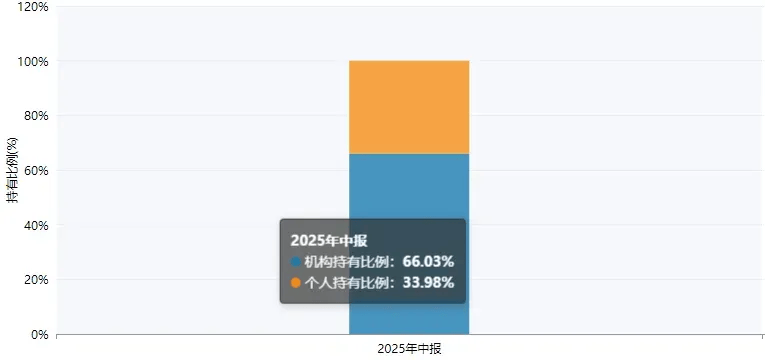
Core Viewpoint - The article emphasizes the significance of the China Securities A500 ETF (159338) as a robust investment option for ordinary investors, highlighting its high popularity, profitability, liquidity, institutional backing, low costs, and versatility in various investment scenarios. Group 1: Popularity - The China Securities A500 ETF has a high number of individual investors, with 105,975 holders, which is three times that of the second-ranked ETF [1] - The proportion of individual investors in the A500 ETF is 33.98%, indicating that one in three holders is an ordinary retail investor [2][4] Group 2: Profitability - The ETF generated a profit of 462 million yuan in the first half of 2025, ranking first among its peers, and reported a profit of 381 million yuan in the third quarter alone, totaling over 840 million yuan for the first three quarters [5][6] Group 3: Liquidity - The average daily scale of the A500 ETF reached 23.8 billion yuan in 2025, making it the leader in both the Shenzhen Stock Exchange and the entire market [7][8] Group 4: Institutional Support - The top ten holders of the ETF are all institutional investors, including major insurance companies and securities firms, indicating strong professional backing and stable holdings [9][10] Group 5: Cost Efficiency - The ETF boasts a low total expense ratio of 0.2%, comprising a management fee of 0.15% and a custody fee of 0.05%, making it cost-effective for long-term investors [11] Group 6: Versatility - The A500 ETF is suitable for various investment strategies, serving as a core holding for long-term investors, a part of a core-satellite strategy for asset allocation, and a tool for tactical adjustments during market fluctuations [12]

A股市场快照:宽基指数每日投资动态-20251223
Jianghai Securities· 2025-12-23 13:13
- The report provides a snapshot of the A-share market, highlighting the performance of various broad-based indices on December 22, 2025, with the ChiNext Index (2.23%) and the CSI 500 (1.2%) showing the largest gains[1][2] - All tracked indices have moved back above their 5, 10, 20, and 60-day moving averages, with the SSE 50 and CSI 2000 indices recovering to within 2% of their 250-day highs[2][14] - The CSI 2000 had the highest turnover rate at 3.82, followed by the CSI 1000 at 2.23, and the ChiNext Index at 2.15[2][17] - The ChiNext Index had the largest negative skewness and kurtosis deviation, while the CSI 1000 had the smallest[2][23][25] - The risk premium for the ChiNext Index (90.4%) and CSI 500 (86.19%) were relatively high over the past five years, while the SSE 50 (74.13%) and CSI 2000 (72.22%) were lower[2][27][31] - The PE-TTM values for the CSI 500 (95.87%) and CSI 1000 (93.97%) were relatively high, while the CSI 2000 (82.81%) and ChiNext Index (58.02%) were lower[3][41][42] - The dividend yield for the ChiNext Index (62.73%) and CSI 1000 (45.54%) were relatively high over the past five years, while the CSI 500 (21.16%) and CSI 2000 (20.41%) were lower[3][51][53] - The current net break rates for the indices were: SSE 50 (22.0%), CSI 300 (16.0%), CSI 500 (10.8%), CSI 1000 (8.1%), CSI 2000 (3.3%), and CSI All Share (6.14%)[3][55]
ETF基金周报:资金布局红利类策略趋势明显-20251216
Dongguan Securities· 2025-12-16 09:18
Group 1 - The report highlights a significant trend in fund allocation towards dividend strategies, indicating a preference for stability in uncertain market conditions [2][4][10] - The total net inflow into ETF funds reached 12.496 billion yuan this week, with all types of ETF funds, except for stock ETFs, experiencing varying degrees of net inflow [10][19] - The report notes that the semiconductor and AI upstream hardware sectors performed well, driven by news regarding Nvidia's chip sales to China, although the overall market remains cautious [15][17] Group 2 - In the bond ETF sector, the average weekly increase for convertible bond ETFs was 0.21%, with a notable preference for credit bonds and company bonds, particularly in the context of a rebound in long-term interest rate bonds [18][20] - The report indicates that the net inflow for bond ETFs was 4.33 billion yuan this week, with significant capital flowing into the AAA-rated technology innovation bonds [21][24] - The analysis of financing and margin trading shows a clear trend towards deleveraging across ETF funds, particularly in the AI and gold asset sectors, with a notable negative net buy for gold assets this week [22][23]
A股市场快照:宽基指数每日投资动态-20251209
Jianghai Securities· 2025-12-09 10:38
- The report primarily focuses on tracking and analyzing the performance of broad-based indices in the A-share market, including their daily returns, moving averages, turnover rates, and valuation metrics such as PE-TTM and risk premiums[1][2][3] - The analysis highlights that all broad-based indices experienced gains on December 8, 2025, with the ChiNext Index (2.6%) and CSI 2000 (1.47%) showing the largest daily increases. For the year-to-date performance, the ChiNext Index (48.97%) recorded the highest growth, followed by CSI 2000 (33.97%) and CSI 500 (25.27%)[10][11] - All indices have surpassed their 5-day, 10-day, and 20-day moving averages, with CSI 1000 and CSI All Share also breaking above their 60-day moving averages. However, CSI 500 remains below its 60-day moving average, indicating a continued market recovery[14][15] - The turnover rates for December 8, 2025, were highest for CSI 2000 (4.34), followed by ChiNext Index (2.78) and CSI 1000 (2.47). The lowest turnover rates were observed for SSE 50 (0.26) and CSI 300 (0.61)[17] - The distribution of daily returns shows that the ChiNext Index has the largest negative kurtosis deviation, while CSI 1000 has the smallest. Similarly, the ChiNext Index exhibits the largest negative skewness, indicating a higher likelihood of extreme negative returns compared to other indices[23][25] - Risk premiums, calculated relative to the 10-year government bond yield, are highest for the ChiNext Index (2.60%) and CSI 2000 (1.46%), with their 5-year percentile ranks at 93.41% and 85.79%, respectively. In contrast, SSE 50 (0.57%) and CSI 300 (0.80%) have lower risk premiums and percentile ranks[27][31] - The PE-TTM ratios for broad-based indices show that CSI 1000 (97.52%) and CSI 500 (95.54%) have the highest 5-year percentile ranks, while CSI 2000 (84.3%) and the ChiNext Index (57.69%) are relatively lower. The ChiNext Index's 5-year percentile rank is below its danger threshold of 80%[39][43][44] - Dividend yields are highest for SSE 50 (3.30%) and CSI 300 (2.71%), while CSI 500 (1.37%) and CSI 2000 (0.75%) are the lowest. The ChiNext Index's 5-year historical percentile rank for dividend yield is relatively high at 66.69%[48][53][55] - The percentage of stocks trading below their book value (PB ratio < 1) is highest for SSE 50 (22.0%) and lowest for the ChiNext Index (1.0%), reflecting varying market valuation attitudes across indices[57]
A股市场快照:宽基指数每日投资动态-20251124
Jianghai Securities· 2025-11-24 07:00
- The report provides a snapshot of the A-share market, highlighting that all broad-based indices fell by more than -1% on November 21, 2025, with the ChiNext Index and CSI 2000 experiencing the largest declines of -4.02% and -3.99%, respectively[1][2] - The report compares the moving averages of the indices, noting that all tracked indices have fallen below the 60-day moving average, with the CSI 2000 being only 0.4% away from breaking the 120-day moving average[13][15] - The turnover rates for the indices on November 21, 2025, are provided, with the CSI 2000 having the highest turnover rate of 4.81, followed by the ChiNext Index at 2.96[18][19] - The distribution of daily returns is analyzed, showing that the ChiNext Index has the largest negative kurtosis deviation, while the CSI 1000 and CSI 2000 have the smallest negative kurtosis deviations[25][27] - The risk premiums of the indices relative to the 10-year government bond yield are discussed, with the SSE 50 and CSI 300 having relatively high 5-year percentile values of 4.21% and 1.83%, respectively[29][30][33] - The PE-TTM ratios of the indices are examined, with the CSI 500 and CSI 1000 having relatively high 5-year percentile values of 94.63% and 94.21%, respectively, while the CSI 2000 and ChiNext Index have lower values of 77.02% and 50.74%, respectively[39][42][44] - The dividend yields of the indices are analyzed, with the ChiNext Index and CSI 1000 having relatively high 5-year historical percentile values of 72.81% and 54.88%, respectively, while the CSI 2000 and CSI 500 have lower values of 34.05% and 23.97%, respectively[50][52][54] - The report also discusses the net asset value ratios of the indices, noting that the current net asset value ratios are 22.0% for the SSE 50, 16.0% for the CSI 300, 11.8% for the CSI 500, 8.0% for the CSI 1000, 3.45% for the CSI 2000, 1.0% for the ChiNext Index, and 6.32% for the CSI All Share Index[56][57]
A股市场快照:宽基指数每日投资动态-20251113
Jianghai Securities· 2025-11-13 08:42
- The report provides a snapshot of the daily investment dynamics of broad-based indices in the A-share market, highlighting the performance of indices such as the CSI 1000 (-0.72%) and CSI 2000 (-0.68%), which experienced the largest declines on November 12, 2025 [1][2][11] - The CSI 500, CSI 1000, and ChiNext indices showed consecutive three-day declines, with the ChiNext index achieving the highest annual growth rate of 45.78%, followed by CSI 2000 (33.78%) and CSI 500 (26.5%) [11][14] - The report compares indices against their moving averages and 250-day highs and lows, noting that the SSE 50 index broke above its 5-day moving average, while indices like CSI 1000 and CSI 2000 fell below their respective short-term averages [14] - Turnover rates and trading volume proportions are analyzed, with CSI 2000 showing the highest turnover rate (4.27%) and the CSI 1000 index accounting for 20.49% of trading volume [3][16][17] - Daily return distributions are examined, revealing that the ChiNext index has the largest negative skewness and kurtosis deviation, while CSI 1000 has the smallest negative kurtosis deviation [23] - Risk premium analysis indicates that SSE 50 and CSI 300 have relatively high 5-year percentile values (65.56% and 44.92%, respectively), while CSI 1000 and CSI 500 have lower values (26.35% and 25.32%) [3][25][29] - PE-TTM values are evaluated, showing that CSI 1000 (97.44%) and CSI 500 (96.2%) have high 5-year percentile values, while CSI 2000 (82.98%) and ChiNext (55.79%) are lower [38][39] - Dividend yield analysis highlights that ChiNext (69.01%) and CSI 1000 (36.53%) have high 5-year historical percentile values, while CSI 500 (16.28%) and CSI 2000 (13.97%) are lower [4][50][49] - Current net-breaking rates are reported, with SSE 50 at 20.0%, CSI 300 at 15.33%, and ChiNext at 1.0%, reflecting market valuation attitudes [51]
【理财锦囊】 个人投资者为何青睐宽基ETF
Zheng Quan Shi Bao· 2025-10-30 19:38
Core Insights - The Chinese capital market is experiencing high-quality development, with major stock indices showing a steady upward trend and increasing market vitality [1] - Broad-based ETFs are becoming a significant choice for individual investors in asset allocation, accounting for nearly half of the ETF market in Shanghai [1] - Broad-based ETFs effectively mitigate common behavioral biases of individual investors and offer diversification, low costs, and high transparency [1][3] Market Performance - In Q3 2025, broad-based ETFs significantly outperformed most actively managed funds, with the ChiNext Index rising by 50.4%, the Sci-Tech 50 Index by 49.02%, and the Shenzhen Component Index by 29.25% [1] - Over the past decade, annualized returns for broad-based indices like CSI 300, CSI 500, and CSI 1000 have stabilized between 5% and 7%, with CSI 2000 exceeding 9% [1] Investment Trends - Continuous inflow of two types of investment funds supports the strong market performance of broad-based ETFs: Central Huijin's net purchases of leading broad-based ETFs reached 207.27 billion yuan in H1 2025, while foreign and insurance funds also increased their allocations [2] - Institutional investors now hold about 60% of the market, enhancing pricing efficiency and reducing the space for individual investors to achieve excess returns through independent trading [2] Investor Advantages - Individual investors face disadvantages in information access and research depth compared to professional institutions, which conduct thousands of company visits and have specialized analysts [3] - Broad-based ETFs simplify market investment by allowing investors to buy the entire market in one transaction, providing a disciplined, diversified, low-cost, and transparent investment option [3] Investment Framework - Individual investors should understand the characteristics of different broad-based indices and their applicable scenarios, such as the SSE 50 for conservative investors seeking stable returns [4] - A "core-satellite" strategy is recommended, where most funds are allocated to low-cost broad-based ETFs, while a smaller portion is used for sector or thematic ETFs to capture additional market opportunities [4] - Risk management is crucial, with a focus on ETFs with over 5 billion yuan in size and daily trading volumes exceeding 100 million yuan, along with regular asset rebalancing [4] Market Growth Potential - The recognition of broad-based ETFs among individual investors is increasing, with personal holdings rising from 44.3% to 49.1% in H1 2025, and the proportion of personal holdings in Sci-Tech board ETFs reaching 72% [5] - Despite rapid development, the market share of broad-based ETFs in China's public fund total is only 8%, significantly lower than the 30% in the U.S., indicating substantial growth potential [6] - With the implementation of regulatory measures to promote index investment, broad-based ETFs are expected to become a key tool for individual investors in financial asset allocation and capitalizing on stock market growth [6]
A股市场快照:宽基指数每日投资动态-20251028
Jianghai Securities· 2025-10-28 08:46
The provided content does not include any quantitative models or factors, nor does it detail their construction, evaluation, or backtesting results. The report primarily focuses on market performance, index comparisons, risk premiums, PE-TTM, dividend yields, and other market metrics. Below is a summary of the key points extracted from the content: - **Market Performance** - All broad-based indices showed positive performance on October 27, 2025, with the ChiNext Index (1.98%) and CSI 500 (1.67%) leading the gains[1][11][12] - Year-to-date, the ChiNext Index had the highest growth (51.03%), followed by CSI 2000 (32.17%) and CSI 500 (28.88%)[11][12] - Consecutive positive days: CSI 500 and ChiNext Index (3 days), SSE 50, CSI 300, CSI 1000, and CSI All Share (5 days), CSI 2000 (6 days)[11][12] - **Index and Moving Averages Comparison** - All indices were above their 5-day, 10-day, and 20-day moving averages as of October 27, 2025[14][15] - SSE 50 and CSI 300 broke their 250-day high levels[14][15] - **Trading Volume and Turnover Rate** - CSI 300 had the highest trading volume share (29.29%), followed by CSI 500 (20.54%) and CSI 2000 (20.09%)[17] - Turnover rates: CSI 2000 (3.85), ChiNext Index (2.99), CSI 1000 (2.73), CSI 500 (2.05), CSI All Share (1.89), CSI 300 (0.8), SSE 50 (0.41)[17] - **Daily Return Distribution** - ChiNext Index exhibited the largest negative kurtosis, while CSI 300 had the smallest negative kurtosis[23] - ChiNext Index showed the largest negative skewness, while CSI 300 had the smallest negative skewness[23] - Changes in kurtosis and skewness over the past 5 years are detailed in Table 3[24] - **Risk Premium** - Risk premiums were calculated relative to the 10-year government bond yield[26] - Current risk premiums: ChiNext Index (1.98%), CSI 500 (1.66%), CSI 300 (1.18%), SSE 50 (0.77%)[30] - 5-year percentile rank of risk premiums: CSI 500 (92.94%), ChiNext Index (88.73%), CSI 1000 (79.37%), CSI 2000 (74.92%)[28][30] - **PE-TTM (Price-to-Earnings Ratio)** - Current PE-TTM values: SSE 50 (12.38), CSI 300 (14.70), CSI 500 (34.66), CSI 1000 (47.82), CSI 2000 (160.45), CSI All Share (22.00), ChiNext Index (44.62)[39][40] - 5-year percentile ranks: CSI All Share (99.42%), CSI 500 (99.26%), CSI 2000 (85.79%), ChiNext Index (61.16%)[39][40] - **Dividend Yield** - Current dividend yields: SSE 50 (3.18%), CSI 300 (2.60%), CSI 500 (1.32%), CSI 1000 (1.10%), CSI 2000 (0.77%), CSI All Share (1.95%), ChiNext Index (0.96%)[49] - 5-year percentile ranks: ChiNext Index (64.79%), CSI 1000 (38.76%), CSI 2000 (16.12%), CSI 500 (13.72%)[49][50] - **Price-to-Book Ratio (P/B)** - Current P/B ratios: SSE 50 (22.0%), CSI 300 (16.33%), CSI 500 (10.8%), CSI 1000 (7.4%), CSI 2000 (3.0%), ChiNext Index (1.0%), CSI All Share (5.83%)[51] This report does not include any quantitative models or factors, so no further analysis on model construction, evaluation, or backtesting results is provided.