席勒市盈率

Search documents
The Uncomfortable Truth About US Markets No One Wants To Hear
Benzinga· 2025-09-22 16:36
Core Insights - Current market conditions suggest that investors should have realistic expectations regarding future returns, particularly in the U.S. market, which is currently at high valuations [2][13][17] - Historical data indicates that starting valuations are a strong predictor of future returns, with high valuations leading to significantly lower returns over the next decade [4][5][17] Market Valuations - The U.S. market's Shiller P/E ratio is currently around 37-40, placing it in the 90th+ percentile of historical observations, which is indicative of potential low future returns [13][14] - In contrast, European markets appear more reasonably priced, with the STOXX Europe 600 trading at a trailing P/E of about 17, suggesting better future return potential compared to the U.S. [6][15] Global Market Trends - Analysis of 17 developed markets from 1979 to 2015 shows that high starting valuations consistently lead to poor future returns across various regions, including Europe, Japan, and Canada [6][17] - Chinese A-shares delivered essentially zero real returns from 2000 to 2018, highlighting the risks of overpaying in a growth market, although current valuations in China appear more attractive [9][10] Investment Strategy - The methodology of using Cyclically Adjusted P/E (CAPE) ratios is recommended for a clearer assessment of market valuations, as it smooths out earnings over a decade [12][17] - Given the current market conditions, it may not be an ideal time to commit large amounts of capital to index funds or passive investment strategies [16][17]
别看股价,看估值
Ge Long Hui· 2025-08-04 02:24
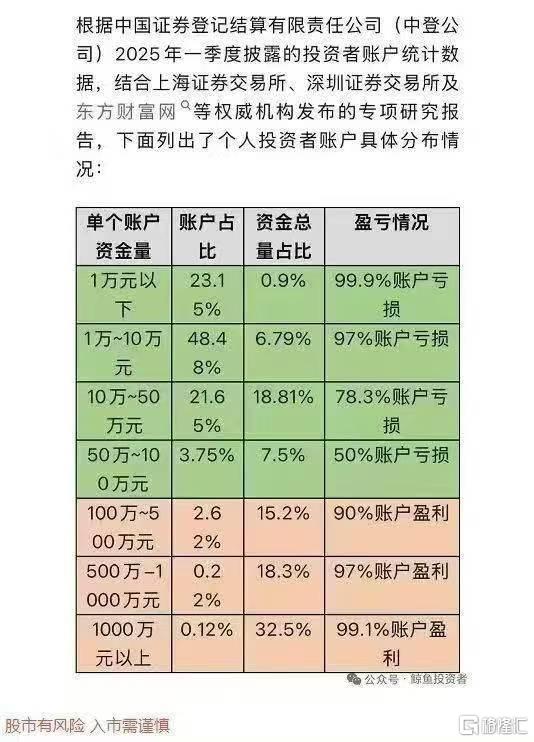
Group 1 - The core viewpoint of the news highlights a positive economic backdrop with the U.S. reaching trade agreements with the EU, Japan, and South Korea, involving a 15% tariff and significant investments into the U.S. market [1] - The U.S. stock market, particularly the S&P 500 and Nasdaq 100, has been reaching new highs, driven largely by major tech companies like Nvidia, Meta, and Microsoft, which contributed significantly to the market's gains this year [1] - The article notes that 60% of the S&P 500's gains and 50% of the Nasdaq 100's gains this year are attributed to these tech giants, raising concerns about their high forward price-to-earnings (P/E) ratios [1] Group 2 - In the A-share market, the margin financing and securities lending balance surged to 1.98 trillion, indicating a highly enthusiastic market environment with funds shifting from dividend ETFs to sectors like steel and coal [2] - The article describes a strong recovery logic in trading, with a pattern of buying on dips becoming apparent as investors share their profits in various groups [2] - The Hong Kong stock market is experiencing a rotation of funds, with new competition emerging in the food delivery sector, while some consumer stocks are showing weakness [3] Group 3 - The article discusses the performance of various account sizes in the market, revealing that a significant percentage of accounts are experiencing losses, particularly among smaller accounts, while larger accounts show a higher percentage of profitability [3] - The recent performance of pharmaceutical stocks in Hong Kong, such as CSPC Pharmaceutical Group, is highlighted, with several companies reaching year-to-date highs [3] Group 4 - The article reflects on investment strategies, emphasizing the importance of stock selection, valuation, and timing, suggesting that a simple approach can often be more effective than complex models [5][6] - It discusses the significance of valuation over technical indicators, recommending the use of historical P/E ratios for stable industries and the Shiller P/E for cyclical industries [6] - The article concludes with a perspective on investment timing, stressing that staying in the market is more crucial than trying to time market entry and exit [6]

对当前市场的看法:估值不低,但谈泡沫还太早了
3 6 Ke· 2025-07-23 01:40
Core Insights - The article discusses investment philosophies, emphasizing the importance of practical methodologies over abstract theories [2][3] - It introduces the book "Big Money Thinks Small" by Joel Tillinghast, a notable public fund manager, focusing on stock selection strategies [4][5] Investment Methodologies - Tillinghast advocates for a bottom-up stock selection approach, prioritizing company-specific characteristics over macroeconomic factors [6][8] - The article contrasts top-down and bottom-up investment strategies, explaining that top-down approaches start with macroeconomic analysis before narrowing down to specific companies [7] Critique of Macroeconomic Analysis - Tillinghast expresses skepticism towards macroeconomic theories, arguing that they often lack objectivity and scientific validity [9][10] - He highlights the subjective nature of economic models and their inability to consistently predict economic outcomes [11][12][13] Stock Selection Criteria - Tillinghast emphasizes the importance of low price-to-earnings (P/E) ratios in stock selection, suggesting that lower initial P/E ratios correlate with higher long-term returns [31][33] - Historical data indicates that stocks with initial P/E ratios below 15 yield significantly higher returns over 10 years compared to those with P/E ratios above 25 [33][39] Industry Performance Insights - The article references a study on industry performance from 1900 to 2016, identifying consumer goods and tobacco as historically strong sectors, while shipping and textiles performed poorly [40][41] - It suggests that industries with stable consumer demand tend to yield better investment returns due to brand loyalty and market stability [40] Current Market Observations - The article notes a challenging investment environment in 2025, characterized by rapid style rotation and a lack of sustainable trends [44][46] - It discusses the potential impact of stablecoins on wealth transfer and market dynamics, suggesting that their proliferation could significantly influence global financial systems [46][47]

[5月26日]指数估值数据(中证1000估值如何;月薪宝发薪日;黄金星级更新)
银行螺丝钉· 2025-05-26 13:40
Core Viewpoint - The article discusses the recent performance of various stock indices, highlighting the fluctuations in large-cap and small-cap stocks, as well as the implications of earnings reports on valuations in the market [1][2][3][5][10]. Group 1: Market Performance - The Shanghai Composite Index opened higher but experienced a decline during the day, with the drop narrowing by the close, maintaining a 5-star rating [1]. - The CSI 300 large-cap stocks saw a decline, while the CSI 1000 and 2000 small-cap indices experienced an increase [2][3]. - Growth-oriented indices, such as the ChiNext, faced significant declines, contrasting with the slight drop in value-oriented indices [4][5]. Group 2: Hong Kong Market Insights - The Hong Kong stock market also faced declines, although dividend stocks remained relatively stable with minor fluctuations [6]. - Technology stocks in Hong Kong experienced substantial declines, but the technology index rebounded to normal valuation levels after a period of growth following the Spring Festival [7][8][9]. - Recent earnings updates indicated growth in Hong Kong technology sector profits, contributing to a decrease in valuations [10]. Group 3: Small-Cap Stock Analysis - The CSI 1000 index reported a profit decline of 17.8% in 2023 and 2.44% in 2024, but signs of recovery were noted in Q1 2025 with a 16% year-on-year profit increase [20][21]. - The high price-to-earnings (P/E) ratio of the CSI 1000, reaching 50-60%, is attributed to profit declines rather than stock price increases, while the price-to-book (P/B) ratio remains relatively low at around 15% [22]. - Historical comparisons were made to the S&P 500 during the 2008 financial crisis, where a similar situation of high P/E ratios occurred despite significant stock price declines [23][24]. Group 4: Valuation Metrics and Strategies - Various valuation methods were discussed, including the Shiller P/E ratio, which averages earnings over multiple years to mitigate annual profit volatility [27][28]. - The use of P/B ratios as a supplementary valuation metric is recommended when earnings growth is unstable, particularly in the context of small-cap stocks [30]. - The article warns of potential risks associated with small-cap stocks due to regulatory changes affecting quantitative private equity funds, which could impact their performance [32][36].