
强农惠农富农政策

Search documents
再创新高!今年全国粮食产量同比增长1.2% 哪些努力支撑起好“丰”景?
Yang Shi Wang· 2025-12-12 04:07
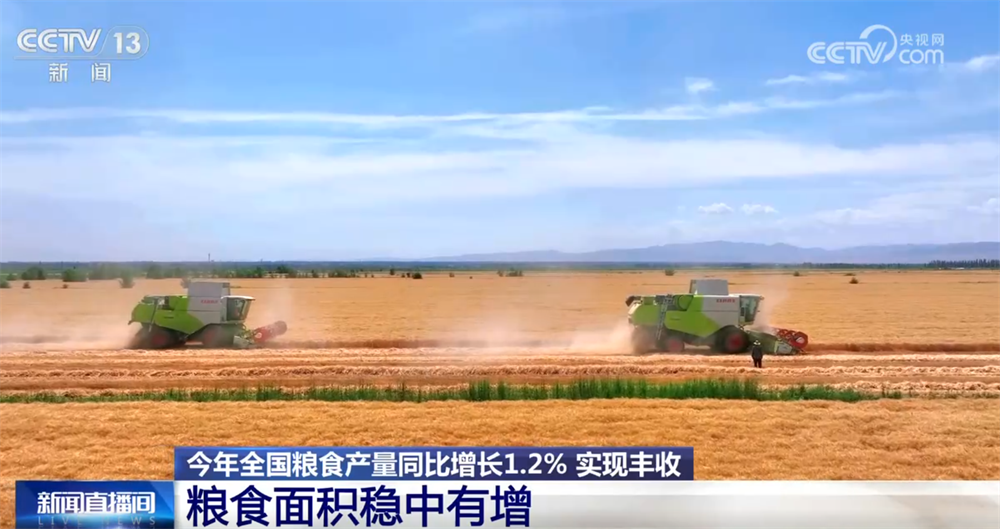
Core Insights - The national grain production in China is projected to reach 14,297.5 billion jin in 2025, marking a 1.2% increase from the previous year, indicating a successful harvest [1][2] - The increase in grain production is supported by a rise in planting area and improved yield per unit area, with a notable increase of 134.8 million mu in planting area and a yield increase of 4.4 kg per mu, reflecting a 1.1% year-on-year growth [1][2] Group 1 - The grain planting area has increased for six consecutive years, with a significant rise of 3.3 million mu in high-yield crops like corn, laying a solid foundation for this year's harvest [4] - The implementation of strong agricultural policies, including minimum purchase prices for rice and wheat and subsidies for corn and soybeans, has stabilized farmers' expectations for grain production [2][4] - The focus on enhancing single crop yields has been a key highlight, with the number of counties involved in yield improvement actions increasing to 702, promoting a balanced increase in production [6] Group 2 - The integration of water and fertilizer management in grain production is expected to cover over 88 million mu by 2025, with specific strategies to increase plant density and improve crop varieties [8] - The resilience of grain production has been demonstrated this year despite severe weather challenges, with timely government interventions and financial support of over 6 billion yuan for disaster relief and crop management [10] - Future projections indicate that grain production will continue to achieve high levels, particularly in autumn crops, with significant contributions expected from the Northeast and Northwest regions, especially in corn [12]

"三农"成绩单传递中国稳定性和确定性
Ren Min Ri Bao· 2025-12-08 02:41
Core Viewpoint - The modernization of agriculture and rural areas is essential for China's overall modernization, emphasizing that a strong nation must first have a strong agricultural sector [1]. Group 1: Agricultural Modernization Goals - The "15th Five-Year Plan" emphasizes accelerating agricultural modernization and promoting comprehensive rural revitalization as a top priority for the Party [1][2]. - The plan aims to enhance agricultural production capacity and quality efficiency, focusing on improving the supply guarantee for important agricultural products [3]. Group 2: Enhancing Agricultural Production Capacity - Agricultural production capacity is defined as the stable output achievable under existing infrastructure, technology, and policy support, with a goal of achieving breakthroughs in grain production capacity during the "15th Five-Year Plan" [4]. - Over 1 billion acres of high-standard farmland have been established, with agricultural technology contributing 63.2% to production capacity [4]. Group 3: Addressing Shortcomings in Agriculture - The plan identifies the need to strengthen the agricultural foundation, improve infrastructure, and enhance resilience against natural disasters as critical areas for development [5]. - Strategies include implementing the "store grain in the land and technology" approach and accelerating self-reliance in high-level agricultural technology [5]. Group 4: Quality and Efficiency Improvement - The focus is on not only quantity but also quality, with initiatives to develop high-quality rice and wheat varieties, and to promote diversified food supply systems [7]. - The plan aims to integrate technology, green practices, quality agriculture, and branding to build a modern agricultural industry [7]. Group 5: Rural Living Environment Improvement - The modernization of agriculture is linked to the well-being of millions of farmers, with plans to create quality living spaces in rural areas [8]. - The approach emphasizes local conditions and orderly, categorized development to enhance rural living standards [11]. Group 6: Policy Effectiveness and Financial Support - The "15th Five-Year Plan" proposes enhancing the effectiveness of agricultural support policies to meet farmers' needs and ensure stable grain production [15][16]. - Financial commitments include increasing the proportion of land transfer income for agricultural use and ensuring that agricultural loans are prioritized [17]. Group 7: Precision in Policy Implementation - The plan stresses the importance of precise policy measures to prevent poverty and support low-income populations in rural areas [18]. - It aims to establish a regular mechanism to prevent the return to poverty, focusing on targeted assistance for vulnerable groups [18].
奔向共同富裕的美好明天 ——加快农业农村现代化,扎实推进乡村全面振兴
Ren Min Ri Bao· 2025-12-08 00:33
Core Viewpoint - Agricultural modernization is essential for China's overall modernization, as emphasized by President Xi Jinping, linking national strength to agricultural strength [1]. Group 1: Agricultural Modernization Goals - The "14th Five-Year Plan" has strengthened the agricultural sector, ensuring food security for over 1.4 billion people and preventing large-scale poverty [1]. - The "15th Five-Year Plan" aims to accelerate agricultural modernization and promote comprehensive rural revitalization, highlighting the importance of addressing agricultural issues as a priority for the entire party [1][2]. Group 2: Enhancing Agricultural Production Capacity - The focus is on improving agricultural production capacity and quality, which is crucial for ensuring food supply and supporting domestic economic circulation [3]. - The goal is to achieve breakthroughs in grain production capacity during the "15th Five-Year Plan," with over 1 billion acres of high-standard farmland established and a 63.2% contribution rate from agricultural technology advancements [4]. Group 3: Addressing Agricultural Shortcomings - Key challenges include unstable industrial foundations, inadequate agricultural infrastructure, and insufficient resilience against natural disasters [5]. - Strategies include implementing the "store grain in the land and technology" approach and enhancing soil quality and farming practices [5]. Group 4: Quality and Efficiency in Agriculture - Innovative practices such as duck-rice co-cultivation and advanced planting techniques are being adopted to enhance product quality and market competitiveness [6]. - The "15th Five-Year Plan" emphasizes the integration of technology, green practices, and quality agriculture to build a modern agricultural industry [7]. Group 5: Rural Living Standards - Agricultural modernization directly impacts the well-being of millions of farmers, with plans to create quality living spaces in rural areas [8]. - The focus is on tailored approaches to rural development, ensuring that local characteristics and cultural heritage are preserved [10]. Group 6: Infrastructure and Environmental Improvements - Various regions are implementing plans to enhance rural infrastructure, including wastewater management and waste disposal systems [11]. - Collaborative development mechanisms among neighboring villages are being established to optimize resource allocation and improve living conditions [13]. Group 7: Strengthening Agricultural Policies - The "15th Five-Year Plan" aims to enhance the effectiveness of agricultural support policies, addressing farmers' needs and ensuring sustainable agricultural development [15][16]. - Financial support for agriculture has increased, with over 10% of land transfer income allocated to rural development and significant agricultural loans being provided [17]. Group 8: Precision in Policy Implementation - Targeted measures are being developed to prevent poverty and support low-income populations, ensuring that assistance reaches those in need [18]. - The transition from poverty alleviation to rural revitalization is a key focus, with an emphasis on maintaining stability and improving living standards for rural residents [18].
从“好收成”到“好收入” 政策如何高效协同发力粮食稳产增收
Jin Rong Shi Bao· 2025-12-04 04:14
Core Viewpoint - The Chinese government is optimistic about achieving a bumper harvest in grain production for 2024, despite challenges from natural disasters and structural issues in the agricultural sector [1][2]. Group 1: Grain Production and Policy Support - China's grain production has consistently remained above 1.3 trillion jin, with a target of surpassing 1.4 trillion jin in 2024, resulting in a per capita grain availability of 1000 jin [2]. - The increase in grain yield is attributed to systematic integration of quality land, seeds, opportunities, and methods, with over 80% of the yield increase in 2024 coming from improved single crop yields [2]. - A multi-dimensional policy support system has been established to encourage grain production, including a "three-in-one" support policy of pricing, subsidies, and insurance to ensure farmers' reasonable profits [2]. Group 2: Challenges in Grain Production - Despite the overall increase in grain production, there are localized challenges, such as low average net profit of 75 yuan per mu for grain farmers in 2023, which undermines the goal of protecting farmers' willingness to cultivate [3]. - Structural contradictions exist within the grain industry, including unmet downstream demand and rising storage and import volumes, indicating issues despite increased overall production [3][4]. Group 3: Policy Recommendations and Future Directions - The "15th Five-Year Plan" highlights the need for modernization in agriculture and rural areas, addressing issues such as insufficient precision in grain production and processing, and the need for better alignment between supply and demand [4]. - Recommendations include optimizing fiscal expenditure structures, enhancing budget performance management, and creating a multi-source investment framework to support agricultural policies [5]. - There is a call for careful consideration of the relationship between policies and market dynamics, advocating for a shift from direct subsidies to more integrated financial tools to reduce dependency on subsidies and alleviate fiscal pressure [5].
经济日报金观平:加大强农惠农富农政策力度
Xin Lang Cai Jing· 2025-11-04 00:45
Core Viewpoint - The article emphasizes the importance of advancing rural construction and enhancing agricultural policies to achieve a prosperous agricultural sector, wealthy farmers, and beautiful rural areas [1] Group 1: Agricultural Policies - The 20th Central Committee of the Communist Party proposed to improve the effectiveness of agricultural support policies [1] - A series of strong agricultural support policies have been implemented to ensure stable supply of food and important agricultural products [1] Group 2: Rural Development - Current agricultural foundations are still weak, and rural development lags behind urban areas [1] - There remains a significant absolute income gap between urban and rural residents [1] Group 3: Policy Implementation - There is a need to continue strengthening agricultural support policies and ensure that human, material, and financial resources align with rural revitalization goals [1]
金观平:加大强农惠农富农政策力度
Jing Ji Ri Bao· 2025-11-04 00:04
Group 1: Agricultural Policy and Investment - The core viewpoint emphasizes the importance of enhancing agricultural policies to achieve a prosperous rural economy and improve living conditions for farmers [1] - Since the 14th Five-Year Plan, fiscal spending on agriculture, forestry, and water affairs has reached 10.8 trillion yuan, with over 10% of national land transfer income allocated to agriculture and rural areas [1] - Fixed asset investment in the primary industry has reached 5.47 trillion yuan, and the balance of agricultural loans stands at 53.19 trillion yuan, indicating significant financial support for farmers [1] Group 2: Support Mechanisms for Farmers - There is a call to accelerate the establishment of a revenue protection mechanism for grain farmers, focusing on price, subsidies, and insurance to enhance agricultural support policies [2] - The aim is to keep prices of important agricultural products at reasonable levels and reform the grain purchase and storage management system to ensure farmers benefit from increased production [2] - The development of a multi-tiered agricultural insurance system is encouraged to reduce farmers' concerns and enhance financial security [2] Group 3: Rural Infrastructure and Public Services - The article highlights the need to improve rural infrastructure and public services, addressing issues such as the imbalance in service quality and the need for more resources to be allocated to rural areas [2] - It advocates for a focus on essential public services that meet the urgent needs of farmers, ensuring efficient use of funds and prioritizing basic public service construction [2] Group 4: Rural Reform and Land Rights - The importance of continuing rural reforms is emphasized, including the "three rights separation" of land and the promotion of collective land use for farmers' benefit [3] - The article suggests enhancing farmers' property rights and enabling them to gain more from reforms through various means, such as transforming resources into assets and allowing legal housing to be utilized for income [3] - It also calls for a clear distribution mechanism for land appreciation income to ensure fair benefits for farmers [3]
加大强农惠农富农政策力度
Jing Ji Ri Bao· 2025-11-03 22:29
Core Viewpoint - The article emphasizes the importance of enhancing agricultural policies to ensure food security and improve rural living conditions, aligning with the goals of rural revitalization and modernization [1][2][3] Group 1: Agricultural Policies and Investments - The central government has implemented a series of strong agricultural support policies, with fiscal spending on agriculture and rural affairs reaching 10.8 trillion yuan during the "14th Five-Year Plan" period [1] - Fixed asset investment in the primary industry has reached 5.47 trillion yuan, and the balance of agricultural loans stands at 53.19 trillion yuan, indicating significant financial support for farmers [1] - The income growth rate of rural residents has consistently outpaced that of urban residents, reflecting the effectiveness of these policies [1] Group 2: Mechanisms for Farmers' Income Protection - There is a push to strengthen the income protection mechanisms for grain farmers through price stabilization, subsidy optimization, and the development of a multi-tiered agricultural insurance system [2] - The government aims to ensure that agricultural funding remains a priority in the general public budget and to innovate financing mechanisms for rural revitalization [2] Group 3: Rural Infrastructure and Public Services - Current challenges in rural infrastructure include a focus on construction over maintenance and uneven quality of public services [2] - The government is committed to addressing these issues by investing resources to enhance public services in rural areas, ensuring that basic services are accessible and effective [2] Group 4: Rural Reform and Land Rights - Since the 18th National Congress, reforms such as the "three rights separation" of rural land have been implemented to enhance farmers' property rights and allow them to benefit from land use [3] - The article advocates for the development of new rural collective economies and mechanisms for fair distribution of land value increases to ensure farmers receive more benefits from reforms [3]
茶室“村讲”连民心(在现场·“村字号”文体活动观察)
Ren Min Ri Bao· 2025-11-02 22:21
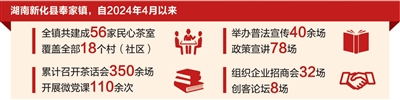
Core Viewpoint - The establishment of "Minxin Tea Room" in Qujiangyuan Village serves as a platform for community engagement, promoting local development and addressing issues through discussions among villagers and local officials [1][3]. Group 1: Community Engagement - "Minxin Tea Room" was created to gather community insights, enhance local development, and resolve conflicts, with local tea culture providing a fitting backdrop for these discussions [1]. - The initiative has led to increased participation from villagers, including discussions on local development strategies and the implementation of national policies [1][3]. Group 2: Economic Development - The village has seen a rise in agritourism, with many villagers establishing homestays and restaurants, contributing to their economic prosperity [2]. - The local government has facilitated knowledge sharing by inviting experts to the tea room, helping villagers leverage new media for marketing their products [3]. Group 3: Social Welfare - The community has organized events for elderly residents, enhancing social cohesion and support for vulnerable groups [3]. - The initiative has positively impacted over 5,000 residents, with an average income increase of 3,000 yuan per household, and improved conflict resolution success rates by 34.3% [3].
热词里的“十五五”丨这些“三农”关键词,透露增收新路径--经济·科技--人民网
Ren Min Wang· 2025-11-01 13:45
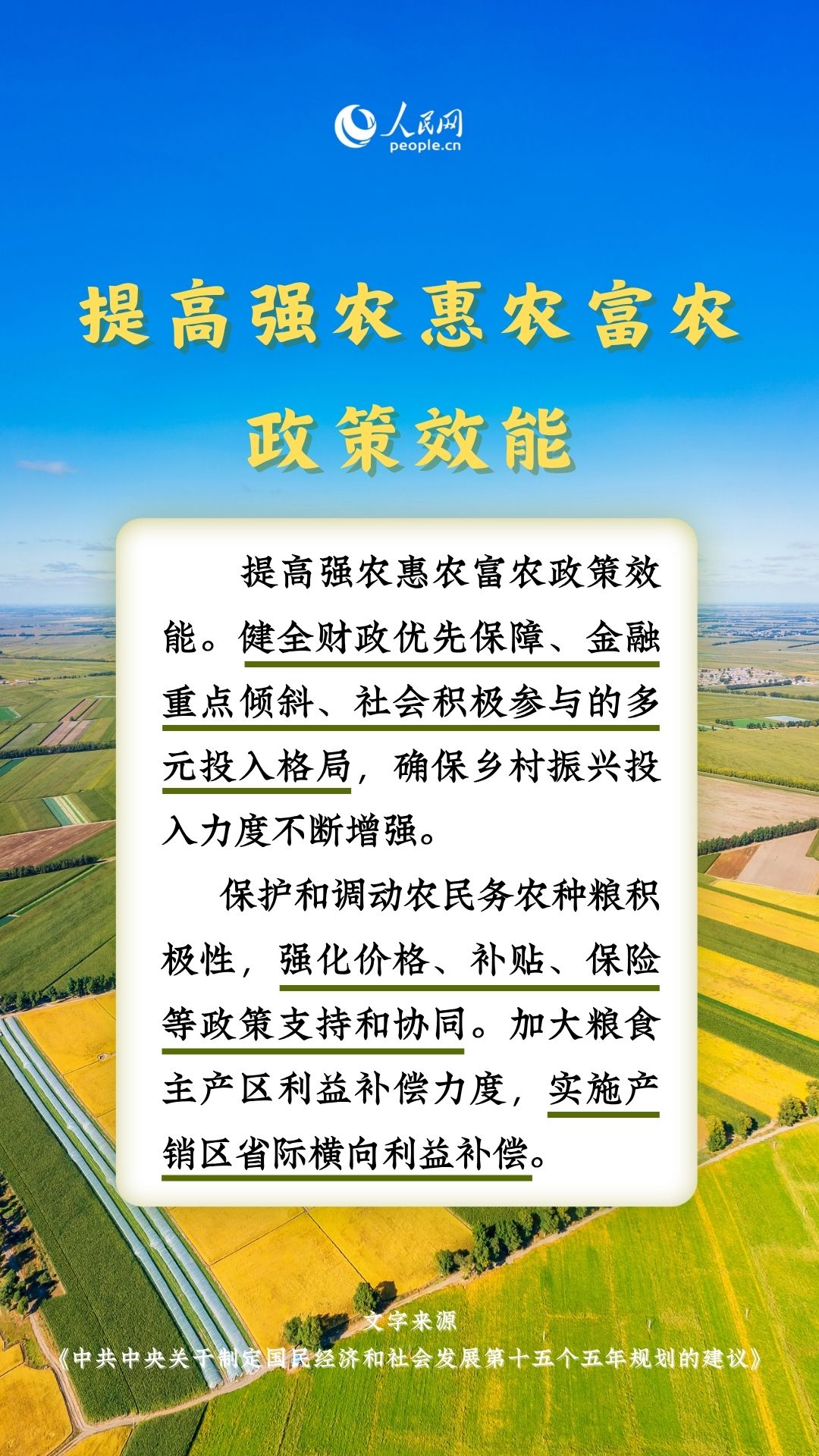
Group 1 - The core viewpoint emphasizes the need to enhance the effectiveness of policies aimed at supporting agriculture and rural development [1] - It advocates for a diversified investment structure that includes prioritized financial support, active social participation, and increased fiscal guarantees to ensure continuous investment in rural revitalization [1] - The policy aims to protect and motivate farmers' enthusiasm for farming and grain production by strengthening support through pricing, subsidies, and insurance [1] Group 2 - There is a call for increased compensation for grain-producing regions, along with the implementation of horizontal compensation mechanisms between production and sales areas [1]

十五五规划建议发布:提高强农惠农富农政策效能
Xin Lang Cai Jing· 2025-10-28 09:00
Core Viewpoint - The article emphasizes the importance of a diversified investment structure to ensure continuous enhancement of rural revitalization efforts through fiscal support, financial focus, and active social participation [1] Group 1: Financial Support and Policies - Strengthening policies such as pricing, subsidies, and insurance to protect and motivate farmers in agricultural production [1] - Increasing compensation efforts for major grain-producing areas and implementing horizontal compensation between production and sales regions [1] - Enhancing management of grain purchasing, sales, and reserves [1] Group 2: Trade and Resource Management - Promoting diversification in agricultural product imports to align trade with production [1] - Encouraging the two-way flow of urban and rural resources, incentivizing various talents to serve and start businesses in rural areas [1] - Advocating for the efficient use of rural collective operational construction land and legally activating idle land and housing for rural development [1] Group 3: Economic Development - Supporting the development of new types of rural collective economies [1]