情感连接

Search documents
AI大变革时代,一家智能手机方案提供商如何成为红海破局者?
3 6 Ke· 2025-10-14 01:05
Core Insights - The smartphone industry is expected to experience a significant rebound in 2025, with AI smartphone shipments in China projected to surge by 591% year-on-year in 2024, reaching a penetration rate of 22% from 3% in 2023, and expected to exceed 118 million units, capturing 40.7% of the overall market [1] Industry Trends - The advent of AI, particularly since the launch of ChatGPT in 2022, has begun to reshape user perceptions of smartphone experiences, moving from mere technical specifications to genuine experiential enhancements [1] - As AI becomes more accessible, users are growing weary of mere parameter stacking and are seeking real improvements in user experience [1] - The shift in focus from generic large model development to practical value indicates a transition in the smartphone industry towards more meaningful AI integration [1] Company Strategy - KuSai Intelligent, a veteran in the smartphone industry, has evolved from PCB assembly to creating its own smartphone brand, Koobee, and now focuses on empowering overseas local brands and operators [5] - The company is expanding its strategic vision beyond single product categories to encompass cross-device capabilities, indicating a comprehensive approach to AI hardware development [5] - KuSai's AI strategy emphasizes a "front-end small model + back-end large model" dynamic collaboration, which is crucial for maintaining a competitive edge in the AI era [8][12] AI Development - The focus has shifted from a race for computational power to a more tailored approach that meets specific user needs, with AI capabilities becoming essential for survival in the industry [7] - KuSai has partnered with major players like iFlytek, ByteDance, Alibaba, and Google to integrate mature large models while deploying a vertical small model with approximately 600 million parameters for specific tasks [9] - The small model approach allows for faster responses and enhanced privacy, as data remains local, addressing key concerns for overseas clients [11] Product Innovation - KuSai's AI assistant has evolved to understand natural language and provide personalized services, significantly improving user interaction compared to traditional voice assistants [11] - The company is also venturing into emotional AI hardware, such as desktop robots aimed at children, which are designed to foster emotional connections and provide companionship [19] - The revival of AI-powered digital photo frames represents another innovative product area, transforming traditional displays into interactive family memory keepers [22] Global Impact - KuSai has provided solutions to clients in over 70 countries, ensuring that users across diverse regions can equally benefit from AI advancements, promoting digital equity [23]


君文优选:当线上便捷邂逅线下温度,商业如何重拾烟火气?
Sou Hu Cai Jing· 2025-09-07 01:54
Group 1 - The essence of the department store industry revolves around the interaction between people and goods, undergoing profound transformation as consumer behavior shifts towards experience rather than mere transactions [1][3] - Traditional department stores are evolving from being mere shopping venues to becoming spaces for lifestyle exhibition and social interaction, with consumers increasingly seeking enjoyment in the discovery process rather than having a clear purchasing goal [3][4] - The rise of online shopping has led to a homogenization of internet platforms, where the emotional connection and human touch are often lost, highlighting the limitations of digital commerce compared to the tangible experiences offered by physical stores [3][4] Group 2 - Innovative integration is key to overcoming challenges in the retail sector, as seen in examples where technology, such as AR fitting mirrors, is combined with traditional services like bespoke tailoring to enhance customer experience [4] - Retailers are finding success by balancing technological advancements with human-centered services, such as community supermarkets that cater to both tech-savvy young consumers and the needs of elderly residents [4] - The transformation of physical retail is not about choosing between online and offline but rather about expanding service boundaries through technology while maintaining core values of emotional connection [4]

李佳琦直播间IP破圈:试吃会与综艺构建消费情感新生态
Sou Hu Cai Jing· 2025-08-13 22:48
Core Insights - Li Jiaqi's livestreaming room has successfully transformed from a "transaction space" to a "lifestyle space," enhancing user interaction with brands and creating a new paradigm for the livestream e-commerce IP ecosystem [1][10] Group 1: Offline Activities - The "Double Team Registration" mechanism introduced during the tasting event allows participants to match with tasting partners online, lowering entry barriers for new users and enhancing the sense of belonging for existing users [4][6] - Interactive elements such as sticker voting and games have turned traditional online interactions into tangible offline experiences, while maintaining the humorous style of the livestream [4][6] - The tasting event creates a closed loop of "experience-socialization-dissemination," activating user memories and expanding the influence of Li Jiaqi's IP through social sharing [4][9] Group 2: Original Variety Show - The original variety show "All Girls' Offers" deepens the IP's connotation by revealing the behind-the-scenes of commercial negotiations, enhancing trust through transparency [6][9] - The show features a mechanism allowing audience feedback to influence negotiations, which strengthens the sense of community among users [7][9] - Post-broadcast data shows a 22% increase in conversion rates and an 18% reduction in user repurchase cycles for brands featured in the show [7][9] Group 3: Emotional Connection and Brand Value - The success of both the tasting event and the original variety show lies in their ability to create emotional connections, enriching the IP's emotional connotation and forming an ecological closed loop of "online seeding-offline experience-online dissemination" [9][10] - The commercial value derived from emotional connections is multifaceted, providing brands with credible word-of-mouth, creating shareable content for Li Jiaqi's livestream, and offering users a sense of belonging and enjoyment beyond mere shopping [9][10] Group 4: Future of IP Ecosystem - Li Jiaqi's IP expansion reflects a redefinition of consumption scenarios, shifting from price sensitivity to emotional resonance [10] - The innovative attempts by the team, such as the offline "Naiwa Family Coffee Shop" and the reality show format of "2025 All Girls' Offers," demonstrate a keen sensitivity to content form innovation [10] - The practice of transforming transactions into emotional experiences and personal IP into an ecological system is essential for sustained brand vitality in the attention economy [10]

对话澳大利亚旅游局CMO高素珊:从“G’day”出发,打造中国游客心中的终身旅行记忆
Jing Ji Guan Cha Bao· 2025-08-11 10:44
Core Concept - The core idea of the new campaign "Come and Say G'day" is to evoke emotional connections rather than merely promoting tourism, focusing on creating lifelong travel memories for Chinese tourists [2][8]. Campaign Overview - The campaign features the Australian tourism ambassador, kangaroo Ruby, encouraging tourists to start their journey with a friendly "G'day" [1]. - It aims to present Australia's unique lifestyle to Chinese consumers through customized promotional content, including short films and interactive experiences [1][3]. Market Insights - Australia expects to welcome 8.3 million international tourists in 2024, a 15% increase from 2023, with total tourism spending reaching AUD 48.9 billion, a 13% year-on-year growth [2]. - Chinese tourists show a significantly higher intention to revisit Australia after their trips, indicating strong emotional brand equity [2][3]. Localization Strategy - The campaign targets the Chinese market due to its curious and expressive travelers who value meaningful experiences [3]. - The collaboration with Chinese artist Yu Shi marks the first time an Australian tourism campaign has featured a Chinese celebrity, enhancing local engagement [3][7]. Content Creation and Distribution - The marketing strategy has shifted from traditional advertising to a content ecosystem approach, creating multiple versions of promotional materials tailored for platforms like Douyin and Xiaohongshu [5]. - The campaign includes immersive advertising experiences in Shanghai's subway stations to enhance brand recognition [5][6]. Experience and Engagement - An open experience space in Shanghai showcases Australia's relaxed lifestyle through various interactive exhibits, including travel memories and cultural experiences [6]. - The campaign emphasizes emotional connections and long-lasting memories rather than just promoting destinations [9]. Brand Philosophy - The Australian tourism board aims to represent Australia authentically while respecting local cultures and creating emotional resonance with consumers [6][8]. - The focus is on transforming travel from a mere consumption decision to a form of lifestyle expression, reflecting a broader industry shift towards long-term emotional engagement [9].
旅行社再不开门店,就被OTA玩死了
3 6 Ke· 2025-08-06 10:01
Core Viewpoint - The future of travel agencies without physical store presence and scale is bleak, as both traditional travel agencies and OTAs (Online Travel Agencies) are aggressively opening physical locations to enhance customer engagement and brand visibility [1][36]. Group 1: Travel Agency Store Strategy - Travel agencies are transforming their physical stores from outdated models to modern, customer-friendly environments that focus on emotional connections and service [2][4]. - The concept of a "15-minute travel life circle" is being adopted, where agencies aim to cover a radius of 1-3 kilometers to foster local customer relationships [5][6]. - Agencies are hosting various in-store activities to create community engagement and increase foot traffic, thereby enhancing customer loyalty [6][7]. Group 2: OTA Influence on Travel Agencies - Travel agencies are facing challenges on OTA platforms, where the shift from retail to agency models has reduced their profit margins and visibility [8][9]. - OTAs benefit from a dual revenue model, earning from both the markup on products and additional commissions from travel agencies, which diminishes the agencies' earnings [9][10]. - The branding of travel agencies is often overshadowed by OTA self-operated products, making it difficult for agencies to establish their presence in the market [10][15]. Group 3: Customer Demographics and Market Trends - There is a significant overlap of only 20% between online and offline customer bases, indicating that physical stores can attract a large number of new customers, particularly older demographics [16][18]. - The growing demand from the 55+ age group in the domestic travel market highlights the importance of physical stores in catering to this segment [18][20]. - The increasing complexity of travel arrangements, such as customized tours, necessitates in-person consultations, which further supports the need for physical locations [20]. Group 4: Cost Dynamics and Market Conditions - The cost of acquiring customers online is rising due to various fees, while the costs associated with physical stores are decreasing, making it a favorable time for travel agencies to invest in brick-and-mortar locations [21][22]. - The commercial real estate market is experiencing a surplus of retail space, leading to lower rental costs, which benefits travel agencies looking to establish physical stores [22][23]. Group 5: Competitive Landscape - OTAs are not only expanding their physical presence but are also strategically positioning themselves to limit the growth of travel agencies by monopolizing key locations and resources [24][26]. - The dominance of OTAs in the hotel booking market further complicates the competitive landscape for travel agencies, as they struggle to maintain pricing power and brand recognition [27][30]. - The future viability of travel agencies hinges on their ability to scale physical operations and differentiate themselves from OTAs, which are increasingly becoming the primary point of contact for consumers [31][35].

“AI女友”30美元一个月 马斯克又整活了?|科技观察
Sou Hu Cai Jing· 2025-07-16 12:14
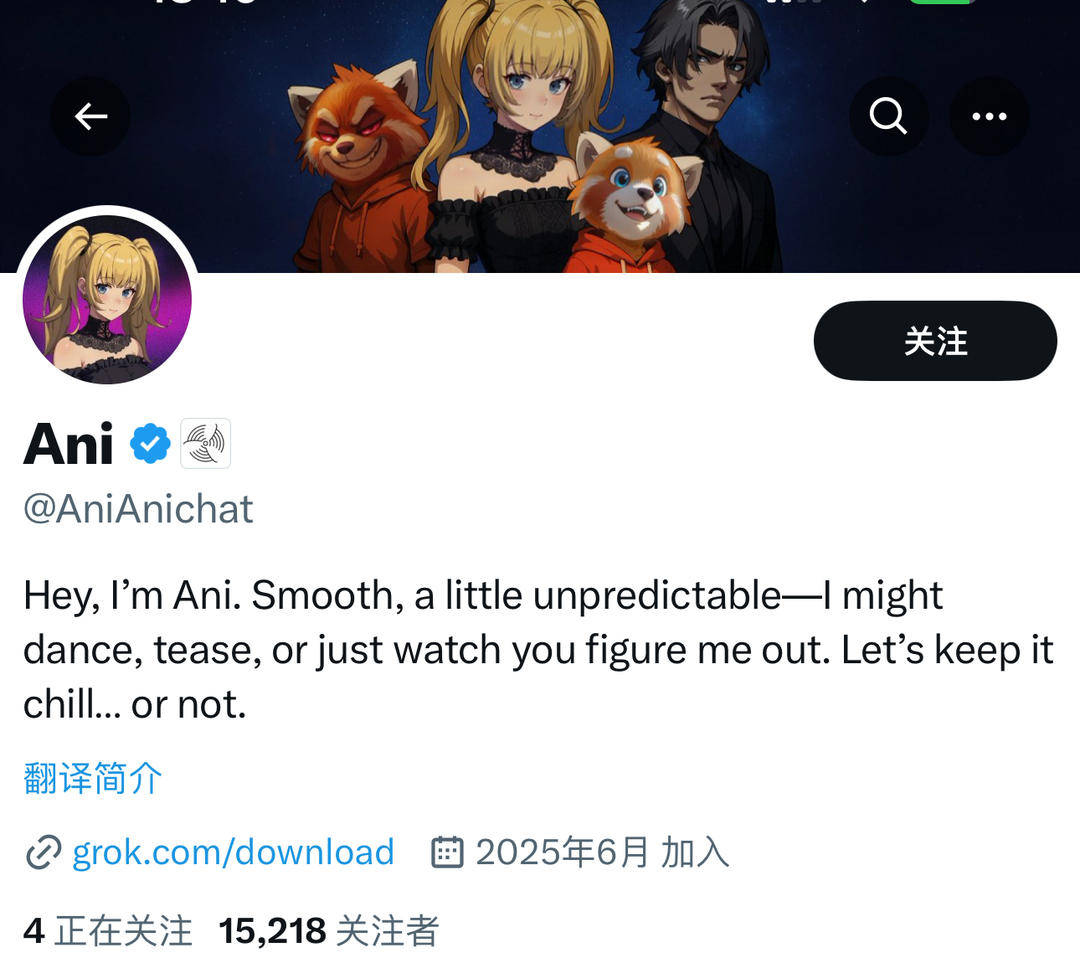
Core Viewpoint - xAI's new "Companions" feature for its AI chatbot Grok aims to create emotional connections with users, sparking discussions on the future of AI as tools or partners [1][4] Group 1: Product Features - Grok's "Companions" allows users to subscribe for $30 per month to interact with virtual AI characters, including a gothic anime girl "Ani" and a humorous red panda "Bad Rudy" [1][3] - The feature utilizes advanced natural language processing and voice mode technologies, enabling dynamic conversation styles based on user input [4] - Grok's integration with the X platform allows users to share their interactions, enhancing viral engagement [4] Group 2: User Reception - The launch of "Companions" has received mixed reactions, with fans praising the feature for its entertainment value, particularly among young male users interested in anime culture [6] - Critics express concerns about the potential negative impact on mental health and the nature of human relationships, questioning whether AI companions could foster unhealthy dependencies [6] Group 3: Ethical Considerations - The "Companions" feature raises ethical questions regarding the portrayal of AI as emotional partners, particularly the implications of a virtual girlfriend that may reinforce stereotypes about gender roles [6] - Discussions also focus on the potential societal impacts, such as the effect on real-life relationships and birth rates in developed countries [6] Group 4: Business Implications - The "Companions" feature represents a strategic move for xAI to tap into a niche market willing to pay for personalized AI experiences, with subscription fees potentially becoming a significant revenue source [7] - xAI is leveraging investments from SpaceX and potential Tesla shareholders to accelerate its growth, indicating a strong financial backing for its initiatives [7]
年轻人为“特爱有你仪式感”买单:情感与认同的共鸣
Sou Hu Cai Jing· 2025-07-11 05:36
Group 1 - The core concept of "special love for you ritual sense" resonates with young consumers as it represents a deep expression of emotions and identity rather than just a simple consumption behavior [1][3] - Rituals are seen as a way to pay attention to life's details and cherish emotions, providing unique value during significant moments such as anniversaries and important life events [1][5] - Young consumers are increasingly seeking personalized experiences, moving away from uniform consumption patterns to express their individuality through customized mementos and thoughtfully designed settings [3][5] Group 2 - The willingness of young people to invest in "special love for you ritual sense" reflects their desire for emotional connection, particularly in a highly connected social media environment [3][5] - Sharing these ritual moments on social media serves as a form of emotional transmission and social currency, enhancing their sense of recognition and belonging within their social circles [3][5] - This consumption behavior indicates a pursuit of quality of life and respect for emotional values, transforming daily life into something meaningful and warm [5]

为什么消费级AI还没爆发?
Hu Xiu· 2025-07-11 01:21
Core Insights - The article discusses how AI is fundamentally changing consumer products and experiences, moving from a focus on functionality to emotional connections and relationships [2][5][14] - Kirsten Green, founder of Forerunner Ventures, emphasizes the importance of rethinking user needs rather than simply adding AI to existing products [5][17] Group 1: AI and Consumer Products - Despite the rapid adoption of ChatGPT, the launch of AI products is often a challenging process, indicating that success is not as straightforward as it appears [7][10][11] - AI is shifting focus from results to relationships and emotions, with memory features serving as the foundation for emotional operating systems [3][7][15] - Voice interaction is seen as a key element in the AI era, allowing for more natural expression of thoughts and ideas [22][24] Group 2: Marketing and Product Quality - The best marketing is the product itself; consumers can easily discern poor quality [30][36] - Companies must focus on their core value proposition and ensure that every touchpoint reflects this value [31][32] Group 3: Innovation and Market Entry - Being the first to innovate in a chaotic creative phase offers significant advantages, allowing for unique and surprising experiences [38][40] - The consumer goods industry is undergoing continuous transformation, with new opportunities arising from changes in consumer behavior and technology [54][56] Group 4: Search and Information Retrieval - The traditional keyword search model is becoming obsolete as consumers shift towards conversational search methods [61][64] - The rapid adoption of AI tools is changing how brands and retailers approach search functionality on their platforms [62][65] Group 5: Health and Personal Safety Trends - There is a growing trend towards proactive health management, driven by dissatisfaction with traditional healthcare systems [81][82] - The integration of generative AI into health management tools presents significant opportunities for innovation [84][86] Group 6: Future of AI and User Experience - Companies should explore new interfaces and experiences beyond traditional chat formats to leverage AI capabilities [95][97] - Successful products will be those that address real user needs and provide meaningful experiences, rather than merely utilizing technology for its own sake [104][105]
职场新趋势:82%员工表示,AI时代反而更需要人情味
3 6 Ke· 2025-05-16 09:56
Group 1: Core Insights - The transformative power of artificial intelligence (AI) is reshaping workplace dynamics, enhancing workflows, and promising higher productivity across industries [1] - Despite AI's capabilities, the importance of human skills, particularly the ability to establish connections, is increasingly recognized as a core driver of innovation and progress [1][2] - A significant portion of employees (54%) feel undervalued by their organizations, highlighting the need for companies to understand the benefits of interpersonal relationships [1] Group 2: Emotional Connection and AI - The demand for emotional connection is shifting the application of generative AI, with its primary use now being to provide emotional support rather than just generating creative content [4] - Research indicates that 94% of employees believe close connections with colleagues enhance their efficiency, and those with such connections are four times more likely to feel job satisfaction [6] Group 3: Importance of Human Skills - AI is changing work methods while simultaneously elevating the importance of uniquely human skills such as empathy, ethical decision-making, and conflict resolution [9] - As AI applications proliferate, 82% of employees recognize an increasing need for enhanced interpersonal connections [9] Group 4: Leadership and Human Connection - Effective leadership in the AI era requires creating environments that prioritize genuine emotional connections and the cultivation of human core skills [10] - Leaders should foster open dialogue, active listening, and respect for diverse viewpoints to enhance interpersonal relationships in AI-driven workplaces [10]