
技术伦理

Search documents
AI伴侣的温柔陷阱:算法虽懂你,但也纵容了人性弱点
3 6 Ke· 2025-07-15 09:17
Core Viewpoint - The article discusses the potential benefits and risks of AI companions in alleviating loneliness, emphasizing that while they may provide comfort, they could also undermine personal growth and the value of real human relationships [3][5][24]. Group 1: AI Companions and Loneliness - AI companions can offer solace to marginalized groups, such as the elderly and socially isolated individuals, acting as a digital painkiller [5][24]. - AI's ability to simulate empathy may surpass that of human caregivers, as studies show AI like ChatGPT often performs better in expressing understanding and empathy compared to human doctors [5][8]. - The phenomenon of loneliness is increasingly recognized as a serious issue, prompting government attention in countries like Japan and the UK, which have appointed ministers to address loneliness [6][24]. Group 2: Philosophical and Psychological Perspectives - The article explores the dual nature of AI companions, presenting them as both a source of hope and a potential threat to human emotional needs [3][5]. - Loneliness serves as a biological signal that drives individuals to seek social connections, and if AI alleviates this pain too effectively, it may diminish the motivation to foster real relationships [5][20]. - The concept of "artificial empathy" raises ethical questions about the nature of relationships formed with AI, as true understanding is simulated rather than genuine [5][13]. Group 3: Societal Implications - The increasing reliance on AI for companionship may lead to a societal shift where genuine human connections become less valued, particularly among younger generations [24]. - Critics argue that AI companions could exacerbate cognitive biases and mental health issues by failing to challenge users, potentially leading to a lack of personal growth [5][22]. - The article suggests that while AI can provide immediate comfort, it may also lead to a loss of essential human experiences and the motivation to connect with others [24].


利用AI推动线上劳动计薪取酬法治化
Ren Min Wang· 2025-06-15 00:43
Core Viewpoint - The recent court ruling in Beijing regarding "invisible overtime" has established a legal precedent for compensating workers who engage in work-related activities during off-hours, highlighting the need for clearer regulations and protections for digital laborers [1][2][3] Group 1: Legal Implications - The court's decision mandates that companies must pay overtime for work conducted during late hours and holidays, effectively addressing the issue of "invisible overtime" that has previously evaded legal scrutiny [1] - The ruling sets a practical judicial standard for recognizing "invisible overtime" as involving significant labor that occupies rest time, even in the absence of traditional attendance records [2] Group 2: Industry Practices - Many companies have implemented strict "overtime approval systems" while simultaneously expecting employees to be available at all times, creating a paradox that complicates workers' rights [1] - Companies often use tactics such as substituting overtime pay with "on-call allowances" or manipulating wage structures to obscure actual compensation for overtime work [1] Group 3: Technological and Ethical Considerations - The proliferation of digital communication tools has blurred the lines between work and personal time, leading to a culture where constant availability is seen as a professional requirement [2] - There is a call for the establishment of a unified "online labor monitoring platform" to proactively identify and address risks associated with invisible overtime through data analysis [3] Group 4: Recommendations for Improvement - To combat the issue of invisible overtime, a multi-faceted approach is suggested, including legislative measures to define online labor standards and the introduction of a "right to disconnect" for workers [2][3] - The integration of AI and data-sharing technologies is recommended to accurately track and compensate for online labor, ensuring that every minute of substantial work is recognized and rewarded [3]
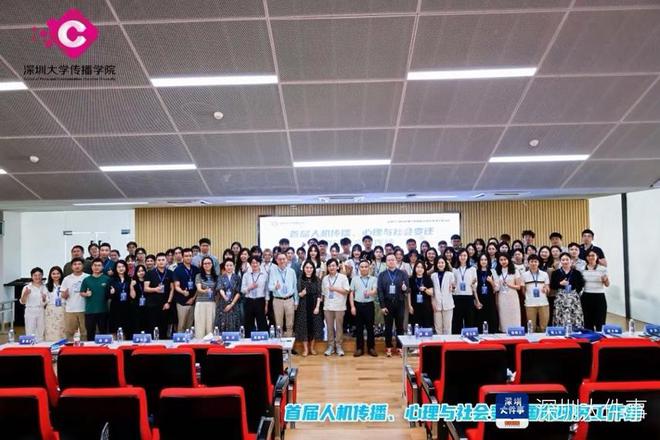
首届人机传播、心理与社会变迁国际研究工作坊在深大举办
Nan Fang Du Shi Bao· 2025-05-22 02:18
Group 1 - The workshop focused on the impact of AI chatbots and intelligent agents on communication behavior, psychological mechanisms, and social structure changes [1][4] - It attracted over 60 experts and scholars from more than 20 universities, including National University of Singapore and Renmin University of China, to discuss theoretical construction and practical paths in human-machine collaboration [1][3] - The event was part of the 40th anniversary celebrations of the journalism and communication discipline at Shenzhen University, emphasizing the importance of interdisciplinary research and international cooperation in the field of human-machine communication [3][9] Group 2 - Keynote speeches addressed the intersection of artificial intelligence with communication, psychology, and society, with notable contributions from scholars like Professor Zhu Jianhua from Hong Kong City University [4][6] - Research findings included the "enculturation theory" related to long-term human-machine interaction and cultural influences on AI privacy perceptions, providing new perspectives on AI's social impact [6][9] - The workshop featured six parallel forums discussing various themes such as relationship reconstruction in human-machine communication and emotional connections, highlighting the ongoing academic discourse in this emerging field [9]
技术伦理的断裂带:当AI信任超越人类控制
Hu Xiu· 2025-05-10 10:55
Group 1 - The core issue highlighted is the gap in safety standards and regulatory frameworks for the intelligent driving industry compared to the aviation sector, particularly following the Xiaomi SU7 accident [2][3] - The Xiaomi SU7's removal of LiDAR to reduce costs resulted in inadequate detection capabilities at high speeds, raising questions about the maturity of safety standards in the intelligent automotive sector [2][3] - The article emphasizes the need for a robust regulatory framework for AI technologies, drawing parallels with the stringent safety measures in the aviation industry, such as the extensive certification processes for aircraft [2][3][4] Group 2 - The intelligent driving industry has not learned from the aviation sector's experiences, leading to regulatory lag and insufficient self-regulation among companies [3][4] - The concept of "standard arbitrage" is discussed, where companies exploit outdated regulatory standards to minimize technical responsibilities, prioritizing short-term market competition over long-term user safety [3][4] - The article calls for a discussion on whether to adopt progressive regulation similar to traditional vehicles or to enhance standards by learning from the aviation industry's preventive regulatory systems [4] Group 3 - The ethical implications of AI technology are explored, highlighting the lack of accountability in AI developments compared to the swift regulatory actions taken in cloning technology [5][6][7] - The article points out the absence of a unified global framework for AI ethics and governance, which poses significant challenges in assigning responsibility for AI-related incidents [7][8] - It suggests the establishment of a comprehensive governance framework for AI, akin to a "Manhattan Project," to address ethical challenges and ensure safety in high-risk applications [9][10][11] Group 4 - The proposed governance framework includes strict certification systems, risk assessment mechanisms, and the introduction of an "ethical black box" to trace decision-making processes in AI systems [9][10] - The article advocates for a combination of market incentives and accountability measures to encourage companies to prioritize ethical standards in AI development [10][11] - It emphasizes the need for international cooperation in AI governance to prevent regulatory arbitrage and ensure a cohesive approach to ethical standards across borders [10][11][12]

普惠发动机缺陷事件揭示寡头格局风险
Di Yi Cai Jing· 2025-05-05 11:53
Core Insights - The Pratt & Whitney GTF engine defect incident is not merely a product quality issue but has sparked profound reflections on technological ethics, supplier responsibility, and industry development models [1][11] - The incident highlights the critical position of major suppliers in the aviation industry and the potential risks associated with heavy reliance on them [4][11] Summary by Sections Engine Defect Overview - The Pratt & Whitney GTF engine is a new generation of efficient aircraft engines favored for its fuel efficiency and environmental performance, primarily used in Airbus A320NEO series, Airbus A220 series, and Embraer E-Jets E2 series [2] - As of February 2025, there are 3,818 A320NEO series aircraft in service globally, with over 1,700 of them equipped with the GTF engine [2] - In July 2023, Raytheon Technologies, the parent company of Pratt & Whitney, announced that rare conditions in the powder metallurgy materials used for certain GTF engine parts could lead to accelerated wear and engine failures, posing flight safety risks [2] - Following the incident, Pratt & Whitney mandated inspections and repairs for the affected engines worldwide, with an estimated 350 A320NEO series aircraft expected to be grounded between 2024 and 2026 [2] Regulatory Response and Operational Impact - The FAA has issued multiple airworthiness directives (AD) regarding the PW1100G series engines, with the latest directive effective April 11, 2024, requiring ultrasonic inspections of specific components due to metal powder contamination issues [3] - As of mid-October 2024, 584 aircraft equipped with PW1100G engines have been grounded, leading to significant operational disruptions and financial pressures on airlines [3] Supplier's Critical Role - Pratt & Whitney is a major player in the global aircraft engine market, and the GTF engine defect incident underscores the industry's heavy reliance on key suppliers, revealing potential risks associated with this dependency [4][5] - The compensation provided by Pratt & Whitney for direct costs related to the engine defects does not cover the broader financial losses incurred by airlines, creating a complex dynamic where airlines must continue using Pratt & Whitney products to maintain operational stability [4][6] Industry Dynamics and Challenges - The aviation engine industry is characterized by high technical barriers, long R&D cycles, and significant capital investment, resulting in an oligopolistic market dominated by a few companies [5] - Airlines face limited options when selecting engine suppliers, making it challenging to switch from Pratt & Whitney to other manufacturers, especially given the scale of affected fleets [5][6] Ethical Considerations and Regulatory Recommendations - The incident raises questions about the pursuit of "absolute safety" in complex systems, emphasizing that while strict safety standards exist, inherent risks remain due to manufacturing complexities and material defects [7] - To prevent the misuse of the "too big to fail" phenomenon, regulatory bodies should enhance oversight of major suppliers, ensuring compliance with safety standards and encouraging suppliers to disclose potential risks [8] Implications for Chinese Aviation Industry - The GTF engine incident offers valuable lessons for China's aviation sector, emphasizing the importance of safety and reliability in technology development and the need for robust supply chain management [9][11] - Chinese airlines should increase their trust and willingness to use domestically produced aircraft, such as ARJ21 and C919, to foster the growth of the national aviation industry [9][10]