A320NEO系列飞机

Search documents
—交通运输行业周报(2026年3月23日-2026年3月29日):地缘对油运影响深化,快递全面提价开启-20260330
Hua Yuan Zheng Quan· 2026-03-30 06:41
Investment Rating - The investment rating for the transportation industry is "Positive" (maintained) [4] Core Views - The current demand in the e-commerce express delivery sector remains resilient, and the "anti-involution" trend is driving up express prices, which releases profit elasticity for companies, indicating a favorable long-term competitive opportunity for the e-commerce express delivery sector [15] - The shipping sector is expected to benefit from the continuous increase in crude oil production and tight capacity, with geopolitical changes potentially catalyzing market sentiment and fundamentals [15] - The aviation sector may see significant elasticity in performance if passenger turnover and ticket price growth continue, providing a buffer against high oil prices [15] Industry Dynamics Tracking Shipping and Ports - The Iranian Revolutionary Guard announced the closure of the Strait of Hormuz, impacting shipping routes and increasing operational requirements for vessels passing through [4] - The SCFI composite freight index increased by 7.0% week-on-week, reaching 1827 points, with notable increases in Shanghai to the US West Coast and East Coast [6] - The BDTI index for VLCC freight rates rose by 23.07% week-on-week, indicating a strong upward trend in oil transportation rates [7] Express Logistics - Express companies in Hunan have announced price increases due to rising operational costs from fuel price hikes [10] - The Guangdong Provincial Express Delivery Regulations were passed to promote high-quality development in the express delivery industry [10] - The express delivery sector's business volume reached 30.49 billion pieces in January-February 2026, a year-on-year increase of 7.1% [26] Aviation and Airports - China Eastern Airlines announced the purchase of 101 Airbus A320neo series aircraft, with deliveries planned from 2028 to 2032 [12][13] - The aviation sector is facing potential flight reductions due to fuel shortages caused by Middle Eastern conflicts [13] Road and Rail - National logistics operations are running smoothly, with rail freight volume at 80.31 million tons, a week-on-week decrease of 1.66% [14] - Deep Highway reported a slight increase in net profit for 2025, with total revenue of 9.264 billion yuan, a year-on-year increase of 0.20% [14] Port Performance - China's port cargo throughput reached 25.824 million tons from March 16 to March 22, 2026, a week-on-week increase of 0.81% [9][78]
中国商飞供应商大会召开,商飞、燃机景气可期
GF SECURITIES· 2026-03-30 04:28
Core Insights - The report highlights the significant growth potential in the defense and aerospace sector, particularly with the recent developments in China's commercial aviation market and the increasing demand for gas turbines [5][15][16]. Group 1: Industry Overview - The China Commercial Aircraft Corporation (COMAC) supplier conference indicates a new phase of large aircraft entering mass production, with the C919 aircraft expanding its operational routes significantly [5][15]. - The gas turbine market has seen a dramatic price increase, with unit costs rising from approximately $2,000 to $3,000 per kilowatt, reflecting a nearly 50% increase driven by supply chain pressures [5][16]. Group 2: Investment Opportunities - The report identifies several key investment themes based on the "S-curve" cycle evolution, focusing on supply chain reforms, military exports, and emerging industries such as commercial aerospace and AI [5][17]. - Specific companies to watch include: - Aviation Power and Control, which are positioned to benefit from high-end aviation equipment production and maintenance needs [5][24][25]. - Zhonghang Xifei and Zhonghang Heavy Machinery, which are major players in military and civil aircraft manufacturing [5][26][27]. - Guangwei Composite Materials, recognized as a core supplier in the aerospace carbon fiber market, with multiple growth avenues in new materials and applications [5][28]. Group 3: Financial Analysis - The report provides a detailed financial analysis of key companies, including projected earnings per share (EPS) and price-to-earnings (PE) ratios for 2025 and 2026, indicating a generally positive outlook for the sector [7]. - For instance, Aviation Power is expected to have a dynamic PE of approximately 24X in 2025, reflecting strong growth potential in the aviation supply chain [5][27]. Group 4: Market Trends - The defense sector is experiencing a shift towards modernization and increased demand for advanced technologies, with a focus on integrating AI and quantum computing into military applications [5][17][20]. - The report emphasizes the importance of domestic production capabilities and the ongoing trend of localization in the semiconductor industry, which is expected to drive growth in the coming years [5][20].


中国东航掷千亿买百架空客 自有飞机占46%优化机队结构
Chang Jiang Shang Bao· 2026-03-26 23:27
Core Viewpoint - China Eastern Airlines has signed a significant purchase agreement with Airbus for 101 A320NEO series aircraft, totaling approximately $15.802 billion (about 108.9 billion RMB), with deliveries scheduled between 2028 and 2032 [2][3]. Group 1: Aircraft Purchase Details - The purchase includes various models such as A320NEO, A321NEO, and A321XLR, with the total catalog price being approximately $15.802 billion [3]. - In 2022, China Eastern Airlines purchased 100 A320NEO aircraft for a catalog price of approximately 85.778 billion RMB, with deliveries expected from 2024 to 2027 [4]. - Additionally, in 2023, the company ordered 100 C919 aircraft from COMAC for a catalog price of approximately 71.1 billion RMB, with deliveries planned from 2024 to 2031 [4]. Group 2: Fleet and Operational Strategy - The total number of aircraft purchased across three transactions amounts to 301, with a combined catalog price of approximately 265.8 billion RMB [5]. - As of February 2026, China Eastern Airlines operates 823 aircraft, of which only 376 are owned, representing about 46% of the fleet, while the remaining 54% are leased [6][7]. - The company aims to optimize its fleet structure and enhance passenger experience, thereby improving market competitiveness [2][4]. Group 3: Financial and Strategic Considerations - Funding for the aircraft purchases will come from a mix of self-owned funds, raised capital, bank loans, and other financing tools [5]. - The company is focusing on building a hub system centered around Shanghai, supporting its strategy to expand into international and emerging markets [4]. - China Eastern Airlines has a robust route network, reaching 1,000 destinations across 160 countries and regions [7].


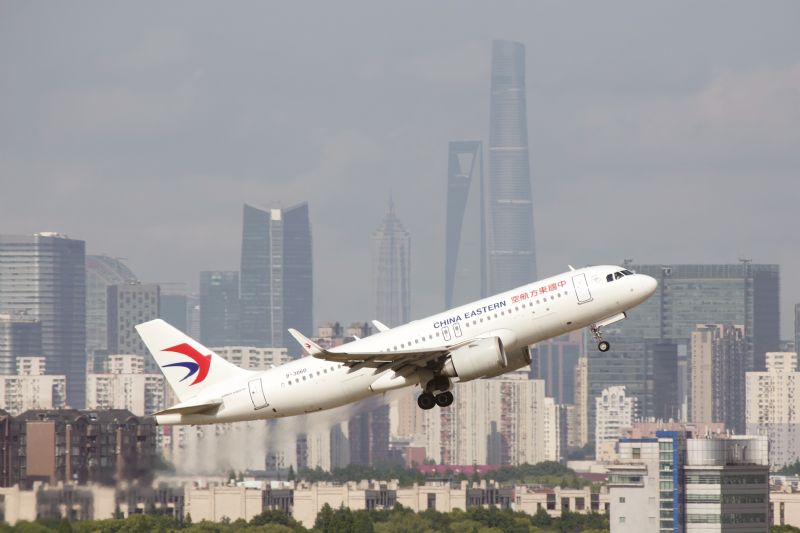
中国东航(600115.SH):向空客公司购买101架A320NEO系列飞机
Ge Long Hui· 2026-03-26 14:59
Core Viewpoint - China Eastern Airlines has signed a purchase agreement with Airbus for 101 A320NEO aircraft, reflecting confidence in the future development of China's civil aviation industry [1] Group 1: Purchase Agreement Details - The purchase agreement was signed on March 25, 2026, in Shanghai, with a total catalog price of approximately $15.802 billion [1] - The equivalent amount in Chinese yuan, based on the exchange rate of 1 USD to 6.8911 CNY on the signing date, is about 108.893 billion yuan [1] Group 2: Strategic Implications - The acquisition of the latest generation of narrow-body aircraft will help the company enhance its narrow-body capacity, optimize fleet structure, reduce fuel consumption and unit costs, and improve route networks [1] - This move supports the company's strategic direction of expanding internationally and into emerging markets, contributing to its "dual carbon" goals [1]
饮料市场分化加剧:农夫山泉增长,康师傅下滑
2 1 Shi Ji Jing Ji Bao Dao· 2026-03-26 02:05
Group 1: Beverage Industry Performance - Nongfu Spring reported a revenue increase of 22.5% to 52.553 billion yuan in 2025, with a net profit growth of 30.9% to 15.868 billion yuan [2] - In contrast, Master Kong's beverage revenue declined by 2.9% to 50.1 billion yuan in 2025, with significant drops in ready-to-drink tea and juice segments [3] - Uni-President China also experienced a similar trend, with a 5.8% revenue decline in the second half of 2025, although the annual revenue showed a slight increase of 1.2% [5] Group 2: Market Dynamics and Competitive Landscape - The decline in Master Kong's beverage sales is attributed to multiple factors, including the impact of aggressive competition in the takeaway market [6] - Master Kong's adjustments, such as reducing the number of marketing distributors and increasing prices, have also negatively affected sales [8] - Despite the challenges faced by competitors, Nongfu Spring has managed to withstand the pressures of the takeaway market, indicating a need for Master Kong's management to reassess their strategies [6][8] Group 3: Other Industry Developments - China Shengmu appointed a new CFO, Li Li, following an internal position rotation [9] - Mengniu reported a revenue decline of 7.3% to 82.2449 billion yuan in 2025, with a net profit of 1.545 billion yuan [11] - The average price of pork in China's wholesale markets decreased to 15.80 yuan per kilogram, reflecting broader agricultural market trends [10]


金融界财经早餐:聚焦央企数智化与长护险制度;福建打造“555X”产业集群;社保基金重仓股曝光;海外资本调研中国AI算力产业链;中概股、黄金大涨;蒙牛乳业利润暴增14倍(3月26日)
Jin Rong Jie· 2026-03-26 01:31
Company and Industry Insights - The total revenue of Pinduoduo for Q4 2025 reached 123.91 billion yuan, a year-on-year increase of 12%, slightly above market expectations; adjusted net profit was 26.30 billion yuan, a decrease of 12% compared to the previous year [9] - Kuaishou reported a total revenue of 142.8 billion yuan for the entire year of 2025, reflecting a year-on-year growth of 12.5%; adjusted net profit was 20.65 billion yuan, up 16.5%, with an adjusted net profit margin of 14.5% [10] - China Life Insurance achieved an operating revenue of 615.68 billion yuan in 2025, a year-on-year increase of 16.5%; net profit attributable to shareholders was 154.08 billion yuan, up 44.1% [10] - Kingsoft Office reported an operating revenue of 5.93 billion yuan for 2025, a year-on-year increase of 15.78%; net profit attributable to shareholders was 1.84 billion yuan, up 11.63% [11] - Huagong Technology's operating revenue for 2025 was 14.36 billion yuan, a year-on-year increase of 22.59%; net profit attributable to shareholders was 1.47 billion yuan, up 20.48% [11] - China Eastern Airlines announced a purchase agreement with Airbus for 101 A320NEO aircraft, with a total catalog price of approximately 15.80 billion USD, equivalent to about 1088.93 billion yuan [12] - Mengniu Dairy reported a revenue of 82.24 billion yuan for 2025, a year-on-year decrease of 7.3%; net profit attributable to equity shareholders increased by 1378.9% to 1.55 billion yuan [12] - Beijing Automotive achieved a revenue of 164.05 billion yuan in 2025, a decline of 14.8% year-on-year, with net profit attributable to equity holders dropping by 87.2% to 122.7 million yuan [13]

目录价格合计超千亿元人民币 中国东航签下101架空客大单
Mei Ri Jing Ji Xin Wen· 2026-03-25 14:40
Core Viewpoint - China Eastern Airlines has signed a purchase agreement with Airbus for 101 A320NEO series aircraft, with a total catalog price of approximately $15.802 billion, aimed at replacing older aircraft models and expanding operational capacity [1][2]. Group 1: Purchase Agreement Details - The purchase agreement was officially signed on March 25 in Shanghai, with the total catalog price calculated at approximately 108.893 billion yuan based on the exchange rate on the signing date [1]. - The aircraft types included in the purchase are A320NEO, A321NEO, and A321XLR [1]. - The delivery of the aircraft is scheduled to occur in batches from 2028 to 2032, with specific annual delivery targets outlined [3]. Group 2: Financial and Operational Context - China Eastern Airlines is experiencing a recovery in operational performance, with a projected profit of 200 million to 300 million yuan for 2025, supported by a stable growth in the civil aviation market [2]. - The company reported a 12.79% year-on-year increase in passenger capacity and a 14.68% increase in passenger turnover for February 2026, indicating a robust market expansion [2]. - The introduction of the A320NEO series is expected to enhance operational efficiency by reducing fuel consumption and operational costs, while also modernizing the fleet [3]. Group 3: Financial Arrangements and Risks - The agreement includes provisions for flexible delivery schedules based on market conditions and operational planning, allowing adjustments to the introduction of aircraft types and delivery times [4]. - The actual purchase price is significantly lower than the catalog price due to substantial discounts from Airbus, and the payment structure is designed to mitigate cash flow impacts on the company [5]. - Funding for the purchase will come from a combination of internal funds, bank loans, bond issuance, and other financing tools, ensuring that the large-scale procurement does not adversely affect the company's cash flow [5].
中国国航:2026年第一次临时股东会审议通过《关于选举曲光吉先生为公司执行董事的议案》等多项议案
Zheng Quan Ri Bao· 2026-03-25 14:09
Core Viewpoint - China National Airlines announced the approval of two significant proposals during its 2026 first extraordinary general meeting, including the election of Mr. Qu Guangji as an executive director and the introduction of 60 A320NEO series aircraft [1] Group 1 - The company held its first extraordinary general meeting of 2026 on March 25 [1] - Mr. Qu Guangji was elected as the company's executive director [1] - The company plans to introduce 60 A320NEO series aircraft [1]

101架空客飞机!中国东航大手笔采购
证券时报· 2026-03-25 13:46
Core Viewpoint - China Eastern Airlines (600115) is set to make a significant aircraft purchase, acquiring 101 A320NEO series planes from Airbus for approximately $15.802 billion, equivalent to about 108.893 billion RMB, with the actual price being notably lower than the list price due to negotiated discounts [1][2]. Group 1: Purchase Details - The purchase agreement was signed on March 25 in Shanghai, and the aircraft will enhance the airline's narrow-body fleet, optimize fleet structure, reduce fuel consumption and unit costs, and improve passenger experience [1]. - The aircraft models included in the purchase are A320NEO, A321NEO, and A321XLR, with the total list price based on Airbus's January 2024 catalog [1]. Group 2: Financial Implications - The actual price of the aircraft is significantly lower than the catalog price, and the airline confirmed that the price discount is fair and reasonable compared to previous purchases [2]. - Funding for the transaction will come from the airline's own funds, bank loans, bond issuance, and other financing tools, with payments being made in installments, which is not expected to significantly impact cash flow or business operations [2]. Group 3: Delivery Schedule and Fleet Management - The delivery of the 101 aircraft is scheduled to occur in batches from 2028 to 2032, with specific annual delivery targets: 9 in 2028, 19 in 2029, 30 in 2030, 27 in 2031, and 16 in 2032 [2]. - During the delivery period, at least 53 existing A320 series aircraft are expected to be retired due to lease expirations or age, making the new purchases partially a replacement for the aging fleet [2].

今日晚间重要公告抢先看——罗博特科签订纳斯达克上市的F公司及其子公司6亿硅光订单;中国东航千亿购机计划正式落地;华工科技25年净利润同比增长20%
Jin Rong Jie· 2026-03-25 13:01
Group 1 - Robotech signed a significant contract worth approximately 600 million yuan for mass production coupling equipment and services applicable to pluggable silicon photonics technology, which is expected to positively impact the company's performance in 2026 [2] - China Eastern Airlines plans to purchase 101 Airbus A320NEO series aircraft at a catalog price totaling about 158.02 million USD, equivalent to approximately 108.93 billion yuan, with deliveries scheduled between 2028 and 2032 [2] - Huagong Technology projected a 20% year-on-year increase in net profit for 2025, with a proposed cash dividend of 2.5 yuan per 10 shares [18] Group 2 - Huadian Technology signed a 740 million yuan EPC contract for an offshore wind power project, with the company responsible for 693 million yuan of the contract amount [3] - Yahua Group signed a five-year lithium spodumene concentrate procurement agreement, ensuring a stable supply of resources for lithium salt product production [4] - China Life Insurance plans to invest 2.8 billion yuan in the Xinxin Technology Innovation Fund, focusing on private equity secondary markets and technology innovation sectors [6] Group 3 - Ruineng Technology is planning to acquire control of Botai Intelligent through a combination of issuing A-shares and cash payments, with stock suspension starting March 26 [8] - Debon Holdings will terminate its listing on the Shanghai Stock Exchange on March 31, 2026, after receiving approval for voluntary withdrawal [9] - New Yellow River announced the resignation of Chairman Zhao Zhengrong due to personal health reasons, with no adverse impact on the company's operations [10] Group 4 - Jiahua Food intends to invest approximately 1 billion yuan in a smart manufacturing project for super plant-based milk [11] - Xiamen Tungsten plans to acquire a stake in Jiangxi Jutong to enhance its tungsten resource self-sufficiency [12] - Energy Wind Power announced the resignation of its director and general manager Yang Zhongxu, with a smooth transition of responsibilities [13] Group 5 - Zhongtai Engineering reported a new contract amount of 18.964 billion yuan for January-February 2026, reflecting a year-on-year growth of 0.54% [26] - Jinli Permanent Magnet reported a 142.44% year-on-year increase in net profit for 2025, with a proposed cash dividend of 2.2 yuan per 10 shares [27] - Noya New Materials reported a 337.6% year-on-year increase in net profit for 2025, with a proposed cash dividend of 3.2 yuan per 10 shares [23]