技术竞争

Search documents
车圈大佬,回应“价格战”!
凤凰网财经· 2025-05-31 12:01
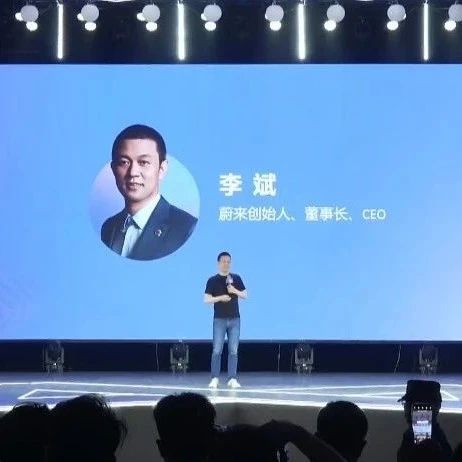
Core Viewpoint - The automotive industry is currently facing a heated debate over "price wars," with industry leaders advocating for a shift towards "technology competition" and "value competition" instead of price reductions [1][3][11]. Group 1: Industry Perspectives on Competition - NIO's CEO, Li Bin, emphasized the need to focus on "technology" rather than engaging in price wars, indicating a desire for sustainable competition [1]. - Changan Automobile's CEO, Deng Chenghao, stated that the future of the automotive industry will revolve around "technology" and "user experience," distancing from low-price strategies [1][11]. - The China Association of Automobile Manufacturers highlighted that chaotic price wars are detrimental to industry profitability and urged companies to adhere to fair competition principles [1]. Group 2: Internal Reforms and Performance - NIO is undergoing significant internal restructuring, particularly within its second brand, with a reported 40% reduction in frontline staff while aiming for a 40% increase in delivery volume in May [3]. - Xiaopeng Motors' CEO, He Xiaopeng, expressed confidence in achieving or exceeding profitability targets by Q4 2025, focusing on internal management and technological advancements [5][7]. Group 3: Technological Advancements and Value Proposition - Deep Blue Automotive aims to enhance its competitiveness through superior products, technology, and user experience, distancing itself from low-cost strategies [9][11]. - GAC Group's Vice President, He Xianqing, emphasized a "value war" approach, providing customers with value beyond just price, supported by significant R&D investments exceeding 55 billion yuan [13][17].


小牛电动营收增超35%,比亚迪却横刀入局,两轮车开启终极混战
美股研究社· 2025-05-20 12:14
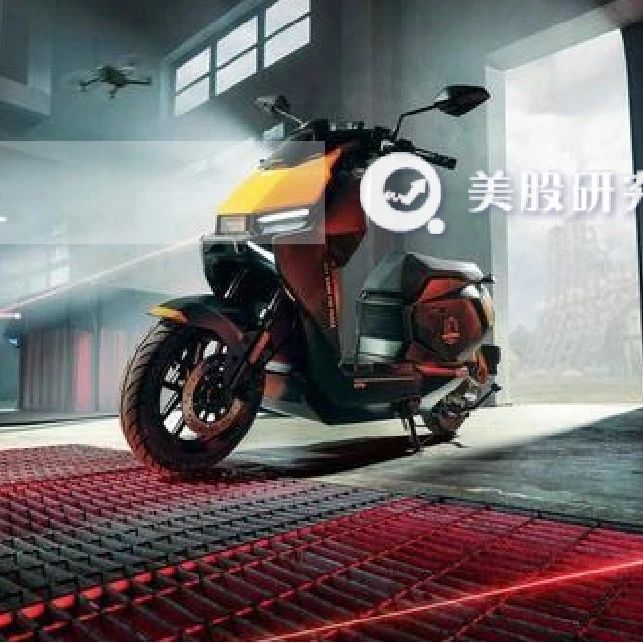
Core Viewpoint - The electric scooter industry is experiencing intense competition driven by technological advancements, market expansion, and strategic positioning, with companies like Niu Technologies facing challenges despite recent revenue growth [1][5]. Revenue Growth and Market Expansion - Niu Technologies reported a revenue of 682 million RMB in Q1 2025, marking a significant year-on-year increase of 35.1% [3]. - The gross margin decreased from 18.9% to 17.3% compared to the same period last year [3]. - The net loss narrowed to 38.8 million RMB, down from 54.8 million RMB, indicating improved financial performance [3]. - Sales of electric scooters reached 203,313 units, a 57.4% increase year-on-year, with the Chinese market contributing 183,065 units, up 66.2% [3][4]. - Niu's channel expansion strategy has led to 4,119 franchise stores in China and a growing international network with 57 dealers across 53 countries [3][4]. Product Strategy and Market Positioning - Niu focuses on product diversification, introducing high-end models like the NXT series with advanced safety features, setting new industry standards [4]. - The company maintains a premium pricing strategy, with an average price above 3,000 RMB, differentiating itself from traditional brands like Yadea and Aima that dominate the low-price segment [4]. - Despite recent successes, Niu faces pressure from traditional brands that are rapidly innovating, necessitating a stronger competitive edge [4]. Profitability Challenges and High-End Strategy Controversy - Niu's financial trajectory shows volatility, with a revenue of 3.288 billion RMB in 2024, a 24% increase, but a net loss of 193 million RMB, highlighting ongoing profitability issues [6]. - Historical performance reveals a decline in average selling price from 4,928 RMB in 2019 to 3,203 RMB in 2024, indicating a shift towards volume-driven sales [7]. - The company has struggled with a prolonged period of losses since 2022, contrasting sharply with its previous peak performance in 2021 [7]. Competitive Landscape and Technological Innovations - BYD's introduction of the "blade battery" technology for two-wheelers marks a significant shift in the industry, enhancing energy density and reducing costs [9][10]. - The competitive environment is evolving towards a focus on technology rather than price, with traditional brands needing to adapt to maintain market share [10]. - Niu must accelerate its battery technology upgrades and consider strategic adjustments to navigate the dual challenges of high-end market pressure and the need to penetrate the mass market [10].


“无论承认与否,硅谷精英变成‘中国必胜论’拥趸”
Guan Cha Zhe Wang· 2025-05-16 08:00
Core Insights - The article highlights China's significant advancements in technology, suggesting that it is redefining the tech future previously dominated by Silicon Valley [1][3] - It emphasizes that the U.S. is facing a genuine competitor in China, which possesses the necessary manufacturing scale, consumer market, and research capabilities [3][4] Group 1: China's Technological Progress - China has transitioned from being viewed as a mere manufacturing hub to a leader in various technology sectors, particularly in AI and electric vehicles [1][3] - Prominent figures in the tech industry, including former Google CEO Eric Schmidt and NVIDIA CEO Jensen Huang, acknowledge that China is on par with or even ahead of the U.S. in several technological fields [3][4] - By 2030, it is anticipated that global technology will increasingly rely on Chinese-made devices and AI applications [3] Group 2: U.S. Response and Strategic Missteps - Silicon Valley's perception of China has shifted, with some companies actively investing in Chinese tech firms, indicating a recognition of China's potential [4][5] - The article critiques the U.S. government's approach, particularly under Trump, for failing to leverage its alliances and cutting research funding, which could hinder its competitive edge [6] - The warning is issued that if current policies continue, Silicon Valley may face long-term risks of obsolescence compared to the expansive "Chinasphere" [6][7]