政府补贴

Search documents
难卖的iPhone Air,加入“政府补贴”
Guan Cha Zhe Wang· 2025-11-03 06:47
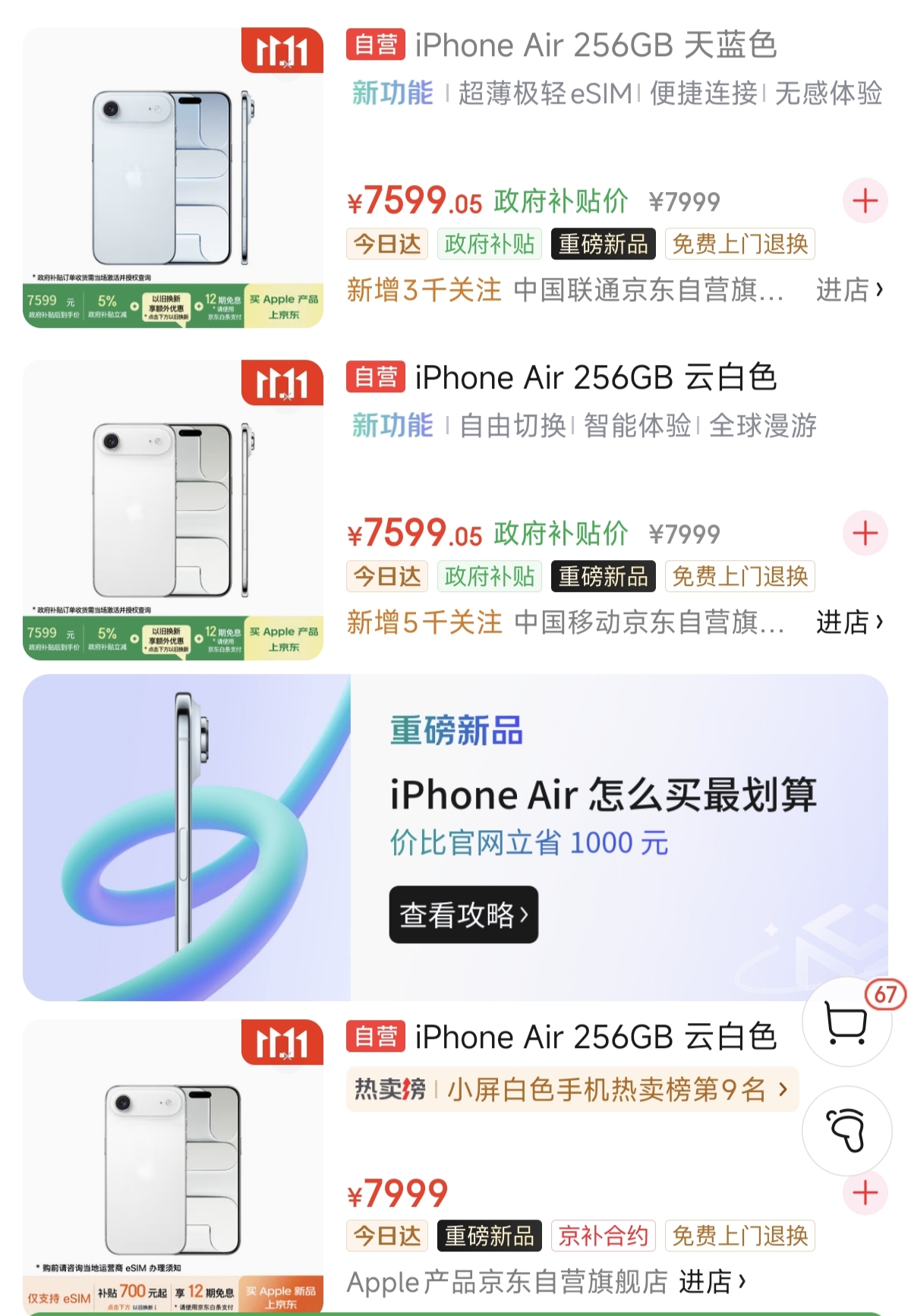
Core Insights - The newly released iPhone Air has been included in government subsidies, with discounts applied to its various storage models [1][12] - The iPhone Air's sales performance has been underwhelming, prompting the rapid introduction of promotional policies [12][13] - The market perception of the iPhone Air is that it offers lower value compared to the standard iPhone 17, leading to consumer preference for the latter [14][15] Pricing and Subsidy Details - The iPhone Air 256GB model originally priced at ¥7999 is now available for ¥7599 after a ¥400 discount [1] - The 512GB model has been reduced from ¥9999 to ¥9499, and the 1TB model from ¥11999 to ¥11399, reflecting discounts of ¥500 and ¥600 respectively [1] - Only the three major telecom operators (China Telecom, China Mobile, and China Unicom) support the government subsidy for the iPhone Air, with no regional restrictions [1] Sales Performance and Market Reaction - The activation volume for the iPhone Air during its first sales week was reported to be over 50,000 units, which is considered disappointing [13] - Analysts have noted that the demand for the iPhone Air is lower than expected, leading to a reduction in supply chain output and capacity [12][13] - Apple's CEO Tim Cook did not mention the iPhone Air's sales performance during the recent earnings call, raising concerns among investors [14] Consumer Preferences and Market Trends - The iPhone Air's specifications, such as a lower battery capacity and fewer features compared to the standard iPhone 17, have contributed to its lack of appeal [14] - The eSIM functionality, while approved for commercial use by the three major telecom operators, is still in the trial phase and has limited consumer attraction [15] - The overall market trend indicates that ultra-thin flagship devices are struggling to gain consumer acceptance, as evidenced by similar products from competitors [15]


美国政府向玉米种植户发放补贴 晚籼稻期货维持不变
Jin Tou Wang· 2025-10-23 04:16
Group 1 - The main contract for late indica rice futures remains unchanged at 2535.00 yuan/ton as of the report date [1] Group 2 - According to foreign media forecasts, U.S. corn net export sales for the 2025/26 marketing year are expected to be between 800,000 to 2,000,000 tons as of the week ending October 16, 2025 [2] - The Brazilian National Association of Grain Exporters (ANEC) anticipates that Brazil's corn exports for October will reach 6.57 million tons, an increase from the previous week's estimate of 6.46 million tons [2] - As of the week ending October 17, the deliverable inventory of corn at CBOT was reported at 15.067 million bushels, a 23.80% increase from the previous week’s 12.17 million bushels, but a 37.27% decrease from the same period last year when it was 24.019 million bushels [2] - The Executive Director of the International Sugar Organization (ISO) stated that U.S. government subsidies to corn growers distort U.S. corn ethanol export prices, impacting market competition [2]
金现代(300830.SZ):收到政府补贴150万元
Ge Long Hui A P P· 2025-09-30 09:41
Core Viewpoint - Jin Modern (300830.SZ) received a government subsidy of 1.5 million yuan, which accounts for 13.01% of the company's audited net profit attributable to shareholders for the most recent fiscal year [1] Group 1 - The government subsidy is related to revenue and is associated with the company's daily production and operational activities [1] - The sustainability of this government subsidy is questionable, indicating it may not be a reliable source of income for the company in the future [1]

超75%利润来自政府补贴!“600元股”大跌近80%!多重疑问待解!
证券时报· 2025-09-05 08:57
Core Viewpoint - The article highlights the heavy reliance of XGIMI Technology on government subsidies for its profitability, raising concerns about the sustainability of its business model and the implications for investors [3][5][7]. Financial Performance - In the first half of 2025, XGIMI Technology reported revenue of 1.626 billion yuan and a net profit of 88 million yuan, with over half of the profit derived from government subsidies amounting to 48.87 million yuan [3][5]. - Over the past two and a half years, XGIMI's total net profit was 328 million yuan, while government subsidies accounted for 249 million yuan, representing 75.82% of the net profit [7][8]. Government Subsidies - In 2023, XGIMI received over 25 government subsidies totaling 112 million yuan, which constituted 93% of its annual net profit [9]. - The company has received significant support for its Yibin Smart Optoelectronic Industrial Park project, with total government subsidies exceeding 835 million yuan, accounting for over 85% of the project's total investment [15][18]. Subsidiary Performance - Yibin XGIMI, a wholly-owned subsidiary, generated nearly 1.9 billion yuan in revenue in 2020 and has consistently reported revenues above 3 billion yuan annually since 2021 [19][20]. - In 2025, Yibin XGIMI's revenue was 1.919 billion yuan, surpassing the consolidated revenue of XGIMI Technology by nearly 300 million yuan [20][21]. Profitability Issues - Despite high revenue, Yibin XGIMI has struggled with profitability, reporting a cumulative net profit of only 4 million yuan from 2020 to 2025 [24]. - The disparity in profitability between Yibin XGIMI and XGIMI Technology may be attributed to internal pricing strategies and cost allocation practices [25].


超75%利润来自政府补贴!“600元股”大跌近80%!多重疑问待解!|e公司调查
Sou Hu Cai Jing· 2025-09-05 04:06
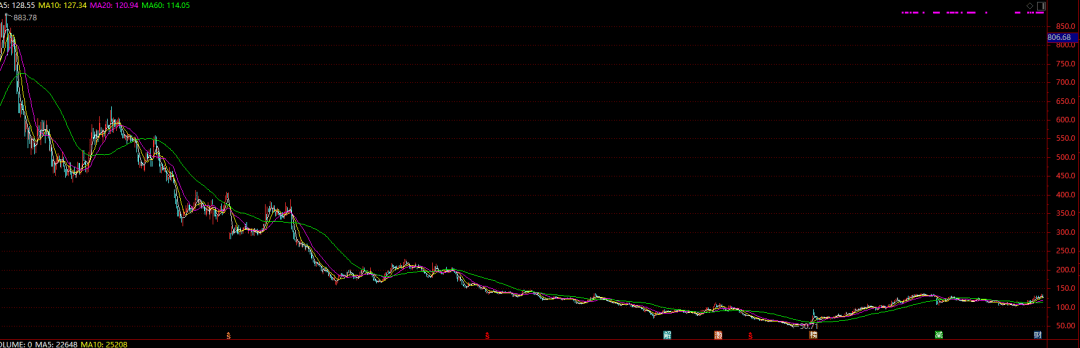
Core Viewpoint - The financial performance of XGIMI Technology heavily relies on government subsidies, raising concerns about its sustainability and profitability in the long term [3][4][5]. Financial Performance - XGIMI Technology's net profit over the past two and a half years totaled 328 million yuan, with government subsidies accounting for 249 million yuan, representing 75.82% of the net profit [5]. - In 2023, XGIMI received over 25 government subsidies totaling 112 million yuan, which constituted 93% of its annual net profit [6]. - In 2024, the company received over 15 government subsidies amounting to approximately 8.8 million yuan, making up 73% of its net profit [6]. Government Subsidies - The company has received significant support from the local government for its Yibin Smart Optoelectronic Industrial Park project, with total subsidies exceeding 8.35 billion yuan, which is over 85% of the project's total investment of approximately 9.7 billion yuan [10][12]. - The accounting treatment of these subsidies involves recognizing them as deferred income, with nearly 29 million yuan recorded as other income in 2023 and 2024 [12]. Subsidiary Performance - Yibin XGIMI, a wholly-owned subsidiary, generated nearly 1.9 billion yuan in revenue in 2020 and has consistently exceeded 3 billion yuan annually since 2021 [16]. - In 2024, the revenue gap between Yibin XGIMI and XGIMI Technology's consolidated revenue widened to 400 million yuan [16]. - Despite high revenue, Yibin XGIMI has struggled with profitability, reporting only 4 million yuan in net profit from 2020 to 2025 [19]. Internal Transactions - The discrepancy between the revenue of Yibin XGIMI and the consolidated revenue of XGIMI Technology may be attributed to internal transactions, where sales between the parent and subsidiary are priced below market value [20]. - The overall investment in the Yibin Industrial Park is less than 1 billion yuan, yet it has received over 800 million yuan in government subsidies, raising questions about the effectiveness of these subsidies in contributing to local tax revenue [20].
政府补贴成利润主要来源极米科技多重疑问待解
Zheng Quan Shi Bao· 2025-09-04 18:46
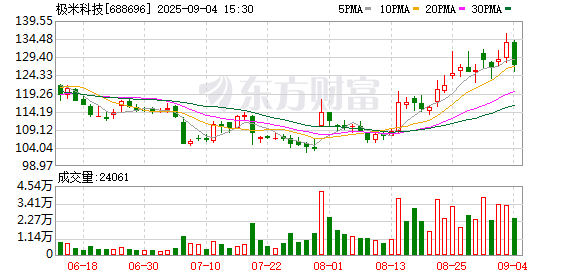
Core Viewpoint - The financial performance of XGIMI Technology heavily relies on government subsidies, which have raised concerns about the sustainability of its profitability and growth [6][7][8]. Financial Performance - In the first half of 2025, XGIMI Technology reported revenue of 1.626 billion yuan and a net profit of 88 million yuan, with government subsidies accounting for over half of the profit [5][6]. - Over the past two and a half years, XGIMI's total net profit was 328 million yuan, while government subsidies during the same period amounted to 249 million yuan, representing 75.82% of net profit [7][8]. - In 2023, XGIMI received over 25 government subsidies totaling 112 million yuan, which constituted 93% of its annual net profit [7]. Government Subsidies - The company has received substantial government support for its Yibin Industrial Park project, with total subsidies exceeding 8.35 billion yuan, accounting for over 85% of the project's total investment of approximately 9.7 billion yuan [10][12]. - The Yibin Industrial Park has been a significant contributor to XGIMI's financials, with the local government providing various forms of financial assistance [8][10]. Subsidiary Performance - Yibin XGIMI, a wholly-owned subsidiary, has consistently reported higher revenue than the consolidated revenue of XGIMI Technology, with 2025 H1 revenue reaching 1.919 billion yuan, surpassing the parent company's revenue by nearly 300 million yuan [12][13]. - Despite high revenue figures, Yibin XGIMI has struggled with profitability, reporting a cumulative net profit of only 4 million yuan from 2020 to 2025 H1 [14]. Internal Transactions - The discrepancy between the revenue of the subsidiary and the parent company may be attributed to internal transactions, where the subsidiary sells products to the parent company at lower prices, affecting overall profitability [13][14].
环龙控股:预计上半年度净利同比下降58.8%—64.2%
Mei Ri Jing Ji Xin Wen· 2025-08-11 10:41
Core Viewpoint - The company, Huanlong Holdings (02260.HK), anticipates a significant decline in net profit attributable to shareholders for the first half of 2025, projecting between RMB 6.6 million to RMB 7.6 million, which represents a decrease of approximately 58.8% to 64.2% compared to RMB 18.4 million in the same period of 2024 [1] Summary by Relevant Categories Financial Performance - The expected net profit for the first half of 2025 is projected to be between RMB 6.6 million to RMB 7.6 million [1] - This represents a decrease of approximately 58.8% to 64.2% compared to the net profit of RMB 18.4 million in the first half of 2024 [1] Operational Factors - The decline in profit is primarily attributed to increased depreciation and amortization due to capacity upgrades, heightened research and development investments, and a reduction in government subsidies and VAT deductions [1] - Despite the anticipated decline in profit, the board believes that the group's operational performance remains stable [1] Strategic Outlook - The company will continue to pursue technology upgrades and market expansion strategies [1]
【苹果】库克感谢中国国补 你今年有购买苹果产品吗?
Sou Hu Cai Jing· 2025-08-04 12:16
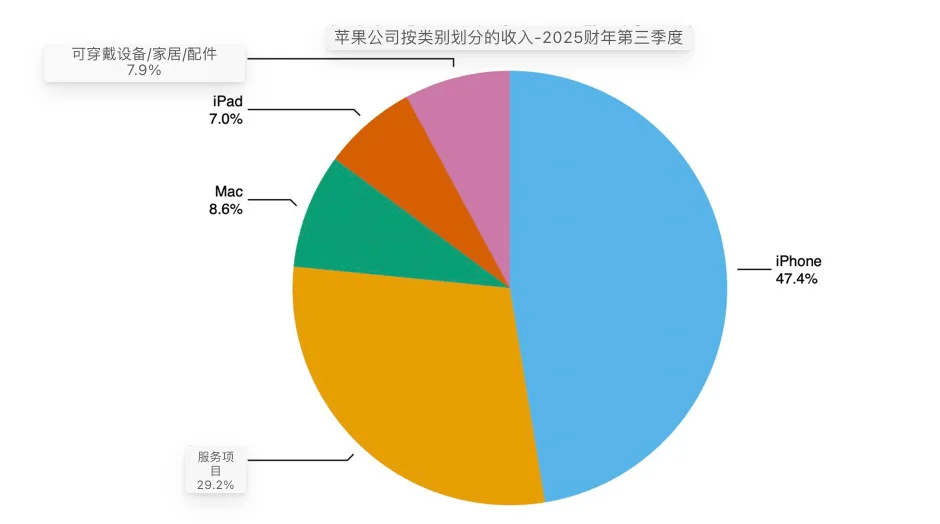
Group 1 - Apple's total revenue for Q3 FY2025 (April-June) reached $94.04 billion, marking a 10% year-over-year increase, the largest quarterly growth since December 2021 [2] - Revenue from Greater China was $15.37 billion, reflecting a 4.4% year-over-year growth [2] - iPhone revenue amounted to $44.6 billion, a 13% increase compared to the same period last year [2] - Mac revenue was $8 billion, showing a 15% year-over-year growth [2] Group 2 - Tim Cook stated that the 4% revenue growth in Greater China compared to the previous quarter was primarily driven by iPhone sales, although Mac also saw significant growth [3] - The MacBook Air was noted as the best-selling laptop model in China [3] - Government subsidies positively impacted the sales of most Apple products [3]
与马斯克关系缓和?特朗普澄清不会“摧毁”马斯克公司
Hua Er Jie Jian Wen· 2025-07-24 20:42
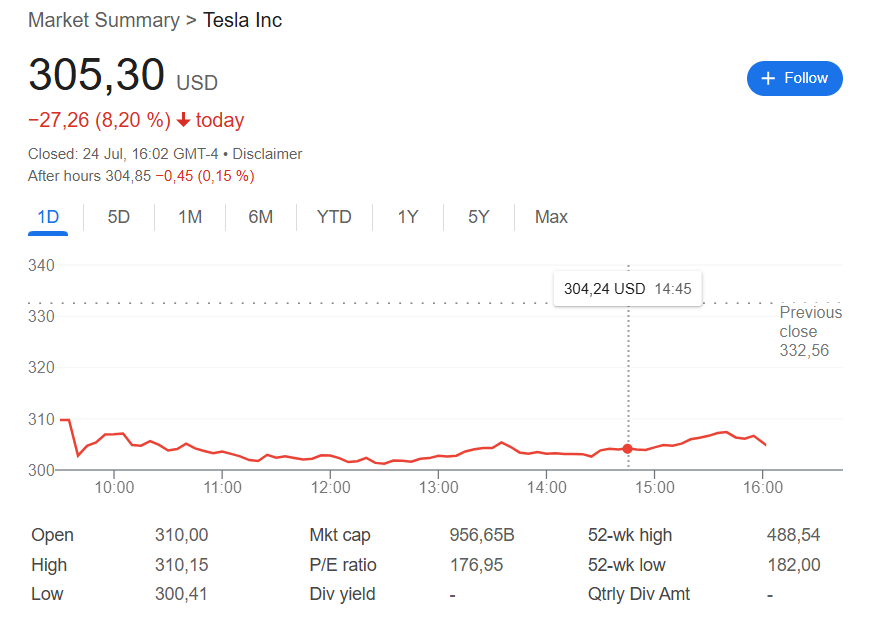
Core Viewpoint - Trump expressed his intention not to harm Elon Musk's companies by cutting government subsidies, emphasizing the importance of all American businesses thriving for the benefit of the country [2]. Group 1: Trump's Statements - Trump clarified on social media that he does not plan to destroy Musk's companies by withdrawing government subsidies, stating that he wants Musk and all American businesses to thrive more than ever [2]. - He highlighted that the success of businesses like Musk's contributes positively to the overall well-being of the United States [2]. Group 2: Tensions Between Trump and Musk - The relationship between Trump and Musk has deteriorated over recent months, marked by public disputes that began with Musk's opposition to Trump's spending bill [5]. - Trump previously threatened to cut some of Musk's government contracts, despite their past close relationship where Musk supported Trump's re-election campaign [5]. Group 3: Financial and Political Pressures on Tesla - Tesla is facing increasing political and financial pressures, with Musk warning of "several difficult quarters" due to tariff costs and the expiration of U.S. electric vehicle incentives [2]. - Tesla's stock fell over 8% following these warnings, indicating market sensitivity to the company's financial outlook [2]. Group 4: Government Contracts and Revenue Risks - Musk's companies, particularly SpaceX, have significant ties to government contracts, with SpaceX receiving over $22 billion from federal agencies since 2008 [5]. - Tesla has generated $12.24 billion in revenue from selling regulatory credits since 2015, which are crucial for its profitability [7]. - The company acknowledged risks associated with potential losses of tax credits and carbon offset mechanisms in its quarterly financial filings, which could negatively impact financial performance [7].

Prediction: Rivian Could Lose This $325 Million Revenue Source That Is Nearly 100% Profit
The Motley Fool· 2025-07-13 14:00
Core Viewpoint - Rivian Automotive is facing both opportunities and challenges, with the potential elimination of a significant revenue source from regulatory credits posing a risk to its financial viability [1][4][6]. Group 1: Company Performance and Future Prospects - Rivian achieved several consecutive quarters of positive gross margins and plans to begin production of three new vehicles priced under $50,000 early next year, which could attract millions of new buyers [1]. - In 2024, Rivian generated $325 million in revenue from the sale of automotive regulatory credits, which contributed significantly to its gross profit [4][6]. - The company sold approximately $300 million worth of regulatory credits in Q4 2024, while its total gross profit was around $170 million, indicating reliance on these credits for profitability [6][11]. Group 2: Impact of Legislative Changes - The recent budget bill signed into law will phase out EV tax credits by the end of 2025, which could lead to increased prices for consumers and a potential drop in demand [3][4]. - The elimination of fines for noncompliant automakers in the new budget bill may reduce the incentive for these automakers to purchase excess regulatory credits, impacting Rivian's revenue from this source [6][12]. - Analysts estimate that around 75% of Tesla's credits are earned in the U.S., with about half from federal programs, suggesting Rivian could face a significant reduction in credit sales and profit if similar proportions apply [10]. Group 3: Long-term Outlook - Despite the challenges posed by the elimination of federal regulatory credits, Rivian is still expected to maintain a gross profit of around $50 million, indicating some resilience [11]. - The company's stock is trading at 2.8 times sales, reflecting low expectations, and while the elimination of federal credits won't be catastrophic, it may extend the timeline for growth initiatives [12]. - Rivian may need to adjust its cash flow and potentially delay some growth initiatives to ensure the timely launch of its mass-market vehicles, but it remains a promising long-term growth stock for patient investors [13].