智慧渔业

Search documents
海洋牧场科技范儿(“融”观中国)
Ren Min Ri Bao Hai Wai Ban· 2025-12-21 23:25
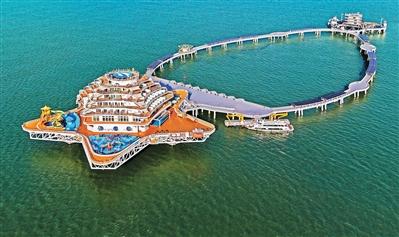
Core Viewpoint - Shandong Province is accelerating the development of a modern fishing industry through technological innovation and integration of land and sea, leading to high-quality growth in fisheries [4][12]. Group 1: Technological Advancements in Fisheries - The introduction of smart fish farming technologies, such as deep-sea intelligent cages, allows for efficient management with minimal manpower, reducing feed waste by over 40% and stabilizing fish survival rates at over 90% [6][5]. - The "Yenghai 1" marine ranch complex utilizes a "5G + marine ranch" model for comprehensive smart management, enhancing operational efficiency and reducing costs [7]. Group 2: Economic Impact on Local Fishermen - The "big fish leads small fish" model enables traditional fishermen to benefit from technology and market advantages, improving their income stability and reducing financial risks [8]. - The development of leisure fishing industries in coastal areas has led to significant economic growth, with annual revenues exceeding 200 million yuan [8]. Group 3: Value Chain Enhancement - Automation in processing has allowed for the production of over 30 types of processed seafood, significantly increasing the value of marine products [9]. - E-commerce platforms have facilitated market access, enabling local cooperatives to connect with consumers and enhance income for surrounding villages [9]. Group 4: Ecological Restoration Efforts - The shift towards deep-sea aquaculture and technological solutions aims to restore marine ecosystems, with initiatives leading to the resurgence of various marine species [10][11]. - The establishment of national marine ranches and the implementation of ecological measures have improved fishery resources and environmental conditions across Shandong [11][12]. Group 5: Future Development Plans - The Shandong provincial government plans to strengthen marine ecological protection and develop a modern marine economy, focusing on sustainable growth and advanced fishing systems [12].

【省农业农村厅】陕西冷水鱼年产量位居全国第三
Shan Xi Ri Bao· 2025-12-11 22:48
Group 1 - The core viewpoint of the news is the promotion of high-quality development in the Qinling cold-water fish industry, emphasizing the integration of ecological protection and industrial growth [1][2] - As of now, Shaanxi has achieved an annual cold-water fish production of over 30,000 tons, ranking third in the country, with a production value exceeding 3 billion yuan, placing it among the top regions nationally [1] - The city of Shangluo, a key production area, has an annual cold-water fish output of 11,000 tons and a comprehensive production value of 1.86 billion yuan, serving as a model for the implementation of the "green mountains and clear waters are invaluable assets" concept [1] Group 2 - The overall fishery industry in Shaanxi has seen significant growth, with funding increasing from over 10 million yuan in 2019 to an average of about 150 million yuan annually, and it is projected that by 2025, the province's aquatic product output will exceed 250,000 tons, with a production value surpassing 10 billion yuan [1] - Shaanxi is home to the Qinling fine-scaled salmon, one of the top ten characteristic aquatic genetic resources in the country, and has achieved national leadership in areas such as the giant salamander industry and artificial breeding of the Lanzhou catfish [1] - A collaborative agreement was signed between the provincial agricultural and rural affairs department and Shangluo city, marking a new phase in industry-academia-research cooperation, alongside the establishment of a digital fishery research center to drive digitalization in the industry [2]
迈向“十五五”的发展图景|大型养殖工船到深海“牧渔”
Ren Min Ri Bao· 2025-11-27 07:12
Core Insights - The article emphasizes the importance of high-quality development in the marine economy and the construction of a strong marine nation, advocating for a diversified food supply system through modern agricultural practices [1]. Group 1: Innovations in Marine Aquaculture - The "Guoxin 1号2—1" is the world's first 150,000-ton smart fishery large-scale breeding vessel, which was launched on April 17 and began trial operations shortly after [3]. - The vessel has a capacity of approximately 96,000 cubic meters for aquaculture, with 15 standard breeding cabins and advanced environmental control systems that ensure optimal living conditions for fish [4]. - Automation and smart technology have significantly reduced labor costs by 20%, with over 90% mechanization and a 45% increase in automation levels, allowing just two people to manage daily feeding operations [4]. Group 2: Supply Chain and Market Impact - The innovative breeding vessel is part of a broader trend in the marine fishery industry, enhancing the entire supply chain from feed formulation to logistics, achieving rapid delivery times of 6 hours for 500 kilometers and 15 hours for 1,000 kilometers [5]. - The successful harvest of 46,000 fish from the "Guoxin 1号2—1" is seen as a starting point, with expectations that the series of vessels will yield over 10,000 tons annually once fully operational [5]. - The industrialization of aquaculture is transforming the marine fishery sector, allowing for seasonal complementarity in fish farming across different regions, thus turning deep-sea areas into sustainable "blue granaries" [6].
大型养殖工船到深海“牧渔”
Ren Min Ri Bao· 2025-11-27 06:29
Core Viewpoint - The article highlights the advancements in marine economy and the development of high-quality marine resources through innovative aquaculture practices, particularly focusing on the "Guoxin 1号2—1" smart fish farming vessel and its impact on the industry [1][5]. Group 1: Marine Economy Development - The initiative aims to promote high-quality development of the marine economy and accelerate the construction of a strong marine nation [1]. - The "Guoxin 1号2—1" is the world's first 150,000-ton smart aquaculture vessel, which was launched in April 2023 and has already begun trial operations [5]. Group 2: Aquaculture Innovations - The vessel has successfully harvested over 46,000 large yellow croakers in a single catch, showcasing its operational efficiency [5]. - The aquaculture system on board includes advanced environmental control systems that ensure optimal living conditions for fish, significantly enhancing their growth and health [5][6]. - The vessel operates with a high degree of automation, achieving over 90% mechanization and a 45% increase in automation levels, which reduces labor costs by 20% [6]. Group 3: Industry Impact - The innovations in aquaculture are driving the overall upgrade of the marine fishery industry, with specialized feed formulas and smart software pushing the industry towards high-end transformation [7]. - The logistics system enables rapid delivery, achieving "fast delivery" within 6 hours for 500 kilometers and 15 hours for 1,000 kilometers [7]. - The expected annual production capacity of the "Guoxin 1号" series vessels is over 10,000 tons, indicating a significant shift towards industrialized aquaculture that enhances production efficiency and resource utilization [7].
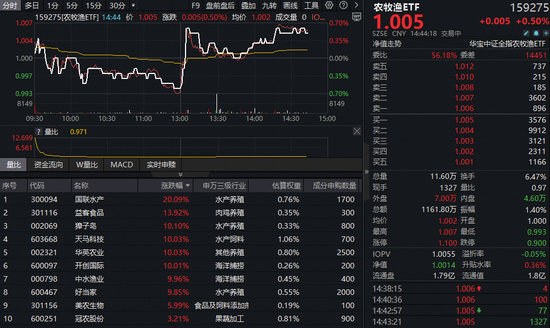
水产股掀涨停潮,国联水产20CM涨停!农牧渔ETF(159275)午后直线拉升,机构持续看好产业链!
Xin Lang Ji Jin· 2025-11-19 07:00
Core Viewpoint - The agricultural, animal husbandry, and fishery sector experienced a significant surge in the market, driven by strong performance in the aquaculture stocks, particularly due to external factors affecting supply and increasing domestic demand for quality aquatic products [1][4]. Group 1: Market Performance - The only agricultural, animal husbandry, and fishery ETF (159275) saw a 0.5% increase in price during the trading session, recovering from earlier weakness [1]. - Key stocks in the aquaculture sector, such as Guolian Aquatic Products, Zangzi Island, and Tianma Technology, reached their daily limit up, indicating strong investor interest [1][4]. Group 2: Supply and Demand Factors - Supply-side influences include ongoing concerns regarding the impact of Japan's nuclear wastewater discharge, which may lead consumers to prefer domestic aquatic products, thereby boosting demand for local offerings [4]. - On the demand side, there is a growing consumer preference for high-quality protein sources from aquatic products, further supporting the sector's growth [4]. Group 3: Policy and Future Outlook - Policy initiatives, such as the 2025 Central Document No. 1 promoting "green and healthy aquaculture," and the release of the "Smart Fishery Development White Paper," are expected to inject new momentum into the aquaculture industry [4]. - Long-term projections indicate a significant recovery in the aquaculture sector by 2025, with major aquatic product prices expected to rebound to historical highs, driven by market adjustments following previous years of overproduction [4]. Group 4: Valuation and Investment Opportunities - The agricultural, animal husbandry, and fishery sector is currently viewed as an attractive investment opportunity, with the agricultural ETF's price-to-book ratio at 2.58, placing it in the lower 31.25% percentile over the past decade [3]. - Analysts recommend focusing on the agricultural, animal husbandry, and fishery ETF (159275) for exposure to a diversified range of stocks within the sector, including aquaculture, pig farming, feed, and crop planting [5].

水产种苗“供给重镇”,佛山的产业底气在哪儿?
Nan Fang Nong Cun Bao· 2025-11-17 11:34
Core Viewpoint - Foshan is emerging as a significant hub for aquatic seedling supply, leveraging modern agricultural biotechnology and healthy breeding techniques to enhance the entire aquaculture industry chain, achieving high-quality development in modern fisheries [2][3][6]. Industry Overview - Foshan produces over 3.686 billion freshwater fish seedlings annually, accounting for 47% of the province's and 24% of the nation's total, showcasing its scale advantage driven by continuous breakthroughs in breeding technology [15][16][17]. - The city has transitioned from traditional breeding methods to modern biotechnological breeding, with new varieties like "Youlu 3" and "Dinggui 1" improving growth rates and disease resistance, significantly benefiting local farmers [19][20][21]. Technological Advancements - The integration of advanced technologies such as genetic sequencing and artificial selection has stabilized the inheritance of superior breeds, moving away from reliance on experience and visual selection [12][13]. - Innovative farming practices have emerged, including precise water quality monitoring and the use of traditional Chinese medicine for disease prevention, leading to healthier fish and higher market prices [24][25][26]. Economic Impact - The total output of aquatic products in Foshan reached 827,000 tons, representing 18.35% of the province's total, indicating explosive growth in quantity and quality due to advancements in breeding technology [31][32]. - The aquaculture industry contributes 21 billion yuan to the city's agricultural output, accounting for 44% of the total, positioning it as a crucial pillar for rural revitalization [35][36]. Collaborative Efforts - The collaboration between research institutions and enterprises has facilitated the application of innovative technologies in aquaculture, enhancing productivity and sustainability [49][50][51]. - The establishment of a comprehensive ecosystem from seedling cultivation to consumer markets has strengthened Foshan's position as a national distribution center for quality freshwater fish [33][34][48]. Future Directions - Continued emphasis on agricultural biotechnology and innovation is expected to drive the transformation of traditional industries, with a focus on sustainable practices and smart aquaculture systems [66][70][72].

15万吨级智慧渔业养殖工船“国信1号2-2”在青岛交付
Xin Lang Cai Jing· 2025-11-15 09:17
Core Insights - The delivery of the 150,000-ton smart fishery breeding vessel "Guoxin 1 Hao 2-2" marks a significant advancement in the aquaculture industry, enhancing operational capabilities in feeding and water collection systems [1] - The vessel will conduct year-round continuous breeding trials for salmon and trout, establishing a comprehensive industry chain from seedling cultivation to marketing [1] Group 1 - The investment and construction of the vessel were undertaken by Qingdao Guoxin Group, indicating strong corporate involvement in the development of smart aquaculture solutions [1] - The vessel is named "Lu Ji Yu Yang 60618," reflecting its operational focus on fish farming [1] - The upgraded core systems of the vessel are expected to improve efficiency and productivity in aquaculture operations [1]
天马科技:天马科技是以科技为主导的全球渔牧集团化农业龙头企业
Zheng Quan Ri Bao Wang· 2025-11-14 14:11
Core Viewpoint - Tianma Technology (603668) positions itself as a leading global aquaculture group driven by technology, focusing on the integration of various agricultural sectors and promoting the development of eight major aquaculture industry clusters [1] Group 1: Company Overview - Tianma Technology operates across the entire modern agricultural aquaculture value chain, including smart breeding, food processing, aquatic seed industry, animal nutrition, and feed [1] - The company emphasizes a technology-driven approach, leveraging AI to create smart aquaculture solutions and enhance the synergy between aquaculture and solar energy [1] Group 2: Strategic Focus - The company is concentrating on marine economy, green economy, and digital economy, aiming to revitalize the industry through its unique eel industry [1] - Tianma Technology's initiatives are aligned with rural revitalization efforts, contributing to farmers' income growth and striving to achieve the goal of "one eel swimming worldwide" [1]

聚焦大湾区农交会|“媒体+”解码粤东地标:潮客文化孕育产业珍馐
Nan Fang Nong Cun Bao· 2025-11-14 11:04
Core Viewpoint - The article highlights the upcoming 2025 Greater Bay Area Agricultural Products Trade Fair and Specialty Products Expo, showcasing the unique agricultural products from the five cities of Eastern Guangdong, aiming to tap into the trillion-dollar consumption market of the Bay Area [12][13]. Group 1: Agricultural Products and Industry Development - The five cities of Eastern Guangdong (Shantou, Shanwei, Chaozhou, Jieyang, Meizhou) are known for their unique geographical features and rich agricultural products, including the famous Meizhou pomelo and Chaozhou Phoenix tea [15][19][30]. - Meizhou has become the largest pomelo production area in Guangdong, with a planting area of 650,000 mu and an annual output accounting for 20% of the national total, generating an industry value exceeding 8.9 billion yuan [20][26][27]. - Chaozhou's Phoenix tea has been recognized as a national specialty product, with an annual output value exceeding 1.8 billion yuan and a planting area of 117,600 mu [30]. - The bamboo shoots from Jieyang are also notable, with a planting area of 52,300 mu and an annual output value surpassing 1.5 billion yuan [33]. Group 2: Industry Upgrading and Technological Innovation - The Shantou city has developed a complete industrial chain for the "Lion Head Goose," with an annual output exceeding 8 million geese and a total industry value of over 4.5 billion yuan [37]. - The traditional food products from the Hakka culture, such as Hakka salt-baked chicken and pickled vegetables, are experiencing industrial upgrades through standardized production [64]. - The integration of technology in traditional fisheries is evident, with the establishment of breeding bases and smart farming platforms in Shantou and Shanwei, enhancing productivity and sustainability [56][57]. Group 3: Market Expansion and Brand Development - The upcoming trade fair is expected to facilitate the transition of local products from "regional specialties" to "industry landmarks," providing a platform for technological empowerment, brand building, and industry chain extension [68][69]. - The event will attract over 1,000 core buyers and feature a "supply-demand matching area" to enhance market penetration and brand influence for Eastern Guangdong agricultural products [73]. - The fair has already achieved significant exposure, with over 10 million interactions and connections to a media matrix of over 100 million users, indicating strong market interest [71].
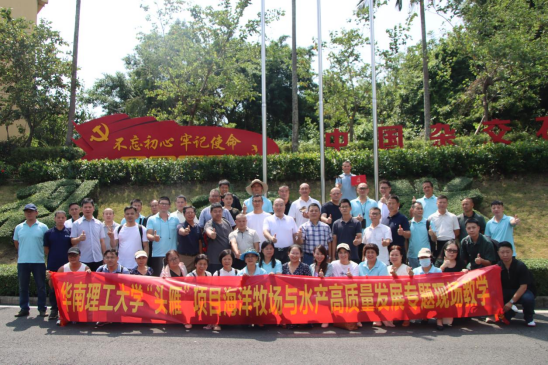
向海图强!华南理工大学“头雁”学员深入海洋牧场探路水产高质量发展
Nan Fang Nong Cun Bao· 2025-11-14 08:10
Core Insights - The training program organized by South China University of Technology focuses on promoting high-quality development in marine ranching, aligning with national strategies for rural revitalization and the "blue granary" initiative [1][17]. Group 1: Policy and Research Support - The training highlighted the importance of a robust policy framework in Guangdong, including a comprehensive support system for marine ranching that encompasses planning, policies, seed industry, and equipment [2]. - Detailed analysis of key aquaculture species such as sturgeon, flower perch, and grouper was provided, emphasizing their suitability, economic benefits, and strategies for optimizing the industry chain [2]. Group 2: Innovation in Seed Industry and Smart Aquaculture - The visit to the Huazhong Agricultural University Fisheries Research Institute showcased significant advancements in aquaculture, including the establishment of quality standards for species like the Nansha blue crab and breakthroughs in disease-resistant vaccines for bass [5]. - The introduction of smart aquaculture systems by Chengyi Smart Fisheries Development Co., which includes ecological farming models and intelligent feeding management, demonstrated effective cost reduction and efficiency improvements [7]. Group 3: Modernization of Traditional Fisheries - The training emphasized the integration of smart factory technologies and supply chain models in aquaculture, showcasing how IoT, AI, and big data can transform traditional fisheries into more efficient and environmentally friendly operations [10]. - The concept of order-based aquaculture supply chains was discussed, addressing industry challenges such as market imbalances and price volatility, and presenting a successful model that integrates breeding, ecological farming, processing, and logistics [12]. Group 4: Technological Empowerment - The final session at the Guangdong Modern Agricultural Equipment Research Institute illustrated the advancements in agricultural equipment that enhance quality and efficiency across various agricultural sectors [14]. - The training concluded with participants expressing the value of the comprehensive knowledge framework developed, which connects macro policies to micro technologies, fostering innovative thinking and resource linkage [16].