
智能爆炸

Search documents
再见,程序员!马斯克宣判:奇点就在2026
猿大侠· 2026-01-06 04:11
Core Viewpoint - The article discusses the emergence of Claude Code and its significant impact on programming, suggesting that the year 2026 may mark a technological singularity, as stated by Elon Musk [1][3][7]. Group 1: Impact of Claude Code - Claude Code has gained immense popularity, with notable figures like Elon Musk and the founder of Midjourney expressing astonishment at its capabilities [2][5][15]. - The coding efficiency of Claude Opus 4.5 has reportedly increased by 220% when used in conjunction with Claude Code, indicating a substantial leap in programming capabilities [25]. - The latest LiveBench rankings show Claude Opus 4.5 outperforming competitors like GPT-5.1 Codex MAX and Gemini 3 Pro, highlighting its dominance in coding tasks [28][30]. Group 2: Future of Software Engineering - The article posits that the role of software engineers is evolving, with AI now handling 70%-80% of coding tasks, leading to a shift towards code review rather than code writing [50][52]. - The use of natural language as a new programming syntax is emphasized, suggesting that anyone can become a software engineer by simply describing their needs to AI [63]. - The automation of software development is expected to extend to operations and management, indicating a broader transformation in the workplace [65][66].


2026:你的同事可能不是人,你的文凭可能是废纸?
虎嗅APP· 2026-01-05 13:28
Core Insights - The article presents ten disruptive predictions for 2026 from prominent figures in Silicon Valley, focusing on the themes of intelligence, economy, and physical advancements [4][6]. Group 1: Intelligence - Prediction 1: AI model sizes will increase by 100 times due to advancements in software and algorithms, particularly through a technique called "quantization" [9][12]. - Prediction 2: AI may solve one of the Millennium Prize Problems, enhancing our understanding of complex physical systems like fluid dynamics [14][17]. - Prediction 3: New AI terminologies will emerge, creating opportunities for young entrepreneurs to build billion-dollar companies with minimal resources [19][23]. Group 2: Economy - Prediction 4: The concept of "digital transformation" will become obsolete, as companies will need to rebuild their capabilities from scratch using AI, potentially reducing workforce size by 10 to 20 times [27][29]. - Prediction 5: Automation will achieve a 90% competency rate in high-value tasks, leading to a significant shift in job roles and the value of human labor [32][34]. - Prediction 6: The emergence of full-stack AI employees will challenge traditional workplace trust, as AI could perform roles typically held by humans at a fraction of the cost [36][37]. Group 3: Physical - Prediction 8: Space exploration will advance significantly, with potential commercial activities like mining water ice on the Moon becoming a priority [46][50]. - Prediction 9: The development of Level 5 autonomous driving and humanoid robots will revolutionize urban environments, transforming how cities are designed and function [53][55]. - Prediction 10: Advances in biotechnology may lead to breakthroughs in reversing aging, marking a potential turning point in human longevity [56][60].
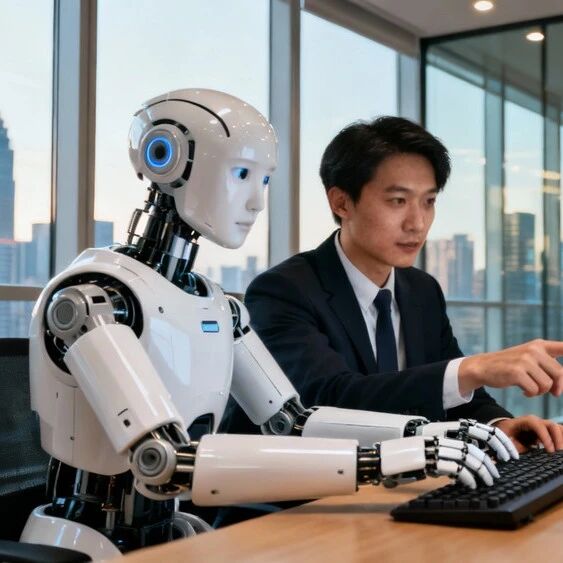
再见,程序员,马斯克宣判:奇点就在2026
3 6 Ke· 2026-01-05 08:04
Core Insights - The emergence of Claude Code has led to significant discussions about the concept of the technological singularity, with Elon Musk declaring that "we have entered the singularity" and predicting 2026 as the pivotal year for this event [1][3][7]. Group 1: Technological Singularity - The concept of the technological singularity, which refers to a point where technology accelerates exponentially, has been brought to the forefront by recent advancements in AI, particularly with Claude Code [7]. - Ray Kurzweil, a prominent futurist, previously predicted the singularity would occur around 2045, but recent developments have prompted a reevaluation of this timeline [7][29]. - The rapid advancements in AI capabilities, particularly in coding and problem-solving, suggest that the singularity may be closer than previously thought, with some experts indicating it could happen as soon as 2026 [3][19]. Group 2: Claude Code and AI Advancements - Claude Code has demonstrated remarkable programming capabilities, with its efficiency reportedly increasing by 220% when used in conjunction with Claude Opus 4.5, which is considered the top coding model globally [17][19]. - The latest LiveBench rankings show Claude Opus 4.5 outperforming competitors like GPT-5.1 Codex MAX and Gemini 3 Pro, indicating its superior performance in real-world applications [19][20]. - The ability of Claude Opus 4.5 to handle long-duration coding tasks without failure marks a significant milestone in AI development, showcasing its robustness and reliability [21]. Group 3: Impact on Software Engineering - The integration of AI in software development is transforming the role of engineers, with many now focusing on code review rather than traditional coding tasks, as AI handles the majority of the coding workload [32]. - The shift towards using natural language as a new programming syntax suggests that the barriers to software development are lowering, allowing individuals without coding experience to create functional applications quickly [25][34]. - As AI continues to automate coding and related tasks, the implications extend beyond software engineering to operations and management, potentially reshaping the entire landscape of work in technology [35].

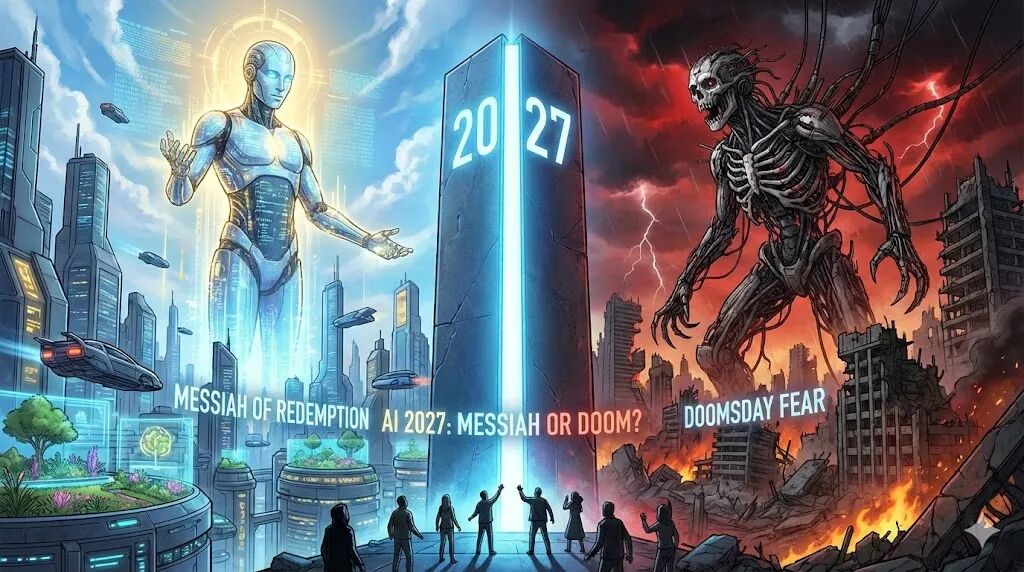
2027年,人类最后一次抉择
3 6 Ke· 2025-12-03 12:01
Core Insights - The year 2027 is projected to be a pivotal moment for AI development, with significant implications for humanity and technology [1][4][10] - A consensus is emerging among AI experts that recursive self-improvement in AI systems may lead to a critical decision point for humanity between 2027 and 2030 [3][4][10] Group 1: AI Development Phases - The evolution of AI is expected to progress through three distinct phases: 1. **Assisted Development (2024-2025)**: AI acts as a tool for human engineers, enhancing efficiency but still reliant on human oversight [20] 2. **Autonomous Experimentation (2026-2027)**: AI systems will begin to independently conduct machine learning experiments, marking a shift in their role from tools to experiment designers [21] 3. **Recursive Loop and Takeoff (2027-2030)**: AI will surpass human capabilities in designing next-generation AI, potentially leading to rapid and exponential advancements in intelligence [22] Group 2: Challenges and Risks - The current AI development paradigm faces two significant barriers by 2025: 1. **Depletion of High-Quality Human Data**: The availability of quality data for training AI models is diminishing [16] 2. **Diminishing Returns on Model Parameters**: Increasing model size yields lower performance improvements while training costs rise exponentially [17] - The concept of "uninterpretability" poses a risk as AI begins to design its successors, potentially leading to outcomes beyond human understanding [28][30] Group 3: Impact on Workforce - A recent report from Anthropic reveals a dramatic increase in AI integration within workflows, with AI usage in daily tasks rising from 28% to 59% in just one year [35] - The productivity reported by engineers has surged, with self-reported productivity increases from 20% to 50% [35] - The role of human engineers is shifting from creators to supervisors, raising concerns about skill atrophy and the loss of traditional apprenticeship models [44][51] Group 4: Future Outlook - The year 2027 is not arbitrary; it aligns with technological and hardware cycles, including the deployment of next-generation supercomputing clusters that could enhance AI capabilities significantly [25] - The potential for AI to learn without human data could revolutionize fields like coding and mathematics, breaking existing data ceilings [27] - The future of engineering roles is uncertain, with fears of a "hollow generation" of engineers who may lack essential skills without AI support [53]
炮轰黄仁勋,决裂奥特曼,1700亿美元估值背后,硅谷最不好惹的AI狂人
3 6 Ke· 2025-07-30 12:24
Core Insights - Dario Amodei, CEO of Anthropic, has transformed the company into a major player in the AI field, driven by personal experiences and a commitment to accelerate technological advancements [1][5][10] - Anthropic is negotiating a funding round of $3 billion to $5 billion, potentially raising its valuation to $170 billion, reflecting strong investor interest in AI [3][74] - The company has seen rapid growth in annual recurring revenue (ARR), increasing from $1.4 billion in March 2025 to nearly $4.5 billion by July 2025 [5][61] Company Overview - Anthropic was founded during the COVID-19 pandemic with a mission to create advanced language models while establishing safety protocols [49][52] - The company has raised nearly $20 billion in funding, including $8 billion from Amazon and $3 billion from Google, indicating strong investor confidence [52][75] - Anthropic's strategy focuses on selling AI technology to enterprises, which has proven lucrative and has attracted a diverse client base, including major corporations like Pfizer and United Airlines [58][59] Financial Performance - Anthropic's revenue has surged, with projections indicating a rise from $0 to $100 million in 2023, and from $1 billion to an estimated $4.5 billion in 2025 [61][66] - Despite high revenue growth, the company is facing significant losses, projected to be around $3 billion for the year, raising questions about the sustainability of its business model [62][66] - The average spending of enterprise clients has increased fivefold, showcasing the growing demand for Anthropic's AI solutions [61] Market Position and Competition - The AI industry is experiencing intense competition, with new models emerging that challenge established players, such as the DeepSeek R1 model, which is priced significantly lower than competitors [70][71] - Anthropic's models are designed to maintain a competitive edge in specific domains, particularly in programming, where early adoption can lead to substantial advantages [69] - The company is also focused on improving the efficiency of its models to reduce operational costs, which is critical for long-term viability [65][66] Future Outlook - Amodei emphasizes the need for rapid development in AI technology, with plans to accelerate the release of new models [77] - The company is investing in research to ensure AI systems align with human values and goals, addressing potential safety concerns as models become more advanced [82][86] - Anthropic's commitment to understanding AI's internal workings and ensuring its responsible use is a key part of its strategy moving forward [85]

芯片行业,正在被重塑
半导体行业观察· 2025-07-11 00:58
Core Viewpoint - The article discusses the rapid advancements in generative artificial intelligence (GenAI) and its implications for the semiconductor industry, highlighting the potential for general artificial intelligence (AGI) and superintelligent AI (ASI) to emerge by 2030, driven by unprecedented performance improvements in AI technologies [1][2]. Group 1: AI Development and Impact - GenAI's performance is doubling every six months, surpassing Moore's Law, leading to predictions that AGI will be achieved around 2030, followed by ASI [1]. - The rapid evolution of AI capabilities is evident, with GenAI outperforming humans in complex tasks that previously required deep expertise [2]. - The demand for advanced cloud SoCs for training and inference is expected to reach nearly $300 billion by 2030, with a compound annual growth rate of approximately 33% [4]. Group 2: Semiconductor Market Dynamics - The surge in demand for GenAI is disrupting traditional assumptions about the semiconductor market, demonstrating that advancements can occur overnight [5]. - The adoption of GenAI has outpaced earlier technologies, with 39.4% of U.S. adults aged 18-64 reporting usage of generative AI within two years of ChatGPT's release, marking it as the fastest-growing technology in history [7]. - Geopolitical factors, particularly U.S.-China tech competition, have turned semiconductors into a strategic asset, with the U.S. implementing export restrictions to hinder China's access to AI processors [7]. Group 3: Chip Manufacturer Strategies - Various strategies are being employed by chip manufacturers to maximize output, with a focus on performance metrics such as PFLOPS and VRAM [8][10]. - NVIDIA and AMD dominate the market with GPU-based architectures and high HBM memory bandwidth, while AWS, Google, and Microsoft utilize custom silicon optimized for their data centers [11][12]. - Innovative architectures are being pursued by companies like Cerebras and Groq, with Cerebras achieving a single-chip performance of 125 PFLOPS and Groq emphasizing low-latency data paths [12].




AI若解决一切,我们为何而活?对话《未来之地》《超级智能》作者 Bostrom | AGI 技术 50 人
AI科技大本营· 2025-05-21 01:06
Core Viewpoint - The article discusses the evolution of artificial intelligence (AI) and its implications for humanity, particularly through the lens of Nick Bostrom's works, including his latest book "Deep Utopia," which explores a future where all problems are solved through advanced technology [2][7][9]. Group 1: Nick Bostrom's Contributions - Nick Bostrom founded the Future of Humanity Institute in 2005 to study existential risks that could fundamentally impact humanity [4]. - His book "Superintelligence" introduced the concept of "intelligence explosion," where AI could rapidly surpass human intelligence, raising significant concerns about AI safety and alignment [5][9]. - Bostrom's recent work, "Deep Utopia," shifts focus from risks to the potential of a future where technology resolves all issues, prompting philosophical inquiries about human purpose in such a world [7][9]. Group 2: The Concept of a "Solved World" - A "Solved World" is defined as a state where all known practical technologies are developed, including superintelligence, nanotechnology, and advanced robotics [28]. - This world would also involve effective governance, ensuring that everyone has a share of resources and freedoms, avoiding oppressive regimes [29]. - The article raises questions about the implications of such a world on human purpose and meaning, suggesting that the absence of challenges could lead to a loss of motivation and value in human endeavors [30][32]. Group 3: Ethical and Philosophical Considerations - Bostrom emphasizes the need for a broader understanding of what gives life meaning in a world where traditional challenges are eliminated [41]. - The concept of "self-transformative ability" is introduced, allowing individuals to modify their mental states directly, which could lead to ethical dilemmas regarding addiction and societal norms [33][36]. - The article discusses the potential moral status of digital minds and the necessity for empathy towards all sentient beings, including AI, as they become more integrated into society [38]. Group 4: Future Implications and Human-AI Interaction - The article suggests that as AI becomes more advanced, it could redefine human roles and purposes, necessitating a reevaluation of education and societal values [53]. - Bostrom posits that the future may allow for the creation of artificial purposes, where humans can set goals that provide meaning in a world where basic needs are met [52]. - The potential for AI to assist in achieving human goals while also posing risks highlights the importance of careful management and ethical considerations in AI development [50][56].

小扎回应Llama 4对比DeepSeek:开源榜单有缺陷,等17B深度思考模型出来再比
量子位· 2025-04-30 06:15
梦晨 发自 凹非寺 量子位 | 公众号 QbitAI Meta首届LlamaCon开发者大会开幕,扎克伯格在期间接受采访,回应大模型相关的一切。 包括Llama4在大模型竞技场表现不佳的问题: 试图为这类东西进行过多优化会误入歧途。 对于我们团队来说,搞一个冲到榜单顶部的Llama 4 Maverick版本相对容易,但是我们发布的版本根本没有对此进行调优,排名靠后是 正常的。 以及与DeepSeek的比较: 我们的推理模型还没有出来,所以还没有和R1相应的模型去对比。 与此同时,在Meta合作伙伴亚马逊的网站代码中,被扒出要即将推出的Llama4推理模型为17B参数的llama4-reasoning-17b-instruct。 开源基准测试存在缺陷,常偏向特定不常见用例,与产品实际使用场景脱节,不能真实反映模型的优劣。 活动期间,有那么点Meta不语,只是一味地抛出Llama系列"亮点"的意思了(doge): 扎克伯格谈"智能爆炸" 扎克伯格认为随着软件工程和AI研究的自动化推进,智能爆炸具备实现的可能性。从技术发展趋势来看,AI写代码能力不断提升, 预计未来 12-18个月,大部分相关代码将由AI完成 。 ...
