
核技术应用

Search documents
报告预计到2030年左右我国核技术应用产业规模将翻番
Xin Hua Cai Jing· 2025-10-16 06:36
Core Insights - The report by the China Nuclear Energy Association predicts that by around 2030, the overall scale of China's nuclear technology application industry will double, establishing a safe, reliable, and efficient nuclear technology application infrastructure [1][2] - The report titled "China Nuclear Technology Application Industry Development Report (2025)" was released at the 2025 International Conference on Nuclear Technology Application [1] Summary by Categories Industry Growth - The nuclear technology application output in China is expected to reach 890 billion yuan in 2024, representing a 27% increase from 2022, with a compound annual growth rate of 15.6% from 2020 to 2024 [1] - The industrial application accounts for approximately 42.7% of the total output, while nuclear medicine diagnosis and treatment contributes 21.7%, and agricultural applications make up 13.9% [1] Employment and Infrastructure - By the end of 2024, there will be approximately 140,000 legal entities engaged in radioactive isotopes/radiation devices, employing around 960,000 people, marking increases of 34% and 17% respectively since 2022 [1] - The number of various radiation devices in use is projected to be about 320,000 sets, with 172,000 radioactive sources, reflecting growth of 17% and 4.9% respectively since 2022 [1] Regional Development - Economic regions in China are actively implementing nuclear technology industry policies and establishing industrial parks to promote the scale of key industries [2] - The Yangtze River Delta is developing an integrated nuclear energy and technology application model, while the Pearl River Delta focuses on building a hub for nuclear medical industries [2] International Collaboration - China has opened 12 top nuclear research facilities to the international community and established 8 IAEA collaboration centers [2] - There is a growing trend of exporting high-end nuclear medical equipment and other products, with continuous growth in the export of isotopes like cobalt-60 [2] Future Outlook - The report suggests that the upgrade of manufacturing, development of the digital economy, and the integration of artificial intelligence with nuclear technology applications present new opportunities for accelerated application and innovation in the nuclear technology sector [2]
特朗普抱怨称中国故意不买美国大豆|首席资讯日报
首席商业评论· 2025-10-16 04:09
Group 1 - Trump accuses China of deliberately not purchasing U.S. soybeans, claiming it creates difficulties for American farmers and is an economic hostile act [2] - JD.com is expected to price its new car between 100,000 to 120,000 yuan, indicating a competitive entry into the low-cost vehicle market [3] - Hong Kong's tourism sector shows recovery with over 36 million visitors in the first three quarters, a 12% increase year-on-year, with mainland visitors accounting for 28 million [4] Group 2 - Nomura forecasts that Goldwind Technology will see revenue and profit growth by 2025, with a projected 57% increase in sales supported by strong order reserves [5][6] - The first batch of exhibits from Peru's Chancay Port for the China International Import Expo successfully arrived at Shanghai, facilitated by a "green channel" for customs clearance [7] - NineSight Intelligence completed a multi-million dollar financing round led by Ant Group, expanding its logistics network across various industries in China [8] Group 3 - A report predicts that China's nuclear technology application industry will double in size by 2030, with a projected output of 890 billion yuan in 2024, marking a 27% increase from 2022 [9] - Hangzhou aims to cultivate 50,000 technology-based SMEs and 3,000 "good seedling" enterprises by 2027, enhancing its innovation ecosystem [10] - SHEIN denies allegations of false business information circulating online, asserting that the claims are malicious and that the company will take legal action [11] Group 4 - Bank of China is the first state-owned bank to shut down its independent credit card app, consolidating functions into its main app, reflecting a trend among banks to streamline services [12] - The State Taxation Administration reports that China's manufacturing sector benefited from nearly 1.3 trillion yuan in tax reductions and refunds in the first eight months of the year [13]


中国核技术应用产值近9000亿,2030年还有望翻一番
Xin Lang Cai Jing· 2025-10-15 11:14
Core Insights - The nuclear technology application industry in China is experiencing rapid growth, with a projected output value of 890 billion yuan in 2024, representing a 27% increase from 2022 and a compound annual growth rate of 15.6% from 2020 to 2024 [1][2] - The industry is expected to reach a market size of one trillion yuan by 2025, with significant growth anticipated to continue through 2030, potentially doubling the current scale [2] - Compared to developed countries, China's nuclear technology application market has substantial room for improvement, with its output value expected to account for 0.66% of GDP in 2024, significantly lower than the 2-3% seen in countries like the US, Japan, and South Korea [2] Industry Development - The nuclear technology application sector encompasses various fields, including industrial applications (42.7%), nuclear medicine (21.7%), and agriculture (13.9%), among others [1] - Recent regulatory developments, including the passage of the first Atomic Energy Law, provide a legal framework to support the growth of the nuclear technology application industry [4] - The National Energy Administration is enhancing top-level design for the industry, with key documents outlining long-term development plans and action schemes [4] Company Initiatives - China National Nuclear Corporation (CNNC) is focusing on three core areas: nuclear medicine, security, and auxiliary applications, establishing a complete industrial ecosystem in nuclear medicine [5] - CNNC is a major supplier of radioactive isotopes, producing 25 types of radioactive drugs and supplying nearly 60% of China's nuclear medicine needs [5] - China General Nuclear Power Group (CGN) is set to launch its first proton therapy device in November 2024, marking a significant advancement in domestic production capabilities for high-performance medical equipment [5] - State Power Investment Corporation (SPIC) has made strides in semiconductor technology, achieving breakthroughs in hydrogen ion implantation, which expands the application of nuclear technology into the semiconductor industry [6][7]

报告显示:2020-2024年我国核技术应用产值年均复合增长率超15%
Xin Lang Ke Ji· 2025-10-15 03:11
Core Insights - The Chinese nuclear technology application industry has made significant progress, with the industry scale reaching new heights and achieving breakthroughs in high-quality development [1] Industry Overview - The output value of China's nuclear technology application is projected to reach 890 billion yuan in 2024, accounting for 0.66% of GDP, which is a 27% increase from 2022 [1] - The compound annual growth rate from 2020 to 2024 is estimated at 15.6% [1] - The distribution of application sectors includes industrial applications (42.7%), nuclear medicine (21.7%), agricultural applications (13.9%), and foundational industries (10.3%) [1] Workforce and Infrastructure - By the end of 2024, there will be approximately 140,000 legal entities engaged in radioactive isotope/radiation device operations, employing around 960,000 people, representing growth of 34% and 17% respectively since 2022 [1] - The number of radiation devices in use is about 320,000 units, with 172,000 radioactive sources, marking increases of 17% and 4.9% respectively since 2022 [1] - There are 42 national large-scale scientific facilities related to nuclear technology, with 18 operational research reactors, including 5 capable of isotope production [1] Technological Advancements - The industry has seen rapid development in irradiation processing and nuclear medical applications, with growth rates exceeding double digits [2] - The production value of nuclear agricultural applications has surpassed 100 billion yuan, and the market penetration of various nuclear analysis and instrumentation products continues to rise [2] - Significant advancements include the approval of the world's first phased array CT and the domestic first photon counting spectral CT, among other innovations [3] International Collaboration - China has opened 12 top nuclear research facilities to the international community and established 8 IAEA collaboration centers [3] - Equipment for Thailand's micro-reactor project has been shipped, and there is a growing trend in the export of high-end nuclear medical devices and industrial irradiation equipment [3]
这个产业,即将迎来万亿元蓝海
中国能源报· 2025-10-15 01:57
Core Viewpoint - The nuclear technology application industry in China has entered a period of rapid development over the past decade, with the industry scale expected to approach 9 trillion RMB by the end of 2024, maintaining an annual growth rate of over 15% [1] Group 1: Industry Growth and Applications - As of now, over 150 countries globally are engaged in various levels of nuclear technology applications across multiple sectors, including industry, healthcare, agriculture, social security, research, and environmental protection [1] - Nuclear technology is increasingly recognized as a key driver for modernizing society, with applications expanding in precision medicine, agricultural improvement, industrial upgrades, environmental governance, social security maintenance, and deep space exploration [1] - The unique advantages of nuclear technology, such as efficiency and cleanliness, are significantly contributing to the green and low-carbon transformation of industrial production, particularly in areas like irradiation processing and advanced manufacturing [1] Group 2: Policy and Legal Framework - In 2024, the National Atomic Energy Agency, in collaboration with ten ministries, released the "Three-Year Action Plan for High-Quality Development of Nuclear Technology Applications," aiming for the direct economic output of the nuclear technology application industry to reach 400 billion RMB by 2026 [2] - The formal enactment of the "Atomic Energy Law" on September 12 this year has legally clarified the importance of nuclear technology applications, providing strong policy and legal support for the industry [2] - Various regions are leveraging their geographical advantages to accelerate the establishment of nuclear technology application industry clusters, with industrial parks emerging in provinces like Sichuan, Zhejiang, and Gansu, forming a new pattern of concentrated development [2]
陈泽民第三次创业,投资前沿产业“核电池”
Sou Hu Cai Jing· 2025-09-27 10:36
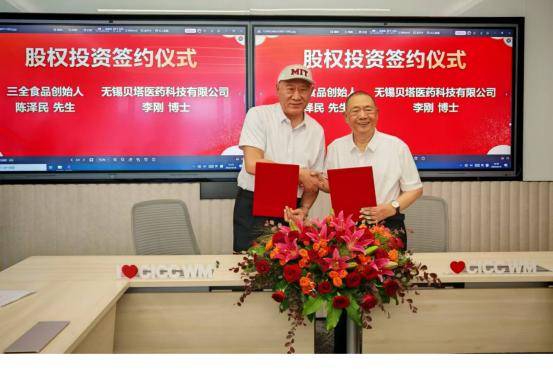
Core Insights - The collaboration between Chen Zemin, founder of Sanquan Foods, and Dr. Li Gang, founder of Wuxi Beta, marks a significant venture into the carbon-14 full industry chain and nuclear battery fields, which Chen views as his "third start" in entrepreneurship [1][3] Company Developments - Chen Zemin's entrepreneurial journey reflects a response to the evolving market, transitioning from food production with Sanquan Foods to geothermal energy, and now to nuclear technology applications [3] - Wuxi Beta has been dedicated to the research and development of carbon-14 nuclear materials and nuclear batteries since 2008, overcoming numerous challenges in this "unmanned zone" of technology [3][4] Industry Potential - Chen Zemin recognizes the vast potential of nuclear battery technology, highlighting its low energy consumption and long lifespan, with applications in medical devices, aerospace, deep-sea monitoring, and nuclear waste recycling [3][4] - The partnership aims to accelerate technological iteration and product mass production, with aspirations to establish Wuxi and Zhengzhou as innovation hubs for nuclear battery applications, promoting the development of the industry chain [4]


受权发布|中华人民共和国原子能法
Xin Hua She· 2025-09-12 15:31
Core Points - The law aims to ensure the research, development, and peaceful use of atomic energy, promote technological advancement and industrial upgrading, and enhance national security and public welfare [3][4][5] Group 1: General Principles - The law applies to atomic energy research, development, and utilization activities within the territory of the People's Republic of China and other sea areas under its jurisdiction [3] - Activities related to atomic energy must adhere to the leadership of the Communist Party of China and follow a comprehensive national security perspective [4] - The development of atomic energy technology and industry should focus on innovation-driven strategies and sustainable development [5] Group 2: Management and Supervision - The State Council's nuclear industry and energy departments are responsible for managing and supervising atomic energy activities [6] - Local governments are required to support atomic energy activities and fulfill their management and supervision responsibilities according to laws and regulations [6] Group 3: Scientific Research and Technology Development - The state will strengthen scientific research and technology development in the atomic energy field, encouraging independent research and enhancing intellectual property protection [10][11] - The establishment of innovation bases and platforms in the atomic energy sector is encouraged to promote the sharing of research facilities and resources [10] Group 4: Nuclear Fuel Cycle - A complete nuclear fuel cycle system will be established, including exploration, mining, refining, and waste management [13][14] - The State Council's nuclear industry department will organize the development of long-term plans for the nuclear fuel cycle [13] Group 5: Utilization - The state will actively promote the safe and orderly development of nuclear power and encourage the application of advanced nuclear reactors [17][18] - Nuclear reactors will be utilized for various applications, including power generation, heating, desalination, and hydrogen production [18] Group 6: Safety Supervision and Management - Safety is a primary concern in atomic energy activities, with strict adherence to safety regulations and responsibilities [21] - The establishment of a nuclear security system is mandated to protect against theft, sabotage, and nuclear terrorism [22] Group 7: Import and Export - The state will strengthen the management of imports and exports in the atomic energy sector, ensuring compliance with international obligations [27][28] - Strict controls will be placed on the export of sensitive nuclear materials and technologies [28] Group 8: Legal Responsibilities - Violations of the law will result in penalties, including fines and disciplinary actions against responsible personnel [30][31] - A compensation system for nuclear damage will be established to address damages caused by nuclear accidents [32]
中国核技术应用觉醒:一场被低估的产业革命正在发生
Zheng Quan Zhi Xing· 2025-09-04 07:53
Core Insights - The article highlights the rapid development of non-power nuclear technology applications in various sectors, with China's market value exceeding 700 billion yuan in 2022, yet only accounting for 0.57% of GDP, indicating significant growth potential compared to developed countries' 2%-3% [1] - A three-year action plan was jointly released by twelve government departments in China, aiming for a direct output value of 400 billion yuan by 2026, emphasizing the need for self-sufficiency in isotope supply and the creation of industrial clusters [1][2] - Stable isotopes are identified as the "invisible cornerstone" of nuclear technology applications, playing a crucial role in medical diagnostics, industrial testing, and agricultural research [1][3] Industry Overview - Stable isotopes, which do not decay and are non-radioactive, are essential for high-precision tracking and analysis in various fields, including medicine and industry [2] - Current production methods for stable isotopes involve high technical barriers and significant equipment investment, with China still relying heavily on imports for high-purity stable isotopes [2][3] - The Chinese market is witnessing a shift towards domestic production of stable isotopes, driven by policy support and increasing market demand [2][3] Market Dynamics - The demand for stable isotopes is surging in nuclear medicine, agriculture, and environmental monitoring, with specific isotopes like Fluorine-18 and Carbon-13 being pivotal in various applications [3][4] - Companies like China Nuclear Group and China General Nuclear Power Corporation are making strides in domestic production capabilities, with significant breakthroughs in medical isotopes [4][5] - The stable isotope industry is characterized by high technical intensity and substantial initial investment, with a growing recognition of its value in enhancing the competitiveness of high-end industries [3][6] Competitive Landscape - The nuclear medicine sector is becoming increasingly competitive, with companies like East China Pharmaceutical and China Nuclear Group emerging as key players, capturing significant market shares [5][6] - The collaboration between companies and research institutions is fostering innovation and expanding the application of stable isotopes in various fields, including cancer treatment and environmental monitoring [5][6] - The formation of a billion-level industry chain is underway, with implications for both patient care and China's positioning in the global nuclear technology application landscape [6]

中国同辐:放射源研发生产基地成功获批辐射安全许可证
Zhi Tong Cai Jing· 2025-08-22 12:08
Core Viewpoint - China Tongyuan (01763) announced that its subsidiary, Sichuan Nuclear Tongyuan Technology Co., Ltd., has successfully obtained a radiation safety license for its radiation source R&D and production base, marking its official qualification for production and sales of radiation sources [1] Group 1: Project Overview - The project is the largest radiation source R&D and production base in Asia, featuring 13 production lines for various radiation sources, including Carbon-14 and Krypton-85 [1] - Upon completion, the annual production capacity will exceed 100,000 radiation sources [1] Group 2: Product and Service Offerings - China Tongyuan will consolidate domestic resources for R&D and production of radiation sources, offering over 70 types of high-quality radiation source products to both domestic and international markets [1] - The company will provide radiation source resource recycling services and irradiation services, contributing positively to applications in industries such as agriculture, medicine, national defense, and aerospace [1] Group 3: Future Plans - The company plans to promote the second phase of the project with high standards to further expand production capacity and diversify its product offerings [1] - Future production lines will include sources such as Californium-252, Cesium-137, and Americium-241 to meet diverse market demands [1]
中国同辐(01763) - 自愿性公告 - 中国同辐放射源研发生產基地成功获批辐射安全许可证
2025-08-22 11:52
香港交易及結算所有限公司及香港聯合交易所有限公司對本公告的內容概不負責,對其準確性 或完整性亦不發表任何聲明,並明確表示,概不對因本公告全部或任何部份內容而產生或因倚 賴該等內容而引致的任何損失承擔任何責任。 自願性公告 CHINA ISOTOPE & RADIATION CORPORATION 中國同輻股份有限公司 (於中華人民共和國註冊成立的股份有限公司) (股份代號:1763) 中國同輻放射源研發生產基地成功獲批輻射安全許可證 本公告乃中國同輻股份有限公司(「中國同輻」或「本公司」)自願發出以使股東及潛 在投資者知悉本公司之最新業務進展。 本公司董事會欣然宣佈,近日,中國同輻旗下附屬公司四川中核同源科技有限公 司的放射源研發生產基地「該項目」成功獲批輻射安全許可證,正式具備放射源生 產、銷售等相關資質,產品將逐步面向市場。 該項目是亞洲最大的放射源研發生產基地,建設包括碳-14源、氪-85源等13條放 射源生產線,該項目建成後年產放射源將超過10萬枚。中國同輻將聚集國內主要 放射源的研發、生產資源,向國內外提供超過70種核素的高質量放射源產品,可 提供放射源資源再利用服務、輻照服務等,為我國工業、農業、 ...