
模拟计算

Search documents
算力赛道“奇兵”:模拟计算芯片破壁而来
Zhong Guo Qi Che Bao Wang· 2025-11-06 02:17
Core Insights - A research team from Peking University has developed a high-precision, scalable analog matrix computing chip based on resistive random-access memory (ReRAM), achieving analog computing precision comparable to digital systems [2][4] - The chip significantly enhances computational throughput and energy efficiency, reportedly improving performance by 100 to 1000 times compared to current top digital processors (GPUs) when solving large-scale MIMO signal detection problems [2][4] - This technological breakthrough addresses global challenges of slowing digital computing power growth and rising energy consumption, offering a new solution for critical fields such as AI and autonomous driving [2][6] Analog vs. Digital Computing - Analog computing was once the dominant form of computation but was replaced by digital computing due to precision and scalability limitations [4] - The new chip aims to resolve the precision issues of analog computing, achieving a relative error as low as 10^-7 after 10 iterations for a 16x16 matrix inversion, which meets the needs of most scientific calculations and AI training [4][9] - The chip's performance surpasses high-end GPU single-core performance when solving 32x32 matrix inversion problems, and achieves over 1000 times the throughput of top digital processors for 128x128 matrices [4][7] Advantages of the New Chip - The chip utilizes a "compute-storage integration" approach, eliminating the need for data to be converted into binary streams, thus reducing energy consumption associated with data transfer [5][6] - The low power consumption and high energy efficiency of the analog computing chip align well with the energy management needs of electric vehicles, potentially enhancing their driving range [7][9] - The chip is expected to significantly reduce the training time for AI models, particularly in autonomous driving, where traditional GPUs may take hours to complete tasks that the new chip could finish in minutes [7][10] Industry Perspectives - While the research results are promising, industry experts express caution regarding the practical application of the technology, particularly in the automotive sector, where reliability and durability under harsh conditions are critical [9][10] - The transition from laboratory to industrial application faces challenges such as cost, supply chain maturity, and the need for robust manufacturing processes for the new chip technology [9][10] - The current state of resistive memory technology is still in the experimental phase, with material consistency and reliability needing further development to meet automotive standards [10]


上证早知道|我国成功研制新型芯片;字节跳动 推出3D生成大模型;多家险资机构 看好科技方向
Shang Hai Zheng Quan Bao· 2025-10-23 23:01
Group 1: Technology Innovations - Peking University has developed a new type of analog computing chip that significantly improves computing efficiency and reduces energy consumption, enhancing applications in artificial intelligence [2] - ByteDance's Seed team launched the 3D generative model Seed 3D1.0, capable of generating high-quality simulation-level 3D models from a single image, addressing current limitations in physical interaction and content diversity [4] Group 2: Market Trends and Insights - Multiple insurance investment institutions recommend prioritizing technology sectors, especially in Hong Kong stocks, as the trading congestion has eased and technology stocks are seen as more attractive in terms of price-to-earnings growth ratios [11] - QFII has increased stakes in 29 companies, focusing on advanced manufacturing sectors with strong performance, indicating a positive outlook for these industries [12] Group 3: Industry Developments - Alibaba's first self-developed AI glasses, Quark AI glasses, are set to launch with a pre-sale price of 3,999 yuan, featuring advanced functionalities [5] - The AI comic industry is experiencing rapid growth, with a significant increase in production and a projected market scale exceeding 20 billion yuan by 2025 [7]
算力解放,我国科研团推研发出新型模拟计算芯片
Xuan Gu Bao· 2025-10-23 15:09
Core Insights - Chinese scientists have achieved a significant breakthrough in computing architecture with the development of a high-precision, scalable analog matrix computing chip based on resistive random-access memory (ReRAM) [1] - This new technology enhances the precision of analog computing to 24-bit fixed-point accuracy, with computational throughput and energy efficiency surpassing current top GPUs by a factor of 100 to 1000 [1] - The technology aims to liberate computing power by integrating data computation and storage, potentially disrupting the long-standing dominance of digital computing [1] Industry Impact - The mainstream CPUs and GPUs currently in the market utilize digital chips and the von Neumann architecture, which separates computing and storage functions [1] - The analog computing advantage lies in eliminating the need to convert data into binary streams and avoiding process data storage, thus merging computation and storage [1] - Industry experts believe this technology could pave the way for a new era of ubiquitous and energy-efficient computing power [1] Related Companies - Relevant A-share concept stocks include Shengbang Co., Ltd. and Changdian Technology [2]
突破瓶颈!我国成功研制新型芯片
半导体芯闻· 2025-10-23 09:58
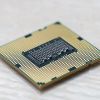
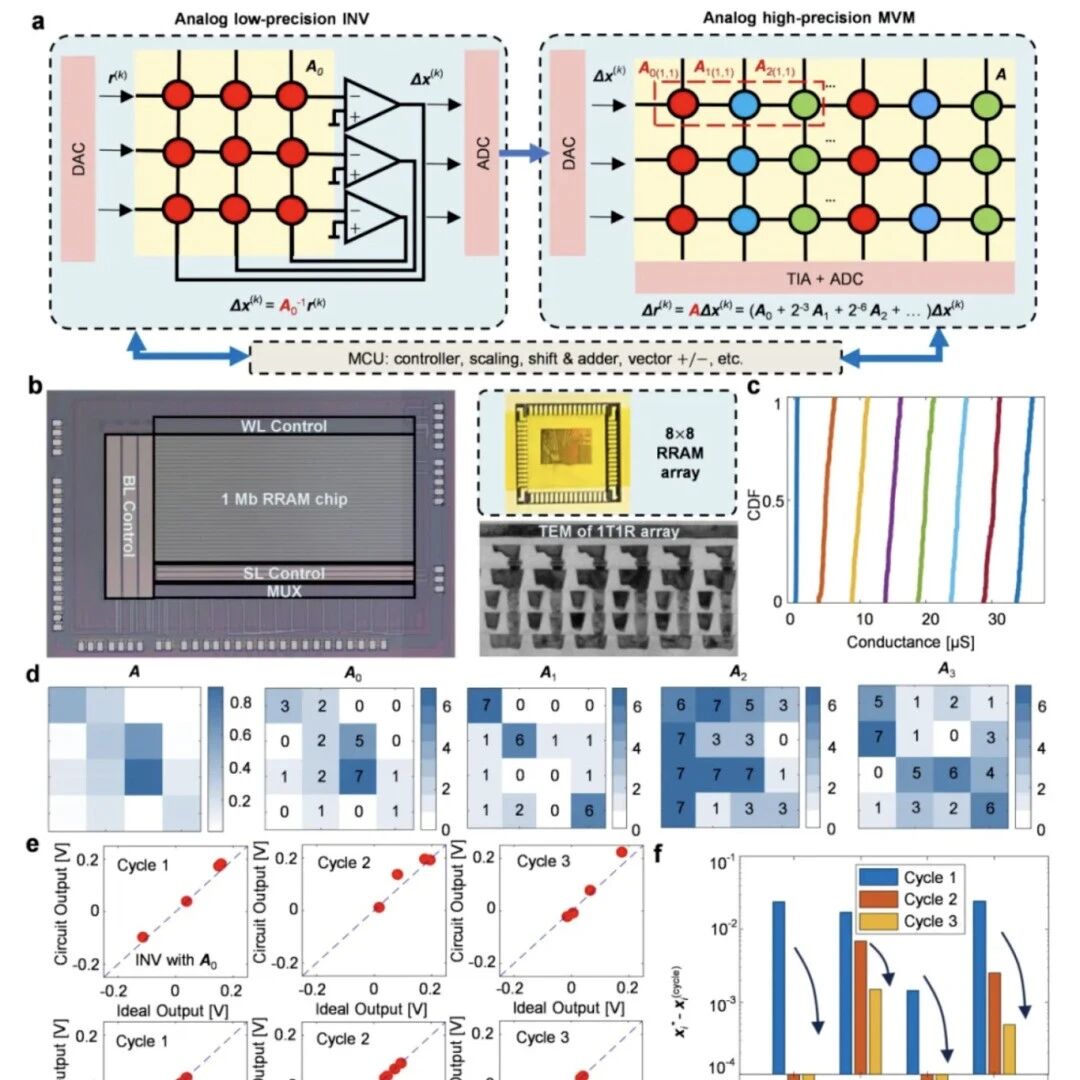
Core Viewpoint - The article discusses the successful development of a high-precision, scalable analog matrix computing chip based on resistive random-access memory (RRAM) by a research team from Peking University, which achieves computational efficiency and energy performance significantly superior to current top digital processors, with improvements ranging from 100 to 1000 times [1][9]. Group 1: Analog Computing Concept - Analog computing allows for direct representation of mathematical values using continuous physical quantities, such as voltage, eliminating the need for binary conversion [4][5]. - Historically, analog computers were widely used before being replaced by digital computers due to precision limitations, which this new research aims to address [5][7]. Group 2: Technical Advantages - The new chip integrates data computation and storage, removing the need for binary data conversion and enabling a more efficient processing method [7]. - The research focuses on solving matrix equations, particularly matrix inversion, which is crucial for AI training, and demonstrates significant performance improvements over traditional GPUs [7][9]. Group 3: Performance Metrics - The team achieved a precision of 24-bit for 16x16 matrix inversion, with relative errors as low as 10⁻⁷ after 10 iterations [9]. - For larger matrices, the chip's performance exceeds that of high-end GPUs, achieving over 1000 times the throughput of top digital processors for 128x128 matrix problems, completing tasks in minutes that would take traditional GPUs a day [9]. Group 4: Future Applications - The chip is expected to serve as a powerful complement in the AI field, particularly in computational intelligence applications such as robotics and AI model training [11]. - The future landscape will likely see coexistence between CPUs, GPUs, and this new analog computing chip, enhancing the overall computational efficiency in energy-intensive tasks [11].
突破瓶颈!我国成功研制新型芯片
中国基金报· 2025-10-23 06:49
Core Viewpoint - The research team from Peking University has developed a high-precision, scalable analog matrix computing chip based on resistive random-access memory (ReRAM), achieving analog computing systems that can match the precision of digital computing systems [1][4]. Group 1: Analog Computing Concept - Analog computing allows for direct representation of mathematical values using continuous physical quantities, eliminating the need for binary conversion [4]. - The historical context of analog computing shows it was widely used in the early development of computers but was replaced by digital computing due to precision limitations [4]. Group 2: Advantages of the New Chip - The new chip integrates computation and storage, removing the need for data conversion into binary streams, which enhances computational efficiency [6]. - The focus of the research is on solving matrix equations, which is more challenging than matrix multiplication, and the chip demonstrates significant advantages in low power consumption, low latency, and high energy efficiency [6]. Group 3: Performance Metrics - The team achieved a precision of 24-bit for inverting 16x16 matrices, with relative errors as low as 10⁻⁷ after 10 iterations [8]. - For larger matrices, the chip's performance exceeds that of high-end GPUs, achieving over 1000 times the throughput of top digital processors when solving 128x128 matrix inversion problems [8]. Group 4: Future Applications - The chip is expected to be a powerful complement in the AI field, particularly in computational intelligence applications such as robotics and AI model training [10]. - The future landscape will see coexistence between CPUs, GPUs, and this new analog computing chip, with each serving distinct roles in computational tasks [10].
突破瓶颈!我国成功研制新型芯片
Ren Min Ri Bao· 2025-10-23 05:45
Core Insights - A research team from Peking University has developed a high-precision, scalable analog matrix computing chip based on resistive random-access memory (ReRAM), achieving analog computing systems that can match the precision of digital computing [1][4] - The chip significantly enhances computational throughput and energy efficiency, achieving improvements of 100 to 1000 times compared to current top digital processors (GPUs) when solving large-scale MIMO signal detection and other critical scientific problems [1][8] Analog Computing Concept - Analog computing is described as a method that uses continuous physical quantities (like voltage or current) to represent mathematical numbers directly, eliminating the need for binary conversion [4][5] - Historically, analog computers were widely used in the early development of computing but were replaced by digital computers due to precision limitations [4] Advantages of the New Chip - The new chip integrates data computation and storage, removing the need to convert data into binary streams, which liberates computational power [5] - It focuses on solving matrix equations, which are more challenging than matrix multiplication, and can achieve high precision and low complexity in calculations [6] Performance Metrics - The team successfully achieved a 24-bit fixed-point precision for inverting 16x16 matrices, with relative errors reduced to the order of 10 after 10 iterations [8] - For larger problems, such as 128x128 matrix inversions, the chip's computational throughput exceeds that of top digital processors by over 1000 times, completing tasks in one minute that would take traditional GPUs a day [8] Future Applications - The chip is expected to serve as a powerful complement in the AI field, particularly in computational intelligence applications like robotics and AI model training [9] - The future landscape will see coexistence with existing architectures, where CPUs will remain as general-purpose controllers, GPUs will focus on accelerating matrix multiplication, and the new analog computing chip will efficiently handle energy-intensive matrix inversion operations [9]

突破世纪难题!我国成功研制
Xin Lang Cai Jing· 2025-10-15 16:22
Core Insights - A new type of chip has been successfully developed in China, which is based on resistive random-access memory (ReRAM) and achieves high precision and scalability in analog matrix computation, rivaling digital computation in accuracy [1][2] Group 1: Technological Breakthrough - The research team from Peking University has created a high-precision, scalable analog matrix computing chip that can solve large-scale MIMO signal detection problems with a computational throughput and energy efficiency that surpasses current top digital processors (GPUs) by 100 to 1000 times [1] - The chip achieves a precision of 24-bit fixed-point accuracy, addressing a century-old challenge in the scientific community regarding the integration of high precision and scalability in analog computing [1][2] Group 2: Performance Metrics - The team successfully demonstrated the ability to invert a 16×16 matrix with a relative error as low as 10⁻⁷ after 10 iterations [2] - For a 32×32 matrix inversion problem, the chip's computational power exceeds that of high-end GPUs, and for a 128×128 matrix, its throughput is over 1000 times that of top digital processors, completing tasks in one minute that would take traditional GPUs a day [2] - The energy efficiency of this chip is more than 100 times better than that of traditional digital processors at the same precision level, providing critical technological support for high-efficiency computing centers [2]
新型芯片算力可超顶级GPU千倍
Ke Ji Ri Bao· 2025-10-15 01:08
Core Insights - A research team from Peking University has developed a high-precision, scalable analog matrix computing chip based on resistive random-access memory (ReRAM), achieving analog computing precision comparable to digital systems [1][2] - The chip significantly enhances computational throughput and energy efficiency, with improvements ranging from 100 to 1000 times over current top digital processors (GPUs) [1][2] Group 1 - The chip addresses complex matrix equation solving, which is essential for applications like communication base station signal processing and AI model training [1] - The research team utilized a novel approach combining new information devices, original circuits, and classical algorithms to create a full analog matrix equation solver with 24-bit fixed-point precision [1][2] - The team successfully demonstrated a relative error as low as 10^-7 after 10 iterations for a 16x16 matrix inversion, showcasing the chip's high precision [2] Group 2 - In terms of performance, the chip surpasses high-end GPU single-core performance when solving 32x32 matrix inversion problems, achieving over 1000 times the throughput of traditional digital processors for 128x128 matrices [2] - The chip's energy efficiency is over 100 times better than traditional digital processors, making it a critical technology for high-efficiency computing centers [2] - The application of this technology in large-scale MIMO signal detection demonstrated high fidelity in image recovery with a bit error rate comparable to 32-bit digital calculations, highlighting its potential in real-time signal processing [2] Group 3 - The breakthrough in analog computing is expected to reshape the computational landscape, providing a promising path for enhancing computational power and potentially breaking the long-standing dominance of digital computing [3]
中国芯片突破引爆全球!算力飙升千倍,美国急眼了?
Xin Lang Cai Jing· 2025-10-14 11:26
Core Insights - A significant breakthrough in chip technology has been achieved by Chinese scientists, enhancing computational power by three orders of magnitude, potentially reshaping the global tech landscape [1][2]. Group 1: Precision Breakthrough - The new type of analog matrix chip developed by Peking University's Micro-Nano Electronics Research Center has surpassed traditional precision limits while maintaining ultra-low power consumption [2]. - This technology utilizes a multi-state resistive switching memory array and an innovative calibration mechanism to address cumulative error issues in complex calculations [2]. - Testing shows that this chip's energy efficiency significantly outperforms existing high-end GPUs in applications like communication signal processing and neural network inference, opening new possibilities for edge computing devices [2]. Group 2: Engineering Achievements - Three Chinese technological innovations have been recognized among the top ten global engineering achievements, covering artificial intelligence, major equipment, and ecological engineering [4]. - The domestically developed open-source model DeepSeek has been acknowledged for its successful open ecosystem construction, marking it as the first foundational model to receive such recognition [4]. - The "South-to-North Water Diversion" project has gained international acclaim for its scale and technical complexity, while the deep-sea manned submersible showcases advancements in deep-sea equipment [4]. Group 3: Innovation and Patent Conversion - China's high-value patent conversion rate continues to rise, with the industrialization scale of innovative achievements surpassing 500 billion yuan, indicating a rapid transition of technological innovation into productive forces [4]. - In display technology, domestic glass substrates have transitioned from catching up to leading the market, with new processes significantly improving product yield and performance [4]. Group 4: Technological Frontiers - The high-end equipment sector has seen significant advancements, with China's self-developed aircraft carrier completing a series of sea trials and meeting all performance indicators, soon to be officially commissioned [7]. - The capital market has reacted positively to technological innovations, with several semiconductor companies experiencing active stock performance due to recent breakthroughs [7]. - Major scientific infrastructure projects are advancing, supporting cutting-edge scientific research from deep space exploration to deep-sea investigations, showcasing China's vibrant technological capabilities on the international stage [7].

10.14犀牛财经早报:四季度多家银行启动处置不良资产 港股IPO融资额同比增逾2倍
Xi Niu Cai Jing· 2025-10-14 01:36
Group 1: Banking Sector - Multiple banks have announced the initiation of non-performing asset disposal, with significant actions taken by Bohai Bank and Guangzhou Rural Commercial Bank, indicating a "hundred billion-level" reduction effort [1] - The volume of non-performing loan transfers has increased significantly in October, with various financial institutions, including state-owned banks and city commercial banks, actively participating [1] Group 2: Convertible Bonds - There has been a notable increase in convertible bond issuance proposals, with 22 companies having their proposals approved since September, exceeding expectations [1] - The market is expected to see a new wave of convertible bond issuances, particularly from companies in popular sectors on the Sci-Tech Innovation Board [1] Group 3: IPO Market - Hong Kong's IPO financing amount has more than doubled year-on-year, leading to a tight supply of investment banking resources [2] - International investment banks like Goldman Sachs and Morgan Stanley are expanding their teams in Hong Kong and Asia-Pacific due to increased project reserves and demand for IPOs [2] Group 4: Smartphone Market - The global smartphone market saw a 2.6% growth in Q3, with total shipments reaching 322.7 million units [3] - Samsung maintained the top position with a market share of 19%, shipping 61.4 million units, while Apple followed closely with 58.6 million units shipped [3] Group 5: Renewable Energy Investment - Apple suppliers have launched a new investment fund in China, totaling 1 billion RMB (approximately 150 million USD), aimed at supporting renewable energy infrastructure [3] - The fund plans to add 1 million MWh of clean power to China's grid by 2030, with participation from several key players in Apple's supply chain [3] Group 6: Cloud Services - Alibaba Cloud announced a price reduction for certain ECS products, effective from October 30, 2025, across multiple regions including Frankfurt, Tokyo, and Dubai [4] Group 7: Fertilizer Project - China Chemical signed a total contracting agreement for a phosphate fertilizer project in Egypt, which includes the construction of a sulfuric acid facility and a DAP facility [4] Group 8: Stock Market Performance - US stock indices collectively rose, with the Dow Jones up 1.29%, Nasdaq up 2.21%, and S&P 500 up 1.56%, driven by strong performance in technology stocks [7] - Notable gains were observed in chip stocks and Chinese concept stocks, reflecting a positive market sentiment [7] Group 9: Precious Metals - Gold prices reached a historic high, surpassing 4100 USD, while silver also hit a record high, breaking the 50 USD mark [8] - The dollar index rebounded, and cryptocurrencies like Bitcoin and Ethereum showed signs of recovery after previous declines [8]