混合云

Search documents
联想集团(00992):3Q25业绩超预期,AIPC加速渗透
CAITONG SECURITIES· 2025-11-21 04:56
Investment Rating - The investment rating for Lenovo Group is maintained at "Buy" [2] Core Views - Lenovo Group's revenue for FY25/26Q2 increased by 14.6% year-on-year to $20.45 billion, exceeding Bloomberg's expectations by 1.7% [8] - The company's adjusted net profit rose by 26.7% year-on-year to $510 million, surpassing Bloomberg's forecast by 0.3% [8] - The AI PC segment is accelerating its penetration, with a penetration rate reaching 33% [8] - The mobile phone business achieved record sales, with revenue of $15.11 billion, exceeding expectations by 3.7% and showing a year-on-year growth of 11.8% [8] - The Infrastructure Solutions Group (ISG) reported strong order reserves, with revenue of $4.09 billion, a year-on-year increase of 23.7% [8] - The Solutions and Services Group (SSG) achieved record quarterly revenue of $2.56 billion, marking 18 consecutive quarters of double-digit growth [8] - Future adjusted net profit growth is projected at 16.9%, 9.9%, and 13.3% for FY25/26, FY26/27, and FY27/28, respectively [8] Financial Performance Summary - Revenue projections (in million USD): - 2024A: 56,864 - 2025A: 69,077 - 2026E: 77,184 - 2027E: 82,925 - 2028E: 89,545 - Net profit projections (in million USD): - 2024A: 1,011 - 2025A: 1,384 - 2026E: 1,649 - 2027E: 1,891 - 2028E: 2,137 - EPS projections (in CNY): - 2024A: 0.08 - 2025A: 0.11 - 2026E: 0.13 - 2027E: 0.15 - 2028E: 0.17 - PE ratios: - 2025A: 11.89 - 2026E: 9.38 - 2027E: 8.18 - 2028E: 7.23 [5][9]

联想集团发布中期业绩,股东应占溢利8.46亿美元 同比增长40%
Zhi Tong Cai Jing· 2025-11-19 23:40
Core Insights - Lenovo Group reported a revenue of $39.282 billion for the fiscal year 2025/26 mid-term, representing an 18% year-on-year increase, and a profit attributable to equity holders of $846 million, up 40% year-on-year [1] - The company achieved a record high in revenue for the first half of the year, with adjusted profit attributable to equity holders increasing by 24% year-on-year when accounting for non-cash items [1] - Revenue from artificial intelligence-related products accounted for 29% of total revenue, a 15 percentage point increase from the same period last year, driven by higher sales of AI devices, servers, and services [1] Financial Performance - The smart devices business group saw revenue and operating profit increase by 15% and 13% respectively, benefiting from a rapid rise in AI computer shipments and strong sales of high-end products [1] - The company achieved a record global PC market share of 25.6% in the second quarter [1] - The infrastructure solutions business group experienced a 30% year-on-year revenue growth, with AI infrastructure revenue showing high double-digit growth, supported by cloud and enterprise infrastructure strategies [1] Service Solutions - The solutions services business group reported a 19% year-on-year revenue increase, reaching a historical high, with operating profit rising by 28% [2] - Revenue from operations and project solutions accounted for 58.9% of total revenue, also a record high, driven by favorable trends in digital workplace solutions, AI, and hybrid cloud [2] - In the second quarter, the company achieved a historical revenue high of $20.5 billion, surpassing records set during the COVID-19 pandemic, with a 15% year-on-year revenue growth and an adjusted net profit margin expanding to 2.5% [2]
AI成科技行业重构关键推手
Jing Ji Ri Bao· 2025-11-14 21:45
Core Viewpoint - IBM is initiating a new round of global layoffs in Q4, affecting thousands of employees, as part of its strategic transformation towards high-growth software and services, reflecting deeper changes in the global tech industry [1][2]. Company Summary - IBM's Q3 revenue reached $16.33 billion, a 9% year-over-year increase, but the company faces uneven business development [1]. - The company aims to shift focus towards high-value software, with a projected 10% growth in this segment for 2024, while consulting and infrastructure revenues declined by 2% and 7.6% respectively [1]. - IBM's cloud market share is below 5%, struggling against competitors like Amazon AWS and Microsoft Azure, necessitating workforce reductions in related areas [1]. Industry Summary - The global tech industry is undergoing significant layoffs, with nearly 100,000 positions cut this year, as companies like Amazon, Microsoft, and Meta also reduce their workforce [2]. - Factors driving these layoffs include economic slowdown, increased competition, and the impact of AI technology leading to job displacement and business restructuring [2][3]. - The layoffs are seen as a necessary transition pain for the tech industry in the AI era, emphasizing the urgency for companies to adapt through technological change and resource optimization [3].

微软Azure Local更新引发严重系统故障:每20小时蓝屏一次
Huan Qiu Wang· 2025-11-01 03:44
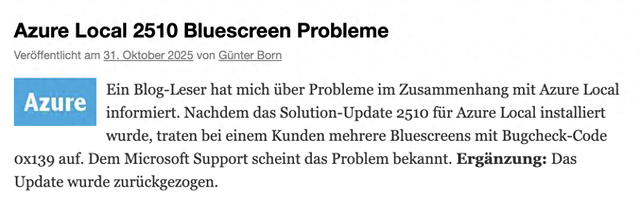
Core Insights - Microsoft recently faced significant system failures due to the update 2510 (version 11.2510.1002.87) for its hybrid cloud solution Azure Local, causing critical disruptions in industries such as healthcare and finance [1][3] Group 1: System Failures - The update led to frequent blue screen crashes (error code 0x139) in production environments, with systems crashing approximately every 20 hours [1][3] - An IT technician reported that multiple nodes hosting around 100 virtual machines experienced collective outages, interrupting essential services like electronic medical records and telemedicine platforms [3] Group 2: Impact on Healthcare - The failures were described as a "Super-GAU" (super disaster) by technical personnel, posing direct threats to patient safety due to reliance on low-latency data processing [3] - Microsoft confirmed that the root cause of the issue was an erroneous change in update 2510, which led to kernel security check failures [3] Group 3: Microsoft's Response - To temporarily mitigate the issue, Microsoft provided a registry fix command to disable the faulty module and restore system stability [3] - Microsoft subsequently retracted the updates with version numbers 11.2510.1002.87 and 12.2510.1002.88 [3] Group 4: Azure Local Overview - Azure Local is positioned as Microsoft's primary hybrid cloud solution, designed to allow enterprises to run certain Azure services in local data centers, balancing the security of private clouds with the flexibility of public clouds [3]


无惧Red Hat增长放缓,华尔街为IBM(IBM.US)撑腰:“本能性下跌”而已,AI业务前景仍向好
智通财经网· 2025-10-23 13:51
Core Insights - IBM's recent earnings and guidance exceeded market expectations, but concerns regarding its software business, particularly the mixed cloud segment driven by Red Hat, have caused investor unease [1][2] - Analysts believe the stock's decline due to Red Hat's slowdown is an "instinctive panic reaction" and does not alter IBM's positive growth trajectory in the artificial intelligence market [1] Group 1: Analyst Perspectives - Stifel analyst David Grossman remains optimistic about IBM's overall performance but warns that a "software reset" may negatively impact the stock in the short term, especially after an 18% increase in stock price over the past seven weeks [1] - Wedbush highlights IBM's $9.5 billion backlog in generative AI orders, indicating significant progress in AI-related projects, maintaining an "outperform" rating with a target price of $325 [1] - Wedbush analyst Dan Ives emphasizes IBM's strong market positioning amid the demand for hybrid cloud and AI applications, suggesting that any moderate panic sell-off would be a buying opportunity [2] Group 2: Financial Guidance and Adjustments - Bank of America analyst Wamsi Mohan slightly lowered the target price for IBM from $315 to $310 but reaffirmed a "buy" rating, citing the company's transition to higher-margin software and strong free cash flow [2] - IBM has raised its revenue growth guidance for fiscal year 2025 to over 5%, with an expected increase in pre-tax profit margins by over 1% and free cash flow projected at approximately $14 billion [2] - Management acknowledged a slowdown in Red Hat's quarterly growth due to execution challenges and lower-than-expected consumer services, adjusting the fiscal year 2025 growth expectation to about 14% year-over-year [2]
美股异动丨IBM盘前跌超7%,第三季度混合云部门收入增速放缓且逊于预期
Ge Long Hui· 2025-10-23 08:28
Core Insights - IBM's stock dropped over 7% in pre-market trading, reaching $267.2 [1] - In Q3, IBM reported a 9.1% year-over-year revenue increase to $16.3 billion [1] - Adjusted earnings per share were $2.65, exceeding analyst expectations of $2.41 [1] - The revenue growth rate of the hybrid cloud segment, which includes Red Hat, slowed to 14%, below the average analyst expectation of 16%, raising concerns about IBM's growth engine [1]
核心增长引擎失速!Red Hat增长不及预期拖累IBM(IBM.US)股价大跌
智通财经网· 2025-10-22 23:20
Core Insights - IBM's disappointing revenue in two key software categories, including the closely watched Red Hat division, raises investor concerns about growth prospects [1][2] - The company's Q3 revenue reached $16.33 billion, a 9.1% year-over-year increase, exceeding expectations, while adjusted earnings per share were $2.65, also above market forecasts [1] - The hybrid cloud segment, which includes Red Hat, saw a 14% sales growth in Q3, slowing from the previous quarter and falling short of the 16% analyst estimate [1][2] Revenue Breakdown - Total software revenue grew by 10% to $7.21 billion, meeting expectations, but organic software growth appears to be slowing [2] - Consulting revenue increased by 3.3% to $5.32 billion, slightly above expectations, while infrastructure revenue surged by 17% to $3.56 billion, driven by sales of the new z17 mainframe server model [3] Market Reaction - Following the earnings report, IBM's stock fell approximately 5.5% in after-hours trading, despite a 31% increase year-to-date [3] - The company reported that its AI business orders exceeded $9.5 billion since mid-2023, up from $7.5 billion disclosed in July, with about 80% of these orders coming from the consulting division [3] Future Outlook - IBM continues to expect Red Hat to achieve around 15% growth, albeit at the lower end of expectations [2] - For the fiscal year ending in December, IBM anticipates free cash flow of approximately $14 billion, surpassing analyst estimates of $13.5 billion, and revenue growth exceeding 5% at constant currency [3]
IBM Stock Up 159%. What Arvind Krishna And Quantum Mean For $IBM Stock
Forbes· 2025-09-27 14:20
Core Viewpoint - IBM has experienced significant stock growth under CEO Arvind Krishna, with a 159% increase since his appointment, driven by a focused strategy on hybrid cloud and AI technologies, alongside advancements in quantum computing [2][3][11]. Financial Performance - Since Krishna took over in April 2020, IBM has consistently beaten earnings per share expectations, although revenue performance has been mixed, often falling short of forecasts [4][10]. - In Q2 2024, IBM reported an 8% revenue increase to $17 billion, exceeding Wall Street estimates, and raised its full-year guidance for software revenue growth due to strong AI demand [8][10]. - The company also raised its free cash flow outlook to over $13.5 billion for 2025, reflecting confidence in its hybrid cloud and AI trajectory [8][10]. Strategic Developments - Krishna's leadership has led to a strategic focus on AI and hybrid cloud, particularly following the spin-off of Kyndryl, which allowed IBM to concentrate on growth areas [6][15]. - The acquisition of Red Hat for $34 billion has modernized IBM's software offerings and enhanced its competitive advantage in the hybrid cloud market [14][15]. Quantum Computing Potential - IBM has achieved $1 billion in cumulative quantum revenue since 2017, with expectations for significant growth as the company plans to launch its first error-corrected quantum computer by late this decade [19]. - Recent advancements in quantum computing have shown promising results, such as HSBC's reported 34% improvement in bond trade predictions using IBM's quantum systems, which may attract further interest from market participants [20][21][22].
首个适配384超节点的混合云将于10月30日商用
Zheng Quan Shi Bao Wang· 2025-09-18 15:14
Core Insights - Huawei Cloud Stack 8.6 new version is set to adapt to CloudMatrix 384 super nodes, marking a significant advancement in hybrid cloud technology [1] - The official commercial launch of this new version is scheduled for October 30 [1] Company Developments - Huawei is introducing the industry's first hybrid cloud that supports CloudMatrix 384 super nodes, indicating a strong position in the cloud computing market [1] Industry Trends - The adaptation of CloudMatrix 384 super nodes by Huawei Cloud Stack reflects ongoing innovations in hybrid cloud solutions, which are becoming increasingly critical for businesses [1]
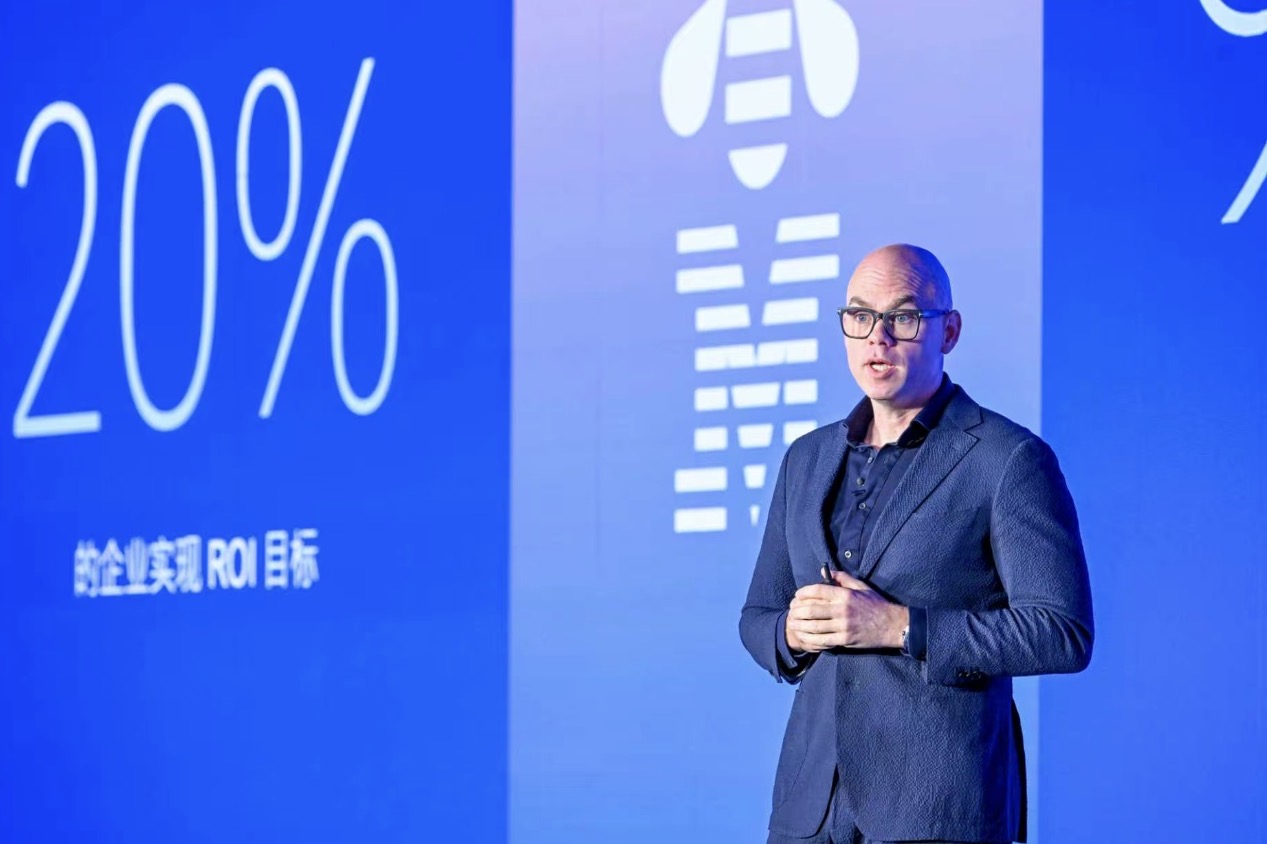
IBM中国市场战略重心已转移,跨国科技巨头垂青AI制造业
Di Yi Cai Jing· 2025-09-06 05:00
Core Insights - IBM aims to assist Chinese enterprises in seizing opportunities presented by hybrid cloud and artificial intelligence technologies [1][3] - The company has shifted its strategic focus in China from hardware and infrastructure services to data integration and AI-driven services [1][3] Group 1: Market Dynamics - Chinese enterprises are at the forefront of accelerating AI application, with only 1% of enterprise data being fully utilized, indicating a need for flexible hybrid cloud architectures and efficient AI tools [3][4] - The Asia-Pacific market, including China, is identified as one of IBM's four key global markets with significant growth potential [3][4] Group 2: Client Base and Investment - IBM's client base in China has transitioned from primarily financial sector clients to a significant number of private manufacturing enterprises [4] - The company is increasing its investment in the Chinese market, focusing on smart manufacturing, data integration, and AI applications [4] Group 3: Future Plans and Innovations - IBM has launched the "AI Deep Cultivation" plan in China, emphasizing digital transformation and international expansion for private manufacturing enterprises [4] - The company predicts that by 2028, 15% of daily business decisions will be generated automatically by AI agents [4][5]