
混合云

Search documents
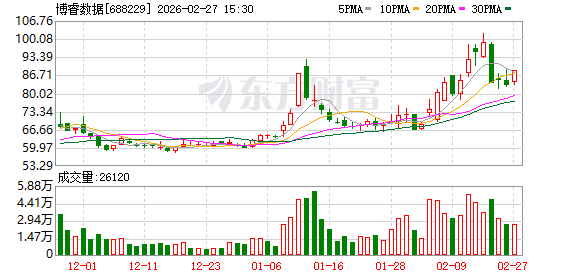
博睿数据:博睿数据更适配混合云、私有云及信创环境,具备更强的本地化合规与私有化场景覆盖能力
Zheng Quan Ri Bao· 2026-02-27 12:06
Core Viewpoint - The company Bonree Data is focusing on the growth and development of Datadog within the public cloud ecosystem, while also enhancing its capabilities in hybrid cloud, private cloud, and domestic innovation environments in China [2] Group 1 - Bonree Data has completed its layout in fields such as Business Intelligence (BI) and security [2] - The company possesses strong localization compliance and private scenario coverage capabilities [2] - BonreeONE product features "full-stack, dual-mode" data collection capabilities [2] Group 2 - The product also includes an "open, integrated" model for constructing observable data across all domains [2] - It has a "unified, powerful" data middle platform capability [2] - The AI algorithms are characterized as "precise, interpretable" [2] Group 3 - The data application capability is described as "crowdsourced, versatile" [2]


市场错杀IBM(IBM.US)!杰富瑞:暴跌无视了“自我革新”的关键事实
智通财经网· 2026-02-25 03:35
Core Viewpoint - IBM's stock experienced a significant decline due to concerns over its traditional business, triggered by Anthropic's Claude Code product's ability to translate COBOL, but analysts highlight IBM's ongoing self-reformation efforts [1][2] Group 1: Market Reaction - IBM's stock fell sharply, marking the largest single-day drop in 26 years, primarily driven by market fears regarding its legacy business [1] - Jefferies pointed out that the sell-off overlooked IBM's proactive self-reformation initiatives [1] Group 2: IBM's Innovations - The Watsonx Code Assistant for Z product integrates generative AI into mainframes, facilitating the modernization of COBOL to Java, thus alleviating the burden of traditional mainframe modernization [1] - IBM's software business acceleration is attributed to advancements in hybrid cloud, AI, automation, and data sectors, rather than solely relying on mainframes [1] Group 3: Competitive Advantages - IBM's integration of capabilities directly into the Z platform provides a structural advantage over horizontal code assistants, which lack native access to mainframe data and tools [2] - The modernization of mainframes involves more than just code conversion; it requires deep integration with operational resilience, performance tuning, and change management, areas where IBM excels [2] Group 4: Market Position - IBM's mainframe business continues to grow, with 70% of its customers expanding related workloads, indicating strong business resilience [2] - Approximately 73% of global transaction volume is still processed by mainframes, underscoring their critical role across various industries [2]

联想集团(0992.HK)FY2026Q3财报点评:战略重组促进ISG业务加速重回盈利轨道 看好公司后续发展
Ge Long Hui· 2026-02-14 14:09
Core Viewpoint - Lenovo Group reported strong financial results for FY2026Q3, with significant revenue growth driven by efficiency optimization and a high-end product mix, despite a decline in net profit year-over-year [1] Group Summaries Revenue and Profit Performance - The company achieved revenue of approximately $22.204 billion, representing an 18% year-over-year increase and an 8.6% quarter-over-quarter increase [1] - Adjusted net profit reached $589 million, a 36% year-over-year increase, indicating a growth rate double that of revenue [1] - The adjusted net profit margin improved by 34 basis points to 2.7%, reflecting enhanced operational leverage and efficiency [1] Smart Devices Business Group - Revenue for the smart devices business group grew by 14% year-over-year, with operating profit increasing by 15% [2] - The profitability of personal computers, tablets, and other smart devices remained strong due to rising average selling prices and improved product mix [2] - The personal computer peripherals business experienced high double-digit revenue growth, significantly enhancing overall profitability [2] Infrastructure Solutions Group - The infrastructure solutions business group achieved record revenue of $5.2 billion, a 31% year-over-year increase, driven by an expanding customer base in cloud infrastructure [3] - A strategic restructuring plan was implemented, incurring a one-time restructuring cost of $285 million, aimed at optimizing product mix and improving operational capabilities [3] - The company anticipates this plan will accelerate its return to profitability in FY2027, with a goal of achieving annual net cost savings exceeding $200 million for the next three fiscal years [3] Solutions Services Business Group - The solutions services business group reported a quarterly revenue increase of 18%, marking 19 consecutive quarters of double-digit growth [3] - Operating profit margin improved to 22.5%, nearing historical highs, with maintenance and project solution services driving growth [3] - The company is strategically positioned in the fastest-growing areas of the IT services market, with a potential market size of $360 billion [3] Profit Forecast and Investment Rating - The company adjusted its profit forecast, expecting revenues of $80.144 billion, $87.600 billion, and $93.235 billion for FY2026 to FY2028, respectively [3] - Non-HKFRS net profits are projected to be $1.796 billion, $1.973 billion, and $2.111 billion for the same period, corresponding to non-HKFRS P/E multiples of 8.0x, 7.2x, and 6.8x [3] - The investment rating is maintained at "Buy" due to significant progress in hybrid AI [3]

廉价算力时代终结,联想混合云成及时雨
Ge Long Hui· 2026-01-28 09:05
Core Viewpoint - The cloud computing industry is experiencing a significant shift as major players like Google Cloud and AWS announce price increases, marking the end of the long-standing trend of decreasing prices and indicating a transition from expansion to profit maximization [1][2][5][14]. Industry Summary - Google Cloud will raise prices for its core services, CDN interconnect, and AI infrastructure starting May 1, 2026, which is a pivotal moment in cloud computing history [1]. - AWS has also increased prices for its EC2 machine learning capacity blocks by 15%, signaling a broader trend in the industry [2]. - The traditional model of cloud services, characterized by decreasing costs and increasing performance, is being disrupted as companies face rising IT bills and must reassess their strategies [2][5]. Company Summary - Lenovo is positioned favorably in this changing landscape, as the price increases in cloud services may drive enterprises towards a more balanced hybrid IT architecture, benefiting Lenovo's hardware manufacturing and cloud service capabilities [2][6]. - The rising costs of cloud services are prompting companies to consider the advantages of owning their infrastructure, with a significant increase in the number of enterprises planning to migrate workloads back to private facilities, from 43% in 2020 to 83% recently [6][7]. - Lenovo's AI infrastructure solutions are becoming increasingly attractive as companies seek cost certainty and efficiency in light of rising cloud service costs [7][10]. - Lenovo's TruScale service allows businesses to pay for on-premises infrastructure in a cloud-like manner, providing financial flexibility while maintaining control over their data [10][12]. - The shift towards hybrid cloud architectures is creating opportunities for Lenovo to serve as a connector between public and private cloud environments, enhancing its role in the market [9][15]. - The rise in cloud service prices is expected to lead to a redistribution of IT spending, favoring hybrid and self-built solutions, which will significantly benefit Lenovo as a comprehensive provider of hardware, cloud services, and solutions [14][15].
阿里云为什么要为一篇自媒体文章下场辟谣?
Sou Hu Cai Jing· 2025-12-26 21:02
Core Viewpoint - Alibaba Cloud officially refuted rumors regarding its benchmark client Xiaohongshu allegedly migrating away from its services, indicating the significance of the situation [1]. Group 1: Rumor and Response - The article that sparked the controversy was titled "Xiaohongshu's Benchmark Client Migrates from Alibaba Cloud," which contained absolute language that could be interpreted as a major client leaving, potentially damaging to Alibaba Cloud's reputation [4]. - The article's absolute statements and implications were deemed high-risk in the business context, leading to its removal due to the lack of evidence supporting the claims [5]. Group 2: Business Implications - Xiaohongshu's data migration to Alibaba Cloud is substantial, with 500PB of data expected to be moved by the end of 2024, making a sudden departure unlikely and impractical [5]. - The article's narrative suggested that Xiaohongshu's decision-making regarding cloud services is more nuanced, focusing on cost-effectiveness and operational efficiency rather than a binary choice of staying or leaving [7]. Group 3: Multi-Cloud Strategy - The trend of using multiple cloud service providers is becoming common among businesses, including smaller companies, to optimize costs, ensure backup, and maintain flexibility [14][15]. - Xiaohongshu, as a large enterprise, is likely to adopt a hybrid cloud strategy, utilizing both self-built and cloud-based solutions, similar to smaller companies that employ multiple cloud services [15].

独家洞察 | 混合云连接如何释放可扩展性、韧性与灵活性
慧甚FactSet· 2025-12-17 04:52
Core Insights - The article discusses the rapid adoption of hybrid cloud connectivity in the financial sector, focusing on the evolution of hybrid real-time infrastructure for network capacity and data distribution [1] - It emphasizes how combining traditional physical data access methods with cloud services can help institutions achieve higher scalability, system resilience, and flexibility [1] - The article highlights the ability to expand network capacity more quickly without the need for new hardware purchases or physical infrastructure updates [1] Hybrid Architecture Benefits - Hybrid architecture maintains resilience during market volatility, service interruptions, and security incidents, allowing for faster scaling and adjustments compared to traditional architectures [3] - Traditional physical architectures require significant time for network capacity expansion, often taking weeks or even months, while hybrid architectures enable a more dynamic operational model [6] - The combination of reserved capacity and on-demand resources provides a predictable cost model at the data access/collection layer, leveraging the elasticity of cloud computing [6] Cost Efficiency - On-demand payment models allow enterprises to run baseline loads on existing local infrastructure and utilize cloud resources during peak demand, reducing the need for expensive local infrastructure [6] - The speed of innovation is enhanced as cloud service providers introduce new models and categories, enabling rapid testing and deployment compared to the lengthy procurement cycles in local environments [7] - Enterprises only pay for additional cloud resources when needed, which is often more cost-effective than maintaining hardware configurations for maximum load demands [8] Protection of Existing Investments - Hybrid approaches allow enterprises to continue using existing hardware and software licenses, maximizing the value of these investments, unlike a full cloud transition which may require complete overhauls [9] Considerations and Challenges - Managing hybrid cloud environments increases complexity in network configuration, monitoring, security policies, and overall operations management, potentially requiring specialized skills and tools [11] - Data movement between different environments necessitates multiple configurations to achieve equivalent security and compliance levels, increasing maintenance and inspection costs [12] - Connectivity between cloud and local resources may face issues such as network latency, bandwidth limitations, and stability problems, which can negatively impact application performance for real-time or critical workloads [13] Strategic Implementation - By adopting leading solutions, financial services firms can dynamically adjust bandwidth and connection options, leveraging a global infrastructure that spans multiple regions and availability zones [14] - The article concludes that while traditional networking methods still hold value in certain scenarios, the flexibility and innovation capabilities of cloud and hybrid architectures are hard to match [14]

“最悲伤的结局”?IBM豪掷110亿收购Confluent:Kafka开源焦虑升级,Flink流计算成最大赢家
Xin Lang Cai Jing· 2025-12-10 00:27
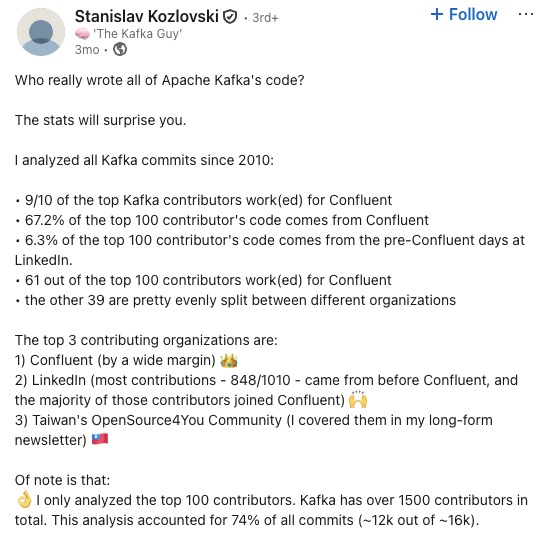
Core Insights - IBM has acquired Confluent for $11 billion in cash, marking a strategic shift away from the industry's focus on GPUs and large model training [1][2] - This acquisition is seen as a natural progression given the five-year strategic partnership between IBM and Confluent, with IBM promoting Confluent as part of its IBM Cloud Pak [1][2] - The acquisition price represents a 30% premium over Confluent's previous stock price, with funding sourced from IBM's cash reserves [1] Financial Overview - IBM's total expenditure on open-source software companies has now exceeded $50 billion, including previous acquisitions of Red Hat for $34 billion and HashiCorp for $6.4 billion [2] - Confluent has over 6,000 customers, providing IBM an opportunity to increase its product penetration among existing clients [2] Market Position and Risks - Confluent is a key player in the Kafka ecosystem, contributing significantly to its development, which raises concerns about the future of Kafka under IBM's ownership [3][5] - The acquisition may lead to cultural clashes between Confluent's fast-paced engineering culture and IBM's traditional corporate structure, potentially impacting innovation and talent retention [5][6] - There are fears that IBM may prioritize proprietary technology over open-source development, which could stifle the growth of the open-source Kafka version [5][6] Strategic Implications - The acquisition is viewed as a move to enhance IBM's capabilities in real-time data processing, with Confluent's technologies being integral to this strategy [8][11] - IBM aims to build a comprehensive data flow capability chain, integrating data ingestion (Kafka), data stream computation (Flink), and enterprise applications [11][12] - The acquisition aligns with IBM's broader strategy to address the challenges of enterprise AI by ensuring efficient internal data flow, moving beyond mere computational power [11][12]
IBM财报解读:估值合理但上涨潜力有限
Xin Lang Cai Jing· 2025-11-27 14:52
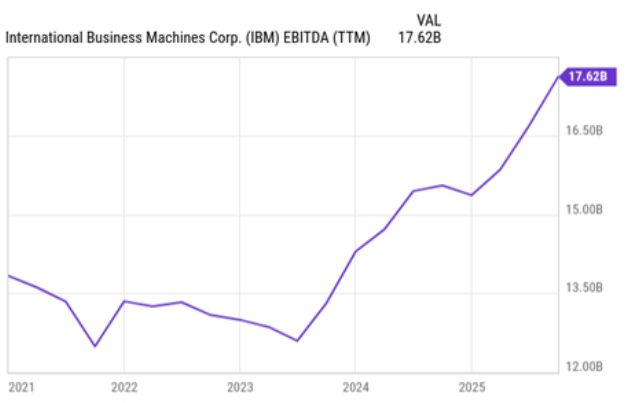
Core Insights - IBM's valuation is significantly lower compared to large tech companies, which reassures analysts [1] - The investment rationale for IBM is not based on valuation expansion but rather on providing a dividend-paying, defensive buffer while analysts focus on SaaS and large tech stocks [1] - Analysts have noted that IBM has delivered actual performance to support its AI business commitments, showing strong execution in AI, hybrid cloud, and IBM Z infrastructure [1] Financial Performance - The core software business growth remains in double digits but is slightly below the fourth quarter of 2024 [3] - Red Hat's business continues to grow, but the growth rate has slowed from 16%-17% to approximately 14% [4] - Consulting business revenue has stabilized, shifting from a year-over-year decline of 2% to a growth of 2% [5] - Infrastructure support business revenue is flat or slightly up, contributing stability to total revenue and EBITDA, but without significant acceleration in trends [6] - The transaction processing business has seen a substantial decline, dropping from approximately 10% year-over-year growth to -2% [6] - Automation business has made significant progress, with growth accelerating from about 15% to approximately 24% [6] - Data and AI business growth has also increased moderately from 4%-5% in Q4 2024 to 8% currently [6] - The hybrid infrastructure business has rebounded significantly, with IBM Z business reversing from a 20% year-over-year decline to a 61% growth in Q3 2025 [6][8] Market Sentiment - The rebound in IBM Z business reflects the end of a large mainframe upgrade cycle, indicating that such high growth rates may not be sustainable [8] - The consulting business has stabilized due to specific client project wins and digital transformation spending, but performance may fluctuate with macroeconomic changes [8] - The narratives around automation and AI are seen as structural growth trends, reflecting ongoing digital transformation and early AI adoption, although their absolute contribution to overall software revenue remains limited [8] - AI business orders increased from $5 billion in Q4 2024 to $9.5 billion in Q3 2025, but the growth rate has slowed compared to previous quarters [8] Valuation and Outlook - Since April, IBM's valuation (measured by enterprise value to forward EBITDA ratio) has increased by 20%-25%, from approximately 14.5x to 17.5x [10] - The 21% year-over-year EBITDA growth in Q3 2025 is notable compared to 7%-8% in Q3 2024, indicating a positive trend [9] - However, the improvement in EBITDA may largely stem from non-structural factors, such as the IBM Z mainframe cycle, rather than sustained acceleration in core business [13] - The overall revenue growth guidance for 2025 exceeds 5%, suggesting a slowdown in growth compared to earlier quarters [9] - IBM's current investment logic remains consistent with April's assessment, indicating reasonable valuation and potential for AI business uplift, but the best-case scenario for EBITDA improvement seems to be priced in [15]
IBM财报解读:估值合理但上涨潜力有限
美股研究社· 2025-11-27 14:24
Core Viewpoint - IBM's valuation is significantly lower compared to large tech companies, which reassures analysts. The company remains a meaningful allocation in the overall IT portfolio, not for valuation expansion, but as a defensive buffer that provides dividends while analysts position themselves in SaaS and large tech stocks [1]. Financial Performance - IBM has demonstrated strong execution in its AI, hybrid cloud, and IBM Z infrastructure business lines, achieving stable growth in revenue, profit margins, and free cash flow. However, since April, the stock has risen significantly, leading analysts to question whether there are any new changes not yet priced in [2]. - The core software business growth is maintaining a double-digit level, albeit slightly below the fourth quarter of 2024 [3]. - The Red Hat business continues to grow, but the growth rate has slightly slowed from 16%-17% to approximately 14% [4]. - Consulting business revenue has stabilized, shifting from a year-over-year decline of 2% to a growth of 2% [6]. - Infrastructure support business revenue is flat or slightly increased, contributing stability to total revenue and EBITDA, but without significant acceleration in trends [7]. Business Segments - The automation business has made significant progress, with growth accelerating from about 15% to approximately 24%, indicating potential for substantial margin improvement [7]. - Data and AI business growth has also increased moderately, from 4%-5% in Q4 2024 to 8% currently [7]. - The hybrid infrastructure business has rebounded significantly, with IBM Z business reversing from a 20% year-over-year decline to a 61% growth in Q3 2025 [7]. - The narrative around automation, AI, and IBM Z reflects a bullish sentiment in the market, with most optimistic expectations being reasonable [7]. Revenue and EBITDA Insights - The overall revenue growth guidance for 2025 exceeds 5%, suggesting a year-over-year growth of about 3% in Q4, which is a slowdown compared to the nearly double-digit growth in the first two quarters [9]. - EBITDA growth is positive, with a year-over-year increase of approximately 21% in Q3 2025, compared to 7%-8% in Q3 2024 [10]. - Since April, IBM's valuation has increased by 20%-25%, from about 14.5 times to approximately 17.5 times forward EBITDA [11]. Investment Logic - The current investment logic for IBM remains consistent with that of April, indicating a reasonable valuation. The potential uplift from AI business is promising, but the best-case scenario for EBITDA improvement seems to be already priced in [17]. - The AI business focuses on enterprise-level solutions, integrating AI into software, consulting, and infrastructure to drive incremental growth and margin improvement, but faces competition from large tech companies and specialized AI providers [17]. - The dividend yield and defensive attributes of IBM make it a quality stock to hold, but analysts do not recommend adding new funds given the missed opportunity from April to October [17].

阿里巴巴20251125
2025-11-26 14:15
Summary of Alibaba's Earnings Call Company Overview - **Company**: Alibaba Group - **Date of Earnings Call**: September 2025 Key Points Industry Performance - **Cloud Computing**: Alibaba Cloud benefited from increased AI demand and rising public cloud usage, with hybrid cloud growing over 20% year-on-year [2][3] - **E-commerce**: China's e-commerce GMV grew by 10% year-on-year, with customer management annual revenue rate (CMAR) also increasing by 10% [2][5] Financial Performance - **Total Revenue**: Alibaba Group's total revenue increased by 15% to RMB 247.8 billion, while net income decreased by 53% to RMB 20.6 billion, reflecting significant investments in fast commerce, AI, and cloud infrastructure [2][6] - **E-commerce Revenue**: Revenue from China's e-commerce business rose by 16% to RMB 132.6 billion, with fast-moving consumer goods (FMCG) revenue surging by 60% [2][6] - **Adjusted EBITDA**: Excluding FMCG losses, adjusted EBITDA for Chinese e-commerce was RMB 10.5 billion, indicating a mid-single-digit year-on-year growth [6][7] Growth Drivers - **AI Products**: AI-related products have shown triple-digit growth for nine consecutive quarters, indicating strong momentum [2][3] - **Customer Retention**: User retention rates and purchase frequency exceeded expectations, with high-value orders increasing significantly [7][8] Challenges and Investments - **Chip Supply Shortage**: A global chip supply shortage is expected to persist for 2 to 3 years, impacting AI infrastructure development [4][13][14] - **Capital Expenditure**: Alibaba has a capital expenditure plan of $380 billion over three years, but supply chain issues may affect the speed of new server deployment [9][10] Future Outlook - **AI Infrastructure**: Continued investment in AI infrastructure and foundational models is prioritized to ensure resource allocation maximizes ROI [4][10][11] - **Consumer Market Expansion**: Alibaba aims to expand its market share in the consumer sector by integrating various business lines, including fresh produce and local services [14] Additional Insights - **Logistics Optimization**: The fast commerce segment has improved order structure and logistics costs, reducing losses per order by 50% compared to previous months [7][8] - **User Engagement**: Daily active users on the Gaode Map reached 360 million, with significant increases in user engagement [5][6] This summary encapsulates the key insights from Alibaba's earnings call, highlighting the company's performance, growth strategies, and challenges in the current market environment.
