清仓式分红

Search documents
卓创资讯筹划港股上市前连续两年“清仓式”分红 上半年增收不增利财报“打架”
Xin Lang Zheng Quan· 2025-08-22 09:10
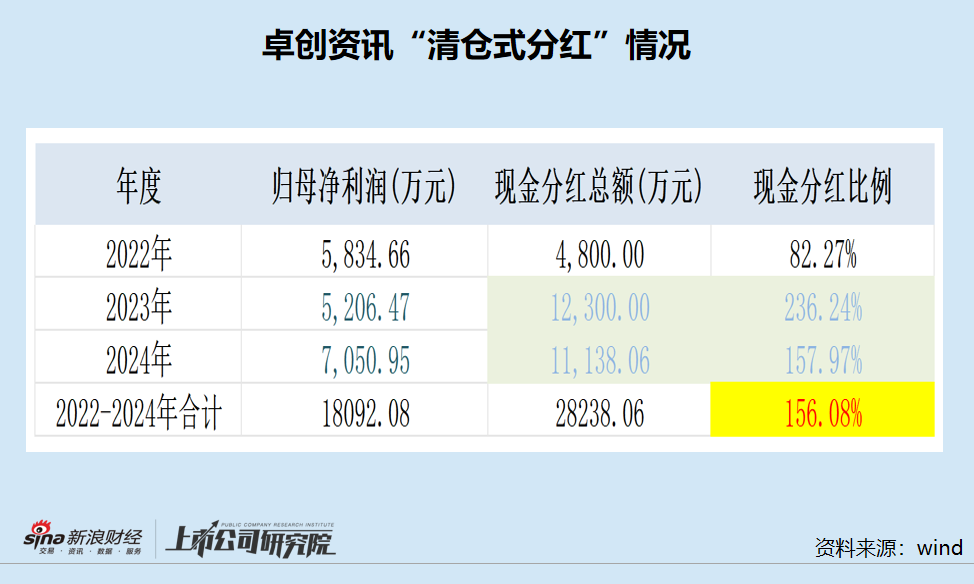
Core Viewpoint - Zhuochuang Information reported an increase in revenue but a decrease in profit for the first half of 2025, raising concerns about its financial practices and the rationale behind its planned IPO in Hong Kong shortly after its A-share listing [1][2][5]. Financial Performance - In the first half of 2025, Zhuochuang Information achieved operating revenue of 171.15 million yuan, a year-on-year increase of 15.75%, while the net profit attributable to shareholders was 35.14 million yuan, a decrease of 10.72% [11]. - The company’s net profit for 2023 and 2024 was reported at 52.06 million yuan and 70.51 million yuan, respectively, with cash dividends of 123 million yuan and 111.38 million yuan, resulting in cash dividend ratios of 236.24% and 157.97% [2][4]. Dividend Policy - Zhuochuang Information has engaged in "clearing-style" dividends, distributing a total of 282.38 million yuan over three years (2022-2024) against a cumulative net profit of 180.92 million yuan, leading to a cash dividend ratio of 156.08% [4][5]. - The company’s approach to dividends raises questions about the sustainability of its financial practices, especially as it seeks additional funding through a Hong Kong IPO [5]. IPO Plans and Delays - Zhuochuang Information announced plans for a Hong Kong IPO less than three years after its A-share listing, despite ongoing delays in its initial public offering projects, which were originally scheduled to be operational by June 30, 2023, but have since been postponed to 2027 [6][10]. - The company cited global economic uncertainties and rapid technological changes as reasons for the delays in its projects, questioning the necessity of seeking further capital through the Hong Kong IPO under similar conditions [10][11]. Accounting Discrepancies - There are significant discrepancies in Zhuochuang Information's financial reporting, particularly regarding research and development expenditures, with a reported difference of 19.72 million yuan between the 2024 and 2025 half-year reports [12][15]. - The inconsistency in financial data raises concerns about the company's accounting practices and the reliability of its financial disclosures, which could impact investor confidence [15][16].

“清仓式分红”背后的资源配置隐忧 成大生物左手用超募资金补流右手大额分红
Xin Lang Zheng Quan· 2025-08-15 08:10
Core Viewpoint - The implementation of new policies in 2024 has led to a significant increase in cash dividends among listed companies in China's stock markets, indicating a positive trend in shareholder returns and market stability [1] Summary by Sections Dividend Trends - In 2024, a total of 3,755 listed companies in the Shanghai and Shenzhen stock exchanges implemented cash dividends, with a total cash dividend amount of approximately 2.4 trillion yuan, marking an increase of 11.7% in the number of dividend-paying companies and a 14.7% increase in total dividend amount compared to 2023 [1] High Dividend Payouts - Some companies are engaging in "clearance-style dividends," where they distribute nearly all of their annual net profits as dividends. This practice raises concerns about the sustainability of the companies' future development and the efficiency of capital market resource allocation [1] Case Study: Chengda Bio - Chengda Bio reported a revenue of 1.676 billion yuan in 2024, a decrease of 4.22% year-on-year, and a net profit of 343 million yuan, down 26.42% year-on-year. The company has seen a continuous decline in revenue and net profit for three consecutive years since its listing [2] - Despite declining performance, Chengda Bio distributed a total cash dividend of 329 million yuan in 2024, with a dividend payout ratio of 96.06%. The largest shareholder, Liaoning Chengda Co., Ltd., holds 54.67% of the company's shares, indicating that a significant portion of the dividends benefits the major shareholder [2] Risks of High Dividend Strategies - The "clearance-style dividend" strategy, while appearing to provide substantial returns to shareholders, poses multiple risks. Distributing nearly all or exceeding the current net profit undermines the company's future development and risk reserves [3] - The practice of using excess funds from IPOs for dividends distorts the capital market's resource allocation function, as these funds should ideally support the company's growth rather than serve as a means for major shareholders to cash out [3] - High dividend payouts in companies with declining fundamentals raise questions about the fairness and rationality of such actions, potentially harming the long-term interests of minority shareholders and the company as a whole [3]

“清仓式分红”敲响可持续发展警钟 义翘神州左手补流右手分红成实控人套现捷径?
Xin Lang Zheng Quan· 2025-08-15 08:10
Core Viewpoint - The implementation of new policies in 2024 has led to a significant increase in cash dividends among listed companies in China's stock markets, with a total cash dividend amount of approximately 2.4 trillion yuan, marking a historical high in both scale and frequency [1] Summary by Sections Dividend Trends - In 2024, a total of 3,755 listed companies in the Shanghai and Shenzhen stock markets implemented cash dividends, with the number of dividend-paying companies and the total amount increasing by 11.7% and 14.7% respectively compared to 2023 [1] High Dividend Ratios - Among 498 listed biopharmaceutical companies, 43 had a dividend payout ratio exceeding 90%, with 32 companies surpassing 100% [2] - For instance, Yiqiao Shenzhou reported a cash dividend of 122 million yuan in 2024, with a payout ratio of 99.76%, despite a significant decline in revenue and net profit [2] Financial Health Concerns - Yiqiao Shenzhou's revenue decreased by 5.06% to 610 million yuan, and net profit fell by 53.13% to 122 million yuan in 2024 [2] - The company's cash reserves have been declining, with total cash and financial assets dropping from 58.02 billion yuan in 2022 to 39.49 billion yuan in 2024 [3] Use of IPO Proceeds - Yiqiao Shenzhou raised 49.8 billion yuan through its IPO, with a significant portion of the funds (83.15%) used to supplement working capital rather than for growth [3] - The practice of using excess IPO funds for dividends raises concerns about the distortion of capital market resource allocation [4] Risks of High Dividend Strategies - High dividend payouts, especially when funded by IPO proceeds, can lead to questions about fairness and the long-term interests of minority shareholders, particularly when the company's fundamentals are weakening [4]
“清仓式分红”敲响可持续发展警钟 合富中国大股东三年套现7500万
Xin Lang Zheng Quan· 2025-08-15 08:10
Core Viewpoint - The implementation of new policies in 2024 has led to a significant increase in cash dividends among listed companies in China's stock markets, with a total cash dividend amounting to approximately 2.4 trillion yuan, marking a historical high in both scale and frequency [1] Group 1: Dividend Trends - In 2024, a total of 3,755 listed companies in the Shanghai and Shenzhen stock markets implemented cash dividends, with the number of dividend-paying companies and the total amount increasing by 11.7% and 14.7% respectively compared to 2023 [1] - The trend of high dividends is particularly notable among the 498 listed biopharmaceutical companies, with 43 companies having a dividend payout ratio exceeding 90%, and 32 of those exceeding 100% [2] Group 2: Company-Specific Analysis - For example, HeFu China reported a revenue of 939 million yuan in 2024, a decline of 14.05% year-on-year, and a net profit of 27.57 million yuan, down 41.58% year-on-year, despite maintaining a high dividend payout [2] - HeFu China's cash dividend for 2024 reached 52 million yuan, with a dividend payout ratio of 187.72%, indicating a trend of distributing more than the net profit [2][3] Group 3: Risks of High Dividend Policies - The phenomenon of "clearance-style dividends," where companies distribute nearly all of their net profits, raises concerns about future sustainability and financial reserves, potentially undermining funds for reinvestment and growth [1][3] - High dividend payouts, especially when funded by initial public offering (IPO) proceeds, can distort the capital market's resource allocation function, benefiting major shareholders at the expense of long-term company health and smaller shareholders [3]

奥克斯电气赴港IPO:线上口碑一般?份额下滑 上市前有无压货冲业绩
Xin Lang Zheng Quan· 2025-07-25 11:27
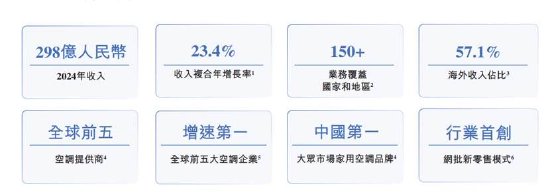
Core Viewpoint - The IPO of Aux Electric appears to show high growth in performance, but the cash flow is deteriorating, raising concerns about the quality of growth. The significant increase in sales rebates compared to 2022 may indicate potential channel stuffing to boost performance. Additionally, the high debt level raises questions about the necessity of fundraising after a substantial pre-IPO cash dividend [1] Group 1: Company Performance - Aux Electric, established in 1994, is one of the top five air conditioning providers globally, focusing on high-quality home and central air conditioning design, research, production, sales, and service [2] - Projected revenues for Aux Electric from 2022 to 2024 are 19.528 billion, 24.832 billion, and 29.759 billion RMB, with net profits of 1.442 billion, 2.487 billion, and 2.910 billion RMB, respectively [2] - The net profit margins for the same years are 7.4%, 10.0%, and 9.8%, with a projected global market share of 7.1% in 2024 [2] Group 2: Market Position and Competition - Aux Electric was one of the first home appliance manufacturers in China to adopt e-commerce channels, establishing long-term partnerships with major platforms like JD.com and Tmall [4] - Despite past successes, Aux Electric's online market share has been declining, with its ranking dropping to seventh place in the online air conditioning market by 2024 [4][5] - The online sales revenue share for Aux Electric from 2022 to 2024 fluctuated, with a decline in direct sales mode from 5.6% to 3.5% [5] Group 3: Financial Health and Cash Flow - Aux Electric's accounts receivable increased significantly from 1.428 billion RMB in 2022 to 3.003 billion RMB in 2024, further rising to 4.765 billion RMB in Q1 2025 [10] - The company's cash flow has deteriorated, with operating cash flows reported at 4.004 billion, 4.631 billion, 2.518 billion, and 580 million RMB over the respective years [15] - The asset-liability ratio for Aux Electric is notably high, at 88.3% in 2022, compared to competitors like Midea and Gree, which are around 62.33% and 59.19% [16] Group 4: Dividend and Debt Concerns - Aux Electric's decision to issue a substantial cash dividend of 3.794 billion RMB in 2024, despite a profit of less than 3 billion RMB, raises concerns about the implications of such a move given its high debt levels [17] - The company’s sales rebates to distributors have surged, with a notable increase of 88.3% from 2022 to 2024, indicating potential pressure on sales channels [12]
鸿星科技IPO:4.8亿分红与2亿补流背后的业绩迷途
Sou Hu Cai Jing· 2025-07-25 05:15
Core Viewpoint - Hongxing Technology is facing significant challenges in its IPO journey, with declining financial performance, supply chain vulnerabilities, and questionable financial practices, raising concerns about its market competitiveness and operational integrity [1][3][20]. Financial Performance - Revenue has declined sharply, with 2022 revenue at 651 million yuan, down 22% year-on-year, and 2023 revenue further decreasing to 542 million yuan, a 16.87% drop, nearly reverting to five years ago levels [2][5]. - Net profit for 2023 plummeted to 133 million yuan, a 31.60% decrease compared to the previous year [2]. Supply Chain Vulnerabilities - Over 60% of the company's base materials are sourced from Japan's Sanwa Group, with a significant reliance on Kyocera Group, which poses a competitive threat as it is the fourth-largest quartz crystal manufacturer globally [6][7]. - The company has a high dependency on imported chips, reaching 76%, indicating a fragile supply chain that could be disrupted by international market changes [7]. Financial Anomalies - The latest prospectus reveals concerning financial data, including a 10.79% increase in prepaid accounts, outpacing the 10.55% growth in operating costs, suggesting potential fund misappropriation [8]. - The construction in progress surged by 655.17% to 50 million yuan, raising suspicions of earnings manipulation [9]. Related Party Transactions - Complex relationships exist between Hongxing Technology and its controlling shareholder, Lin Honghe, with significant sales through related parties raising doubts about transaction authenticity [12][14]. - The gross margin from sales to related parties is significantly lower than that from third-party sales, indicating potential pricing issues [14]. Research and Development Shortcomings - R&D expenditure has consistently fallen below industry averages, with a 2022 R&D expense ratio of 5.17%, lower than the comparable company average of 7.26% [15][16]. - The company has shown an unusual pattern in patent acquisition, with no new patents for a decade before suddenly obtaining eight in a short period [16]. Dividend and Fundraising Concerns - The company has distributed 481 million yuan in cash dividends from 2020 to 2022, representing 85.62% of net profits, exceeding regulatory limits [18][19]. - Despite a healthy cash flow, the rationale for a 200 million yuan fundraising plan to supplement working capital is questioned, especially after a significant drop in dividends in 2023 [20].
又现“清仓式”分红 华富洋IPO前分红超5亿元流入实控人家族
Xi Niu Cai Jing· 2025-07-15 12:05
Group 1 - The core viewpoint of the article is that Huafu Yang, a supply chain service provider, has submitted a prospectus for an IPO on the Hong Kong Stock Exchange, with Agricultural Bank of China International as the sole sponsor [2] - Huafu Yang, established in 2001, has over 20 years of experience in cross-border supply chain services, primarily for electronic products, especially integrated circuits, covering over 40 vertical industries [2] - The company's revenue and profit figures from 2022 to 2024 show fluctuations, with revenues of 253 million, 221 million, and 235 million yuan, and profits of 86.99 million, 83.61 million, and 85.53 million yuan respectively [2] Group 2 - Huafu Yang has implemented significant cash dividends totaling 524 million yuan from 2022 to 2024, with 210 million yuan in 2023 and 314 million yuan in 2024, exceeding the net profits during the same period [2] - The total dividends distributed during the IPO period account for 41.1% of the company's cumulative profits over its 23-year history [2] - The actual controllers of Huafu Yang, Feng Sujun and Yang Chun Kui, hold 76% of the shares through a family trust, indicating that the majority of the dividends will benefit their family [3] Group 3 - One of the major fundraising projects for the IPO is to supplement working capital, highlighting a strategy of large-scale dividend distribution alongside capital raising [4]

75亿美元分红难平资本角力:科兴生物董事会现“双版本”结果,十年内斗僵局难破
Sou Hu Cai Jing· 2025-07-14 08:10
Group 1 - The core event revolves around a dramatic power struggle at Sinovac Biotech, highlighted by a special shareholders' meeting where the current chairman, Li Jiaqiang, called for a recess, but the meeting continued under director Lu Yulin's leadership, resulting in a vote [2][9]. - Sinovac announced a staggering special dividend plan totaling up to approximately $7.5 billion, which includes a $55 special cash dividend per share, a $19 second special cash dividend, and a third special cash dividend ranging from $20 to $50 per share, potentially leading to a total dividend of $124 per share [3][11]. - The company’s financial performance has been volatile, with revenues peaking at $19.375 billion in 2021 but plummeting to $1.493 billion in 2022 and $448 million in 2023, alongside a net profit drop from $14.46 billion in 2021 to a loss of $258 million in 2023 [5][11]. Group 2 - The power struggle dates back to 2016 when co-founders Yinxing Dong and Pan Aihua had a falling out over the company's privatization plans, leading to a prolonged conflict involving various capital factions [6][7]. - The conflict escalated in 2018, resulting in a series of aggressive tactics, including stock dilution and boardroom battles, which ultimately led to a six-year trading suspension on NASDAQ due to governance issues [8][9]. - As of July 9, 2023, a new round of control disputes has emerged, with shareholders voting to remove the current board and elect new members backed by Sequoia Capital, although the existing board claims the vote lacks legal validity [9][10].

“新冠疫苗”之王科兴生物派发巨额分红,七年内斗迎来终局?
Guan Cha Zhe Wang· 2025-07-11 10:11
Group 1 - The core conflict at Sinovac Biotech revolves around a control struggle, culminating in a shareholder vote that removed the current board led by Li Jiaqi and elected a new board aligned with founder Yin Weidong [1][4] - Sinovac announced a "liquidation-style dividend" plan totaling up to $7.5 billion, with a maximum dividend per share of $124, significantly higher than the pre-suspension share price of $6.47, indicating a dividend yield of 850% [1][4][7] - The company experienced a dramatic increase in revenue during the pandemic, with vaccine sales reaching $19.375 billion in 2021, but has since faced a sharp decline, reporting a loss of $79 million in 2023 [7][8] Group 2 - The dividend distribution is seen as a strategy to gain shareholder support while potentially depleting cash reserves to weaken future control by opponents [4][7] - Following the dividend payout, the company's cash reserves will be significantly reduced, leaving approximately $2 billion for operations, raising concerns about its financial sustainability [1][7] - Sinovac's non-COVID related revenue has consistently remained below $200 million per year, highlighting a lack of sustainable growth beyond its pandemic-era success [7][8]

疫苗之王,突击分红500亿!
商业洞察· 2025-07-11 08:38
Core Viewpoint - Sinovac Biotech is planning a massive dividend payout of 75 billion USD (approximately 538 billion RMB), raising concerns about the company's financial health and governance structure [2][4]. Group 1: Dividend Payout - The company intends to distribute a total of 75 billion USD as a "clearance-style" dividend, which is unusual for a healthy company [2][4]. - The dividend payout is over 20 times the current stock price of 6.47 USD, with a total market capitalization of 389 million USD [4][5]. - If the dividend plan is executed, major shareholders stand to gain significantly, with the largest shareholder, SoftBank Group, potentially receiving up to 9.6 billion USD [6][7]. Group 2: Shareholder Dynamics - The company's ownership structure is highly fragmented, with no single shareholder holding more than 30%, leading to a lack of absolute control [5][6]. - The upcoming shareholders' meeting is a critical event, and the founder, Yin Weidong, is likely using the dividend to secure support from other shareholders amid ongoing power struggles [7][10]. - Historical conflicts between co-founders have created a tense environment, with past legal battles affecting current governance [8][10]. Group 3: Financial Performance - Sinovac's financial performance has deteriorated sharply, with net profits dropping from 8.4 billion USD in 2021 to just 1.08 billion USD in 2022, followed by consecutive losses in 2023 and 2024 [10][11]. - The company has substantial cash reserves, which shareholders view as an attractive target for distribution, especially given the uncertain future and lack of a controlling shareholder [11].