
热管理技术

Search documents
腾龙股份20251201
2025-12-01 16:03
Summary of Tenglong Co., Ltd. Conference Call Company Overview - **Company**: Tenglong Co., Ltd. - **Industry**: Automotive components, specifically focusing on thermal management systems and new energy vehicles Key Points Industry and Market Dynamics - **Overseas Market Expansion**: Tenglong is actively expanding its overseas market presence, particularly in Poland, Southeast Asia, and Morocco, to counter domestic competition and declining gross margins. As of the first half of 2025, overseas sales reached 460 million yuan, accounting for 24% of total revenue, with expectations for continued growth [2][6][21] - **New Energy Vehicle (NEV) Growth**: The NEV-related business accounted for over 50% of revenue in the first three quarters of 2025, driven by increased penetration rates and higher value per vehicle. The company is launching new products like electronic water pumps and plate heat exchangers [2][7] Financial Performance - **Q3 2025 Performance**: In Q3 2025, the company reported revenue of 972 million yuan and a net profit of 52 million yuan, a year-on-year decrease primarily due to intensified industry competition and a decline in gross margins. However, the gross margin improved by 1 percentage point quarter-on-quarter [2][9][10] - **Financial Stability**: As of Q3 2025, the asset-liability ratio was 48.17%, with accounts receivable turnover days at 98.43, indicating stable cash flow and manageable financial risk [4][13] Strategic Initiatives - **Cost Management**: The company is implementing a "cost-saving and revenue-increasing" strategy, focusing on product matrix expansion, solidifying domestic market share, and enhancing operational efficiency [2][14] - **Technological Innovation**: Tenglong is committed to technological innovation, particularly in thermal management, and is exploring applications in non-automotive sectors such as energy storage and data centers [3][15] Product and Service Development - **Product Matrix**: The main business segments include thermal management products for air conditioning and NEV systems, EGR products for emissions control, and traffic management products. The company is also developing air conditioning hoses and has established a comprehensive domestic production base [5][6] - **Non-Vehicle Applications**: Tenglong has made progress in non-vehicle applications, including high-power electronic water pumps for energy storage and data centers, and is developing smart cabin products [8][15] Future Outlook - **Q4 2025 Expectations**: The company anticipates a stable operational environment in Q4 2025, with seasonal increases in vehicle production expected to boost performance [11] - **Currency Risk Management**: With overseas sales constituting about 20% of total revenue, the company is actively managing currency risks associated with USD and EUR transactions [12][21] Market Challenges - **Competitive Landscape**: The automotive industry is facing intense competition, leading to price wars that pressure profit margins. Tenglong is adapting by enhancing its product offerings and focusing on high-quality clients [3][27] - **Long-term Value Creation**: The company remains focused on long-term value creation for investors, despite short-term challenges [19] Additional Insights - **Hydrogen Energy Investment**: Tenglong has invested in a hydrogen fuel cell company, indicating a long-term interest in hydrogen energy applications, particularly in commercial vehicles [20] - **Market Positioning**: The company is strategically positioning itself to leverage its existing capabilities while exploring new growth avenues in emerging markets and technologies [24][25] This summary encapsulates the key insights from the conference call, highlighting Tenglong's strategic initiatives, financial performance, and market outlook.

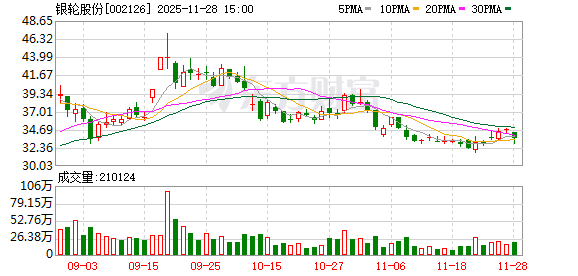
银轮股份拟1.33亿元收购深蓝股份55%以上股权 强化热管理产业链核心技术掌控
Zheng Quan Ri Bao· 2025-11-28 07:41
Core Viewpoint - Zhejiang Yinlun Machinery Co., Ltd. plans to acquire over 55% of Shenzhen Deep Blue Electronics Co., Ltd. for approximately 133 million yuan, aiming to enhance its control over the thermal management industry and integrate advanced technologies [2][3][4] Company Summary - The acquisition involves purchasing approximately 20.31 million shares of Deep Blue Electronics at 4.05 yuan per share, totaling about 82.27 million yuan, followed by a capital increase of around 50 million yuan [2] - Deep Blue Electronics specializes in high-tech electronic devices, particularly HVAC controllers and variable frequency drives, with projected revenues of 71.52 million yuan and 30.86 million yuan for 2024 and the first half of 2025, respectively [2] - Yinlun's traditional business focuses on automotive thermal management components, with a significant expansion into digital energy and robotics, reporting a 58.94% year-on-year revenue growth in digital energy for the first half of 2025 [2] Industry Summary - The integration of Deep Blue's technology with Yinlun's resources is expected to lower production costs and enhance control over core technologies in the thermal management supply chain [3] - The complementary customer bases of both companies provide a solid foundation for exploring new markets and large clients, particularly in the electronic manufacturing and smart home sectors [3] - The acquisition is anticipated to create a differentiated technological barrier in the competitive thermal management industry, positioning Yinlun to develop unique products that stand out from competitors [3][4] - The demand for thermal management technology is expected to grow with the rapid development of new energy vehicles and digital energy sectors, allowing companies with core technological advantages to dominate the market [4]


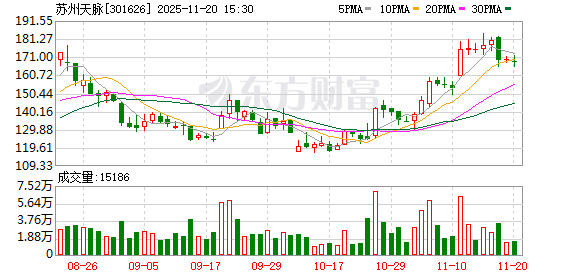
苏州天脉:天脉建准主要从事微型风扇研发、生产和销售,产品将主要应用于智能手机、平板电脑等消费电子场景
Mei Ri Jing Ji Xin Wen· 2025-11-20 11:07
Core Viewpoint - The establishment of a joint venture, Tianmai Jianzhun, between Suzhou Tianmai and Jianzhun Electric focuses on the research and production of cooling products, leveraging both companies' technological and resource advantages to potentially enter NVIDIA's liquid cooling supply chain [2]. Group 1: Joint Venture Details - The joint venture, Tianmai Jianzhun, was established on November 14, 2025, with a registered capital of 13 million yuan, where Suzhou Tianmai holds a 65% stake and Jianzhun Electric holds a 35% stake [2]. - Tianmai Jianzhun will primarily engage in the research, production, and sales of micro fans, targeting applications in consumer electronics such as smartphones and tablets [2]. Group 2: Company Backgrounds - Suzhou Tianmai is recognized as a high-tech enterprise with capabilities in mass production of high-performance thermal management components, including mid-to-high-end thermal materials, heat pipes, and uniform temperature plates [2]. - Jianzhun Electric, established in 1980, specializes in energy-saving motor technology and has developed innovative products such as the world's first MagLev magnetic levitation motor fan and the smallest millimeter-scale micro fan [2]. Group 3: Market Applications - The products from both companies are widely used in various sectors, including smartphones, laptops, automotive electronics, and security monitoring [2]. - The collaboration aims to integrate resources and strengths to position Tianmai Jianzhun as a leading thermal management technology provider in the industry [2].
飞龙股份:公司持续深耕主业,生产经营一切正常
Zheng Quan Ri Bao Wang· 2025-11-18 11:13
Core Viewpoint - Feilong Co., Ltd. (002536) is committed to its main business operations, which are running normally, and is focusing on a strategic layout centered around the "four curves" strategy [1] Group 1: Business Strategy - The company aims to solidify its core business in vehicle thermal management [1] - It plans to use its overseas production base, Longtai Company, as a strategic foothold to deepen its global market layout [1] - The company intends to expand into emerging applications of thermal management technology [1] - It will promote the deep integration of thermal management technology with cutting-edge industries to build an integrated supply chain and achieve value empowerment [1]

Gentherm (NASDAQ:THRM) Surpasses Earnings Estimates
Financial Modeling Prep· 2025-10-23 23:00
Core Insights - Gentherm reported an earnings per share (EPS) of $0.73, exceeding the estimated $0.655, indicating strong operational performance [1][6] - The company achieved a revenue of approximately $386.87 million for Q3 2025, surpassing the Zacks Consensus Estimate by 3.16% and showing growth from $371.51 million in the same quarter last year [3][6] Financial Performance - The reported EPS of $0.73 represents a 14.06% earnings surprise, although it is a slight decrease from the $0.75 per share reported in the same quarter last year [2][6] - Gentherm's year-to-date operating cash flow reached $88 million, reflecting its financial health [4][6] - The company secured $745 million in new automotive business awards, contributing to its goal of exceeding $2 billion in awards for the year [4] Market Position - Gentherm's price-to-earnings (P/E) ratio is approximately 37.34, indicating that investors are willing to pay a premium for its earnings [5] - The company's low debt-to-equity ratio of roughly 0.08 suggests a strong balance sheet [5] - A current ratio of approximately 1.96 indicates Gentherm's capability to meet short-term obligations [5]


我国科学家研发仿生光热织物,既可秒速升温又能稳定耐用
Xin Hua She· 2025-10-11 13:38
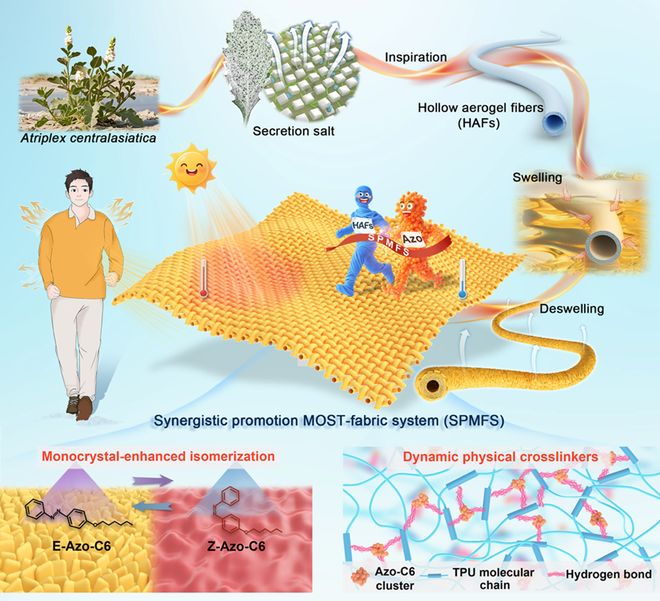
Core Insights - The research team from Tianjin University has developed a new type of molecular solar thermal (MOST) fabric that can achieve efficient light-to-heat conversion and excellent mechanical properties, inspired by the salt-absorbing mechanisms of salt-tolerant plants [1][4] - This innovative fabric can rapidly increase surface temperature to 40°C within 12 seconds under -20°C conditions and maintains over 90% of its thermal performance after extensive washing and mechanical stress [1][4] Group 1: Technology and Innovation - The MOST fabric utilizes a unique design inspired by the dynamic cycle of salt absorption and crystallization found in the plant species "Kochia scoparia," which allows it to adapt to extreme environments [3] - The fabric is made from thermoplastic polyurethane aerogel fibers, which are treated with a special azo compound solution to create a dense crystal layer on the surface, enhancing its optical and mechanical properties [3] Group 2: Performance and Applications - Experimental results show that the fabric can increase temperature by 25.5°C in 70 seconds under blue light and by 21.2°C in 50 seconds under simulated sunlight at low temperatures [4] - The fabric's ability to precisely control heat release through light intensity adjustment makes it suitable for everyday warmth and as a portable therapeutic device for conditions like arthritis [4] Group 3: Market Potential - This research represents a significant breakthrough in thermal management materials, paving the way for applications in smart clothing, medical therapy devices, and outdoor protective gear, transitioning personal thermal management from reliance on external energy to efficient solar energy utilization [4]
飞荣达:公司有微通道液冷板技术储备,截至2025年获专利843项
Xin Lang Cai Jing· 2025-09-22 01:13
Core Viewpoint - The company has a significant technological reserve in microchannel liquid cooling plate technology and is actively developing new products to meet diverse market demands [1] Group 1: Technology and Innovation - The company has obtained a total of 843 patents as of June 30, 2025, indicating a strong commitment to innovation and technology development [1] - The company is recognized as a leading provider of thermal management solutions in China, with a wide range of thermal management products [1] Group 2: Market Demand and Customer Focus - The company continuously develops new technologies and products to cater to different customer needs, usage environments, and product specifications [1]

飞龙股份(002536) - 002536飞龙股份投资者关系管理信息20250918
2025-09-18 09:44
Company Overview - Feilong Automotive Parts Co., Ltd. has over 70 years of history, established in 1952, focusing on thermal management system solutions [1] - The company has two development phases: - Before 2017: Focused on automotive thermal management components like mechanical water pumps and turbocharger housings [1] - Since 2017: Expanded into non-automotive sectors while continuing to develop automotive thermal management products [1][2] Product Development and Market Reach - The company has established four R&D centers in Shanghai, Wuhu, Nianxiang, and Xixia, focusing on new energy thermal management components [1][2] - Products are sold nationwide and exported to over 200 domestic and international clients, serving more than 300 factory bases globally [2] Investment and Product Strategy - The company is integrating thermal management technology with various sectors, including AI, 5G, and renewable energy [3] - No additional investments in domestic automotive engine thermal management products are planned, aside from the existing subsidiary in Thailand [3] New Energy Vehicle Products - Supplies electronic pumps, temperature control valves, and integrated modules for pure electric vehicles, and exhaust manifolds for hybrid vehicles [4] Manufacturing and Supply Chain - The self-manufacturing rate of electronic pump products exceeds 90%, with key components produced in-house [5] - Major clients for new energy thermal management integrated modules include Chery, Nanjing Automobile, and Geely, with increasing orders year-on-year [5] Competitive Advantages and Market Position - The company holds a unique market position in the liquid cooling sector due to its first-mover advantage and customer-centric platform design [6] - Focuses on customized development to meet diverse client needs, offering high-performance, lightweight, and cost-effective products [6] Global Strategy and Risk Management - The company is enhancing its global strategy by establishing a production base in Thailand to mitigate risks from U.S. tariff policies [7] - The first overseas smart factory in Thailand was completed on June 26, 2025, aimed at expanding into Southeast Asia and North America [7]
拓普集团(601689):二季度营收同环比提升,汽车、机器人及液冷业务持续突破
Guoxin Securities· 2025-09-04 14:35
Investment Rating - The report maintains an "Outperform the Market" rating for the company [4][6][23]. Core Insights - The company achieved a revenue of 12.94 billion yuan in the first half of 2025, representing a year-on-year increase of 5.8%, while the net profit attributable to the parent company decreased by 11.1% [1][9]. - In Q2 2025, the company reported a revenue of 7.17 billion yuan, up 9.7% year-on-year and 24.3% quarter-on-quarter, with a net profit of 730 million yuan, down 10.0% year-on-year but up 29.0% quarter-on-quarter [1][9]. - The company is focusing on expanding its liquid cooling business, having secured initial orders worth 1.5 billion yuan, leveraging its thermal management capabilities and customer resources [3][22]. Financial Performance - The company’s gross margin in Q2 2025 was 19.3%, a decrease of 1.1 percentage points year-on-year, attributed to changes in product structure and reduced economies of scale [2][14]. - The company’s R&D expenses increased due to ongoing investments in new products related to robotics and automotive electronics [2][14]. - The forecast for net profit attributable to the parent company for 2025, 2026, and 2027 is adjusted to 3.22 billion, 3.94 billion, and 4.77 billion yuan respectively [4][23]. Revenue and Profit Forecast - The projected revenue for 2025 is 31.39 billion yuan, with a growth rate of 18.0% [5]. - The expected earnings per share (EPS) for 2025 is 1.86 yuan, reflecting a downward adjustment from previous estimates [4][5]. Market Position and Strategy - The company is positioned as a core player in the humanoid robotics supply chain, with ongoing collaborations with major automotive manufacturers to enhance its product offerings [4][23]. - The company is implementing a platform strategy and deepening partnerships with various automotive brands, which is expected to provide stable growth momentum [3][22].

【私募调研记录】博普科技调研三花智控
Zheng Quan Zhi Xing· 2025-09-01 00:08
Group 1 - The core viewpoint of the news is that Bopu Technology conducted a survey on a listed company, Sanhua Intelligent Control, revealing significant growth in revenue and net profit for the first half of 2025 [1] - Sanhua Intelligent Control achieved operating revenue of 16.263 billion yuan, an increase of 18.91% year-on-year, and a net profit of 2.110 billion yuan, up 39.31% year-on-year [1] - The revenue from the refrigeration and air conditioning components business reached 10.389 billion yuan, growing by 25.49% year-on-year, driven by rising global temperature control demand and the expansion of heat pump technology into data centers and energy storage [1] - The automotive components business generated revenue of 5.874 billion yuan, an increase of 8.83% year-on-year, with a customer base that includes major automakers such as Mercedes-Benz, BYD, Tesla, and Toyota [1] - The company is advancing its data center liquid cooling business by leveraging existing thermal management technology for component reuse [1] - A robotics division has been established, focusing on electromechanical actuators and promoting mass production [1] - The growth in net profit is primarily attributed to the "elite troops" initiative, which enhances operational quality [1] - The company is addressing tariff policies through overseas production base layouts and has reached cost-sharing agreements with clients to ensure supply chain stability [1]
