
环境保护

Search documents
中国上市公司质量ESG指数报告-北京师范大学
Sou Hu Cai Jing· 2026-01-28 02:09
Core Viewpoint - The "China Listed Company Quality / ESG Index Report No.5 (2025)" aims to enhance the quality of listed companies in China by aligning with global ESG trends and establishing a scientific evaluation system [1][7]. Group 1: Evaluation Framework - The report is based on the State Council's opinions on improving the quality of listed companies and emphasizes the integration of corporate governance with ESG principles [1][7]. - The evaluation system includes three main dimensions: corporate governance (81 indicators, 55% weight), social responsibility (44 indicators, 35% weight), and environmental protection (7 indicators, 10% weight) [1][12]. - The evaluation covers 5,292 A-share listed companies in Shanghai, Shenzhen, and Beijing that have been listed for at least one year as of April 30, 2025 [1][14]. Group 2: Evaluation Results - From 2020 to 2024, the average index for non-financial companies first declined, then rose, and slightly decreased again, with a score of 68.14 in 2024, down by 0.79 from the previous year [2][20]. - State-owned enterprises consistently outperformed non-state-owned enterprises, with central enterprises showing the best performance [2][22]. - The eastern region ranked highest, with Tianjin, Shanghai, and Anhui being the top three provinces; the mining industry led while the education sector ranked lowest [2][32]. Group 3: Policy Recommendations - The report suggests that corporate governance should align with international standards, enhancing protections for minority investors and board independence [2][19]. - Social responsibility and environmental protection should be grounded in practical realities, incorporating economic and innovation responsibilities while prioritizing stakeholder rights [2][19]. Group 4: Significance of the Index - The index serves multiple stakeholders, including regulators, investors, and companies, by providing insights into the quality and ESG performance of listed companies [2][20]. - It aims to reduce information asymmetry for investors, helping them identify long-term investment opportunities and enhancing market stability [2][20]. - The index also assists companies in recognizing performance gaps and taking corrective actions to improve competitiveness [2][20].


东西问丨白雅婷:联合国官员如何观察理解中国发展故事?
Xin Lang Cai Jing· 2026-01-25 14:11
现将访谈实录摘要如下: 中新社记者:回顾在华经历,中国给您留下最深刻印象的是什么? 中新社北京1月25日电 题:联合国官员如何观察理解中国发展故事? ——专访联合国开发计划署亚太区域局副局长、前驻华代表白雅婷 中新社记者 肖欣 2026年伊始,联合国开发计划署(UNDP)驻华代表白雅婷(Beate Trankmann)离开北京,赴曼谷履新UNDP 亚太区域局副局长。 启程前夕,白雅婷接受中新社"东西问"独家专访,讲述她20多年间对中国发展故事的深入观察。 视频:【东西问】"中国观察家"白雅婷眼中的中国发展故事来源:中国新闻网 白雅婷:如果把我在这一任期内6年间的见闻与25年前第一次来华任职时相比,给我留下深刻印象的是 中国在环境保护方面的进步,以及环保投入如何真正改善了人们的日常生活质量。 举个例子,我办公室外有条亮马河。25年前,它臭得难以靠近;现在,人们在河畔跑步,在岸边的咖啡 馆欣赏美景。不仅仅是亮马河,这是一项全国性努力。数据显示,2000年初,中国约57%的河流被列为 水质良好,而现在已超过90%。 空气质量改善也是如此。25年前,很难意识到北京是被美丽群山环抱的城市;现在,天空晴朗,能经常 看到群 ...

芬兰总理访华:北极光辉映东方光芒,中芬友谊历久弥新|图览天下
Xin Lang Cai Jing· 2026-01-25 04:52
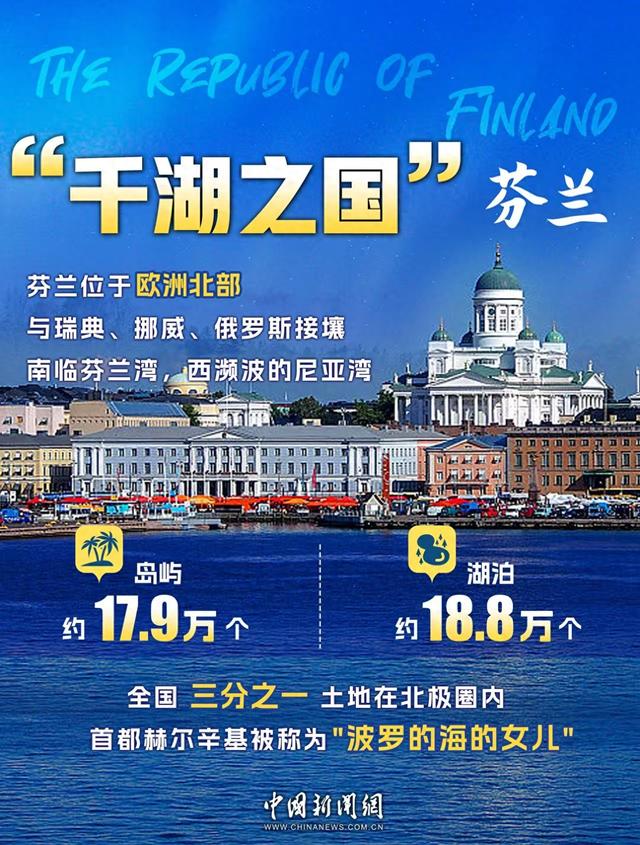
中新网1月25日电 外交部发言人1月22日宣布:应国务院总理李强邀请,芬兰总理奥尔波将于1月25日至 28日对中国进行正式访问。 地处北欧的芬兰,是最早承认新中国的西方国家之一,当前中芬关系发展良好。中芬关系是不同历史文 化、社会制度和发展阶段的国家间和平相处、互利合作的典范。 无论是北极光、圣诞老人,还是桑拿浴、诺基亚……这些闻名于世的标签,都来自芬兰。 芬兰地处欧洲北部,与瑞典、挪威、俄罗斯接壤,南临芬兰湾,西濒波的尼亚湾。该国首都赫尔辛基是 全国文化、金融和经济活动中心,也是芬兰最大的工业中心。 这个国家以"千湖之国"著称,有约18.8万个湖泊,内陆水域面积占全国总面积的10%。这个国家还被称 为"圣诞老人的故乡",全国三分之一的土地在北极圈内,午夜阳光是其标志性的自然现象。 传统桑拿是芬兰的特色文化之一,也被称为芬兰的"国粹"。据称,该国桑拿房大约有200万至300万间, 平均不到3个人就拥有一间桑拿房。近年来,更是涌现出一系列非同寻常的桑拿房,从赫尔辛基海滨甚 至到摩天轮,在各种异想天开的地方,都能享受蒸桑拿。 据芬兰国家技术创新局和芬兰游戏产业中心统计,芬兰开发的游戏中有95%用于出口,是其文化出 ...
越南6月起推行E5/E10生物燃料
Zhong Guo Hua Gong Bao· 2026-01-23 03:45
尽管进展顺利,越南政府也承认在标准与技术规范方面仍存差距,特别是在石油行业的储存设施与基础 设施管理方面。新的《产品质量法》起草需要各部委、地方政府加强协调以完善法规,确保燃料市场稳 定、透明与安全;定期检查和监督将是工作重点;此外新的《石油贸易法令》已进入最终征求意见阶段。 中化新网讯 近日,越南政府宣布,自2026年6月1日起,全国将正式推行使用E5及E10生物燃料。此举是 越南推行旨在促进可持续发展与环境保护的能源转型路线图的关键步骤,越南当局表示,法律基础、技 术基础设施及企业支持等条件已基本就绪。 在由越南工贸部主持的燃料供应与管理会议上,科技部代表表示已为按时引入E10燃料创造了必要条 件。主要燃料分销商已做好准备,越南石油集团已基本完成所需升级,平明石油公司也已大体满足技术 标准,以确保供应稳定与燃料质量。 ...
坚决打好污染防治攻坚战 | 守护一方绿 点亮万家灯
Guang Xi Ri Bao· 2026-01-18 03:26
Core Insights - The Nanning Pumped Storage Power Station in Guangxi is designed to balance construction and environmental protection, showcasing a successful integration of large-scale engineering with ecological considerations [1][2] - The project has achieved a high utilization rate of excavation materials, exceeding 94%, and significantly reduced land use and transportation of waste [1] - The station is set to generate 2.5 billion kilowatt-hours of clean energy annually, reducing carbon emissions by approximately 2.2 million tons, equivalent to the carbon absorption of over 60,000 acres of forest [3] Environmental Protection Efforts - Over 90% of construction wastewater is recycled, and rainwater is collected for dust control and maintenance [2] - A unique initiative involved the relocation and preservation of a rare plant species, the Cyathea, with a survival rate of over 96% after transplantation [2] - The project has established a technical standard for the relocation and protection of the Cyathea, marking a significant advancement in ecological conservation practices [2] Economic Impact - The total investment in the power station is approximately 8 billion yuan, with an expected annual tax revenue of around 100 million yuan for the local area [3] - The construction phase has stimulated related investments exceeding 16 billion yuan, contributing to local economic development [3]
谢春涛向国防大学国际防务学院外国军官学员介绍中国国家治理
Xin Lang Cai Jing· 2026-01-09 06:19
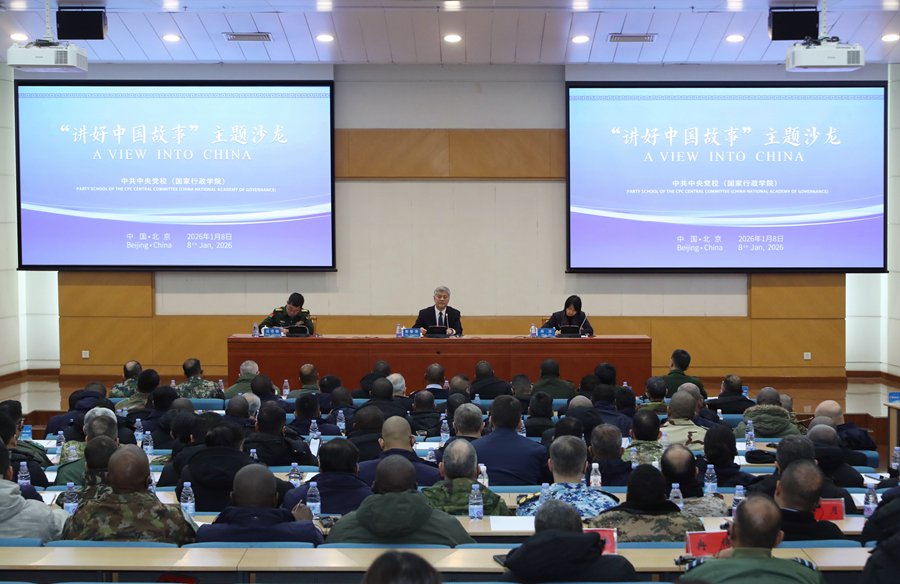
Group 1 - The event was a themed salon titled "Telling China's Story" held at the Central Party School (National Academy of Governance) for visiting military students from the National Defense University [1] - Vice President Xie Chuntao introduced the main functions of the school and systematically presented the advantages of China's national system and governance, emphasizing 13 key aspects including the leadership of the Party, the role of the people, and the socialist economic system [3] - The discussion included topics such as the spirit of the 20th Central Committee's Fourth Plenary Session, training of officials, environmental protection, and the construction of international communication capabilities [3] Group 2 - Attendees included officials from the National Defense University and relevant departments of the school [4] - Prior to the salon, foreign military students visited the school's history museum and campus [4]
美国一口气退了哪些群
Xin Lang Cai Jing· 2026-01-08 19:02
Core Viewpoint - The Trump administration has announced the withdrawal of the United States from 66 international organizations deemed "not in the interest of the United States," significantly impacting global cooperation in various sectors, particularly climate change and women's rights [1][5]. Group 1: Environmental Impact - Approximately 20 of the organizations being exited are related to climate change, sustainable development, and environmental protection, including the United Nations Framework Convention on Climate Change, which is considered the legal foundation for global climate cooperation [1]. - The U.S. will be absent from the 30th Conference of the Parties to the UN Framework Convention on Climate Change in 2025, marking the first absence in nearly 30 years [1]. Group 2: Women's Rights and Health - The U.S. will terminate its participation and funding for the United Nations Entity for Gender Equality and the Empowerment of Women and the United Nations Population Fund, which are crucial for global gender equality and maternal health initiatives [2]. - The U.S. had already cut funding to the United Nations Population Fund last year, and this announcement formalizes the withdrawal [2]. Group 3: Global Development - The withdrawal list includes organizations such as the United Nations Conference on Trade and Development and the International Energy Forum, which are vital for global economic development and social affairs [4]. - Several UN bodies focused on regional economic development, including the UN Economic and Social Affairs Department and various regional economic commissions, are also affected by this decision [4]. Group 4: Broader Implications - Trump's memorandum states that the operations of these organizations contradict U.S. national interests, security, economic prosperity, or sovereignty, indicating a broader trend of the U.S. stepping back from global cooperation [5]. - The decision to exit these organizations is seen as a continuation of efforts to undermine global systems, particularly in areas related to development, women's issues, and climate change [3].
我国空气质量标准修订符合国情、体现决心
Xin Lang Cai Jing· 2025-12-26 13:54
Core Viewpoint - The Ministry of Ecology and Environment of China has released a draft for revised air quality standards, tightening the limits for PM2.5 and PM10 concentrations to better protect public health while considering national conditions [1][2]. Group 1: Air Quality Standards - The proposed secondary limits for PM2.5 annual and daily concentrations are tightened from 35 and 75 micrograms per cubic meter to 25 and 50 micrograms per cubic meter, respectively [1]. - The secondary limits for PM10 annual and daily concentrations are also tightened from 70 and 150 micrograms per cubic meter to 50 and 100 micrograms per cubic meter [1]. - The limits for sulfur dioxide and nitrogen dioxide are also being tightened due to their health impacts and their role in the secondary formation of PM2.5 [1]. Group 2: Comparison with International Standards - Other countries and regions, such as the United States, have also revised their PM2.5 limits, with the U.S. EPA tightening the annual average from 12 micrograms per cubic meter to 9 micrograms per cubic meter by 2024 [1]. - Despite these international standards, the proposed limits in China are still considered relatively lenient compared to the strictest global standards [1]. Group 3: National Context and Development - China's reliance on coal and its status as a manufacturing powerhouse, contributing nearly 30% to global manufacturing value, necessitate higher emissions of air pollutants [2]. - The expected economic development trajectory suggests that by 2035, China will reach a level comparable to that of medium-developed countries, which typically have PM2.5 limits around 25 micrograms per cubic meter [2]. - The revision of standards reflects China's commitment to improving environmental quality and public health while aligning with its development goals [2].
三沙西沙洲:从零星几棵树到植被覆盖率超90%(美丽中国·身边的绿色故事)
Ren Min Ri Bao· 2025-12-26 03:13
Core Viewpoint - The article highlights the successful ecological restoration efforts on Xisha Island, where local fishermen have transformed a barren sandbank into a green oasis through tree planting and environmental protection initiatives [2][4][6]. Group 1: Ecological Restoration Efforts - The fishermen on Xisha Island have planted approximately 138,000 trees over the past decade, achieving a survival rate of over 95% [4][6]. - The island's vegetation coverage has exceeded 90%, with various tree species such as Casuarina, coconut trees, and noni trees contributing to the transformation [2][4]. - Innovative planting techniques, such as using water-filled bottles to support tree growth, have been adapted from methods learned from Inner Mongolia [4][6]. Group 2: Environmental Protection Initiatives - Local fishermen are actively involved in cleaning up marine debris, collecting plastic waste that washes ashore, and transporting it to recycling facilities [6][7]. - The government has implemented measures such as building a simple dock for easier transportation of soil and materials, and installing seawater desalination equipment to support irrigation needs [4][6]. - Regular environmental activities, including tree nursery maintenance and marine sanitation efforts, are conducted to enhance the ecological environment of the islands [6][7].
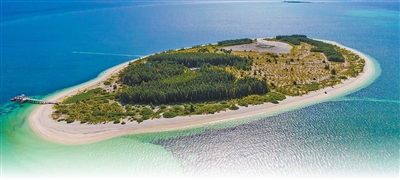
一座岛礁的绿色蜕变 三沙西沙洲:从零星几棵树到植被覆盖率超90%(美丽中国·身边的绿色故事) 2013年至今种成约13.8万棵树,成活率达95%以上
Ren Min Ri Bao· 2025-12-25 22:26
Core Viewpoint - The article highlights the efforts of fishermen in Xisha Islands, particularly in the greening and environmental protection initiatives on Xisha Island, showcasing their transition from fishing to ecological conservation [2][5]. Group 1: Environmental Initiatives - The fishermen have successfully transformed Xisha Island, which previously had sparse vegetation, into a green oasis with over 90% vegetation coverage, planting approximately 138,000 trees with a survival rate of over 95% [2][4]. - Innovative methods such as using discarded bottles for planting trees have been implemented to adapt to the harsh sandy environment, ensuring the trees can thrive despite challenges like high temperatures and typhoons [4][5]. - The local government has facilitated these efforts by providing desalination equipment for irrigation and constructing a simple dock for easier transportation of soil and materials [4][6]. Group 2: Ecological Impact - The growth of trees on Xisha Island has led to improved soil quality and the return of wildlife, including sea turtles and various migratory birds, indicating a positive ecological impact [5][6]. - Regular clean-up activities are conducted by fishermen and local officials to maintain the cleanliness of the surrounding waters and protect the island's ecosystem [6]. Group 3: Community Involvement - Fishermen have taken on new roles as guardians of the island, participating in both tree planting and waste collection efforts, demonstrating a strong community commitment to environmental stewardship [5][6]. - The local ecological office emphasizes ongoing collaboration between community members and government officials to ensure the sustainability of greening and waste management initiatives [6].