现实世界资产代币化(RWA)

Search documents
八部门发文进一步防范处置虚拟货币等相关风险
Zhong Guo Zheng Quan Bao· 2026-02-07 01:58
Core Viewpoint - The People's Bank of China and other regulatory bodies have issued a notification to further prevent and address risks associated with virtual currencies and Real World Assets (RWA) tokenization, emphasizing the illegal nature of such activities within the country [1][2]. Group 1: Regulatory Stance - The central bank and the China Securities Regulatory Commission reaffirm a long-standing prohibitive policy stance on virtual currency-related activities, stating that virtual currencies do not hold the same legal status as fiat currencies and any related activities are illegal [2]. - The notification reiterates that any issuance of stablecoins pegged to the Renminbi without approval from relevant authorities is prohibited [2]. Group 2: RWA Tokenization - The notification defines RWA tokenization as the process of converting ownership and income rights of assets into tokens using encryption and distributed ledger technology [3]. - Activities related to RWA tokenization within the country are prohibited unless approved by relevant authorities, and foreign entities are also barred from providing such services to domestic subjects [3][4]. Group 3: Compliance and Management - Domestic financial institutions' overseas subsidiaries must adhere to compliance and risk management frameworks when providing RWA tokenization services abroad [5]. - Intermediary and technology service providers involved in RWA tokenization must establish robust compliance systems and report their business activities as required [5]. Group 4: Virtual Currency Mining - The notification emphasizes the ongoing crackdown on virtual currency mining activities, with local governments responsible for identifying and shutting down existing mining projects and prohibiting new ones [7]. - The National Development and Reform Commission will work with relevant departments to strictly control mining activities and ensure compliance with regulations [7]. Group 5: Risk Monitoring - Financial institutions are prohibited from providing services related to virtual currencies, including account opening, fund transfers, and the issuance of financial products linked to virtual currencies [7]. - Continuous monitoring and reporting of illegal activities related to virtual currencies and RWA are mandated to maintain a high-pressure stance against violations [8].
八部门发文 进一步防范处置虚拟货币等相关风险
Zhong Guo Zheng Quan Bao· 2026-02-06 23:21
Core Viewpoint - The People's Bank of China and other regulatory bodies have issued a notification aimed at further preventing and addressing risks associated with virtual currencies and Real World Assets (RWA) tokenization, highlighting the rise of illegal activities in these markets since last year [1][2]. Regulatory Stance - The central bank and the China Securities Regulatory Commission (CSRC) maintain a prohibitive policy stance on virtual currency-related activities, reiterating that virtual currencies do not hold the same legal status as fiat currencies and that any related business activities within the country are illegal [2][4]. - The notification emphasizes that stablecoins pegged to fiat currencies are also subject to regulation, and any issuance of stablecoins linked to the Renminbi (RMB) without approval is prohibited [2][3]. RWA Tokenization - The notification defines RWA tokenization as the process of converting ownership and income rights of assets into tokens using cryptographic and distributed ledger technologies [3]. - Activities related to RWA tokenization within the country are deemed illegal unless approved by relevant authorities, and foreign entities are prohibited from providing related services to domestic subjects [3][4]. Cross-Border Regulations - Strict regulations are imposed on domestic entities engaging in RWA tokenization activities abroad, with oversight from various regulatory bodies to ensure compliance with domestic laws [4][5]. - Financial institutions' overseas subsidiaries must adhere to compliance and risk management frameworks established by their domestic counterparts when providing RWA tokenization services [5][6]. Risk Monitoring and Management - Financial institutions are prohibited from facilitating virtual currency-related activities, including account opening and fund transfers, and must report any illegal activities [6][7]. - Continuous efforts are being made to regulate and eliminate virtual currency mining activities, with local governments responsible for identifying and shutting down existing operations [6][7].
八部门明确稳定币、RWA等相关业务监管红线,重申禁止虚拟货币相关业务活动
Xin Lang Cai Jing· 2026-02-06 14:01
Core Viewpoint - The People's Bank of China and seven other departments issued a notification to further prevent and address risks related to virtual currencies, reiterating that virtual currencies do not have the same legal status as fiat currencies and that activities related to virtual currencies are considered illegal financial activities [1][2][10]. Group 1: Virtual Currency Regulations - The notification emphasizes that virtual currencies like Bitcoin, Ethereum, and Tether are characterized by being non-fiat, utilizing encryption and distributed ledger technology, and existing in digital form, thus lacking legal tender status [2][9]. - Activities such as exchanging fiat currency for virtual currencies, trading virtual currencies, and providing intermediary services for virtual currency transactions are strictly prohibited and will be dealt with legally [2][10]. - Any investment in virtual currencies or related financial products that contravenes public order and good morals is deemed invalid, with losses borne by the investor [2][10]. Group 2: Stablecoin Regulations - The notification prohibits any entity from issuing stablecoins pegged to the Renminbi abroad without proper authorization, highlighting the risks associated with stablecoins, including lack of central bank backing and potential for illicit use [3][11]. - Stablecoins are noted to perform some functions of fiat currencies in circulation, which raises regulatory concerns [3][11]. Group 3: Real-World Asset Tokenization - The notification explicitly bans the tokenization of real-world assets (RWA) within the country, defining it as converting ownership rights into tokens using encryption and distributed ledger technology [4][12]. - Any related activities, including providing intermediary services for RWA, are prohibited unless authorized by relevant regulatory bodies [4][12]. - Strict regulations are imposed on domestic entities engaging in RWA activities abroad, requiring compliance with the principle of "same business, same risk, same rules" [5][13]. Group 4: Mining and Financial Institutions - Continuous efforts will be made to monitor and regulate virtual currency mining activities, with a focus on managing financial, intermediary, and technical service providers [6][15]. - Financial institutions are prohibited from providing services related to virtual currencies, including account opening, fund transfers, and issuing financial products linked to virtual currencies [6][15]. Group 5: Internet and Legal Responsibilities - Internet companies are barred from providing platforms for virtual currency and RWA activities, and must report any illegal activities to authorities [7][16]. - Violations of the notification will result in penalties, and criminal liability may be pursued for those knowingly assisting foreign entities in providing illegal services related to virtual currencies [7][16].
黄金遭遇40年来最大下跌,XBIT美联储颠覆市场宽松预期波及贵金属与加密金融
Sou Hu Cai Jing· 2026-01-31 14:32
Core Viewpoint - The global financial market experienced significant turbulence, with gold prices witnessing the largest single-day drop since 1983, primarily driven by a shift in Federal Reserve policy expectations [1][3]. Group 1: Gold Market Impact - Gold prices fell from a historical high of $5598 per ounce to $4880 per ounce, marking a drop of nearly $670 within 30 hours, with a maximum intraday decline exceeding 12% [1][3]. - The Federal Reserve's decision to maintain the federal funds rate between 3.50% and 3.75% and the indication that interest rate cuts are not imminent led to a sharp decline in market expectations for rate cuts, with the probability for a March cut dropping from 30% to 13.5% [3][5]. - The significant sell-off in gold was exacerbated by algorithmic stop-loss orders being triggered as prices fell below key support levels, alongside increased margin requirements from major exchanges [5][6]. Group 2: Cryptocurrency Market Response - The cryptocurrency market, while not experiencing the same level of volatility, faced adjustments due to macro liquidity expectations, with a total market capitalization of approximately $2.98 trillion [6][8]. - XBIT, a leading compliant crypto financial service provider, highlighted that the shift in Federal Reserve policy would accelerate the filtering of less practical altcoins from the market, while Ethereum's Layer-2 upgrades and the tokenization of real-world assets (RWA) are expected to drive future growth [6][8]. - The market showed a divergence in asset preferences, with some institutions reducing Bitcoin holdings in favor of gold, reflecting differing views on the two asset classes [8]. Group 3: Future Outlook - XBIT anticipates that the recent drop in gold prices is a correction following excessive optimism, with ongoing geopolitical risks and central bank gold purchases providing long-term support for gold [8]. - The cryptocurrency sector may continue to experience short-term panic, but the long-term outlook remains positive due to regulatory advancements and technological iterations [8]. - The recent market turbulence underscores the profound impact of macroeconomic factors, with compliance and technology emerging as key competitive advantages for the crypto industry [8].

七协会首次亮剑:严禁机构开展虚拟货币、RWA代币相关业务
Sou Hu Cai Jing· 2025-12-06 11:24
Core Viewpoint - The recent joint announcement by the People's Bank of China and 13 departments aims to combat virtual currency trading and speculation, with a specific focus on prohibiting activities related to Real World Asset (RWA) tokens for the first time [3][5]. Group 1: Regulatory Actions - Seven major financial industry associations in China have issued a risk warning regarding virtual currencies and RWA tokens, stating that institutions must not engage in related business activities [3][5]. - The warning highlights the rapid rise in virtual currency-related concepts, which have been exploited by criminals for illegal fundraising and scams [3][4]. Group 2: Risks Associated with Stablecoins and RWAs - Stablecoins currently fail to meet requirements for customer identity verification and anti-money laundering, posing risks of being used for money laundering and illegal fundraising [5][6]. - The issuance and trading of RWA tokens are associated with multiple risks, including false asset risks and speculative trading risks, with no approved activities by Chinese financial authorities [5][6]. Group 3: Specific Prohibitions and Requirements - Financial institutions are prohibited from providing services related to the issuance and trading of virtual currencies and RWA tokens, including any form of financial support for virtual currency mining projects [7]. - Internet platform companies must not engage in marketing or technical services for virtual currency and RWA token activities, ensuring compliance in information dissemination [7]. Group 4: Public Awareness and Reporting - The associations emphasize the need for public vigilance against various forms of virtual currency and RWA token activities, urging individuals to report any suspicious activities to regulatory authorities [7].

酒店融资进入“链上时代”:RWA把未来收益权切成N份,回报率翻倍
Sou Hu Cai Jing· 2025-11-14 09:58
Group 1 - The hotel industry faces a significant challenge with "sleeping assets," which include idle properties, underutilized equipment, and prepaid member rights, amounting to over 1 trillion yuan in value [3][6] - Real World Assets (RWA) technology, based on blockchain, offers a solution by tokenizing these non-standardized physical assets, enabling their fragmentation, tradability, and transparent management [3][5] Group 2 - RWA provides four core values to activate sleeping assets: 1. Digital asset confirmation through blockchain ensures clear ownership and reduces disputes [5][6] 2. Fragmented trading allows for smaller investments, making it accessible to ordinary investors and increasing liquidity [7][8] 3. Dynamic valuation and financing enable real-time asset value assessment, improving financing conditions for hotels [8][9] 4. User rights enhancement allows for cross-brand exchange of loyalty points, increasing their utility and attractiveness [9][11] Group 3 - RWA not only activates existing assets but also reshapes the entire value chain of the hotel industry, transitioning from asset-driven models to ecosystem collaboration [11][12] - The hotel sector can shift from being heavy asset holders to asset managers, reducing debt ratios and focusing on operational efficiency [12][16] Group 4 - The integration of blockchain with AI and IoT is expected to elevate the hotel industry from asset operation to value ecosystem operation, unlocking the full potential of sleeping assets [16]
香港发行全球最大规模数字债券
Sou Hu Cai Jing· 2025-11-12 02:36
Core Viewpoint - The Hong Kong market is increasingly accepting native digital bonds, which may become a standard financing option for sovereign and high-quality corporate issuers due to improving legal and infrastructure frameworks and ongoing policy incentives [2][3]. Group 1: Digital Green Bond Issuance - The Hong Kong government successfully priced approximately HKD 10 billion worth of digital green bonds under its sustainable bond program, with total subscriptions exceeding HKD 130 billion, indicating a 12-fold oversubscription [2][3]. - The issuance includes bonds in multiple currencies: HKD, RMB, USD, and EUR, with specific interest rates for different maturities [3]. - This issuance is recognized as the largest digital bond issuance globally to date [2]. Group 2: Market Dynamics and Participation - The issuance reflects a significant increase in market participation, with more banks and first-time investors actively engaging in the digital bond market [4]. - Hong Kong is expected to issue over USD 84 billion in green and sustainable bonds in 2024, maintaining its position as the leading issuer in Asia for seven consecutive years, accounting for 45% of the regional total [4]. Group 3: Technological Innovations - The issuance utilized tokenized central bank currencies, laying the groundwork for integrating other forms of digital currencies and enhancing interoperability among different digital infrastructures [4][5]. - The digital bonds are issued in a native digital format, streamlining the issuance process and reducing settlement times and costs compared to traditional bonds [5][6]. Group 4: Future Developments and Initiatives - The Hong Kong government is promoting the normalization of digital bond issuance through initiatives like the "Digital Bond Subsidy Program" and exploring the tokenization of existing traditional bonds [6][7]. - There are ongoing efforts to innovate products related to green bonds, green funds, ESG ETFs, and GRWA (Green Real World Asset Tokenization) [7].
全球RWA市场规模逼近300亿美元,机构入场开启链上资产新时代
Sou Hu Cai Jing· 2025-11-06 13:02
Core Insights - The global financial technology sector is experiencing a significant turning point in 2025, with the Real World Asset (RWA) market surpassing $29.5 billion and a remarkable growth rate of 178% from January to September, indicating a shift from conceptual exploration to scalable development [1] Market Growth and Participation - Traditional financial institutions are deeply involved in the current market growth, with BlackRock's on-chain treasury ETF managing over $3.5 billion and Blackstone's tokenized money market fund BUIDL expanding to a multi-chain ecosystem with a size of $2.9 billion [2] - The number of issuers has increased by 300% since the beginning of the year, and the number of holder accounts has exceeded 310,000, reflecting a trend of market participation expanding from institutions to qualified investors [2] Efficiency Revolution - RWA's core value lies in reconstructing traditional asset trading processes, with cross-border real estate transaction times reduced from 90 days to 72 hours and financing costs lowered by 40% through the optimization of five key areas [2][3] - Key areas of optimization include standardized asset screening and due diligence, modular innovation in legal structure design, automated execution of token issuance, global access to secondary market trading, and intelligent management of profit distribution [3] Application Expansion - The application scenarios of RWA are extending from financial assets to the real economy, with government bonds and corporate bonds remaining mainstream, while innovative cases in real estate and renewable energy equipment are emerging [5] - Examples include a Hong Kong office project that improved liquidity by 300% through RWA transformation, and a successful financing of renewable energy charging piles by Longxin Group [5] Regulatory Collaboration - Hong Kong is establishing itself as a compliant gateway for mainland Chinese assets, with the Hong Kong Monetary Authority's "Ensemble" project achieving a cross-border compliance agreement with Singapore, reducing compliance costs by 65% [5] - Shenzhen Futian Investment Holdings successfully issued a digital bond in Hong Kong that integrates public issuance, exchange listing, and public chain RWA, providing a replicable compliance path for mainland assets [5] Challenges and Future Prospects - Despite rapid development, RWA faces challenges such as fragmented regulation, standardization of technology, and market liquidity, with varying regulatory requirements across countries complicating cross-border projects [7] - The deepening participation of institutions and ongoing technological innovation are driving industry growth, with the RWA market expected to reach trillions of dollars by 2030, with a compound annual growth rate of approximately 53% [7] Conclusion - The rapid development of RWA signifies the arrival of the asset digitization era, presenting new opportunities for companies with quality underlying assets to enhance asset efficiency while emphasizing compliance and technological adaptability [7]
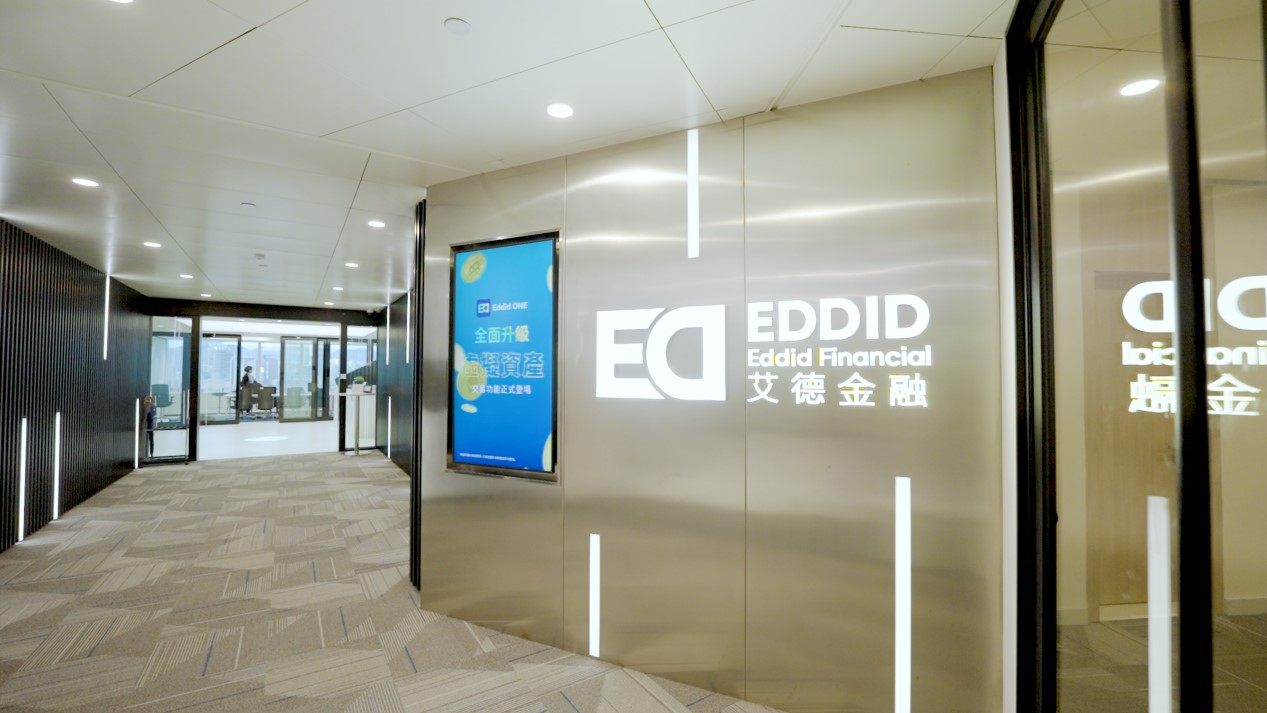
智通专访丨艾德金融:香港 RWA 赛道持牌先行者,以全链条服务推动资产数字化新发展
智通财经网· 2025-10-27 05:50
Core Insights - Hong Kong has emerged as a significant hub for Real World Assets (RWA) tokenization amid the global digital asset wave, with companies like Aide Financial leading the way in compliance and innovation [1][3] - Aide Financial focuses on the digital transformation of various asset classes, including high-end agriculture and precious metals, enabling asset fragmentation and cross-platform circulation [3][6] - The company aims to solidify its leading position through a "technology + compliance + ecosystem" model, enhancing its financial technology services and fostering collaboration with various stakeholders [3][10] Company Overview - Aide Financial is a licensed institution based in Hong Kong, holding multiple licenses from the Hong Kong Securities and Futures Commission, allowing it to operate across various financial activities [5][6] - The company has been proactive in the virtual asset space, recognizing trends early and becoming one of the first to obtain digital asset distribution qualifications [5][6] RWA Market Practices - Aide Financial has developed a comprehensive business model that includes sales, distribution, underwriting, and asset management, positioning itself in the first tier of RWA operators in Hong Kong [7][8] - The company has successfully integrated traditional assets into the RWA framework, covering sectors such as precious metals, real estate, and renewable energy [7][8] Risk Management and Compliance - Aide Financial has established a multi-dimensional evaluation mechanism to assess new projects, ensuring compliance and economic viability through thorough due diligence [8][12] - The company emphasizes the importance of legal compliance, fair valuation, and clear commercial logic in the assets it tokenizes [12][13] Ecosystem Development - Aide Financial focuses on internal and external collaboration to build a robust RWA ecosystem, ensuring technological capabilities align with market demands [10][15] - The company aims to educate investors about RWA, enhancing their understanding and promoting informed decision-making [14][15] Future Outlook - The regulatory framework in Hong Kong is seen as supportive for the growth of the RWA market, providing a clear direction for financial institutions and issuers [15] - The RWA model is expected to lower barriers for startups and SMEs, facilitating access to financing and driving economic growth in the region [15]
2025房地产资产证券化报告:从证券化到通证化,RWA重构资产投资逻辑
Sou Hu Cai Jing· 2025-10-03 01:17
Core Insights - The report discusses the transformation of real estate asset securitization from traditional methods to tokenization through blockchain technology, highlighting the advantages of Real World Assets (RWA) in enhancing investment logic and accessibility [1][2]. Group 1: RWA Definition and Advantages - RWA refers to the tokenization of tangible and intangible assets using blockchain technology, allowing for efficient trading and global access [17]. - RWA enhances liquidity and lowers investment barriers by fragmenting large assets into smaller tokens, enabling broader participation from investors [19][21]. - Compared to traditional Asset-Backed Securities (ABS), RWA covers a wider range of assets, simplifies structures, and significantly reduces costs [19][20]. Group 2: Development and Market Growth - Since its inception in 2017, RWA has evolved from a conceptual phase to rapid market expansion, particularly from 2023 onwards [3][4]. - As of August 26, 2025, the total on-chain RWA value reached $26.65 billion, with private credit and U.S. Treasury bonds being the primary assets [4]. - The issuance scale of global on-chain RWA was $15.5 billion in 2024, marking a 256% year-on-year increase, and $14.9 billion in the first half of 2025, reflecting a 142% growth [4]. Group 3: RWA in Real Estate - RWA tokenization in real estate allows for the conversion of property ownership or income rights into tradable digital tokens, with three core models: equity tokens, debt tokens, and income rights tokens [5]. - Projects like the Hong Kong office building RWA have demonstrated significant improvements in liquidity and financing costs compared to traditional Real Estate Investment Trusts (REITs) [6]. - Major players in the real estate sector, such as New City Group and Greenland Holdings, are actively exploring RWA opportunities to enhance their financing strategies [6]. Group 4: Technical Framework and Participants - The technical architecture of RWA consists of four layers: blockchain base, smart contract layer, middleware, and application layer, ensuring modular and scalable support [30][31]. - Key participants in the RWA ecosystem include asset issuers, technology service providers, exchanges, DeFi protocols, compliance service providers, and regulatory bodies [24][26][27]. - The integration of oracles, cross-chain interoperability, and IoT devices enhances data transparency and asset monitoring within the RWA framework [31].