
生态循环农业

Search documents
蚯蚓“吞”废成肥,地昇“种”出兴农新篇
Nan Fang Nong Cun Bao· 2025-12-17 11:06
Core Viewpoint - The article highlights the innovative practices of Guangdong Disheng Ecological Agriculture Technology Co., Ltd. in transforming agricultural waste into valuable resources through ecological farming methods, particularly using earthworms to enhance soil health and promote sustainable agricultural practices [4][8][66]. Group 1: Company Overview - Guangdong Disheng Ecological Agriculture Technology Co., Ltd. has established a resource recycling base that processes over 100,000 tons of agricultural organic waste annually, including livestock manure and straw [24][60]. - The company focuses on ecological circular agriculture, leveraging a team of experts, including PhD holders, to drive technological advancements in waste management and organic fertilizer production [38][40]. - Since its establishment in October 2022, the company has developed a complete ecological industrial chain, producing various organic fertilizers and plant nutrition products [40][60]. Group 2: Technological Innovation - The company employs a unique process involving earthworms to convert organic waste into high-quality fertilizers, enhancing soil fertility and promoting plant growth [32][49]. - Disheng has developed products rich in active components, such as antibacterial peptides and free amino acids, through advanced processing techniques [41][60]. - The company has been granted 12 patents and has received multiple awards for its innovative contributions to the agricultural sector [38][39]. Group 3: Market Impact - The use of Disheng's organic fertilizers has led to improved crop yields and quality, as evidenced by positive feedback from local farmers who report better market prices for their produce [54][56]. - The company’s products are positioned to meet the growing demand for sustainable agricultural practices, contributing to the ecological and economic development of the region [61][66]. - Disheng's operations not only address waste management issues but also support the sustainable development of local agriculture, enhancing employment opportunities in rural areas [60][63].


斩获湾区上市公司绿色治理Top20 京基智农书写农业可持续发展新答卷
Quan Jing Wang· 2025-11-14 07:16
Core Viewpoint - The 9th China (Shenzhen) Corporate Governance Summit highlighted the theme "Governance as a Foundation, Market Value Renewal," focusing on strong regulation, risk prevention, and promoting high-quality development, with 京基智农 recognized for its innovative green governance practices [1] Group 1: Corporate Governance and Recognition - 京基智农 was awarded the "2025 Bay Area Listed Companies Green Governance Top 20" for its innovative practices in green governance, alongside notable companies like 招商蛇口, 比亚迪, and 汇川技术 [1] - The company has established a modern pig farming industry chain, achieving an annual output of over 2 million pigs, contributing significantly to the food supply in the Guangdong-Hong Kong-Macao Greater Bay Area [1] Group 2: Environmental Initiatives - In 2024, 京基智农's total environmental investment reached 108 million yuan, implementing low-carbon production processes that resulted in a greenhouse gas reduction of 39,941.54 tons of CO₂e [2] - The company has adopted technologies such as dry manure cleaning and high-temperature aerobic fermentation, converting 100% of livestock waste into organic fertilizer, with wastewater fully reused for irrigation [2] - 京基智农 has developed a green chain for processing pineapple waste, producing fermented feed that improves pig weight gain by 5% to 10% and reduces feed costs by over 10 yuan per ton, saving more than 10 million yuan annually [2] Group 3: Social Responsibility - 京基智农 promotes a "company + farmer" model, establishing over 12 service departments in the Guangxi and Guangdong regions to support farmers in pig farming, thereby increasing their income [3] - The company has engaged in charitable activities, including the establishment of four "京基智农 Love Libraries" in the western Guangdong region and funding rural infrastructure and cultural activities to improve living conditions [3] - The recognition as one of the "2025 Bay Area Listed Companies Green Governance Top 20" reflects the industry's acknowledgment of 京基智农's green governance practices and the feasibility of green transformation in agriculture [3]

桐庐循环经济激活绿色新动能
Hang Zhou Ri Bao· 2025-11-14 03:10
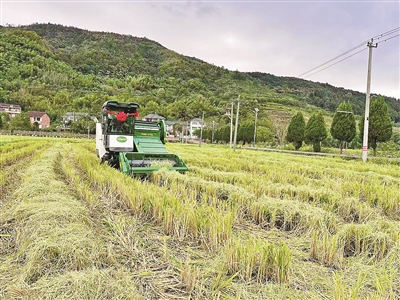
Core Viewpoint - The article highlights the innovative agricultural practices in Tonglu County, focusing on the transformation of rice straw into organic fertilizer through advanced technology and efficient processes [3][4][5][6] Group 1: Agricultural Waste Management - The company provides a full-chain service for straw collection, storage, disposal, and resource utilization, processing 35,000 tons of agricultural waste annually [3] - The use of new intelligent fermentation equipment has improved composting efficiency by over 30% compared to traditional methods [4] - The organic fertilizers produced have shown significant benefits in soil improvement and crop quality, leading to positive feedback from local farmers [4] Group 2: Technological Advancements - The fermentation process utilizes a "straw-manure collaborative aerobic high-temperature fermentation" technique, which effectively reduces production costs [4] - A straw carbonization machine, in collaboration with Zhejiang University of Technology, is being tested to create carbon-based fertilizers that enhance soil quality [5][6] Group 3: Policy and Market Development - Since 2020, Tonglu County has implemented six rounds of special support policies for the organic fertilizer industry, promoting a shift towards large-scale, standardized, and intensive operations [5] - The county's agricultural bureau has provided 55 sets of machinery to major grain producers and fully subsidized 32 sets for local outlets, significantly lowering processing costs [5] Group 4: Future Prospects - The county is expanding its ecological circular agriculture model, integrating research and development with local universities to create specialized organic fertilizers [6] - The upcoming provincial conference on organic fertilizer production quality improvement in Tonglu indicates growing recognition of the county's agricultural model [6]
多层次推动生态循环农业高质量发展
Zhong Guo Huan Jing Bao· 2025-11-10 05:46
Core Viewpoint - Ecological circular agriculture is a crucial aspect of green development in the agricultural sector, aiming to break through traditional flat agricultural production challenges and achieve a three-dimensional cycle in agricultural production [1] Group 1: Systematic Promotion and Innovation - Development of ecological circular agriculture requires a robust, targeted, and adaptive technical support mechanism [1] - Establishment of pilot projects to explore ecological circular agriculture models and the growth of new agricultural business entities to enhance demonstration effects [1] - Emphasis on cultivating high-quality application-oriented talents in ecological circular agriculture through categorized training and the establishment of educational bases [1] Group 2: System Improvement and Efficiency Integration - Expanding and extending the circular agricultural industry chain is essential for promoting ecological circular agriculture [2] - Encouragement of deep processing in agricultural product industries and comprehensive utilization of by-products [2] - Development of a complete agricultural product circulation system and exploration of new models like "Internet + ecological agricultural products" [2] Group 3: Mechanism Improvement and Strengthened Support - Development of ecological circular agriculture requires substantial support in tax incentives, ecological compensation, and infrastructure construction [3] - Increased public financial support for ecological circular agriculture, with a shift towards targeted funding policies [3] - Establishment of a multi-source investment mechanism involving government guidance, agricultural production entities, and social capital [3]
南农晨读 | 竹海听涛
Nan Fang Nong Cun Bao· 2025-10-30 05:04
Group 1 - Jiangmen Tangkou Village is recognized as one of the "Top Ten Excellent Cases of National Civilized Rural Construction," making it the only selected case from Guangdong Province [6][7]. - The selection was part of the first China Civilization Rural Conference held in Yan'an, Shaanxi Province, on October 29-30, 2023, organized by multiple governmental bodies [4][5][24]. Group 2 - The conference emphasized the theme "Civilization Makes Rural Areas Better," showcasing various initiatives and practices aimed at enhancing rural culture and development [24][48]. - Guangdong's "Nanyue Ancient Post Road" was highlighted as a valuable example of integrating cultural heritage with rural revitalization efforts [50][51]. Group 3 - The International Agricultural Service Trade Conference is set to take place in Nansha, Guangzhou, on October 28, 2025, focusing on global agricultural dialogue and cooperation [20][21]. - The event aims to enhance agricultural service trade and promote Guangdong's agricultural development on an international scale [19].
向“新”而行!河源生态循环农业创造超千万收益
Nan Fang Nong Cun Bao· 2025-10-29 09:02
Core Viewpoint - The article highlights the development of ecological circular agriculture in Heyuan, which has generated over 10 million yuan in additional income through innovative agricultural practices and sustainable farming techniques [5][10]. Group 1: Agricultural Innovations - The introduction of winter-sown purple vetch improves soil quality by fixing nitrogen and enhancing fertility, leading to increased crop yields [16][23]. - The "rice-purple vetch" rotation model has raised the average organic matter content in soil by 3.5% in Dongyuan County [24]. - The cultivation of purple vetch has resulted in a significant reduction of 15%-20% in chemical fertilizer usage, improving soil health and crop quality [20][21]. Group 2: Ecological Tea Gardens - The promotion of smart tea gardens in Zijin County encourages organic farming practices, eliminating the use of chemical fertilizers and pesticides [29][30]. - The production of Zijin tea has seen a growth rate of 28.6% over the past three years, driven by the ecological farming methods [36][38]. Group 3: Sustainable Aquaculture - The implementation of high-density, low-risk aquaculture using recirculating water systems has led to a 23.03% increase in fish production, reaching 5,049 tons [59]. - The innovative aquaculture facilities, such as the circular water "farming factory," allow for efficient use of space and resources, with each tank capable of raising 5,000 fish [52][54]. Group 4: Waste Management and Resource Utilization - The East Source Dongrui project has established a comprehensive waste management system that generates over 10 million yuan annually from waste treatment [61][64]. - The project also produces biogas from pig waste, contributing to sustainable energy solutions and reducing environmental impact [66][68]. Group 5: Overall Agricultural Growth - The total agricultural output value in Heyuan is projected to reach 28.453 billion yuan in 2024, reflecting a year-on-year growth of 5.1% [43][44]. - The region's commitment to sustainable agricultural practices has led to the establishment of numerous standardized demonstration farms, enhancing the ecological farming landscape [76][78].

山东新泰:种养结合盘活“生态账本”
Zhong Guo Jing Ji Wang· 2025-10-29 06:34
Core Insights - The transformation of a traditional duck farming operation into a modern "integrated farming" demonstration base has led to the successful cultivation of high-quality "Shan Nong Su Pears" [1][2] - The collaboration between Shandong Agricultural University and Tianxin Agricultural Development Co., Ltd. has resulted in innovative waste management practices that convert livestock waste into organic fertilizers, enhancing both environmental sustainability and economic returns [2][3] Group 1: Company Transformation - Tianxin Agricultural Development Co., Ltd. has shifted from a traditional duck farm to a modern agricultural model, cultivating pears that can sell for up to 100 yuan each [1] - The company produces 60,000 tons of organic fertilizer and over 200,000 cubic meters of organic liquid annually, contributing to an additional revenue of over 30 million yuan [2] Group 2: Environmental and Economic Impact - The resource utilization rate of livestock waste in Xintai has reached 93.5%, creating an efficient ecological cycle that integrates livestock farming and crop cultivation [3] - The innovative waste management practices have transformed what was once an ecological burden into a valuable resource, promoting sustainable agricultural practices across over 60,000 acres [2][3]
(乡村行·看振兴)福建宁化:“鱼鳞坑”筑起生态链 促小茶果成大产业
Zhong Guo Xin Wen Wang· 2025-10-28 05:18
Core Viewpoint - The article highlights the innovative "fish scale pit" planting technique in Ninghua County, Fujian Province, which enhances the ecological chain and significantly increases the yield of oil tea fruit, transforming the local oil tea industry into a large-scale enterprise [1][2]. Group 1: Innovative Agricultural Practices - The traditional oil tea planting method led to severe soil erosion during rainy seasons, negatively impacting soil fertility and oil tea yield [2]. - The "fish scale pit + hillside ditch" planting technique was developed to intercept rainwater, conserve soil, and gather nutrients, creating a complete soil and water conservation system [2]. - The implementation of a "three-in-one" model combining "stereoscopic planting and breeding + ecological recycling" reduces the use of chemical fertilizers and pesticides while promoting resource recycling [2]. Group 2: Economic Impact and Production - The oil tea plantation in Ninghua County is expected to yield between 150,000 to 165,000 kilograms of tea fruit this year, producing approximately 10,000 kilograms of tea oil, valued at over 2 million yuan at a market price of 200 yuan per kilogram [4]. - Ninghua County has prioritized the oil tea industry as a key sector for economic development, focusing on cultivating quality demonstration forests, transforming low-yield forests, and supporting the upgrading of processing enterprises [4]. - The total area of oil tea forests in Ninghua County has reached 204,500 acres, making it the second-largest in the province, with an annual production of 2,650 tons of tea oil and an estimated annual output value of around 400 million yuan [4].
生态闭环护良田 品牌溢价富农户 “祥里大米”铺展乡村“丰”景图
Zhen Jiang Ri Bao· 2025-10-18 23:28
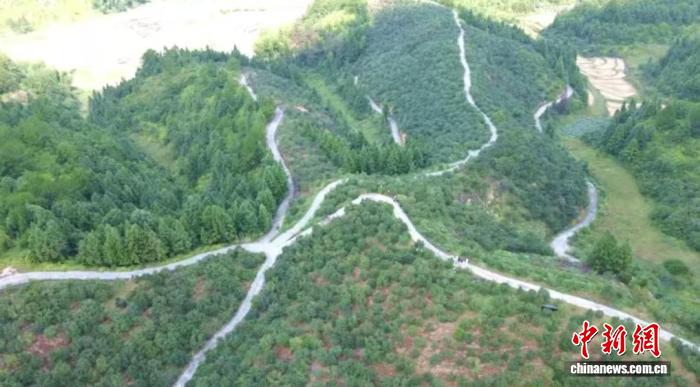
Core Insights - The article highlights the successful implementation of an ecological circular planting model in Xiangli Village, driven by party leadership and green agricultural practices, which enhances both industry and ecology [1][5]. Group 1: Agricultural Development - Xiangli Village has established the Erling Fuxiang Grain Processing Farmers' Professional Cooperative, which manages over 20,000 acres of land and benefits more than 5,000 households, generating an annual income increase of over 500,000 yuan for farmers [2]. - The cooperative's "cooperative + brand + farmer" organizational system integrates agricultural resources and facilitates the connection between production and sales, embedding farmers into the modern agricultural development framework [2]. Group 2: Ecological Practices - The village employs standardized production processes, selecting high-quality rice varieties and utilizing controlled-release fertilizers alongside biological and chemical pest control methods to reduce chemical usage while maintaining crop health [3]. - A key aspect of the ecological model is the resource utilization of rice straw, which is composted into organic fertilizer, creating a closed-loop system that enhances soil fertility and addresses soil acidification [3]. Group 3: Economic and Social Impact - The "Xiangli Rice" brand is expected to see significant price increases due to improved quality, enhancing collective income and providing a stable income bridge for surrounding farmers, with projected sales for the cooperative exceeding 17 million yuan in 2024 [4]. - Regular technical training for farmers on green planting and straw utilization has improved agricultural technology application in the region, creating a replicable local ecological circular agriculture model that can aid agricultural transformation in surrounding areas [4].
广西扶绥:科技赋能甘蔗产业走生态循环路
Zhong Guo Jing Ji Wang· 2025-09-26 02:52
Core Viewpoint - The article highlights the innovative agricultural practices in Fusui County, Guangxi, focusing on the efficient cultivation of sugarcane through land transfer and intercropping methods, which significantly enhance farmers' income and agricultural productivity [1][2][3] Group 1: Agricultural Practices - Fusui County, known as "the hometown of sugarcane," has implemented an 8,000-acre intercropping model that combines sugarcane with other crops, leading to increased efficiency and profitability [1] - The average yield of sugarcane is around 6 tons per acre, with a net profit of approximately 1,000 yuan per acre after costs, indicating limited income growth for farmers [1] - The introduction of high-standard land remediation, "wide row narrow plant" cultivation, and full mechanization has resulted in direct income increases of over 600 yuan per acre [1] Group 2: Financial and Operational Support - The Fusui Tongzheng Investment and Financing Group has established a stable land transfer mechanism at a price of 1,000 yuan per acre, facilitating the development of modern agricultural facilities [2] - The county plans to cultivate 1.1 million acres of sugarcane by 2025, with an additional 400,000 acres available for cultivation, indicating significant growth potential [2] - The integration of local farmers into daily management and a tiered reward system based on yield has motivated farmers and improved operational efficiency [2] Group 3: Policy and Technological Integration - Agricultural development in Fusui County is supported by policy banks like the Agricultural Development Bank, which aims to enhance rural revitalization and local economic growth through effective fund allocation [3] - The focus on ecological sustainability and the reduction of chemical inputs through new technologies is expected to improve profitability and competitiveness in the sugarcane industry [3] - The use of drones for precise fertilization and IoT monitoring of sugarcane growth exemplifies the integration of technology into traditional farming practices, promoting an eco-friendly and sustainable agricultural model [3]