生物药研发

Search documents
天士力(600535):顺利完成“百日融合” 盈利能力稳步提升
Xin Lang Cai Jing· 2025-08-29 06:31
Core Viewpoint - The company reported a mixed financial performance for the first half of 2025, with a slight decline in revenue but an increase in net profit, indicating potential resilience in profitability despite revenue challenges [1][2]. Financial Performance - In H1 2025, the company achieved revenue of 4.288 billion yuan, a year-on-year decrease of 1.91%, while net profit attributable to shareholders was 775 million yuan, a year-on-year increase of 16.97% [1]. - For Q2 2025, revenue was 2.233 billion yuan, down 3.86% year-on-year, but net profit rose to 460 million yuan, up 25.41% year-on-year [1]. - The overall gross margin for H1 2025 was 67.37%, a slight decrease of 0.08 percentage points year-on-year, with a net profit margin of 18.42%, an increase of 3.48 percentage points year-on-year [1]. Dividend and Shareholder Returns - The company announced a mid-year dividend payout of 2.1 yuan per share (before tax), representing 40.50% of the net profit attributable to shareholders for H1 2025 [1]. Business Development and Strategy - The company successfully completed the "100-day integration" with its controlling shareholder, China Resources Sanjiu, enhancing marketing capabilities and business synergy [2]. - The company is focusing on expanding its pharmaceutical commercial sector and leveraging China Resources Sanjiu's marketing channels to boost sales in the second half of the year [2]. Research and Innovation - The company has 83 projects in its research pipeline, including 31 innovative drugs, and is advancing its modern traditional Chinese medicine initiatives [2]. - The company is also focusing on biopharmaceuticals, with ongoing clinical trials for several innovative therapies [2]. Investment Outlook - The investment rating is maintained at "Buy," with expectations for net profit growth from 1.19 billion yuan in 2025 to 1.51 billion yuan in 2027, reflecting a compound annual growth rate [3].

神州细胞: 中信证券股份有限公司关于北京神州细胞生物技术集团股份公司2025年度向特定对象发行A股股票之上市保荐书
Zheng Quan Zhi Xing· 2025-08-26 16:35
Core Viewpoint - The company, Sinocelltech Group Limited, is preparing for a specific issuance of A-shares in 2025, aiming to raise up to 900 million RMB to enhance its liquidity and support its ongoing research and development in the biopharmaceutical sector [1][18][24]. Company Overview - Sinocelltech Group Limited was established on April 23, 2007, and became a joint-stock company on March 19, 2019, with a registered capital of 445.34 million RMB [2][3]. - The company focuses on the research and development of innovative biopharmaceuticals, particularly in the treatment of malignant tumors, autoimmune diseases, infectious diseases, and genetic disorders [3][4]. Business Operations - The company has developed a high-efficiency, high-throughput technology platform for biopharmaceutical research and production, with a diverse pipeline including monoclonal antibodies, recombinant proteins, and innovative vaccines [3][4][5]. - As of the date of the report, the company has one recombinant protein drug and four antibody drugs approved for market, with three vaccine products included for emergency use, and several others in clinical research [3][7]. Financial Performance - The company reported revenues of 102.32 million RMB, 188.73 million RMB, and 251.27 million RMB for the years 2022, 2023, and 2024 respectively, indicating a significant growth trajectory [7][8]. - The total assets as of December 31, 2024, were approximately 344.96 million RMB, with total liabilities of about 325.11 million RMB, resulting in shareholders' equity of 19.85 million RMB [8][9]. Issuance Details - The upcoming issuance will involve the sale of up to 25 million shares at a price of 36.00 RMB per share, which is not less than 80% of the average trading price over the 20 trading days prior to the pricing date [17][18]. - The funds raised will be used entirely to supplement the company's working capital [18][24]. Regulatory Compliance - The company has undergone due diligence and has been deemed compliant with relevant laws and regulations governing securities issuance and listing [22][24]. - The issuance is subject to approval from the Shanghai Stock Exchange and the China Securities Regulatory Commission [24].


奥浦迈: 奥浦迈:2025年半年度报告
Zheng Quan Zhi Xing· 2025-08-22 14:18
Core Viewpoint - Shanghai OPM Biosciences Co., Ltd. reported significant growth in revenue and net profit for the first half of 2025, driven by strong market demand and effective cost management [1][6][7]. Financial Performance - The company achieved operating revenue of RMB 177.75 million, a year-on-year increase of 23.77% compared to RMB 143.61 million in the same period last year [6][7]. - Total profit reached RMB 48.85 million, marking a 62.55% increase from RMB 30.05 million in the previous year [6][7]. - Net profit attributable to shareholders was RMB 37.55 million, up 55.55% from RMB 24.14 million in the prior year [6][7]. - The net cash flow from operating activities surged to RMB 61.34 million, a remarkable increase of 271.78% compared to RMB 16.50 million in the same period last year [6][7]. Key Financial Indicators - Basic earnings per share rose to RMB 0.33, reflecting a 57.14% increase from RMB 0.21 in the previous year [7]. - The weighted average return on net assets increased to 1.78%, up from 1.13% [7]. - Research and development expenses accounted for 13.58% of operating revenue, compared to 10.71% in the previous year [7]. Business Development - The company has expanded its product offerings, with 282 confirmed drug development pipelines utilizing its cell culture products, an increase of 35 from the end of 2024 [6][7]. - Service business revenue also improved, showing a growth of 13.24% compared to the previous year [6][7]. Shareholder Returns - The company proposed a cash dividend of RMB 2.30 per 10 shares, contingent on meeting profit distribution conditions for the first half of 2025 [1].

步长制药:研发+出海双轮驱动 生物药板块释放增长潜能
Feng Huang Wang Cai Jing· 2025-08-11 14:09
Core Viewpoint - The announcement of an exclusive supply agreement between Sichuan Luzhou Bichang Biopharmaceutical Co., Ltd. and GOODFELLOW PHARMACORPORATION marks a significant step for the company in entering the Philippine market and expanding its international presence, particularly in the Southeast Asian region [1][6]. Group 1: Product and Market Overview - Efparepoetin alfa is an innovative biopharmaceutical product designed to treat anemia in adult dialysis patients caused by chronic kidney disease (CKD), filling a market gap as no similar products have been approved in China [2][3]. - The global chronic kidney disease market is projected to reach USD 41.21 billion in 2024 and USD 43.16 billion in 2025, with a compound annual growth rate (CAGR) of 5.9%, driven by factors such as aging population and increasing diabetes and hypertension cases [3]. Group 2: Strategic Development - The company is focusing on "innovation-driven, diversified development" by strengthening its biopharmaceutical sector while maintaining its leadership in traditional Chinese medicine, with 12 biopharmaceutical products currently in the R&D phase [4]. - The Chinese biopharmaceutical market is expected to exceed RMB 800 billion by 2025, benefiting from policy support and technological innovation, which aligns with the company's strategic direction [4]. Group 3: Financial Performance and Social Responsibility - Since its listing in 2016, the company has returned over RMB 9.183 billion to shareholders through cash dividends and share buybacks, significantly exceeding the initial fundraising of RMB 3.9 billion [5]. - The company has contributed over RMB 32 billion in taxes, supporting local public services and promoting employment through its production and R&D centers across various provinces [5]. Group 4: Future Outlook - The collaboration with GOODFELLOW is seen as a strategic move to capitalize on the growing demand in emerging markets, positioning the company for future internationalization of more products [6]. - The integration of technological innovation, stable capital operations, and social responsibility is expected to create a sustainable competitive advantage for the company in the global pharmaceutical market [6].

神州细胞首次盈利研发投入占营收37% 控股股东包揽9亿定增助力降财务风险
Chang Jiang Shang Bao· 2025-06-08 23:24
Core Viewpoint - Shenzhou Cell (688520.SH) has achieved its first profit in 2024 and plans to raise up to 900 million yuan through a private placement to its controlling shareholder, Lhasa Ailike, to enhance liquidity and reduce financial risks [2][6][9] Group 1: Fundraising and Shareholding Structure - Shenzhou Cell plans to issue shares at 36 yuan per share, raising no more than 900 million yuan, which will be used entirely for replenishing working capital [3][4] - After the issuance, Lhasa Ailike's direct shareholding in Shenzhou Cell will increase to 62.98%, while the total control by its actual controller, Xie Liangzhi, and his concerted parties will rise to 70.86% [4][6] - This is the second time Shenzhou Cell has planned a private placement since its IPO, with the first occurring in June 2020, raising 1.282 billion yuan [5] Group 2: Financial Performance and Profitability - In 2024, Shenzhou Cell achieved revenue of 2.513 billion yuan, a year-on-year increase of 33.13%, and a net profit of 112 million yuan, up 128.27% [2][7] - The company’s R&D expenditure in 2024 was 936 million yuan, accounting for 37.25% of its revenue, reflecting a 23.11% decrease from the previous year [9] - Shenzhou Cell's cumulative losses reached 3.76 billion yuan by March 2025, with a debt ratio of 94.25%, indicating a need for capital and operational funding [9] Group 3: Product Development and Market Strategy - Shenzhou Cell focuses on developing biopharmaceutical products for various diseases, including cancer and autoimmune diseases, and has seen a stable sales increase of its core product, Anjain, which generated 1.89 billion yuan in sales in 2024 [6][7] - The sales of three other products, Anpingxi, Anjairun, and Anbeizhu, exceeded 620 million yuan in 2024, marking a significant year-on-year growth of 499.80% [8] - The company has implemented effective market strategies to ensure stable revenue growth despite pricing pressures from regional procurement [7][8]

迈威生物与深势科技达成战略合作 打造生物药研发大模型平台
Zheng Quan Ri Bao· 2025-05-14 08:42
Core Viewpoint - Maiwei Biotech and DeepMind Technology have announced a strategic partnership to leverage their strengths in biopharmaceutical research and artificial intelligence to create a new paradigm for drug development [2][4]. Group 1: Company Strengths - Maiwei Biotech has significant advantages in ADC technology platform construction and the discovery of single/double antibody molecules, having established a complete industry chain from research and development to production [3]. - The company’s self-developed IDDC platform and Mtoxin toxin technology have been validated in multiple projects [3]. Group 2: Collaboration Details - The collaboration will focus on two main areas: the construction of a knowledge engine using the Uni-SMART multimodal scientific literature model to enhance research efficiency and the exploration of innovative targets through the RiDYMO® platform, which can significantly improve molecular simulation sampling efficiency [3]. - The partnership aims to combine Maiwei Biotech's ADC technology advantages with DeepMind's RiDYMO® platform to accelerate the discovery of drug molecules from concept to realization [3]. Group 3: Industry Impact - This collaboration is expected to shift biopharmaceutical research from an "experiment-driven" approach to a "computational-driven" model, enhancing research efficiency and providing better accessibility to innovative drugs for patients [4]. - The initiative aims to meet the unmet clinical needs globally by delivering more effective biopharmaceutical innovations [4].

国金证券:给予神州细胞买入评级
Zheng Quan Zhi Xing· 2025-04-28 00:39
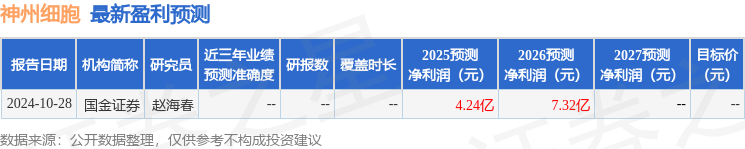
Core Viewpoint - The report highlights Shenzhou Cell's strong performance driven by eight key products, achieving profitability for the first time and showcasing a rich pipeline for future growth [1][3]. Financial Performance - In 2024, the company reported revenue of 2.513 billion, net profit attributable to shareholders of 112 million, and a non-recurring net profit of 474 million, marking a 33% year-on-year revenue growth [2][3]. - For Q1 2025, the company recorded revenue of 519 million, net profit attributable to shareholders of 64 million, and a non-recurring net profit of 24 million, reflecting a year-on-year decline of 15%, 14%, and 85% respectively [2]. Operational Analysis - The restructuring of the eight key products led to a revenue of nearly 2.5 billion in 2024, with the first-ever achievement of positive profitability [3]. - The product Anjain achieved stable sales of 1.89 billion, growing by 6.18% year-on-year, despite price reductions in regional and alliance collective procurement [3]. - Sales of three antibody products exceeded 620 million, with a remarkable year-on-year growth of 499.80% [3]. Research and Development - In 2024, the company invested 936 million in R&D, focusing on clinical studies for products like SCT1000, SCT650C, and SCTB14, as well as preclinical development of multiple pipeline products [4]. - The monoclonal antibody SCT-I10A was approved for marketing in China in February 2025 for treating head and neck squamous cell carcinoma and liver cancer [4]. - Several innovative biologics and vaccines are in development, including SCT650C for autoimmune diseases and SCTB14 for solid tumor immunotherapy, with Phase II clinical trials initiated [4]. Profit Forecast and Valuation - The revenue forecasts for 2025 and 2026 have been adjusted downwards by 7% and 17% to 3 billion and 3.9 billion respectively, with net profit forecasts reduced by 47% and 39% to 224 million and 450 million [5]. - The company is expected to achieve a revenue of 4.9 billion and a net profit of 789 million by 2027 [5]. - The rating for the company remains "Buy" [5].

花粉季的“过敏星人”,买出一个百亿爆款
3 6 Ke· 2025-03-31 00:32
Core Viewpoint - The article discusses the significant increase in pollen levels in Beijing due to a warm winter, leading to a surge in allergy cases and a corresponding rise in the demand for allergy medications, indicating a booming market for allergy-related pharmaceuticals [1][8][9]. Industry Overview - The allergy medication market in China is projected to experience rapid growth, potentially exceeding $20 billion by 2030, driven by an increasing patient population and rising awareness of allergy conditions [8][9]. - Currently, there are approximately 500 million patients in China suffering from allergic diseases such as allergic rhinitis, asthma, atopic dermatitis, and chronic obstructive pulmonary disease [8]. Market Dynamics - Recent data shows a 40% year-on-year increase in the purchase of allergy-related medications, with a 127% day-on-day increase in orders since March 20 in Beijing [8]. - Popular allergy medications like Loratadine and its upgraded version Desloratadine have seen significant sales growth, with Loratadine's retail market sales surpassing 7.6 billion yuan in the past five years, maintaining an annual growth rate of over 10% [10][11]. Competitive Landscape - The allergy medication market is characterized by numerous players, primarily traditional pharmaceutical companies that have historically relied on generic drugs [10]. - New entrants are focusing on innovative drug development, including small molecule targeted drugs and biological agents, with over 1,600 clinical trials related to allergies registered globally [12][13]. Emerging Trends - A new biological drug, Dupilumab, has been approved for treating seasonal allergic rhinitis, showing promising results in clinical trials [13]. - The high pricing of biological drugs presents a challenge for patient acceptance, as many patients prefer cost-effective options despite the superior efficacy of these new treatments [15]. Treatment Innovations - Desensitization therapy is gaining attention as a long-term solution for allergies, although it requires a lengthy treatment period [16][17]. - Companies like Iwubio are already seeing sales growth in desensitization products, indicating a potential shift in treatment preferences among patients [17]. Future Outlook - The allergy medication market in China is still in its early stages, with many companies vying for a share of this lucrative sector, awaiting the emergence of the next blockbuster product [19].