
盐碱地综合利用

Search documents
深度关注丨监督推动盐碱地变“米粮川”
Zhong Yang Ji Wei Guo Jia Jian Wei Wang Zhan· 2025-12-01 02:58
Group 1 - The core viewpoint of the articles emphasizes the importance of high-quality agricultural development, particularly through the comprehensive utilization of saline-alkali land and the protection of black soil in Jilin Province, which is crucial for ensuring national food security [1][2][14] - In 2024, China's total grain production is projected to exceed 1.4 trillion jin, with Jilin Province achieving a grain output of over 85 billion jin for the first time, driven by increased development of saline-alkali land [1] - The Jilin Provincial Discipline Inspection and Supervision Commission has been actively involved in supervising land remediation projects, particularly focusing on the involvement of social capital and addressing corruption issues related to land management [4][6][14] Group 2 - The articles highlight the significant challenges associated with saline-alkali land, which is characterized by high salinity and low organic matter content, making its comprehensive utilization a complex task [7][13] - Various regions, including Shanghai, Shanxi, and Henan, have explored different methods for involving social capital in land remediation, with a focus on risk prevention and control through structured bidding processes [4][11] - The Jilin Provincial government has implemented policies to guide and regulate social capital participation in the development of agricultural resources, ensuring comprehensive management from project initiation to post-implementation [10][11] Group 3 - The articles discuss the ongoing efforts to enhance supervision and accountability in land remediation projects, with a focus on preventing corruption and ensuring the effective use of resources [8][12][14] - The Jilin Provincial Discipline Inspection and Supervision Commission has established a third-party evaluation mechanism to regularly assess project implementation and address any discrepancies or issues that arise [11][13] - The comprehensive utilization of saline-alkali land is recognized as a critical component of agricultural expansion, with over 140 remediation projects implemented in Jilin Province, resulting in the addition of over 800,000 mu of arable land and an expected annual grain increase of nearly 1 billion jin [13][14]

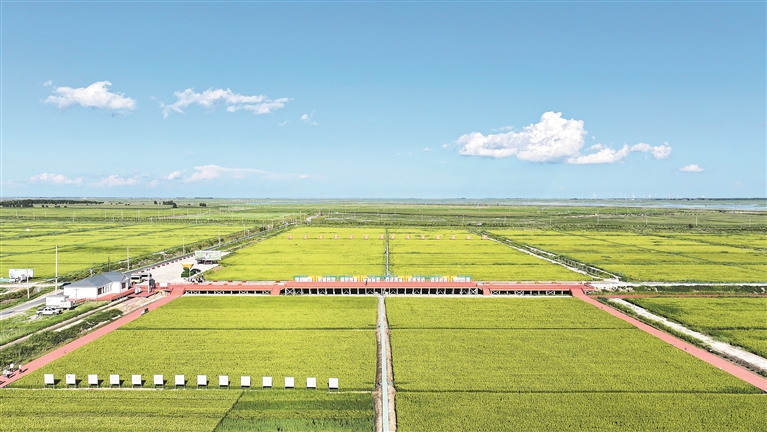
中国破解盐碱地治理难题 “不毛之地”变丰产田
Ren Min Ri Bao· 2025-11-20 01:08
Core Insights - The "14th Five-Year Plan" emphasizes high-quality construction of high-standard farmland, protection of black soil, and comprehensive utilization of saline-alkali land, aiming to enhance soil quality [1] Group 1: Saline-Alkali Land Utilization - The 2025 Saline-Alkali Land Comprehensive Utilization Technology Innovation Conference highlighted the gradual formation of a regional governance model and the collaborative development of characteristic agriculture in saline-alkali areas [1][2] - The report outlines over 40 innovative achievements in biological breeding, productivity enhancement, and ecological utilization of saline-alkali land [2] - Various technical models have been established, such as the "dry sowing and wet harvesting" in the Northwest Oasis area and integrated grass-livestock systems in the Ningxia Hetao Plain [2] Group 2: Agricultural Practices and Innovations - In Jiangsu's coastal saline-alkali areas, a water-drought rotation annual planting model has been developed, achieving a 20% increase in soil organic matter and maintaining soil salinity below 2‰ [2] - The report stresses the importance of preventing secondary salinization of farmland and establishing efficient drainage systems [3] - The focus is on selecting drought-resistant and salt-alkali tolerant crops to promote the development of characteristic agriculture in saline-alkali regions [4] Group 3: Development of Characteristic Agriculture - The report advocates for differentiated management of saline-alkali land usage, promoting various agricultural practices based on land conditions [4] - Successful cultivation of varieties such as Huanghua dry alkali wheat and Zhanhua winter jujube has been reported, along with the exploration of unique aquaculture models [4] - The development of the Yellow River Estuary wetland sheep industry is highlighted, emphasizing the need for standardization and branding to enhance product quality and recognition [5] Group 4: Breeding Innovation System - The establishment of a breeding innovation system for saline-alkali land is underway, with 68 new varieties of salt-alkali resistant crops developed and promoted across 26.32 million acres [7] - The National Saline-Alkali Land Comprehensive Utilization Technology Innovation Center is working on enhancing breeding efficiency and levels through collaboration and innovation networks [7]
综合利用,盐碱地变丰产田
Ren Min Ri Bao· 2025-11-18 12:38
Core Insights - The article emphasizes the importance of high-quality agricultural land construction and the comprehensive utilization of saline-alkali land in China, highlighting the establishment of a breeding innovation system for saline-alkali land [1] Group 1: Saline-Alkali Land Utilization - The report outlines over 40 innovative achievements in biological breeding, productivity enhancement, and ecological utilization of saline-alkali land in China [2] - Various regional governance models and technical modes have been created, such as the "dry sowing and wet harvesting" in the Northwest oasis area and integrated grass and livestock systems in the Ningxia Hetao Plain [2] - In Jiangsu's coastal saline-alkali areas, annual rainfall supports a rotation planting model, achieving a 20% increase in soil organic matter and maintaining soil salinity below 2‰ [2] Group 2: Challenges and Solutions - The comprehensive utilization of saline-alkali land faces challenges such as water resource shortages and mismatched salt control technologies [3] - The report stresses the need for effective drainage systems and a dynamic monitoring network for soil salinity to implement differentiated irrigation and drainage standards [3] Group 3: Agricultural Development - The report advocates for a combination of "suitable crops for the land" and "suitable land for crops" to maximize the potential of saline-alkali land [4] - It highlights the high functional component content and biological activity of many saline-alkali agricultural products, urging the development of a data-sharing platform for salt-tolerant plant resources [4] Group 4: Breeding Innovation - Successful varieties such as the Huanghua drought-resistant wheat and saline-alkali goji berry have been developed, enhancing the value of saline-alkali agricultural products [5] - The National Saline-Alkali Land Comprehensive Utilization Technology Innovation Center has established a breeding innovation system, with 68 new salt-tolerant crop varieties developed and promoted across 26.32 million acres [6]
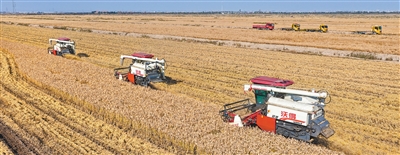
我国积极探索区域盐碱耕地治理模式——综合利用,盐碱地变丰产田
Ren Min Ri Bao· 2025-11-18 00:16
Core Insights - The "14th Five-Year Plan" emphasizes high-quality construction of high-standard farmland, protection of black soil, and comprehensive utilization of saline-alkali land to enhance arable land quality [1] Group 1: Saline-Alkali Land Utilization - The 2025 Saline-Alkali Land Comprehensive Utilization Technology Innovation Conference highlighted the development of a regional governance model and the collaborative development of characteristic agriculture in saline-alkali areas [1] - The report outlines over 40 innovative achievements in biological breeding, productivity enhancement, and ecological utilization of saline-alkali land [2] - Various technical models have been established, such as the "dry sowing and wet harvesting" method for cotton in the Northwest Oasis area, promoting efficient use of resources and ecological improvement [2] Group 2: Agricultural Practices and Innovations - In Jiangsu's coastal saline-alkali areas, a rotation planting model has been developed, achieving a 20% increase in soil organic matter and maintaining soil salinity below 2‰ [2] - The report stresses the importance of preventing secondary salinization of arable land and establishing efficient drainage systems [3] - The report advocates for a differentiated approach to saline-alkali land usage, promoting various agricultural practices based on land conditions [4] Group 3: Development of Specialty Agriculture - The report indicates successful cultivation of varieties such as Huanghua drought-resistant wheat and Zhanhua winter jujube, enhancing the value of saline-alkali agricultural products [4] - The Yellow River Estuary sheep industry is highlighted as a model for developing specialty agriculture in saline-alkali areas, focusing on standardization and branding [5] Group 4: Breeding and Resource Management - The establishment of a breeding innovation system for saline-alkali land is underway, with 68 new varieties of salt-tolerant crops developed and promoted across 26.32 million acres [7] - The National Saline-Alkali Land Comprehensive Utilization Technology Innovation Center is working on enhancing breeding efficiency and resource management [7]
我国积极探索区域盐碱耕地治理模式 综合利用,盐碱地变丰产田
Ren Min Ri Bao· 2025-11-17 23:41
Core Viewpoint - China is actively exploring regional governance models for saline-alkali land management, aiming to enhance agricultural productivity and ecological sustainability through innovative techniques and practices [1][2]. Group 1: Saline-Alkali Land Utilization - The "14th Five-Year Plan" emphasizes high-quality construction of farmland and comprehensive utilization of saline-alkali land to improve soil quality [1]. - A recent report highlights over 40 innovative achievements in biological breeding, productivity enhancement, and ecological utilization of saline-alkali land [2]. - Various technical models have been developed, such as the "dry sowing and wet harvesting" method for cotton in the Northwest Oasis region, promoting efficient use of resources [2]. Group 2: Agricultural Practices and Crop Management - In Jiangsu's coastal saline-alkali areas, a rotation planting model has been implemented, achieving a 20% increase in soil organic matter and maintaining soil salinity below 2‰ [2]. - The report advocates for a differentiated approach to land use, promoting specific crops based on the salinity level of the land [4]. - Successful cultivation of saline-alkali resistant crops has been reported, including varieties like "Jiyang 12" with a yield of 317.9 kg per mu [5]. Group 3: Challenges and Solutions - Current challenges include issues with irrigation practices, freshwater resource shortages, and mismatched salt control technologies [3]. - The report stresses the importance of establishing efficient drainage systems and a dynamic monitoring network for soil salinity [3]. Group 4: Development of Specialty Agriculture - The development of specialty agriculture in saline-alkali areas is encouraged, focusing on high-value products and brand recognition [5]. - The report indicates that unique functional components in saline-alkali products can enhance their market value [4]. - A variety of specialty products have been developed, including deep-processed items from saline-alkali crops, significantly increasing industry value [4].
综合利用,盐碱地变丰产田(美丽中国)
Ren Min Ri Bao· 2025-11-17 22:40
Core Insights - The article emphasizes the importance of high-quality agricultural land construction and the comprehensive utilization of saline-alkali land as part of China's "14th Five-Year Plan" [1] Group 1: Saline-Alkali Land Utilization - China is gradually forming a regional governance model and a collaborative development pattern for saline-alkali land and characteristic agriculture [2] - The report highlights over 40 innovative achievements in the fields of biological breeding, productivity enhancement, and ecological utilization of saline-alkali land [2] - The annual organic matter content in soil has increased by 20%, with soil salinity levels maintained below 2‰ and pH levels below 7.8 in certain regions [2] Group 2: Agricultural Development Strategies - The report advocates for a combination of "suitable crops for the land" and "suitable land for crops" to maximize the potential of saline-alkali land [3] - It suggests differentiated management of saline-alkali land usage to promote diverse agricultural outputs based on land conditions [3] - The development of characteristic agricultural products from saline-alkali land has been highlighted, with successful cultivation of varieties such as Huanghua drought-resistant wheat and Zhanhua winter jujube [4] Group 3: Breeding Innovation - The establishment of a breeding innovation system for saline-alkali land is underway, with the introduction of new salt-tolerant varieties like "Jiyang Gu 12" achieving a yield of 317.9 kg per mu [5] - A total of 68 new salt-tolerant crop varieties have been cultivated, with 26.32 million acres of new varieties and technologies promoted nationwide [5]
我国积极探索区域盐碱耕地治理模式 综合利用,盐碱地变丰产田(美丽中国)
Ren Min Ri Bao· 2025-11-17 22:01
Core Insights - The "14th Five-Year Plan" emphasizes high-quality development of high-standard farmland, focusing on black soil protection and comprehensive utilization of saline-alkali land, aiming to enhance arable land quality [1] Group 1: Saline-Alkali Land Utilization - The 2025 Saline-Alkali Land Comprehensive Utilization Technology Innovation Conference highlighted the establishment of a regional governance model and the collaborative development of characteristic agriculture in saline-alkali areas [1] - The report outlines over 40 innovative achievements in biological breeding, productivity enhancement, and ecological utilization of saline-alkali land [1] - Effective management practices such as crop configuration, precise water and fertilizer management, and integrated farming are being implemented to improve resource utilization and ecological sustainability in saline-alkali regions [1] Group 2: Agricultural Practices and Innovations - In Jiangsu's coastal saline-alkali areas, a water-drought rotation annual planting model has been developed, achieving a 20% increase in soil organic matter and maintaining soil salinity below 2‰ [2] - The report stresses the importance of preventing secondary salinization of arable land and suggests building efficient drainage systems and a dynamic monitoring network for water and salt [2] - The report advocates for a differentiated approach to saline-alkali land usage, promoting various agricultural practices based on land conditions [3] Group 3: Specialty Agricultural Development - The development of saline-alkali land specialty agriculture is encouraged through standardization and branding, enhancing product quality and recognition [4] - Successful cultivation of varieties such as Huanghua drought-resistant wheat and saline-alkali goji berries has been reported, along with the exploration of unique aquaculture practices [3] Group 4: Breeding Innovation - The establishment of a breeding innovation system for saline-alkali land is underway, with 68 new varieties of salt-tolerant crops developed and promoted across 26.32 million acres [6] - The National Saline-Alkali Land Comprehensive Utilization Technology Innovation Center is focusing on enhancing breeding efficiency and resource management [6]
轻工纺织产业“三年计划”出炉 山东19条产业链全覆盖
Da Zhong Ri Bao· 2025-11-13 01:16
Core Insights - The implementation of four action plans has achieved full coverage of 19 iconic industrial chains in Shandong Province, focusing on technological innovation in key industries [1] Group 1: Robotics Industry - The robotics industry will leverage the strategic opportunity of integrating robotics technology with artificial intelligence, focusing on key components, software systems, and complete machine manufacturing [2] - The plan aims to develop advanced servo motors, operating system software, and special robots, while expanding application scenarios across various sectors such as automotive, home appliances, and healthcare [2] - The goal is to create 100 representative benchmark application scenarios, positioning Shandong as a national hub for robotics technology innovation [2] Group 2: Modern Food Industry - The modern food industry will emphasize safety, nutrition, green, and intelligent development, addressing the entire supply chain from raw materials to processing equipment [2] - A technical system will be established for food safety, including traceability, quality control, and green packaging, enhancing consumer safety and satisfaction [2] - The industry aims to create over 100 innovative products, significantly increasing the added value of modern food [2] Group 3: Light Industry and Textiles - The light industry and textiles sector will focus on high-end, green, and intelligent development, enhancing low-carbon production processes and advanced product development [3] - Innovations will include multifunctional advanced fiber products and high-end medical textiles, as well as new paper products for specialized applications [3] Group 4: Modern Metallurgy Industry - The modern metallurgy industry will accelerate the development of high-end raw materials and precision processing technologies, targeting products like ultra-high-strength steel and marine aluminum alloys [3] - The focus will also be on developing frontier materials such as rare earth functional materials and special magnesium and titanium alloys to capture future industry opportunities [3] Group 5: Implementation Measures - The four action plans propose specific measures for promoting innovation resources, building innovation platforms, and ensuring the transformation of scientific achievements [3] - The provincial science and technology department will implement policies to inject new momentum into the construction of a modern industrial system [4]
综合利用 盐碱地变丰产良田
Ren Min Ri Bao· 2025-11-06 00:24
Core Insights - The comprehensive utilization of saline-alkali land is crucial for ensuring national food security and stabilizing China's food supply [1] - The Chinese government emphasizes the importance of improving soil quality and expanding arable land through the development of saline-alkali areas [1] Group 1: Current Status and Importance - China has 1.5 billion acres of saline-alkali land, with 500 million acres having potential for development [1] - The third national land survey has identified the distribution and area of saline-alkali land, providing a foundation for targeted remediation efforts [2] Group 2: Technological Innovations and Practices - In Jilin Province, the average yield of rice on treated saline-alkali land has exceeded 600 kg per mu, approaching the levels of black soil [3] - Various remediation techniques, such as organic silicon agents and gypsum, are being explored to improve soil conditions [3] - The National Saline-Alkali Land Comprehensive Utilization Technology Innovation Center has developed 68 new salt-tolerant crop varieties, with 20 officially registered [4] Group 3: Agricultural Development and Future Prospects - The promotion of salt-tolerant crop varieties, such as 'Xiao Yan 60', has led to significant increases in yield, with some farmers reporting 1,000 jin per mu [6] - Saline-alkali land is being transformed into productive agricultural areas, contributing to the overall agricultural industry and enhancing food security [6] - The comprehensive utilization of saline-alkali land is supported by national pilot programs, indicating a promising future for agricultural development in these areas [6]
《盐碱地综合利用技术发展报告》发布
Zhong Guo Jing Ji Wang· 2025-10-27 14:45
Core Insights - The 2025 Saline-Alkali Land Comprehensive Utilization Technology Innovation Conference was held in Dongying, Shandong, focusing on "Empowering Saline-Alkali Land Characteristic Industries with Technology" [1] - Key reports presented included topics on the upgrade and development of the "medicinal and food homology" health industry, resource excavation and high-value utilization of saline-alkali land characteristic agricultural products, and enhancing crop resistance potential to promote seed industry development [1] - The "Saline-Alkali Land Comprehensive Utilization Technology Development Report (2025)" was released, detailing the basic conditions of saline-alkali land in China, summarizing major technological developments, and outlining future trends and prospects [1] Group 1 - The "China Saline-Alkali Land Characteristic Industry Development Report (Yellow River Delta Sheep)" highlighted the unique characteristics of Dongying meat sheep, including high protein content, high proportion of polyunsaturated fatty acids, selenium richness, and a distinct almond aroma [2] - Recommendations from the report emphasized leveraging saline-alkali land resources to enhance quality, strengthen functionality, and emphasize uniqueness, while promoting standardized practices and gradually moving towards branding and deep processing of sheep meat [2] - Notable attendees at the conference included officials from the Chinese Academy of Sciences, the Chinese Academy of Engineering, and provincial government representatives, indicating strong institutional support for the initiatives discussed [2]