硅光子学

Search documents
算力霸权松动,AI硬件的“群雄时代”到来?
科尔尼管理咨询· 2025-10-30 09:40
Core Insights - The article discusses the significant impact of AI hardware, particularly GPUs, on the market, highlighting NVIDIA's rise to become one of the highest-valued companies globally due to its dominance in AI chip technology [1][3]. - It raises questions about the future of AI hardware, the trends shaping its development, and the emergence of new players in the market [1][3]. AI Hardware Market Dynamics - The AI boom continues despite fluctuations, with substantial investments from the U.S. government and the EU aimed at enhancing AI capabilities [3][4]. - NVIDIA holds approximately 90% of the global gaming GPU and data center GPU market, with a projected revenue growth of over 50% in 2025 compared to 2024, which already saw a record revenue of $130.4 billion [4][3]. GPU Demand and Alternatives - The demand for GPUs in AI is driven by their parallel processing architecture, which allows for rapid handling of large datasets, crucial during the AI training phase [6][7]. - Alternatives to GPUs include Application-Specific Integrated Circuits (ASICs) and Field-Programmable Gate Arrays (FPGAs), each with distinct advantages and limitations [7][8]. Competitive Landscape - The competitive landscape is evolving, with AMD and Intel as key competitors to NVIDIA, though NVIDIA's CUDA programming environment offers significant advantages over AMD's ROCm [10][11]. - Intel's Gaudi 3 chip, aimed at competing with NVIDIA, has faced challenges in gaining market traction due to NVIDIA's established dominance [12]. Emerging Players and Innovations - Companies like Google are developing their own chips, such as TPUs, to reduce reliance on NVIDIA, indicating a shift in the competitive dynamics of the AI hardware market [12][13]. - Startups like Cerebras, SambaNova, and Groq are emerging with innovative solutions that could challenge NVIDIA's position in the long term [14][15]. Future Trends in AI Hardware - The future of AI hardware may involve a hybrid model combining GPUs, ASICs, FPGAs, and new chip architectures, driven by the need for differentiation based on workload types [18]. - Key technological advancements such as silicon photonics, neuromorphic computing, and quantum computing are expected to influence the AI chip market, although their specific impacts remain uncertain [17][18].


VCSEL,还有新机会吗
半导体行业观察· 2025-08-05 01:37
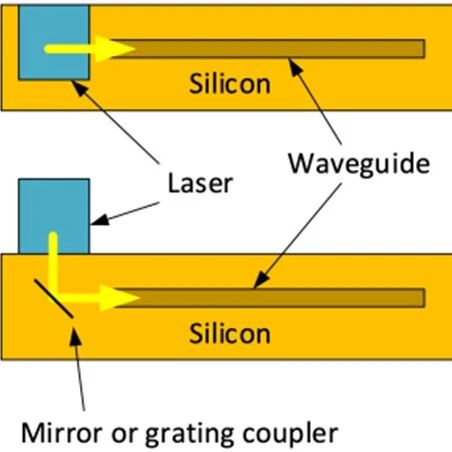
Core Viewpoint - Optical technology has matured in long-distance communication, but its service distance is shrinking, particularly in data centers, with a shift from fiber optics to more compact solutions like waveguides [2]. Group 1: Current Trends in Optical Technology - Vertical-cavity surface-emitting lasers (VCSELs) are driving short fiber links, and there is ongoing research to bring fiber optics closer to data center servers [2]. - The transition of fiber optics from card edges to onboard and now to packaging indicates a significant evolution in optical communication [2]. Group 2: Integration Challenges - The integration of lasers with silicon faces challenges related to reliability, temperature sensitivity, and energy consumption [4]. - Current optical devices rely on distributed feedback lasers (DFB), which are effective for long-distance fiber optics but are more expensive compared to other types [6]. Group 3: Temperature Management - Temperature control is a major challenge for laser developers, as precise temperature management is crucial for maintaining signal integrity [8]. - Experts suggest that isolating lasers from high-temperature chips can enhance performance and reliability [9]. Group 4: VCSEL Applications and Limitations - VCSELs are cost-effective and suitable for short-distance connections, particularly in data centers, but they face challenges in wavelength compatibility with existing optical systems [14]. - Recent advancements have improved the bandwidth of O-band VCSELs, reigniting interest in their use for single-mode fiber applications [15]. Group 5: Future Research Directions - Ongoing research is focused on integrating III-V materials into silicon substrates, although these technologies have not yet reached mass production levels [12]. - Quantum dot (QD) lasers, which are less temperature-sensitive, are also being explored, but their output power remains a limitation [12].
CPO,大有可为
半导体行业观察· 2025-07-21 01:22
Core Insights - The article discusses the growing importance of integrated semiconductor optical modules, specifically On-Board Optical (OBO), Near-Package Optical (NPO), and Co-Packaged Optical (CPO) solutions, which are expected to see a compound annual growth rate of 50% in shipment volume by 2033 [2][4]. Group 1: Market Trends - Integrated optical solutions are significantly improving transmission capacity and processing for AI systems, providing higher bandwidth at lower power consumption [2][4]. - The transition from copper to optical solutions is anticipated to lead to a non-linear performance enhancement, with potential performance increases of up to 80 times compared to existing solutions [7]. Group 2: Key Players and Future Projections - Major companies like NVIDIA, Intel, Marvell, and Broadcom are currently leading the development of CPO technology, which is expected to drive substantial revenue growth and shipment volume by 2027 [4]. - By 2033, it is projected that over half of the revenue and shipment volume will come from integrated semiconductor optical I/O solutions [4].


这类芯片,全球首颗
半导体行业观察· 2025-07-20 04:06
Core Viewpoint - A multidisciplinary academic team has successfully integrated quantum light sources and electronic devices into a single silicon chip, marking a significant advancement in quantum technology [3][4]. Group 1: Technological Breakthrough - The researchers developed the first chip that integrates electronic, photonic, and quantum components, utilizing standard 45-nanometer semiconductor manufacturing processes [3][4]. - This integrated technology enables the chip to produce a continuous stream of correlated photon pairs, which are fundamental for many quantum applications [4]. Group 2: Future Implications - The breakthrough signifies an important step towards the mass production of "quantum light factory" chips and the development of more complex quantum systems composed of multiple interconnected chips [4]. - The research indicates that quantum computing, communication, and sensing could transition from concept to reality over the next few decades [4]. Group 3: System Design and Stability - The chip features a system that actively stabilizes the quantum light sources, specifically the silicon micro-ring resonators, which are sensitive to temperature and manufacturing variations [6][7]. - Each chip contains 12 parallel-operating quantum light sources, with integrated photodiodes to monitor and maintain the alignment of the incident laser [7]. Group 4: Collaborative Efforts - The project required interdisciplinary collaboration among fields such as electronics, photonics, and quantum measurement, essential for transitioning quantum systems from the lab to scalable platforms [4][8]. - The chip is manufactured using a commercial 45-nanometer complementary metal-oxide-semiconductor (CMOS) platform, developed in collaboration with various institutions and companies [7][8]. Group 5: Industry Impact - The advancements in silicon photonics and quantum technology are expected to serve as a foundation for technologies ranging from secure communication networks to advanced sensing and ultimately quantum computing infrastructure [8]. - Several researchers involved in the project have moved into the industry, reflecting the growing momentum of silicon photonics and its potential in expanding AI computing infrastructure and scalable quantum systems [8].


这个国家,成芯片重镇
半导体行业观察· 2025-07-13 03:25
Core Viewpoint - The Taiwanese semiconductor industry is making significant strides in Singapore, with a new 22nm foundry set to open in April 2025, expected to create 700 jobs and produce 30,000 wafers monthly, primarily for mobile display and IoT chips [2][3]. Group 1: Economic Contribution - The semiconductor sector's contribution to Singapore's GDP has increased from 2.8% in 2014 to 5.6% in 2022, with output rising from SGD 48.9 billion to SGD 156.7 billion [3][9]. - Singapore produces 10% of the world's chips, highlighting its critical role in the global semiconductor landscape [3][9]. Group 2: Talent Attraction and Development - Taiwanese semiconductor companies are attracting both Taiwanese and local talent, with initiatives to collaborate with local educational institutions to enhance industry knowledge [4][5]. - Engineers from Taiwan share positive experiences about Singapore's multicultural environment and the rapid work pace, indicating successful adaptation over time [3][4]. Group 3: Regional Expansion and Investment - Taiwanese semiconductor firms are expanding into Southeast Asia to mitigate tariff issues, with Singapore planning to invest approximately SGD 1 billion in a new semiconductor R&D center [5][9]. - Other Southeast Asian countries are also investing in their semiconductor capabilities, with Malaysia committing at least USD 5.3 billion over the next decade [5]. Group 4: Technological Advancements and Future Outlook - The rise of AI is driving demand for advanced semiconductor technologies, with Singapore's companies exploring opportunities in data centers, electric vehicles, IoT, and 5G [8][21]. - The global semiconductor market is projected to reach USD 1.06 trillion by 2030, with a CAGR of 7%, driven primarily by automotive, computing, and wireless communication sectors [20][21]. Group 5: Challenges and Competitive Landscape - The geopolitical tensions between the US and China have intensified competition in the semiconductor sector, with companies diversifying production to manage risks [9][22]. - Singapore's semiconductor industry, while currently dominated by multinational corporations, is encouraged to foster local startups and innovation to remain competitive [15][19].

光芯片,台积电的豪赌
半导体行业观察· 2025-05-27 01:25
Core Viewpoint - TSMC partners with startup Avicena to produce MicroLED-based interconnect products, aiming to replace electrical connections with optical ones to meet the increasing communication demands between GPUs in AI data centers [1][4]. Group 1: Technology Overview - The collaboration focuses on using optical connections to address unprecedented demands for data volume, bandwidth, latency, and speed in AI clusters due to large language models [1]. - Avicena's LightBundle platform utilizes hundreds of blue MicroLEDs connected through imaging-type optical fibers to transmit data, avoiding the complexities associated with lasers [1][4]. - The technology allows for a simple optical fiber link that can transmit data at 10 Gb/s over distances exceeding 10 meters, achieving net transmission rates of up to 3 Tb/s [4]. Group 2: Industry Context - The optical interconnect technology is positioned as a solution to the challenges faced by laser-based optical interconnects, which struggle with reliability, manufacturing, and cost issues [3][4]. - Avicena's approach leverages existing technologies in LEDs, cameras, and displays, which are already mature industries, allowing for quicker adjustments in production methods [6][7]. - TSMC's involvement in producing optical detector arrays for Avicena highlights the potential for lower costs and higher efficiency compared to traditional laser-based systems [7]. Group 3: Competitive Advantage - Avicena claims that their technology can achieve energy consumption as low as sub-picojoules per bit, outperforming other optical methods that find it difficult to reach 5 picojoules per bit [7]. - The simplicity of the LightBundle design, requiring only minor modifications to existing camera and display technologies, positions it favorably against more complex silicon photonics solutions [6][7].

英伟达CPO,掀起新大战
半导体行业观察· 2025-03-26 01:09
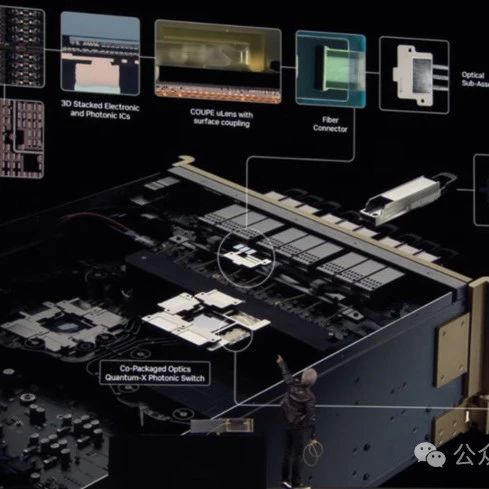
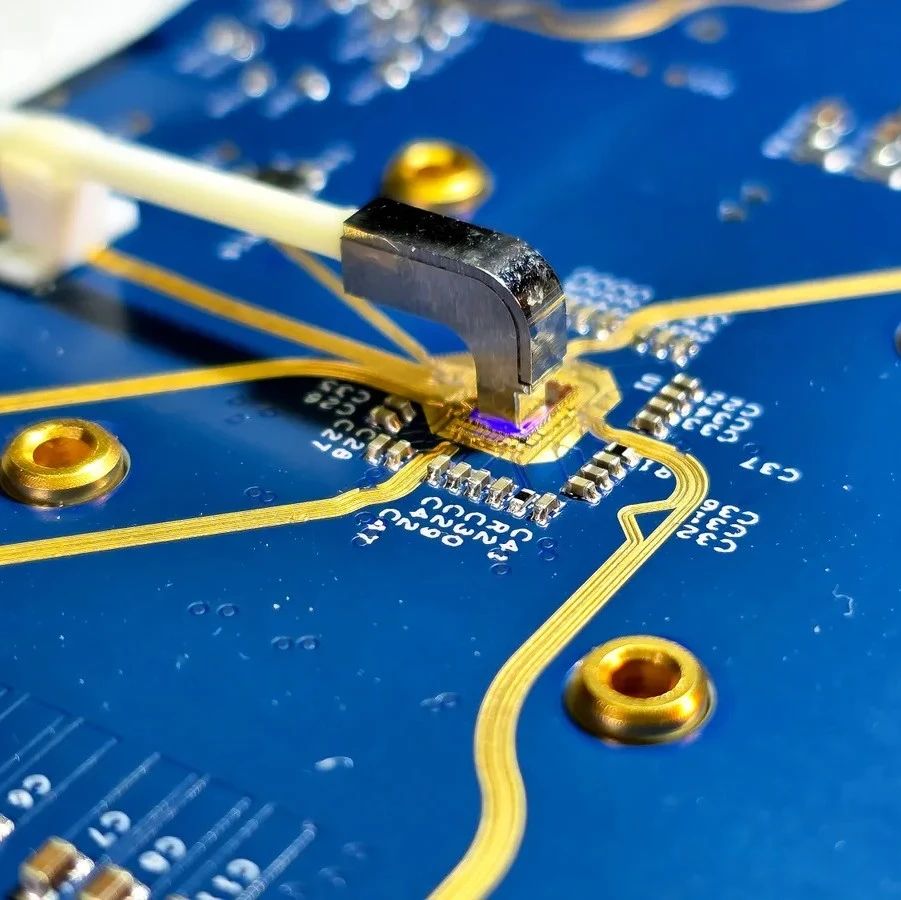
Core Viewpoint - The article discusses Nvidia's announcement of a co-packaged optics (CPO) switch aimed at significantly reducing power consumption in AI data centers, marking a potential breakthrough in optical networking technology [1][5][18]. Group 1: Technology Overview - The CPO switch integrates optical and electronic components to enhance bandwidth and reduce power consumption by minimizing the distance electronic signals must travel [2][4]. - Nvidia's CPO technology claims to reduce power consumption by 70%, from 30W per 1.6T pluggable transceiver to just 9W per CPO port [5][17]. - The CPO switch is designed to handle data rates of 1.6 Tb/s, utilizing micro-ring modulators (MRM) for improved power efficiency [13][17]. Group 2: Market Implications - The introduction of CPO technology is seen as a significant advancement that could lead to a reduction in the number of lasers required in AI data centers by 75%, thus saving substantial energy [18][19]. - Nvidia's CPO switch is expected to enhance the reliability of data transmission by 63% and improve the ability to withstand network interruptions by 10 times [18]. - The company plans to launch two types of switches, Spectrum-X and Quantum-X, with Quantum-X expected to be available later this year [19]. Group 3: Competitive Landscape - Other companies, such as Broadcom, are also developing CPO switches, but Nvidia's approach with micro-ring modulators differs fundamentally from Broadcom's use of Mach-Zehnder modulators [20][24]. - Micas Networks has announced a 51.2T product based on Broadcom's CPO platform, which offers a 50% reduction in power consumption [22][23]. - The competition in the CPO market is intensifying, with various companies exploring different optical technologies to meet the growing demands of data centers [20][22]. Group 4: Future Developments - Nvidia is actively researching new optical technologies to enhance the scalability of its networking solutions, with plans for future integration of optical interconnects into GPUs [28][29]. - The company is collaborating with multiple partners, including TSMC and Coherent, to optimize the technology for AI data center needs [19][14]. - The ongoing development of CPO technology is expected to lead to further innovations in optical networking, potentially transforming data center architectures [26][28].