
经济压力

Search documents
坚决反对对中方施加所谓经济压力!外交部,最新回应→
证券时报· 2025-09-05 10:14
Core Viewpoint - The Chinese government firmly opposes any economic pressure imposed on China by foreign nations, particularly in the context of the Ukraine crisis, asserting its neutral stance and non-involvement in the conflict [2][3]. Group 1: China's Position on Economic Pressure - The Chinese Foreign Ministry spokesperson emphasized that China is not the creator of the Ukraine crisis and opposes the notion of applying economic pressure on China [2]. - The spokesperson reiterated China's consistent and objective stance regarding the Ukraine crisis, rejecting any attempts to involve China in the matter [2]. Group 2: China-Russia Relations - The spokesperson highlighted that China maintains a relationship with Russia based on principles of non-alignment, non-confrontation, and not targeting third parties [3]. - The year marks the 80th anniversary of the victory in the World Anti-Fascist War, with many countries, including Australia, commemorating this shared historical event [3].

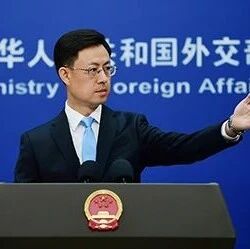
“特朗普要求欧洲对中国施加经济压力”,中方回应
Huan Qiu Shi Bao· 2025-09-05 09:24
Core Viewpoint - The article discusses President Trump's request for European leaders to stop purchasing Russian oil and to exert economic pressure on China in an effort to resolve the Russia-Ukraine conflict [1] Group 1: U.S. Position - President Trump communicated to European leaders the necessity to halt Russian oil purchases [1] - The request is part of a broader strategy to apply economic pressure on China [1] Group 2: China's Response - China's Foreign Ministry spokesperson emphasized that China maintains a fair and objective stance on the Ukraine crisis [1] - The spokesperson rejected the notion that China is a creator or party to the crisis and opposed the imposition of economic pressure on China [1]
特朗普称欧洲各国领导人必须对中国施加经济压力 外交部回应
Xin Jing Bao· 2025-09-05 08:26
Core Viewpoint - The Chinese government maintains a neutral and objective stance on the Ukraine crisis, asserting that it is neither the creator nor a party to the conflict, and opposes any economic pressure imposed on China by other nations [1]. Group 1 - The Chinese Foreign Ministry spokesperson emphasized that China should not be implicated in the Ukraine crisis and opposes the notion of economic pressure from European leaders as suggested by U.S. President Trump [1].

宏观点评:7月PMI超季节性回落的背后-20250731
GOLDEN SUN SECURITIES· 2025-07-31 11:33
Group 1: PMI Trends - July manufacturing PMI decreased to 49.3%, down 0.4 percentage points from the previous value, indicating a contraction for the fourth consecutive month[2] - Non-manufacturing PMI fell to 50.1%, a decline of 0.4 percentage points, with service and construction sectors dropping by 0.1 and 2.2 percentage points respectively[2] - Composite PMI output index decreased by 0.5 percentage points to 50.2%, suggesting a slowdown in overall economic expansion[2] Group 2: Supply and Demand Signals - July PMI production index was 50.5%, down 0.5 percentage points, indicating continued expansion but with weakening demand[3] - New orders index fell by 0.8 percentage points to 49.4%, entering contraction territory, with new export orders down by 0.6 percentage points[3] - New export orders index dropped to 47.1%, remaining in contraction, while import orders held steady at 47.8%[3] Group 3: Price and Employment Insights - Price indices rebounded, with raw material and factory price indices rising by 3.1 and 2.1 percentage points respectively, indicating a narrowing decline in PPI[4] - Employment pressure eased slightly, with manufacturing, service, and construction employment indices increasing by 0.1, 0.0, and 1.0 percentage points respectively[4] - Service sector PMI fell to 50.0%, while construction PMI dropped 2.2 percentage points to 50.6%, the second-lowest this year[6] Group 4: Economic Outlook - The July Politburo meeting indicated a focus on policy implementation, with potential new policies expected but not strong stimulus measures[6] - Economic pressures are anticipated to increase in the second half of the year, particularly in August and September, due to prior "export rush" effects and short-term contraction[6] - Continued monitoring of US-China trade negotiations is advised, as potential developments may impact market conditions[6]
有十几万存款就很了不起吗?银行人:存款十几万,确实很了不起
Sou Hu Cai Jing· 2025-06-26 06:17
Core Insights - The increasing savings willingness among Chinese residents contrasts sharply with the reality that over 560 million people have zero bank account balances, and many others are in debt, with savings often below 100,000 yuan [1][5] - A significant 58% of residents prefer to save more, while only 23.2% and 18.8% lean towards more consumption and investment, respectively, indicating a troubling economic backdrop despite the apparent desire to save [1] Group 1: Young Generation's Debt - The younger generation, particularly those born in the 1990s, faces a severe mismatch between income and expenditure, with nearly 90% having an average debt of 127,000 yuan, requiring 18 months of salary to repay [1] - Many young individuals are categorized as "moonlight" or "debt" groups, often lacking any savings [1] Group 2: Housing Prices and Mortgage Pressure - High housing prices are a significant barrier to savings, with over 95% of families needing loans to purchase homes, leading to long-term mortgage repayment pressures that consume most of their income [1] - For these families, accumulating even a few thousand yuan in savings is challenging, let alone reaching 100,000 yuan [1] Group 3: Income and Cost of Living - Most residents earn between 3,000 and 6,000 yuan monthly, while rising prices and limited wage growth result in stagnant or declining real income levels [4] - Achieving a balance between income and expenses is already difficult for many families, making it nearly impossible to accumulate significant savings [4] Group 4: Overall Economic Pressure - Despite an increase in total savings, the actual savings amounts for most residents remain bleak, with 100,000 yuan considered a substantial amount [5] - Low income, high prices, and the debt burden of the younger generation collectively hinder the growth of savings, reflecting the economic vulnerability and pressures faced by Chinese residents [5]

美联储主席鲍威尔:关税可能推高物价并对经济产生压力。
news flash· 2025-06-24 12:35
Core Viewpoint - Federal Reserve Chairman Powell indicated that tariffs could lead to increased prices and exert pressure on the economy [1] Group 1 - Tariffs are likely to contribute to inflationary pressures within the economy [1] - The economic impact of tariffs may result in broader financial strain on consumers and businesses [1] - Powell's comments suggest a cautious approach to trade policies and their implications for economic stability [1]
美联储古尔斯比:关税仍将产生滞胀效应,协议的临时性将对经济造成压力。
news flash· 2025-05-12 18:50
Core Insights - The Federal Reserve's Goolsbee indicates that tariffs will continue to exert a stagflationary effect on the economy, suggesting that the temporary nature of agreements will place additional pressure on economic conditions [1] Group 1 - Tariffs are expected to have a lasting stagflationary impact on the economy [1] - The temporary nature of trade agreements is likely to create further economic stress [1]
麦当劳:经济压力正在冲击中等收入消费者。
news flash· 2025-05-01 12:37
Core Insights - The article highlights that economic pressures are impacting middle-income consumers, which is affecting their spending habits and choices [1] Group 1: Economic Impact - Economic pressures are leading to a shift in consumer behavior among middle-income groups, resulting in reduced spending at fast-food chains like McDonald's [1] - The article suggests that these consumers are increasingly seeking value and affordability in their food choices due to rising costs [1] Group 2: Consumer Behavior - Middle-income consumers are prioritizing budget-friendly options, which may lead to a decline in sales for premium offerings at fast-food restaurants [1] - The trend indicates a potential long-term shift in consumer preferences as economic conditions continue to evolve [1]
