
绿色建造

Search documents
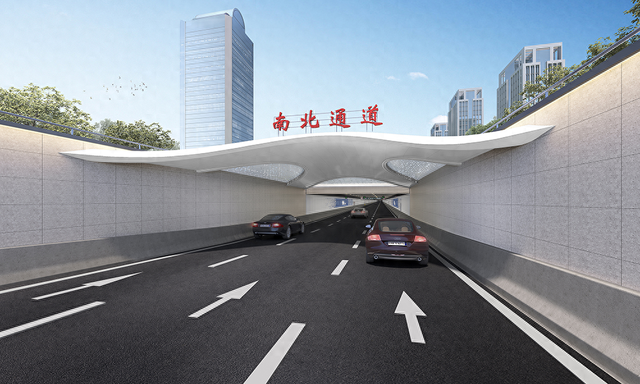
上海开工建设南北通道完善城市交通
Xin Hua Wang· 2026-01-02 07:22
Core Viewpoint - The construction of the new sections of the Shanghai North-South Passage aims to alleviate traffic pressure in the central urban area and support the development of key functional zones such as North Bund and Lujiazui [1] Group 1: Project Overview - The North-South Passage spans 14.55 kilometers, connecting the Shanghai Ring Road in the north to the northern part of Pudong New District [1] - The newly commenced sections, approximately 6.35 kilometers long, will feature a dual four-lane design and are being constructed by Shanghai Urban Investment Group's subsidiary [1] Group 2: Technological Integration - The project will utilize Building Information Modeling (BIM) and digital twin technology for comprehensive digital management across planning, construction, operation, and maintenance [1] - Smart sensing and IoT systems will be employed for real-time monitoring and dynamic optimization of engineering safety and environmental impact [1] Group 3: Environmental Considerations - The project emphasizes green construction through prefabrication, high-quality eco-friendly materials, and energy-saving processes, significantly reducing carbon footprint and ecological disturbance [1] Group 4: Strategic Importance - The North-South Passage is a major transportation project that will connect key development areas in Shanghai, enhancing the reliability and resilience of the central urban traffic network [1] - Upon completion, it will integrate with the North Horizontal Passage, Pudong Avenue, and Bund Passage to form a "grid-like" main road network in the central urban area [1]
上海南北通道新建工程开工,将成世界最长中心城区地下连续流道路
Xin Lang Cai Jing· 2026-01-02 07:09
Core Viewpoint - The construction of the North-South Passage in Shanghai has officially commenced, aiming to enhance the urban traffic network and support regional development through improved connectivity and traffic flow [2][5]. Group 1: Project Overview - The North-South Passage will span 14.55 kilometers, starting from the Zhonghuan Dabaishu Interchange and ending at the intersection of Yanggao South Road and Chengshan Road, forming a crucial part of Shanghai's "grid" traffic system [1]. - The project includes the construction of the Pu Xi section and the cross-river section, totaling approximately 6.35 kilometers, featuring major infrastructure such as the Dabaishu Interchange renovation and a main tunnel from Zhongshan North Road to Binjiang Avenue [3]. Group 2: Traffic Impact - The new passage is expected to significantly alleviate traffic pressure on the parallel North-South Elevated Road, thereby enhancing the overall traffic efficiency of the central urban road network [5]. Group 3: Engineering Challenges and Innovations - The North-South Passage is set to become the world's longest underground continuous flow road in a city center, facing numerous global engineering challenges [7]. - The project emphasizes sustainable development through green construction practices, including the use of prefabricated technology and eco-friendly materials to minimize ecological disturbance [7].

住建部:在更大范围推广智能建造、绿色建造、装配式装修
Zheng Quan Shi Bao Wang· 2025-12-31 10:22
Core Viewpoint - The Ministry of Housing and Urban-Rural Development has released opinions aimed at enhancing housing quality, emphasizing the development of new construction methods [1] Group 1: New Construction Methods - Accelerate the integration of the construction industry with advanced manufacturing technologies and next-generation information technologies [1] - Promote intelligent construction, green construction, and prefabricated decoration on a broader scale [1] Group 2: Digital Technology and BIM - Expand the application scenarios of digital technology in engineering and advance the use of Building Information Modeling (BIM) technology throughout the entire process of housing design, construction, and operation [1] - Promote the application of intelligent construction equipment [1] Group 3: Waste Management and Resource Utilization - Accelerate the reduction and resource utilization of construction waste [1] Group 4: Green Building Initiatives - Ensure that all new urban housing is built as green buildings and increase the proportion of high-star green buildings [1] - Promote energy-saving and carbon reduction in building operations and strengthen energy efficiency limit management [1] Group 5: Energy Efficiency and Renewable Energy - Establish a building energy efficiency grading system and compile carbon emission statistical accounting standards [1] - Promote the electrification of building energy use, conduct integrated photovoltaic pilot projects, and enhance the utilization of renewable energy [1] - Accelerate the transformation of the energy structure used in buildings [1]
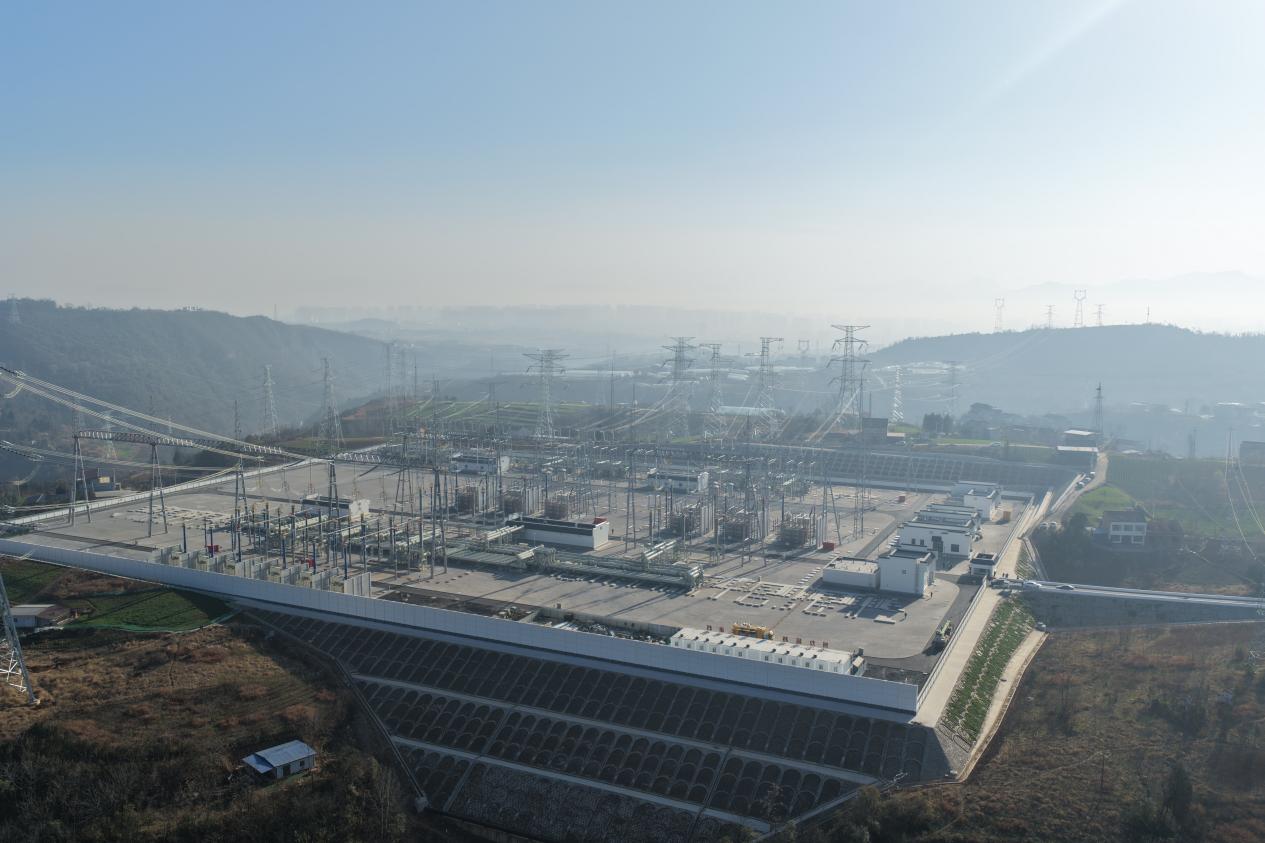
安康750千伏输变电工程建成投运
Zhong Guo Neng Yuan Wang· 2025-12-31 06:37
Core Viewpoint - The successful commissioning of the Ankang 750 kV substation project marks a significant advancement in the high-quality development of southern Shaanxi and injects strong momentum into regional coordinated development [2] Group 1: Project Overview - The Ankang 750 kV substation project is a key infrastructure for optimizing the energy layout in Shaanxi Province and enhancing regional interconnectivity [2] - The project spans approximately 406 kilometers, connecting load centers with clean energy-rich areas across Xi'an, Shangluo, and Ankang [2] Group 2: Construction Management - During construction, State Grid Shaanxi Electric Power implemented a proactive safety management system, focusing on monitoring work teams, key processes, and strengthening emergency response systems [2] - The project overcame challenges such as heavy construction tasks, complex working conditions, and variable weather by ensuring safety management responsibilities were met [2] - Innovative transportation methods, such as cableway transport, were utilized to replace traditional road construction, integrating "smart construction" and "green building" concepts throughout the project [2] Group 3: Operational Impact - Upon commissioning, the project will enhance the power supply capacity in the Ankang region by 3 million kilowatts and increase the capacity for renewable energy consumption by 30% [2] - It will provide reliable power supply to the Xikang high-speed railway, supporting sustainable economic and social development in the surrounding areas [2] - The project plays a crucial role in promoting the green transition of regional energy and supports the "dual carbon" goals [2]
【安康】750千伏输变电工程建成投运
Shan Xi Ri Bao· 2025-12-31 00:45
Core Viewpoint - The successful commissioning of the Ankang 750 kV power transmission and transformation project is a significant boost for high-quality development in southern Shaanxi and regional coordinated development in Shaanxi province [1] Group 1: Project Overview - The Ankang 750 kV power transmission and transformation project is a key infrastructure for optimizing the energy layout in Shaanxi and enhancing regional interconnectivity [1] - The project spans approximately 406 kilometers, connecting load centers along the route with areas rich in clean energy [1] Group 2: Safety and Management - State Grid Shaanxi Electric Power has established a proactive safety management system, focusing on site operations, critical processes, and strengthening emergency response systems [1] - The project overcame challenges such as complex construction conditions and variable weather, ensuring smooth construction through effective safety management [1] Group 3: Technological and Environmental Innovations - The project utilized cableway transportation to replace traditional road construction methods, integrating "smart construction" and "green building" concepts throughout the process [1] Group 4: Impact and Benefits - The project will enhance the power supply capacity in the Ankang region by 3 million kilowatts and increase the capacity for renewable energy consumption by 30% [1] - It will provide reliable power supply for the Xikang high-speed railway and support economic and social development in the surrounding areas, contributing to the stable and reliable clean energy support for high-quality development in Shaanxi [1]
中经评论:房屋品质提升工程该如何推进
Jing Ji Ri Bao· 2025-12-30 23:58
Core Viewpoint - The concept of "good houses" has become a key focus in China's housing policy, with the government emphasizing the need for quality improvement in housing construction and the implementation of a housing quality enhancement project during the 14th Five-Year Plan period [1][4]. Group 1: Housing Quality Enhancement - The implementation of the housing quality enhancement project is a significant task for the 14th Five-Year Plan, aiming to improve housing standards, design, materials, construction, and operational levels over the next five years [1]. - The government plans to prioritize the construction of "good houses" in affordable housing, ensuring that commercial housing meets both rigid and improved demands, and making significant progress in the renovation of old houses [1]. - A comprehensive policy, standard, technical, and industrial system will be established to support the enhancement of housing quality [1]. Group 2: Design and Construction Standards - The new "Residential Project Standards" will take effect on May 1, 2025, serving as the baseline requirement for "good houses," with an emphasis on improving design, materials, construction, and equipment standards [1]. - Architectural design must focus on residential functionality, safety, performance, quality, and experience, with a push for refined and integrated designs that cater to diverse housing needs [2]. - The application of new construction methods, including intelligent, green, and prefabricated construction, will be promoted, marking a shift towards high-quality development in the construction industry [2]. Group 3: Renovation of Old Houses - The government will steadily advance the renovation of urban villages and dilapidated houses, as well as the energy-efficient renovation of existing housing [3]. - Residents will be encouraged to update old housing through various methods, including trade-ins and modular construction, with the use of prefabricated renovations to shorten renovation time [3]. - Technology will play a crucial role in enhancing housing quality, with a focus on research and development of key technologies and the integration of technological applications [3]. Group 4: Industry Transformation - Real estate and construction companies are expected to transition into integrators for "good house" construction, streamlining the entire industry chain from research and development to service [3]. - There is potential for the formation of industrial clusters encompassing building materials, home furnishings, and appliances, with ongoing improvements in standardization and series production in the construction sector [3].
甬金衢上金华城区段全线梁板预制完工 提速“枢纽”建设-焦点播报
Zhong Guo Xin Wen Wang· 2025-12-29 07:10
Core Insights - The completion of the prefabrication task for the YJQ Shangjinhua urban section project marks a significant milestone, laying a solid foundation for subsequent bridge connectivity [2][4] - The project spans 38.26 kilometers and includes the construction of 32 bridges, with 5 being major bridges, indicating a large-scale infrastructure development [2] Group 1: Project Innovations - The project introduces a new model for beam production, utilizing three intelligent production lines for rebar processing, concrete production, and industrial prefabrication, which enhances standardization and efficiency [2][3] - The precision of rebar processing reaches millimeter-level accuracy, with the prefabrication cycle reduced by 50%, waste discharge decreased by 50%, and concrete loss minimized by 20%, aligning with the principles of "intelligent and green construction" [3] Group 2: Management and Quality Control - A smart control center based on IoT technology integrates production management, quality control, progress tracking, and safety management, significantly improving management efficiency [3] - The introduction of a "five-dimensional rating system" for beam quality transforms qualitative assessments into data-driven evaluations, increasing the proportion of Grade A beams from 60% to over 90% [3] Group 3: Economic Impact and Progress - The project is a key construction initiative under Zhejiang's "14th Five-Year Plan" and part of the "thousand projects, trillion investment" program, aimed at enhancing regional transportation capacity and supporting the development of an inland open hub in Jinhua [4] - As of now, the project has completed an investment of 9.736 billion yuan, accounting for 83.72% of the approved budget, with an overall progress rate of 73.06% [4]


原地焕新“好房子”,中建国际投资开创城市更新“智建”新路径
Xin Jing Bao· 2025-12-26 05:56
Core Viewpoint - The "2025 Annual Excellent Case of Green Development" was announced at the "2025 Green Development Summit," highlighting the importance of sustainable urban renewal projects in China [1] Group 1: Project Overview - The Huapicun Hutong No. 8 project, developed by China State Construction International Group, is recognized as the first modular integrated construction (MiC) technology project for the renovation of dilapidated buildings in Beijing [1][2] - The project utilized an "original demolition and reconstruction" model, significantly enhancing safety, livability, and property value, with completion from demolition to construction taking only three months [2][3] Group 2: Technological Innovation - MiC technology, developed by China State Construction International, allows over 90% of construction processes to be completed in a factory, reducing construction waste by 75% and material waste by 25% compared to traditional methods [2][4] - The project incorporated advanced design features such as noise reduction, waterproofing, and energy-efficient installations, addressing the living conditions of residents effectively [3][4] Group 3: Future Projects and Impact - Following the success of Huapicun Hutong No. 8, another project at Sanlihe District No. 28 has also adopted MiC technology, marking a shift from pilot projects to mature applications in urban renewal [4][5] - The project aims to meet the "good housing" construction standards and includes features like barrier-free elevators and enhanced kitchen and bathroom spaces, increasing the overall building area by approximately 17% [4][5] Group 4: Broader Implications - The development of the Dinghuisi project as Beijing's first concrete modular affordable housing project will provide 241 rental units, contributing to a multi-tiered housing security system [6] - The establishment of the Zhongjian Hailong Intelligent Construction Industrial Park aims to create a comprehensive base for MiC technology, promoting green building practices and supporting regional economic development [6]

住房城乡建设部:有序搭建房地产开发、融资、销售基础性制度
Xin Hua Cai Jing· 2025-12-23 07:37
Core Viewpoint - The national housing and urban-rural construction work conference emphasized the importance of high-quality development in the housing and urban-rural construction sector, outlining key tasks for 2026 and the "15th Five-Year Plan" period [1]. Group 1: Key Tasks for 2026 - Focus on four main areas: modernizing urban construction, stabilizing the real estate market, upgrading the construction industry, and strengthening the foundation for high-quality development [2][3]. Group 2: Modernizing Urban Construction - High-quality urban renewal will be prioritized, including the implementation of a special plan for urban renewal during the "15th Five-Year Plan" period, and various community improvement projects [3]. - Emphasis on enhancing urban infrastructure, including drainage systems and safety projects, while promoting effective urban governance and management [3]. Group 3: Stabilizing the Real Estate Market - Policies will be tailored to local conditions to control supply, reduce inventory, and optimize housing supply, with a focus on affordable housing and improving housing quality [4]. - The government will support reasonable financing needs of real estate companies and adjust policies to meet residents' housing demands [4]. Group 4: Upgrading the Construction Industry - The industry will focus on smart and green construction, developing a modern construction industry chain and promoting new building materials [5]. - Strengthening market order and safety management in construction projects will be a priority [5]. Group 5: Strengthening High-Quality Development Foundations - Enhancements in legal frameworks, standard systems, and statistical analysis will be pursued to support the construction sector [6]. - The integration of artificial intelligence in housing and urban construction will be promoted, alongside international cooperation to enhance the competitiveness of "Chinese construction" in global markets [6].
住建部最新发声:房地产仍有较大发展潜力
Di Yi Cai Jing Zi Xun· 2025-12-23 05:09
12月22日至23日,全国住房城乡建设工作会议在北京召开。会议指出,2026年,要着力抓好4方面工 作。 ——推进现代化人民城市建设,重点是:高质量开展城市更新,编制实施"十五五"城市更新专项规划, 抓好城市体检、更新试点,实施一批民生工程、发展工程、安全工程。以"绣花"功夫精细化推进城镇老 旧小区改造、完整社区建设、口袋公园建设、绿地开放共享、"温暖工程"建设、城市小微公共空间改 造,提升无障碍适老化环境品质。高质量实施"两重"、"两新"项目建设,持续开展地下管网改造和综合 管廊建设,常态化推进城市燃气管道老化更新改造,力争完成改造各类燃气管道3万公里。积极开展新 型城市基础设施建设。持续建设城市排水防涝工程体系、城市基础设施生命线安全工程;高效能推进城 市治理,推动建立城市管理统筹协调机制,发挥好"一委一办一平台"作用,深入开展城市管理进社区工 作,运用好"吹哨报到"、"接诉即办"等工作机制,深化城市管理和执法体制改革,持续推进城市管理执 法队伍标准化规范化建设;高标准建设文明城市,完善历史文化保护传承体系,全力抓好老城区和老街 区专项调查,深入开展国家历史文化名城专项评估和监测,完善城市风貌管理制度,以 ...