脑机接口技术

Search documents
中国团队研制新型可拉伸柔性电极,破解脑机接口核心难题
Ke Ji Ri Bao· 2026-02-09 07:07
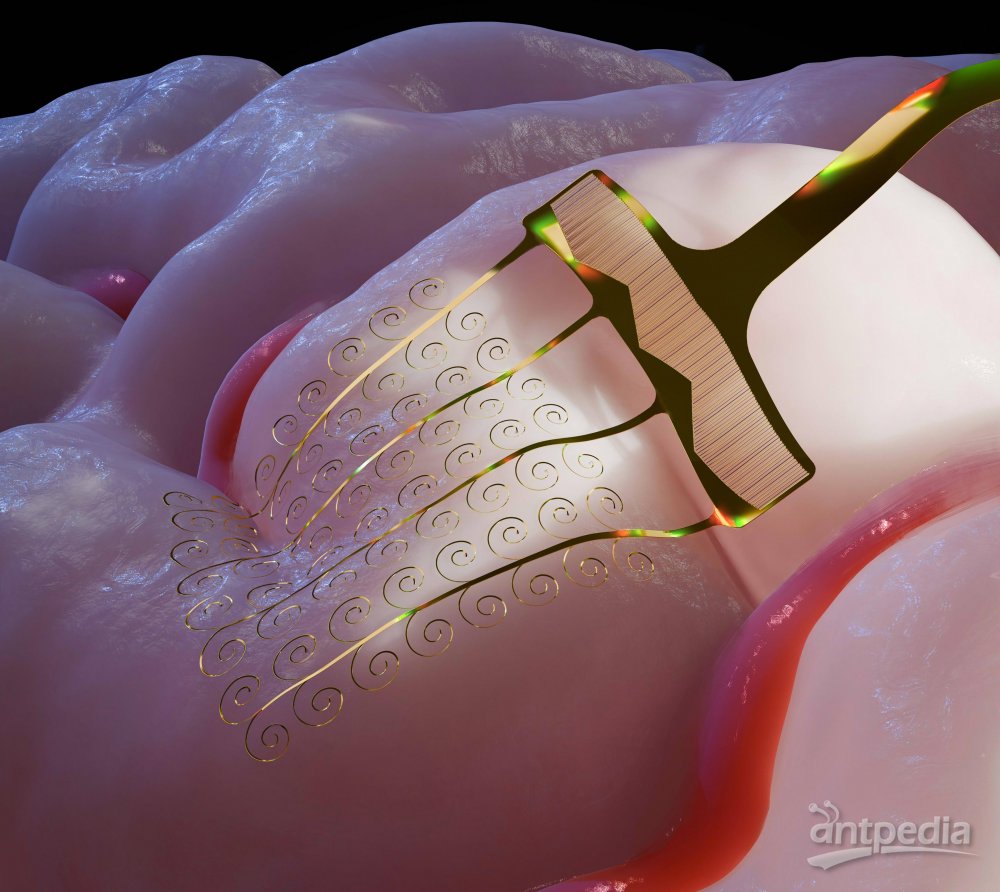
Core Insights - A research team led by Fang Ying from Beijing Brain Science and Brain-like Research Institute has developed a new type of high-throughput, stretchable flexible electrode that addresses the challenges of traditional flexible electrodes in brain-machine interface (BMI) technology, particularly in dynamic brain movements [1][2][3] - The new stretchable electrode architecture can dynamically follow brain movements with a required stretching force that is only 1/100th of that needed for Neuralink's linear electrodes, significantly reducing mechanical damage to brain tissue and minimizing immune responses [2][3] Group 1 - The new flexible electrode technology provides a foundational solution for the long-term stability of invasive brain-machine interfaces, overcoming issues of electrode displacement and inflammation caused by brain tissue movement [2][3] - Research conducted on macaques demonstrated that the stretchable flexible electrode could achieve long-term stable recordings in the brain, successfully capturing 257 single-neuron signals with a 256-channel implant and high-quality neural signals with a 1024-channel implant [2][3] Group 2 - This innovative technology is expected to address key obstacles for the clinical application of invasive brain-machine interfaces in China, potentially allowing the country to gain a competitive edge in the global market [3] - The advancement in this technology is anticipated to enhance the performance of brain-machine interfaces, contributing to the overall development of the industry and improving public health through cutting-edge technology [3]

通向“人机融合”的下一步?超声波“读脑”技术初露头角
Huan Qiu Wang Zi Xun· 2026-02-09 02:34
Core Viewpoint - Brain-machine interface (BMI) technology has made significant advancements, with companies like Neuralink leading the way, but these methods involve invasive surgeries and high risks. Merge Labs, a new startup, aims to develop a non-invasive approach using ultrasound technology to read and modulate brain activity, potentially treating mental health disorders and enhancing cognitive processes [2][3]. Group 1: Company Overview - Merge Labs was founded in January this year and has secured $252 million in funding from investors, including OpenAI, indicating a strong interest in innovative BMI technologies [2]. - The company is exploring a new type of brain-machine interface that could not only decode information but also treat conditions like depression and addiction, marking a significant shift in the approach to human-machine interaction post-ChatGPT [2]. Group 2: Technology and Methodology - Traditional BMIs rely on electrode arrays that require invasive surgeries, which pose risks and limit the interaction to specific brain areas. In contrast, Merge Labs utilizes functional ultrasound, which emits high-frequency sound waves to monitor blood flow changes, indirectly inferring neuronal activity [3][4]. - The ultrasound method is less invasive, requiring only placement beneath the skull or through a small window in the skull, allowing for monitoring of multiple brain regions simultaneously [4]. Group 3: Advanced Techniques - Merge Labs is also investigating "sonogenetics," a cutting-edge technique that makes specific neurons more sensitive to ultrasound, enabling precise activation or inhibition of targeted neurons. This could lead to more personalized treatment options for neurological disorders [5]. - Sonogenetics combined with ultrasound may offer new therapeutic avenues, such as restoring partial vision in blind patients and assisting cancer treatment by modulating surrounding neural activity [5]. Group 4: Ethical and Technical Challenges - The involvement of AI in Merge Labs' technology raises ethical and privacy concerns, particularly regarding the sensitivity of brain data and the intentions behind AI's role in processing this data [6]. - Despite the potential of functional ultrasound, it has inherent limitations, such as a response time lag due to its reliance on blood flow changes, which may hinder real-time applications like speech decoding [6][7]. - Merge Labs is still in the exploratory phase, having demonstrated the ability to decode monkey movement intentions and detect human brain activity during activities like playing guitar, but significant challenges remain before human application [7].

海淀企业脑机接口技术取得重要突破
Xin Jing Bao· 2026-02-09 01:22
Core Viewpoint - A significant breakthrough has been achieved in the field of invasive brain-machine interfaces in China, with the development of a highly flexible electrode that addresses key challenges in the technology [1] Group 1: Technological Advancements - The research team led by Fang Ying has successfully developed a high-throughput signal acquisition and biomechanically compliant stretchable electrode, solving the issues of traditional flexible electrodes that are prone to displacement and detachment [1] - This breakthrough has been published in the international journal "Nature Electronics" on February 5 [1] Group 2: Clinical Implications - The new technology effectively addresses core issues related to the implantation of bioelectronic devices in the brain, including minimizing displacement due to significant brain movement and reducing inflammatory responses [1] - The research demonstrates a comprehensive approach from flexible electrode design to implantation methods, showcasing its potential to enhance brain-machine interface performance [1] Group 3: Future Directions - The CEO of Zhiren Medical, Song Qi, stated that the company will continue to focus on core technology development and clinical transformation, aiming to benefit patients with neurological diseases and contribute to China's strategic advancement in this field [1]
宏观金融类:文字早评2026-02-06-20260206
Wu Kuang Qi Huo· 2026-02-06 02:01
文字早评 2026/02/06 星期五 宏观金融类 股指 【行情资讯】 1、八部门印发《中药工业高质量发展实施方案(2026—2030 年)》,到 2030 年中药工业全产业链协同 发展体系初步形成; 2、2026 年 APEC 标准与合格评定分委会首次会议在广州召开,会议聚焦脑机接口技术等相关国际标准在 APEC 经济体实施; 3、比特币价格日内一度跌破 7 万美元关口。分析认为,在这一轮大跌后,比特币的上涨动能、市场叙 事以及"避险资产"的标签几乎同时瓦解; 4、美国联邦通信委员会受理 SpaceX 百万颗卫星系统部署申请。这一卫星系统将建立一个环绕地球轨道 的数据中心网络。此外,SpaceX 计划推出星链手机。 基差年化比率: IF 当月/下月/当季/隔季:-1.02%/1.08%/4.05%/4.21%; IC 当月/下月/当季/隔季:0.55%/3.08%/9.04%/6.96%; IM 当月/下月/当季/隔季:-4.86%/3.39%/12.81%/9.94%; IH 当月/下月/当季/隔季:-6.05%/-0.76%/0.43%/2.34%。 【策略观点】 近期市场轮动节奏加快,热点板块持续性不 ...
涉及脑机接口技术等,中国提出多项APEC合作项目
Xin Lang Cai Jing· 2026-02-05 06:55
记者今天从广州召开的2026年亚太经合组织(APEC)标准与合格评定分委会(SCSC)首次会议了解 到,此次会议由中方担任主席,市场监管总局牵头组织。中国在会议上提出的多项APEC合作项目,得 到各个经济体的积极响应。 另外,提出"老年友好型食品设计标准化"项目,聚焦区域经济体共同面临的老年营养改善和食品适配问 题,推动老年友好型食品设计的标准化路径,为促进健康老龄化和创新发展提供国际协同方案,充分发 挥标准化在公共健康治理中的基础性作用。(央视新闻) 其中聚焦脑机接口技术在康复领域的应用需求,推动APEC数字康复相关标准与测试技术区域协调,完 善脑机接口ISO国际标准体系。 提出数字赋能绿色转型新项目倡议,聚焦人工智能、区块链、物联网等先进技术在应对气候变化领域的 应用潜力,推动ISO绿色低碳国际标准在APEC经济体实施。 ...
A股脑机接口板块尾盘回升,爱朋医疗短线拉升涨超4%
Mei Ri Jing Ji Xin Wen· 2026-02-05 06:48
Group 1 - The A-share brain-computer interface sector experienced a rebound towards the end of trading, with Aipeng Medical rising over 4% [1] - Other stocks in the sector, including Innovation Medical, Botao Biological, Kefu Medical, and Saili Medical, also saw gains [1] - China has proposed multiple APEC cooperation projects that involve brain-computer interface technology [1]

涉及脑机接口技术等 中国提出多项APEC合作项目
Yang Shi Xin Wen· 2026-02-05 06:36
Core Viewpoint - The 2026 APEC Standards and Conformance Subcommittee (SCSC) meeting held in Guangzhou, chaired by China, focused on several collaborative projects, particularly in brain-computer interface technology and digital empowerment for green transformation [1] Group 1: APEC Cooperation Projects - China proposed multiple APEC cooperation projects that received positive responses from various economies [1] - The projects emphasize the application of brain-computer interface technology in rehabilitation, aiming to enhance regional coordination on digital rehabilitation standards and testing technologies [1] - There is a push to improve the ISO international standard system for brain-computer interfaces [1] Group 2: Digital Empowerment and Green Transformation - A new initiative for digital empowerment in green transformation was introduced, focusing on advanced technologies such as artificial intelligence, blockchain, and the Internet of Things [1] - The initiative aims to explore the potential of these technologies in addressing climate change [1] - Efforts will be made to promote the implementation of ISO green low-carbon international standards across APEC economies [1]
一栋科创楼串起“6G朋友圈”(在现场)
Ren Min Wang· 2026-02-04 22:44
Core Viewpoint - The establishment of the 6G Communication Innovation Valley in Shanghai aims to develop 6G immersive communication technologies, integrating wearable devices with digital worlds, and is part of a broader initiative to create a 6G industrial ecosystem by 2030 [1][4]. Group 1: 6G Development and Applications - 6G is positioned as the next step in communication technology, providing a "nervous system" for future industries, as opposed to 5G's role in enhancing speed [1]. - The goal is to integrate satellites, ground stations, and user terminals into a cohesive network to support various future applications, including emergency signals and remote surgeries [4]. - The 6G Communication Innovation Valley has already attracted over 50 related enterprises, forming a comprehensive ecosystem covering the entire 6G industrial chain [5]. Group 2: Collaborative Innovations - Companies like Guokexinnao and Waterfall Technology are collaborating to develop AI glasses that utilize brain-machine interface technology to detect Alzheimer's disease [3]. - The integration of 6G chip modules into smart devices is crucial for real-time data transmission to healthcare providers, enhancing patient monitoring and treatment [3]. - The innovation space provides resources for startups, facilitating research and development, and enabling quick testing and validation of new technologies [2][3]. Group 3: Testing and Validation - The top floor of the innovation building houses a satellite internet testing and validation platform, essential for ensuring the functionality of 6G devices before deployment [3]. - The process involves developing devices on lower floors, followed by testing on the rooftop, ensuring a seamless transition from development to real-world application [3].
上海松江区有座未来产业园 一栋科创楼串起“6G朋友圈”(在现场)
Ren Min Ri Bao· 2026-02-04 22:05
Core Viewpoint - The establishment of the 6G Innovation Valley in Shanghai aims to develop a comprehensive ecosystem for 6G technology, focusing on immersive communication and the integration of various technologies to enhance future industries [1][4]. Group 1: 6G Technology Development - The 6G Innovation Valley is positioned as a hub for the future industry, with a goal to create China's first commercial 6G deployment city by 2030 [1]. - The functionality of 6G is described as building a "nervous system" for future industries, integrating satellites, ground stations, and terminals into a cohesive network [1][4]. - The 6G ecosystem is being developed with a focus on satellite network control and operation, which is considered a significant challenge in the industry [2]. Group 2: Collaborative Innovations - Companies within the 6G Innovation Valley, such as Guokexinnao and Waterfall AI, are collaborating to develop innovative products like AI glasses that utilize brain-computer interface technology [3]. - The AI glasses aim to detect Alzheimer's disease and will incorporate 6G modules for rapid data transmission to healthcare providers [3]. Group 3: Infrastructure and Testing - The 6G Innovation Valley includes a satellite internet testing and verification platform, facilitating the development and testing of 6G devices [3]. - The workflow involves research and development on lower floors, with testing conducted on the rooftop, ensuring a streamlined process from development to deployment [3]. Group 4: Industry Impact - The ultimate goal of 6G technology is to benefit various industries and improve public welfare, enabling applications such as advanced rescue signals, sensitive autonomous driving, and low-latency remote surgeries [4]. - The 6G Innovation Valley has attracted over 50 related enterprises, creating a network that covers the entire 6G future industry chain [4].
从消费电子到医疗器械:强脑科技“专注欣”医疗版获批,加速商业化转型
Jin Rong Jie· 2026-02-03 10:47
Core Insights - Strong Brain Technology has announced that its ADHD intervention product "Focus Xin" has received medical device registration in China, becoming the world's first brain-computer interface product for children with ADHD to obtain joint certification for both software and hardware [1][4] - This approval marks a significant step in the clinical application of non-invasive brain-computer interface technology, providing evidence-based non-drug rehabilitation options for approximately 23 million children with ADHD in China [1][4] Product Overview - "Focus Xin" consists of a rehabilitation training software for ADHD and a single-channel EEG collector, utilizing non-invasive brain-computer interface technology based on neurofeedback mechanisms [3] - The product allows users to wear a lightweight headband to collect EEG signals, with the system analyzing attention status in real-time and guiding children through attention training via gamified tasks [3] - Compared to traditional multi-channel EEG devices, "Focus Xin" offers advantages such as lightweight design, ease of use, and lower operational barriers, enhancing its feasibility for home and grassroots medical institutions [3] Clinical Validation - The clinical efficacy of "Focus Xin" has been validated through rigorous studies, showing significant improvements in children's attention, self-control, and executive function [3] - Research indicates that the product's effects are more pronounced when used in conjunction with medication, particularly for younger children aged 6-7 [3] Market Context - The prevalence of ADHD in China is approximately 6.4%, with a total patient population of around 23 million, but the current treatment rate is below 10%, indicating a substantial treatment gap [4] - Existing mainstream medication treatments have limitations, such as poor adherence, noticeable side effects, and high relapse rates after discontinuation, highlighting the need for non-drug interventions like "Focus Xin" [4] - The Chinese ADHD treatment market was valued at approximately 8.3 billion yuan in 2023, with projections to exceed 34 billion yuan by 2030, indicating a growing market for digital therapies [4] Company Background - Strong Brain Technology was founded in 2015 by Han Bicheng, focusing on the development of non-invasive brain-computer interface technology [4] - The company has established three product lines: intelligent bionics, smart health, and smart education, and completed a 2 billion yuan equity financing round in January 2026, with a valuation exceeding 1.3 billion USD [4] - The approval of "Focus Xin" signifies the company's strategic shift from consumer products to compliant medical products, establishing high entry barriers and laying the foundation for commercial replication [4] Future Implications - The certification of "Focus Xin" allows it to enter hospital procurement systems and opens possibilities for future integration with health insurance and commercial insurance [5] - Experts emphasize the unique advantages of brain-computer interface technology in creating an integrated system for diagnosis, treatment, and rehabilitation, advocating for collaborative mechanisms among hospitals, enterprises, schools, and communities to promote the technology's widespread application [5] - The approval of "Focus Xin" not only represents a milestone for Strong Brain Technology but also provides a replicable model for the medicalization of brain-computer interface technology, with potential for digital therapies to reshape the treatment paradigm for children's neurodevelopmental disorders [5]