
软件即服务(SaaS)

Search documents
Workday首席执行官埃申巴赫卸任,联合创始人布斯里接任
Xin Lang Cai Jing· 2026-02-09 16:50
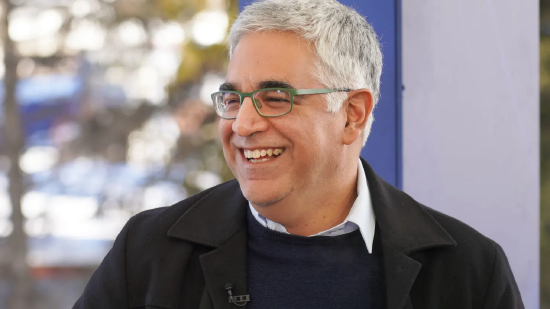
阿尼尔・布斯里 企业软件公司 Workday 周一宣布,首席执行官卡尔・埃申巴赫卸任,由公司联合创始人阿尼尔・布斯 里接任,即刻生效。 布斯里曾在该软件公司担任多个高管职务:2009 年至 2014 年任联合首席执行官,2014 年至 2020 年任 首席执行官,2020 年至 2024 年再次担任联合首席执行官,2024 年至 2026 年任执行董事长。 埃申巴赫于 2022 年与布斯里共同担任 Workday 联合首席执行官,并于 2024 年开始单独担任首席执行 官一职。 近几个月来,包括 Workday 在内的软件股持续承压,因投资者担忧人工智能可能对行业造成颠覆性冲 击。Workday 股价去年下跌 17%,今年以来已下跌超 20%。 周一当天,该公司股价下跌 5%。 核心要点 布斯里在声明中表示: "我们正步入公司历史上最关键的时期之一。人工智能带来的变革比软件即服务(SaaS)更为深远,它 将定义下一代市场领导者。" Salesforce、甲骨文、微软等均为主要的软件即服务企业。 上月,埃申巴赫曾试图淡化市场对人工智能冲击软件行业的担忧,他对 CNBC 表示,相关说法 "被夸大 了" 且 "并不 ...

每周回顾 马斯克团队走访中国多家光伏企业;1月港股IPO集资额同比增长555%
Sou Hu Cai Jing· 2026-02-06 10:41
Macro & Industry - China has banned the use of hidden door handles in vehicles, requiring mechanical door handles for all car doors except the tailgate, effective from January 1, 2027 [1] - NAND flash prices are expected to rise by over 40% in Q1 2026 due to reduced consumer-grade production and increased demand from AI servers [1] - The VAT rate for basic telecom services will increase from 6% to 9% starting January 1, 2026, impacting the revenue and profits of major telecom operators [2] Company News - Meituan announced the acquisition of Dingdong Maicai's China business for approximately 7.17 billion USD (about 49.75 billion RMB), enhancing its service offerings [4] - NIO is projected to achieve its first quarterly adjusted operating profit between 700 million RMB and 1.2 billion RMB in Q4 2025, marking a significant milestone in its 11-year history [4] - SpaceX has confirmed the acquisition of xAI, aiming to integrate AI with its existing technologies to create a highly ambitious innovation engine [8]






科技巨头CEO齐声反驳“AI替代论”:毫无逻辑、“歇斯底里”
Jin Shi Shu Ju· 2026-02-06 04:27
Group 1 - The CEOs of major tech companies dismiss concerns that AI will erode the competitive moat of traditional software companies, despite significant stock declines in recent months [1] - Nvidia's CEO Jensen Huang argues that the idea of the tools industry declining due to AI is illogical, emphasizing that both humans and robots will continue to use existing tools rather than reinvent them [1] - Major enterprise software stocks like Palantir and Oracle have seen declines of approximately 12% over the past three trading days, with other companies like Salesforce, SAP, ServiceNow, Snowflake, and Microsoft also experiencing significant drops [1] Group 2 - Investors are worried that SaaS companies' clients may develop internal software solutions using AI tools from providers like Anthropic, reducing reliance on established vendors like Salesforce [2] - Concerns are heightened by the release of Anthropic's digital assistant Claude Cowork, which automates tasks for legal, sales, and marketing teams [2] - Google CEO Sundar Pichai and Arm CEO Rene Haas echo Huang's sentiments, suggesting that the fears surrounding software stocks are unfounded [2] Group 3 - Pichai notes that Google's software clients, including Salesforce, Intuit, and ServiceNow, are integrating Gemini into their workflows to enhance their products [3] - Haas describes the fear driving the software stock sell-off as a "mini-hysteria," with analysts agreeing that the strict requirements for data governance, security, and compliance present significant challenges for new entrants and companies developing in-house solutions [4] - Analysts believe it is too early to determine which companies will emerge as winners or losers, as enterprises are still in the early stages of adopting AI tools [4] Group 4 - Leading software companies are defending their competitive positions in an increasingly AI-driven market, with ServiceNow's CEO stating that speculation about AI consuming software companies is unfounded [5] - The CEO emphasizes that AI will not replace software companies but rather relies on them [5]




策略点评:AI回调的布局窗口
Bank of China Securities· 2026-02-06 01:41
Core Insights - The report emphasizes that the recent pullback in the AI industry is a necessary phase in the deep integration of AI technology into various sectors, rather than a fundamental threat to the industry's future [1][6] - It suggests that the current market concerns regarding the uncertainty of AI application business models and hardware demand are part of the industry's evolution, and that this pullback presents investment opportunities in AI applications, cloud services, and storage [2][6] Market Trends - Since mid-January 2026, the AI industry chain has experienced a continuous pullback, exacerbated by several events in early February, including Microsoft's financial report revealing dual concerns about growth dependency and investment returns [2][3] - Microsoft's Q2 2026 financial report indicated a slowdown in Azure cloud computing growth and projected capital expenditures exceeding $100 billion, with approximately 45% of its cloud business backlog dependent on OpenAI [3] - Concerns were also raised regarding NVIDIA's investment stance on OpenAI, with CEO Jensen Huang indicating a cautious approach to investment, despite previous indications of a potential $100 billion investment [4] Business Model Uncertainty - The report identifies dual uncertainties in the market: the uncertainty of AI application business models and the uncertainty of real demand [5][6] - It highlights that traditional SaaS companies may face challenges as enterprises consider building their own AI tools, potentially undermining SaaS profitability [5][6] - The report argues that the market's valuation logic is shifting from paying premiums for future potential to assessing current realities and investment returns [5] Long-term Outlook - The report posits that the concerns regarding business model and demand uncertainties are part of the necessary evolution towards deeper integration of AI technology, rather than a fundamental threat to the industry's prospects [6] - It suggests that traditional application vendors can leverage their industry knowledge and data advantages to build new barriers in the AI era, and that early movers may see valuation increases [6][7] - The demand for hardware is expected to grow in tandem with the maturity of software applications, as AI applications transition from "technology demonstrations" to "production tools" [7]

“AI杀死SaaS”论调引发全球抛售,软件的天塌了吗
2 1 Shi Ji Jing Ji Bao Dao· 2026-02-04 14:43
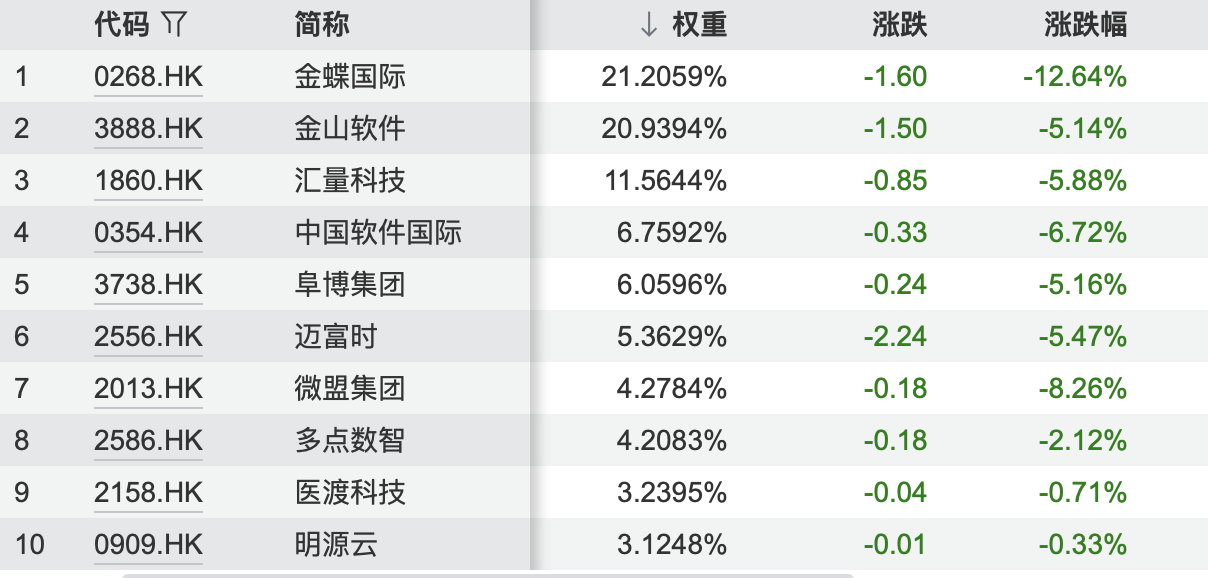
受AI可能颠覆SaaS的情绪影响,全球资本市场正在剧烈震荡。 2月3日,在美国人工智能初创企业Anthropic发布一款面向企业法务的插件后,一些被面临AI替代风险的SaaS公司股票遭到抛售。 2月4日收盘,港股SaaS概念股中,金蝶国际下跌12.64%,金山软件下跌5.14%,汇量科技下跌5.88%、中国软件国际下跌6.72%,阜博集团下跌5.16%,它们 为目前5家市值超百亿港元的SaaS概念股。 据统计,周二追踪软件、金融数据和交易所股票的两项标普类股指数市值周二合计蒸发了约3000亿美元。 2月4日,这种恐慌从华尔街传导到了香港中环。2月4日收盘,Wind香港SaaS指数下跌6.39%,板块总市值共蒸发近150亿港元。 去年,市场还在为AI赋能SaaS的潜力感到兴奋,但这种情绪在短时间内转为焦虑与担忧:AI是否会颠覆或是直接取代SaaS乃至软件行业。 2月4日,有科技界人士向记者分析称,市场反应可能过度恐慌。SaaS对比AI仍在中小企业市场有着低门槛的优势,预计未来SaaS市场会开始分化。 全球SaaS概念股全线受挫 事实上,本轮软件概念股的抛售从1月14日左右就已开始。Wind数据显示,自1月14日 ...
SaaS已死?华尔街上演软件股大崩盘 AI“抢饭碗”担忧达到极致
Sou Hu Cai Jing· 2026-02-04 02:41
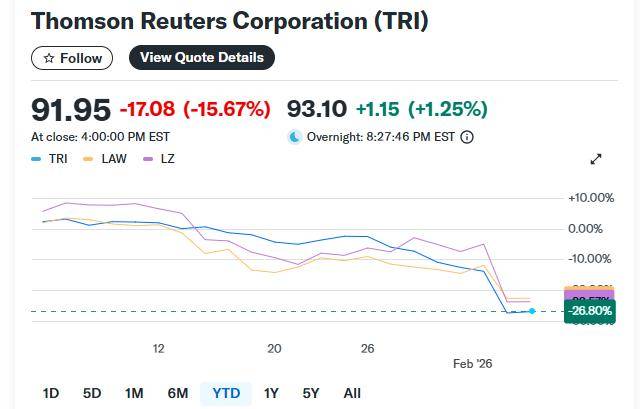
智通财经2月4日讯(编辑 潇湘)华尔街对软件股的怀疑态度已持续了一段时间,但近来情绪正迅速从 常规的唱空转向"末日论"。随着AI可能带来毁灭性冲击的担忧不断积聚,交易员们正纷纷抛售整个软件 行业的股票。 杰富瑞证券股票交易部的Jeffrey Favuzza表示,"我们正称之为'SaaS末日'——即软件即服务类股票的末 日。目前的交易风格完全是'快让我逃离'式的卖出。" 这种焦虑在周二进一步加剧。AI初创公司Anthropic发布了一款面向企业法务团队的生产力工具,导致 法律软件和出版公司的股价暴跌。整个板块的抛售压力显而易见:拥有大型数据分析业务的伦敦证券交 易所集团(LSEG)下跌13%,汤森路透暴跌16%,CS Disco Inc.下跌 12%,Legalzoom.com Inc.则惨跌 20%。 据统计,追踪软件、金融数据和交易所股票的两项标普类股指数市值周二合计蒸发了约3000亿美元。 AI抢饭碗担忧扩散到极致? 事实上,智通财经1月中旬时就曾介绍过,美国软件股面临的风险已持续发酵数月。上月引发相关抛售 的一大导火索,来自于初创公司Anthropic在1月12日发布的新AI协作工具"Claude Co ...
私募巨头阿波罗警告:“软件已死”!AI正重塑4400亿美元估值逻辑
Hua Er Jie Jian Wen· 2026-02-03 13:48
这种冲击已在估值上显现。据Pitchbook数据,2025年私募股权收购SaaS公司的平均倍数已从前一年的 24倍降至18倍,而此前一些明星企业如Coupa Software和Cloudera的交易倍数曾高达60倍。Park Square创 始人Robin Doumar表示,软件行业"刀枪不入的光环"早已不合时宜,那些违背金融逻辑的高倍数估值时 代希望能就此终结。 阿波罗的John Zito近期在多伦多的一次投资者聚会上语惊四座,他发出的质疑——"软件是否已死?", 标志着私募资本市场对软件行业"增长稳定、收入可观"这一长期核心假设的彻底决裂,人工智能的崛起 正迫使投资者重新评估这一曾备受追捧的赛道。 这一警告并非空穴来风,据知情人士向彭博透露,阿波罗在2025年已将其直接贷款基金的软件风险敞口 削减了近一半,从年初的约20%大幅下调。与此同时,Arcmont资产管理公司和海芬资本管理公司等机 构已聘请顾问,专门排查其投资组合中可能因AI技术冲击而变得脆弱的企业。 市场恐慌情绪已开始蔓延。受AI投入回报不及预期的担忧影响,微软股价下跌;Blue Owl Capital旗下 一只科技基金遭遇巨额资金外流;两家欧 ...
约 20 万元起售,「丐版」特斯拉即将入华,舒适配置全砍
Xin Lang Cai Jing· 2026-01-15 02:21
Core Viewpoint - Tesla plans to introduce a standard version of Model 3/Y in the Chinese market, aiming to stimulate demand and stabilize sales amid a maturing product cycle [1][26]. Group 1: Product Launch and Pricing - The standard version of Model 3/Y is expected to enter the Chinese market soon, with Model 3 leading the launch followed by Model Y [3]. - The anticipated starting prices for the standard versions are approximately 200,000 RMB for Model 3 and 230,000 RMB for Model Y, reflecting a significant price reduction from their North American counterparts [4][3]. Group 2: Product Features and Adjustments - The standard versions will feature significant reductions in comfort and luxury configurations, focusing more on the driving tool aspect rather than comfort [14]. - Key changes include the removal of certain aesthetic features, a downgrade in interior materials, and a reduction in battery capacity, leading to a decrease in range to around 516 kilometers [12][9][7]. - The standard version will also have a simplified naming structure, with the Premium version above it, which retains more features [5][6]. Group 3: Software and Subscription Model - Tesla is shifting from a one-time purchase model for Full Self-Driving (FSD) to a subscription-based model, aiming to increase recurring revenue [15][20]. - This transition is expected to enhance the company's valuation by providing a more stable income stream, with potential subscription prices in China estimated between 400-600 RMB per month [20] . Group 4: Market Challenges and Competition - Despite the introduction of the standard version, Tesla's sales in North America have declined, indicating that the new model may not attract enough new customers and could cannibalize higher-end sales [23][26]. - The competitive landscape in China is intense, with local brands like Geely, BYD, and Xiaomi offering more luxurious features at similar price points, which may undermine the appeal of Tesla's standard version [26][23]. - If the standard version fails to resonate with price-sensitive consumers, it could dilute Tesla's brand value and market share in China [26].

特斯拉FSD将取消买断制 订阅成唯一选项
Zheng Quan Shi Bao Wang· 2026-01-14 11:28
Group 1 - The core point of the article is that Tesla will discontinue the one-time purchase option for its Full Self-Driving (FSD) software on February 14, 2026, transitioning to a subscription-only model, which is seen as a move towards a Software as a Service (SaaS) approach [1][2] - The FSD feature has evolved since its launch in 2016, with the current buyout price in the U.S. being $8,000 (approximately 56,000 RMB) and in China being 64,000 RMB [1] - The subscription pricing for FSD in North America was initially set at $199 per month but was later reduced to $99 per month, making the buyout equivalent to about 81 months of subscription [1] Group 2 - Tesla is currently experiencing a sales downturn, having lost its position as the world's largest electric vehicle manufacturer to BYD in 2025, prompting the company to focus on technology projects like FSD to create new revenue streams [3] - The shift to a subscription model aligns with the critical period of FSD technology iteration and the potential launch in the Chinese market, as lower monthly fees could attract more users and provide valuable real-world data for algorithm improvement [4] - Regulatory scrutiny poses a challenge for FSD, with investigations into safety violations under the FSD mode, including running red lights and driving in reverse on public roads [4]
风投机构预测:2026年企业AI支出将增长,合作供应商数量却会减少
Xin Lang Cai Jing· 2025-12-30 16:52
Core Insights - Companies are transitioning from trial phases of AI tools to focused investments, with a significant increase in AI budgets expected by 2026, but with funds concentrated on fewer partnerships rather than widespread spending [1][5] - The market is predicted to experience a polarization, where a small number of suppliers will capture the majority of enterprise AI budgets, while many others may see stagnation or decline in revenue [2][6] Investment Focus Areas - Enterprises are expected to increase investments in AI security applications, recognizing the importance of building robust governance and regulatory frameworks for reliable AI deployment [2][6] - AI spending will concentrate on three key areas: strengthening data foundations, optimizing post-model training, and streamlining tool integration [2][6] Impact on AI Startups - AI startups may face a significant industry shakeout similar to what SaaS startups experienced years ago, with those offering unique, hard-to-replicate products likely to grow, while those with commoditized offerings may struggle [3][7] - Investors are focusing on startups that possess proprietary data and products that are difficult for tech giants to replicate, as these companies are seen to have the strongest competitive advantages [3][7]