
金融高质量发展

Search documents
多个“全国第一”,彰显高质量发展硬实力
Xin Hua Ri Bao· 2026-01-22 05:09
Core Insights - Jiangsu Province has achieved significant financial development during the "14th Five-Year Plan" period, maintaining a leading position in social financing, loan growth, and the number of listed companies [1][2][3] Group 1: Financial Growth and Support for the Real Economy - Jiangsu's social financing increment averaged 3.35 trillion yuan annually from 2021 to 2024, with a total of 3.09 trillion yuan added in the first eleven months of 2025, ranking first in the country [2] - By the end of 2025, the total RMB loan balance in Jiangsu is projected to reach 28.25 trillion yuan, with an average annual growth rate of 12.8%, consistently outpacing the nominal GDP growth [2][3] - The balance of technology loans reached 5.2 trillion yuan, benefiting over 148,000 enterprises, while green loans and inclusive small and micro loans also saw substantial growth [2][3] Group 2: Capital Market Development - Jiangsu added 259 domestic listed companies during the "14th Five-Year Plan," leading the nation, with a total of 722 companies listed [5] - The province's capital market achieved direct financing of 6.97 trillion yuan, with bond financing amounting to 6.37 trillion yuan and public REITs raising 240 billion yuan [5] - The issuance of technology innovation bonds increased by 183% year-on-year, totaling 706 billion yuan [5] Group 3: Support for Private Enterprises - Jiangsu has implemented various policies to support the growth of private enterprises, including the establishment of 105 financial service points and nearly 300 specialized financial service events [6] - Over 8.9 trillion yuan in preferential loans were issued to nearly 100,000 small and micro enterprises during the "14th Five-Year Plan" [6] - The balance of inclusive small and micro loans exceeded 4 trillion yuan by the end of 2025 [6] Group 4: Insurance and Risk Management - The insurance sector in Jiangsu has seen cumulative payouts of 892.9 billion yuan, with over 7 trillion yuan in insurance capital entering the province [7] - The province has established a comprehensive government financing guarantee system, with a guarantee balance exceeding 1.16 trillion yuan [7] - Jiangsu has maintained a "zero default" record in the public bond market for 35 consecutive months, reflecting effective risk management [8] Group 5: Financial Ecosystem and Innovation - Jiangsu has developed a financial service system that supports enterprises throughout their lifecycle, enhancing innovation and industrial upgrading [4] - The province has launched over 200 innovative financial products in the Nanjing and Taizhou regions, contributing to a robust financial ecosystem [3][4] - Collaborative efforts with various financial institutions have led to the establishment of a supportive environment for technology innovation and industrial transformation [4][5]

江苏亮出“十四五”时期高含“金”量金融成绩单多个“全国第一”,彰显高质量发展硬实力
Xin Hua Ri Bao· 2026-01-22 00:00
Core Insights - Jiangsu's financial development during the "14th Five-Year Plan" period has achieved significant milestones, including leading the nation in social financing scale, new loan increments, and the number of listed companies on the Sci-Tech Innovation Board and Beijing Stock Exchange [1][2]. Group 1: Financial Growth and Support for the Real Economy - From 2021 to 2024, Jiangsu's annual social financing increment averaged 3.35 trillion yuan, with a total of 3.09 trillion yuan added from January to November 2025, ranking first in the country and increasing by 446.1 billion yuan year-on-year [2][3]. - By the end of 2025, the total RMB loan balance in Jiangsu is projected to reach 28.25 trillion yuan, with an average annual growth rate of 12.8% from 2021 to 2025, consistently outpacing the nominal GDP growth rate [2][3]. - The balance of technology loans reached 5.2 trillion yuan, benefiting over 148,000 enterprises, while green loans and inclusive small and micro loans also saw significant growth [2][3]. Group 2: Capital Market Development - Jiangsu added 259 new domestic listed companies during the "14th Five-Year Plan," the highest in the nation, bringing the total to 722, with direct financing reaching 6.97 trillion yuan [4][5]. - The issuance of Sci-Tech bonds increased by 183% year-on-year in 2025, with a cumulative total of 70.6 billion yuan issued in the province [5]. - The province's financial ecosystem has been strengthened through various initiatives, including the establishment of a securities service platform and a resource pool for listed companies [5][6]. Group 3: Support for Private Enterprises and Risk Management - Jiangsu has implemented policies to support the growth of private enterprises, including the establishment of 105 financial service points and nearly 300 specialized financial service events [6][7]. - The province's insurance sector has shown resilience, with cumulative compensation reaching 892.9 billion yuan and a financing guarantee balance exceeding 1.16 trillion yuan [7][8]. - Jiangsu has maintained a "zero default" record in the bond market for 35 consecutive months and has established a provincial-level financial work coordination mechanism to enhance regulatory effectiveness [8].
小贷行业加速清退是金融业高质量发展必然要求
Guo Ji Jin Rong Bao· 2026-01-20 00:03
Core Viewpoint - The rapid reduction in the number of small loan companies in China indicates a significant transformation in the industry, with both positive and negative reactions from society regarding the implications for small and medium-sized enterprises' financing challenges [1] Group 1: Industry Restructuring - The number of small loan companies has decreased to 4,863 as of September 2025, down by 111 from the second quarter of 2025, with a loan balance of 722.9 billion yuan, a reduction of 31.9 billion yuan in the first three quarters [1] - The accelerated exit of non-compliant small loan companies is expected to reshape the market ecology, promoting a "good money drives out bad money" dynamic, enhancing the ability of remaining companies to serve small and micro enterprises [1] Group 2: Promotion of Inclusive Finance - Regulatory authorities are pushing small loan companies to lower financing costs and focus on serving small and micro enterprises, correcting past deviations from their original inclusive finance goals [2] - This shift is anticipated to improve the accessibility and fairness of financial services, reducing the financing burden on small and micro enterprises and stimulating operational vitality [2] Group 3: High-Quality Development and Structural Optimization - The cleaning up of "zombie" and "lost contact" companies will reduce ineffective supply and optimize the overall layout of small loan institutions, enhancing their core competitiveness [2] - Regulatory measures, including rating management and in-depth supervision, will encourage compliance and operational efficiency, steering the industry towards high-quality development [2] Group 4: Benefits for Borrowers - The accelerated exit of non-compliant companies will leave behind institutions with strong qualifications and risk management capabilities, leading to lower financing costs for borrowers and a better lending environment [3] - This will also reduce incidents of fraud and aggressive collection practices, enhancing consumer protection and fostering a positive relationship between small loan companies and borrowers [3] Group 5: Financial System Stability - The exit of "shell" and "lost contact" institutions will purify the financial environment, reducing potential risk sources and enhancing the overall risk resistance of the industry [4] - The industry’s transition towards high-quality development will improve resource allocation efficiency, directing funds more effectively towards the real economy [4]
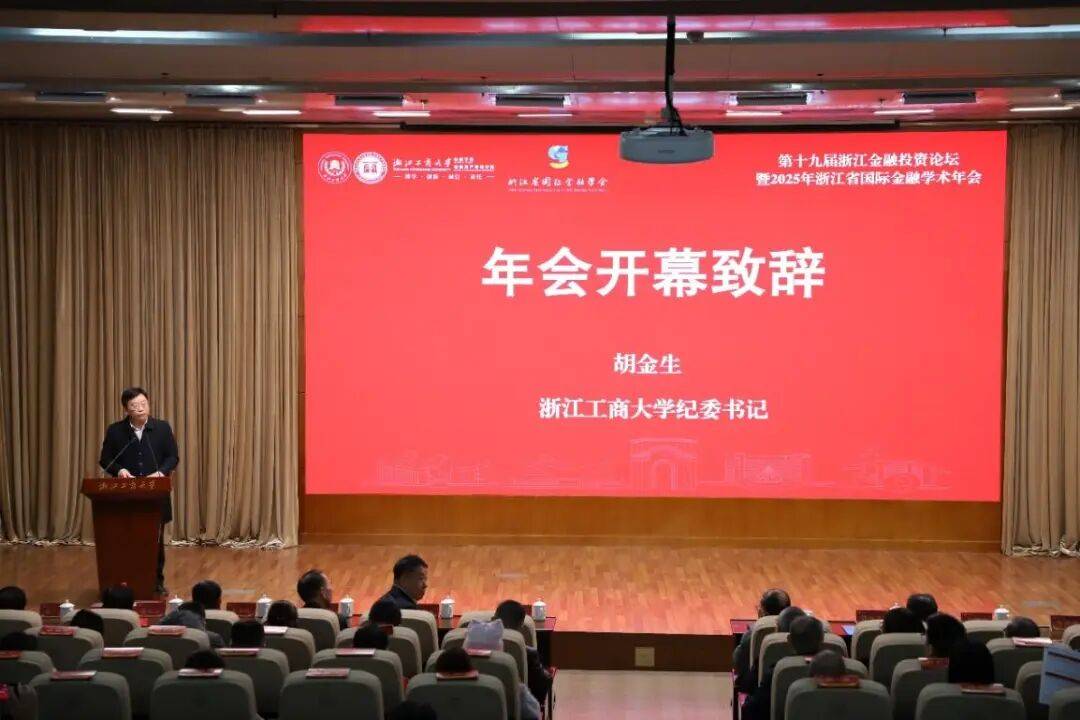
金融赋能浙江现代化先行!浙江省国际金融学术年会举行
Sou Hu Cai Jing· 2026-01-19 14:13
Core Viewpoint - The 19th Zhejiang Financial Investment Forum emphasizes the theme of "New Stage, New Concept, New Pattern: Financial High-Quality Development Empowering Zhejiang's Modernization" and discusses various topics related to financial development in Zhejiang Province [1]. Group 1: Forum Overview - The forum took place on January 17 in Hangzhou, attracting over 200 participants, including government officials, scholars, financial institutions, and media representatives [1]. - Key topics included the monetary effects of fiscal policy, the rise of digital currencies, high-quality development of the insurance industry during the 14th Five-Year Plan, and mechanisms for financial support in building a common prosperity demonstration zone in Zhejiang [1]. Group 2: Key Presentations - Yang Changjiang from Fudan University discussed the impact of digital currencies on the global financial system, highlighting their diversification, functionality, and the need for strategic responses [8]. - Bian Zhichun from Shanghai University of Finance and Economics presented insights on the internal mechanisms of fiscal influence on monetary operations, emphasizing the importance of policy combination effects [9]. - He Wenjiong from Zhejiang University provided recommendations for enhancing the quality of development in Zhejiang's insurance industry during the 14th Five-Year Plan [10]. Group 3: Reports and Awards - The "Zhejiang Financial Innovation Development Report (2025 Volume)" was officially announced, aimed at contributing to national financial reform and modernization through research on financial innovation in Zhejiang [12]. - The forum recognized 49 outstanding academic papers, showcasing significant contributions to financial research [12]. Group 4: Future Directions - Jin Xuejun, president of the Zhejiang International Finance Society, stated the society's commitment to aligning with the goals of building a financial powerhouse and addressing major issues in Zhejiang's economic and financial development [14].

荣获四大奖项 中国人寿书写金融高质量发展答卷
Xin Lang Cai Jing· 2026-01-19 07:54
Core Insights - China Life Insurance Company has received multiple industry awards, including the "Annual Insurance Protection Brand Award" and the "Annual Insurance Corporate Social Responsibility Award," reflecting its leadership in the insurance sector and commitment to social responsibility and digital transformation [1][3]. Group 1: Business Performance - In the first three quarters of 2025, China Life achieved total premiums of 669.645 billion yuan, a year-on-year increase of 10.1%, with new premiums reaching 218.034 billion yuan, up 10.4% [1]. - The company reported double-digit growth in total premiums, new premiums, and renewal premiums, with total premiums expected to exceed 700 billion yuan by the end of 2025 [1]. Group 2: Product and Service Development - China Life is focusing on value creation and efficiency improvement by diversifying its product offerings, including life insurance, annuities, and health insurance, leading to balanced growth in new premiums [2]. - The company has implemented a dynamic adjustment mechanism linking predetermined interest rates to market rates, significantly reducing the rigid costs of new business liabilities [2]. Group 3: Social Responsibility - China Life has established a comprehensive inclusive insurance service system, leveraging its extensive network of 18,000 institutions to serve various demographics, including the elderly and small businesses [3]. - The company has provided approximately 11.2 trillion yuan in risk protection for small businesses and individual entrepreneurs, benefiting over 32 million people [3]. Group 4: Rural Development and Green Initiatives - In 2025, China Life deployed 1,020 village support staff to assist in 1,085 aid points, covering 227 million rural residents with life insurance, providing a total coverage amount of 27.99 trillion yuan [4]. - The company is actively involved in green development, integrating green standards into its investment processes and participating in renewable energy projects [4]. Group 5: Cultural Development - China Life is enhancing its corporate culture by launching the "Corporate Culture Gene Renewal" project, which aims to align its cultural values with sustainable development [6]. - The project emphasizes the integration of traditional and modern financial cultures, focusing on core values such as integrity, innovation, and compliance [6]. Group 6: Digital Transformation - China Life has developed a "one-stop" online insurance digital space, improving service efficiency and customer experience through technology [8]. - The company has processed over 58,000 online claims, achieving a service handling time improvement of over 50% compared to traditional methods [8]. Group 7: Future Commitment - The recognition from various awards serves as both motivation and responsibility for China Life to continue enhancing its core competencies and leading the industry towards high-quality development [9].

金融监管总局召开监管工作会议,明确五大任务护航“十五五”开局
2 1 Shi Ji Jing Ji Bao Dao· 2026-01-16 02:26
Core Viewpoint - The National Financial Supervision Administration emphasizes a focus on risk prevention, strong regulation, and promoting high-quality development in the 2026 regulatory work meeting, marking the beginning of the "14th Five-Year Plan" [1] Group 1: Key Tasks for 2026 - The meeting outlined five key tasks: effectively advancing risk resolution for small and medium financial institutions, preventing and resolving risks in related fields, enhancing the industry's high-quality development capabilities, strengthening and improving financial regulation, and continuously improving the quality and efficiency of financial services for the economy and society [2] - The emphasis on risk resolution for small and medium financial institutions has shifted from "accelerating progress" to "effectively advancing risk resolution," focusing on controlling the pace and maintaining a bottom-line thinking to prevent defaults [2] - The real estate financing mechanism has transitioned from "expanding and increasing efficiency" to "normal operation," highlighting compliance in debt resolution for financing platforms and reinforcing the crackdown on illegal financial activities [2] Group 2: Strengthening Financial Regulation - The meeting stressed the importance of focusing on substantive risks and practical issues, enhancing the "five major regulations," improving legal regulatory capabilities, and implementing classified and tiered supervision [3] - The meeting also highlighted the need to enhance financial services for economic and social quality, including increasing support for major strategies, key areas, and weak links, optimizing technology financial services, and promoting stability in enterprises and employment [3] Group 3: Achievements in 2025 - In 2025, significant progress was made in risk resolution, with 394 banking institutions approved for exit through mergers or dissolutions, doubling the number from 2024 [4] - The "white list" project loans exceeded 7 trillion yuan, supporting the construction and delivery of nearly 20 million housing units, effectively safeguarding the legal rights of homebuyers [5] - A strong regulatory atmosphere was established, with the financial regulatory legal system being improved and illegal activities being severely punished, resulting in over 4,500 leads on illegal financial activities being transferred to law enforcement [5]
继续聚焦风险化解:金融监管总局 2026 年监管工作会议学习体会
Guoxin Securities· 2026-01-15 15:17
Investment Rating - The investment rating for the industry is "Outperform the Market" (maintained) [1][5]. Core Insights - The Financial Regulatory Bureau held a meeting to summarize the work of 2025 and arrange key tasks for 2026, with a continued focus on risk resolution, particularly for small and medium-sized financial institutions [2][3]. - The meeting emphasized five main areas: risk resolution for small financial institutions, prevention of risks in real estate and financing platforms, enhancement of high-quality development capabilities, improvement of financial regulation, and better financial services for economic and social quality [3][4]. - Compared to 2025, the requirements for 2026 remain largely unchanged, with a strong emphasis on preventing "explosive" risks in small financial institutions and a focus on normalizing the operation of real estate financing coordination mechanisms [3][6]. Summary by Sections Risk Resolution - The primary focus remains on resolving risks in small and medium-sized financial institutions, with a goal to firmly maintain the bottom line of preventing "explosive" risks [3][6]. - In 2025, nearly 400 banks were approved for dissolution or merger, and this trend is expected to continue into 2026 [3]. High-Quality Development - The requirement to enhance the industry's high-quality development capabilities remains unchanged, with new directives to cautiously advance the reduction and quality improvement of small financial institutions and to address disorderly competition [4][6]. Financial Regulation - There is a strong emphasis on strengthening and improving financial regulation, focusing on substantive risks and practical issues, and enhancing regulatory capabilities [4][6]. Financial Services - The meeting called for continuous improvement in financial services to enhance economic and social quality, including support for major strategies and sectors [4][6]. Investment Recommendations - The industry is expected to benefit from a narrowing of net interest margin declines, leading to an improvement in fundamentals for 2026, maintaining the "Outperform the Market" rating. Recommended stocks include Ningbo Bank and Changshu Bank, with attention to Changsha Bank and Chongqing Rural Commercial Bank. Stable high-dividend stocks such as China Merchants Bank, Industrial and Commercial Bank of China, and Jiangsu Bank are also considered valuable for allocation [7].
2026年将继续实施好适度宽松的货币政策
Xin Lang Cai Jing· 2026-01-06 23:07
Core Viewpoint - The People's Bank of China (PBOC) is committed to implementing a series of monetary policy measures to support stable economic growth and financial market stability, while also focusing on financial reform and risk management as part of the "14th Five-Year Plan" [1][7]. Group 1: Monetary Policy - The PBOC will continue to implement a moderately loose monetary policy, utilizing various tools such as interest rate cuts and reserve requirement ratio adjustments to maintain liquidity and support economic growth [2][9]. - The focus will be on aligning social financing scale and money supply growth with economic growth and price level expectations, ensuring a stable RMB exchange rate [3][9]. Group 2: Financial Services - The PBOC aims to enhance the quality of financial services for the real economy by improving the financial policy framework and increasing support for key areas such as technology innovation and small and micro enterprises [3][10]. - There will be an emphasis on optimizing financial support for consumption and agriculture, as well as improving the financing capabilities of financial institutions for small and micro enterprises [3][10]. Group 3: Risk Management - The PBOC will work on mitigating financial risks in key areas, including managing the debt risks of financing platforms and enhancing risk identification and early correction for small financial institutions [4][10]. - A macro-prudential management framework will be established to maintain financial stability, alongside improved monitoring of financial markets [4][11]. Group 4: Financial Reform and Opening Up - The PBOC will deepen financial reform and enhance the openness of financial markets, including optimizing mechanisms for bond and currency markets [5][11]. - Support will be provided for the construction of international financial centers and the facilitation of cross-border RMB usage [5][11]. Group 5: Global Financial Governance - The PBOC will actively promote global financial governance reforms and enhance cooperation with international organizations to coordinate macroeconomic policies [6][11]. Group 6: Financial Management and Service Capacity - The PBOC will focus on improving financial management and service capabilities, including the development of a modern financial statistical system and enhancing the regulatory framework for payment services [6][12]. - There will be efforts to strengthen the regulation of virtual currencies and improve the overall payment service environment for various demographics [6][12].
金融如何为经济稳定增长提供有力支撑
Xin Lang Cai Jing· 2026-01-06 17:29
Core Viewpoint - The People's Bank of China (PBOC) is set to implement a moderately accommodative monetary policy in 2026, focusing on supporting stable economic growth and high-quality development through various financial measures [1]. Group 1: Monetary Policy Implementation - The PBOC will continue to adopt a moderately accommodative monetary policy, enhancing counter-cyclical and cross-cyclical adjustments to support the real economy [1]. - Key considerations for monetary policy will include promoting high-quality economic development and a reasonable rebound in prices [1]. - The PBOC plans to maintain ample liquidity and relatively loose social financing conditions [1]. Group 2: Financial Support and Structural Policies - The PBOC aims to improve the financial "Five Major Articles" policy framework and enhance the evaluation system for financial service effectiveness [2]. - There will be a focus on optimizing the structural monetary policy tool system to support key areas such as domestic demand expansion, technological innovation, and small and micro enterprises [2]. Group 3: Bond Market and Innovation Financing - Over 700 entities issued technology innovation bonds exceeding 1.5 trillion yuan through the bond market's "Technology Board" last year [3]. - The interbank bond market has seen 264 companies issue approximately 660 billion yuan in technology innovation bonds, with 60% of these bonds having a maturity of over three years [3]. - The PBOC will enhance the efficiency of fund utilization and improve the transmission of monetary policy [3]. Group 4: Financial Reform and Risk Management - The PBOC is committed to deepening financial reform and opening up, optimizing mechanisms like "Bond Connect" and "Swap Connect" [4]. - The PBOC emphasizes the importance of risk management, proposing measures to mitigate financial risks in key areas and improve risk identification in small financial institutions [4]. - A mechanism will be established to provide liquidity to non-bank institutions under specific scenarios, supporting capital markets through monetary policy tools [4].
央行发声!2026年工作重点明确
Zhong Guo Zheng Quan Bao· 2026-01-06 11:06
中国人民银行1月6日消息,2026年中国人民银行工作会议1月5日-6日召开。 会议提出,把促进经济高质量发展、物价合理回升作为货币政策的重要考量,灵活高效运用降准降息等 多种货币政策工具,保持流动性充裕,保持社会融资条件相对宽松,引导金融总量合理增长、信贷投放 均衡,使社会融资规模、货币供应量增长同经济增长和价格总水平预期目标相匹配。 防范汇率超调风险 完善结构性货币政策工具体系 建立在特定情景下向非银机构提供流动性的机制性安排 发挥好两项支持资本市场的货币政策工具作用 会议认为,2025年以来,面对复杂严峻的国内外经济金融形势,中国人民银行坚决落实党中央、国务院 决策部署,在执行好存量货币政策基础上,推出新的一揽子货币政策措施,有力支持实体经济稳定增长 和金融市场平稳运行,持续深化金融供给侧结构性改革,稳妥处置重点领域金融风险,积极推动全球金 融治理改革完善,纵深推进全面从严治党,各项工作迈上新台阶。 会议强调,中国人民银行要全面贯彻党的二十大和二十届历次全会精神,认真落实中央经济工作会议决 策部署,坚持稳中求进工作总基调,继续实施适度宽松的货币政策,发挥增量政策和存量政策集成效 应,加大逆周期和跨周期调节 ...