铁水联运

Search documents
中美经贸添暖意,盐田港外贸出货忙
Cai Fu Zai Xian· 2025-11-05 13:25
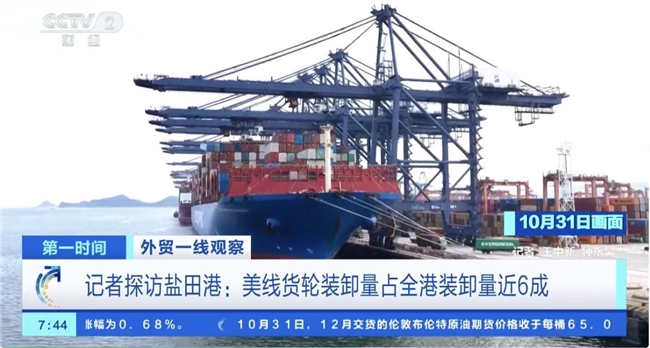
Core Insights - Recent US-China trade negotiations have shown positive signals, leading to a strong recovery in the foreign trade market, with ports like Yantian Port reflecting this market momentum [1][3] Group 1: Port Activity and Trade Volume - Yantian Port, as one of the largest single container terminals globally, handles over one-third of Guangdong's foreign trade import and export volume, with more than a quarter of the nation's exports to the US [3] - On October 31, the loading and unloading volume of US-bound vessels at Yantian Port accounted for nearly 60% of the total port operations for that day, indicating a surge in orders from US clients [3] - In the first three quarters of 2025, China's goods trade import and export reached 33.61 trillion yuan, a year-on-year increase of 4%, with the growth rate in the third quarter rising to 6%, marking eight consecutive quarters of year-on-year growth [3] Group 2: Multi-Modal Transport Development - Yantian International has been actively expanding its multi-modal transport network, creating a comprehensive logistics system that integrates international shipping, railways, and feeder services, providing one-stop logistics solutions for inland foreign trade enterprises [4] - The "Liling-Yantian Port" container rail-water intermodal route has been recognized as one of the top ten national brand routes, highlighting its significance in the logistics network [5] Group 3: Automotive Export Growth - The Shenshan Xiaomo Port has achieved a record high in automobile exports, with nearly 17,000 vehicles exported in October, representing a year-on-year increase of over 170% and a month-on-month surge of 183% [6] - The port's strategic location and efficient collaboration with leading automotive manufacturers have contributed to a stable and substantial core cargo source [6] Group 4: Infrastructure and Future Outlook - Yantian Port operates 20 deep-water berths efficiently, while Xiaomo Port is enhancing its roll-on/roll-off terminal facilities, with plans for new berths to accommodate larger vessels [10] - As US-China economic cooperation deepens and the holiday season approaches, Yantian Port is expected to see continued growth in foreign trade, with plans to increase international shipping routes and improve service efficiency [10]


前三季度跨区域人员流动量超五百亿人次
Ren Min Ri Bao· 2025-11-04 22:12
Core Insights - A series of major transportation projects are progressing rapidly, with significant investments in infrastructure and improvements in logistics efficiency [1][2][3] Group 1: Transportation Infrastructure Development - The Yanqi Yangtze River Bridge, the world's largest cable-stayed bridge, is nearing completion, expected to be finished by November [1] - The Xinjiang Wuwei Expressway, spanning 319.7 kilometers, is in the final stages, aiming for full operation by the end of this year [1] - The total investment in transportation fixed assets reached 2.6 trillion yuan in the first three quarters, with significant contributions from highways, railways, and waterways [1] Group 2: Personnel and Freight Movement - Cross-regional personnel flow reached 50.6 billion trips in the first three quarters, a year-on-year increase of 3.1% [2] - The total freight volume was 4.325 billion tons, reflecting a year-on-year growth of 3.89%, with notable increases in railway and highway freight [2] - Port cargo throughput grew by 4.6% year-on-year, with foreign trade container throughput showing resilience [2] Group 3: Innovations in Logistics - The "One Bill" system has streamlined logistics processes, significantly reducing costs and improving transport efficiency for exports [3] - The Ningbo Zhoushan Port has launched 111 container sea-rail intermodal routes, achieving over 1.5 million standard container units in business volume [3] - The Ministry of Transport plans to enhance the integration of container sea-rail intermodal transport, targeting an annual growth rate of around 15% by 2027 [3]
交通“大动脉”“微循环”更加畅通 前三季度跨区域人员流动量超五百亿人次
Ren Min Ri Bao· 2025-11-04 22:03
Group 1: Transportation Infrastructure Development - Major transportation projects are progressing rapidly, with the world's largest cable-stayed bridge, the Yanqi Yangtze River Bridge, expected to complete its main span by November [1] - The Xinjiang Wuwei Expressway, spanning 319.7 kilometers, is nearing completion and aims for full operation by the end of this year [1] - The total investment in transportation fixed assets reached 2.6 trillion yuan in the first three quarters, with significant contributions from highways, railways, and waterways [1] Group 2: Personnel and Freight Movement - Cross-regional personnel flow reached 50.6 billion trips in the first three quarters, a year-on-year increase of 3.1% [2] - The total freight volume grew to 43.25 billion tons, reflecting a year-on-year increase of 3.89% [2] - Port cargo throughput increased by 4.6% year-on-year, with foreign trade container throughput showing resilience with an 8.4% increase [2] Group 3: Innovations in Logistics - The "One Bill" system has streamlined logistics processes, significantly reducing costs and improving transport efficiency for exports from Yiwu [3] - The Ningbo-Zhoushan Port has launched 111 container sea-rail intermodal routes, achieving over 1.5 million standard container units in sea-rail intermodal business [3] - The Ministry of Transport plans to enhance the integration of container sea-rail intermodal transport, targeting an annual growth rate of approximately 15% by 2027 [3]
“长江班列”九江首发 实现长江中游三省全覆盖
Si Chuan Ri Bao· 2025-10-27 00:48
Core Viewpoint - The launch of the "Yangtze River Express" from Jiujiang marks a significant expansion of the rail-water intermodal transport system, enhancing the logistics capabilities for bulk commodity transportation in the central Yangtze River region [1] Group 1: Transportation Development - The "Yangtze River Express" is designed to improve the transportation capacity of the Yangtze River Golden Waterway, successfully extending its service to Jiangxi province after covering Sichuan, Hubei, and Hunan [1] - The intermodal transport system combines rail and water transport, significantly reducing transportation time for goods, such as corn, from 25 days to 10-12 days [1] Group 2: Operational Efficiency - The new transport model shifts from traditional bulk transport to a standardized containerized approach, utilizing 50 standard containers for the shipment of corn [1] - This transition to a "bulk to container" transport model enhances efficiency by reducing loading and unloading times and minimizing loss rates during transportation [1]
营口港联运线路入选国家典型案例
Liao Ning Ri Bao· 2025-10-25 00:59
Core Insights - The "Northeast Inland - Yingkou Port" container rail-water intermodal route has been selected as a typical case for the 2025 brand route cultivation by the Ministry of Transport, National Railway Administration, and China National Railway Group [1] Group 1: Logistics Development - Yingkou Port has actively promoted a collaborative model integrating "port, shipping, and rail," creating an efficient logistics model that includes "dedicated lines/rail freight yards + block trains + ports + shipping" [1] - The port has established a premium service brand for the "North Grain South Transport" block train, supporting the development of "one order system" and "one container system" [1] Group 2: Intermodal Transport Volume - The intermodal transport volume is projected to reach 45,000 TEUs in 2024, representing a year-on-year increase of 26.6% [1] - For 2025, the expected intermodal transport volume is 53,000 TEUs, with a year-on-year growth of 17.1% [1] Group 3: Future Plans - The company plans to leverage Yingkou's role as an inland container hub, adhering to the logistics development philosophy of "hub + channel + network" [2] - There will be a focus on enhancing cooperation between ports, railways, and shipping to integrate key logistics resources for both land and sea [2] - The company aims to improve transport capacity, optimize structure, enhance efficiency, strengthen guarantees, build systems, and promote sharing to solidify Yingkou Port's core role in the "North Grain South Transport" logistics corridor [2]
阳逻港直航进出境货运量增长超两倍
Chang Jiang Ri Bao· 2025-10-18 00:45
Core Insights - The direct shipping route from Wuhan Yangluo Port to Busan, South Korea, has significantly boosted cargo volume, with a 258.86% year-on-year increase in direct import and export cargo volume in the first three quarters of 2025 [1] - The establishment of a direct shipping network covering Japan, South Korea, Russia, Vietnam, and Indonesia has contributed to the growth of the port's operations [1] Group 1 - The "Hua Hang Han Ya 1" vessel departed from Wuhan Yangluo Port carrying 2,759.73 tons of automotive parts and lithium batteries, marking a significant milestone in direct shipping operations [1] - In the first three quarters of 2025, Yangluo Port recorded 138 inbound and outbound vessels, representing a 60.47% increase compared to the previous year [1] - The port has seen an average of 3-4 direct shipping vessels per week, indicating a robust increase in shipping activity [1] Group 2 - The port's direct shipping volume for the first five months of this year has already surpassed the total volume for the entire previous year [1] - The integration of "river-sea" and "rail-water" transport has enhanced operational efficiency, allowing for seamless connections and direct customs clearance [1] - The establishment of a direct shipping window by Wuhan New Port Customs has facilitated zero-delay customs clearance for direct shipping vessels [2]
武汉阳逻港直航进出境货运量增长258%
Zhong Guo Xin Wen Wang· 2025-10-17 08:05
Core Insights - Wuhan Yangluo Port has seen a significant increase in direct inbound and outbound cargo volume, with a growth of 258.86% year-on-year, reaching 259,000 tons in the first three quarters of 2025 [1] Group 1: Cargo Volume Growth - The port recorded a total of 138 vessel trips for direct inbound and outbound cargo in the same period [1] - An average of 3 to 4 direct vessels are operating weekly, contributing to the growth in cargo volume [1] - The direct cargo volume for the first five months of this year has already surpassed the total for the entire previous year [1] Group 2: Route Expansion - Since the launch of the first direct route in 2019, Yangluo Port has added an average of one new direct route each year, now covering Japan, South Korea, Russia, Vietnam, and Indonesia [1] - The efficient linkage of "river-sea transport" and "rail-water transport" has been established, enhancing operational capabilities [1] Group 3: Operational Efficiency - The Wuhan New Port Customs has set up a dedicated window for direct shipping to ensure "zero delay" in customs clearance through measures like document pre-examination and priority inspection [2] - The implementation of a "smart telecommunication quarantine" model has improved vessel inspection efficiency, allowing for "on-demand" inspections [2] - Joint inspections with border inspection and maritime departments have effectively reduced inspection times by over 30% [2]
四川港口集装箱吞吐量创历史新高
Si Chuan Ri Bao· 2025-10-11 01:41
Core Insights - Sichuan Port Company reported significant growth in cargo throughput and container volume during the National Day and Mid-Autumn Festival holiday, achieving a total cargo throughput of 128,200 tons, a year-on-year increase of 75.57% [1] - The company completed a container throughput of 5,709 TEUs, marking a year-on-year growth of 13.93%, with foreign trade container volume reaching 2,552 TEUs, up 18.86% [1] - The integration of five major ports in Sichuan has led to enhanced resource utilization and improved service efficiency, with the combined container throughput accounting for over 99% of the province's total [1] Summary by Categories Cargo Throughput - Total cargo throughput reached 128,200 tons, reflecting a 75.57% increase year-on-year [1] - Large cargo handling included 266.5 tons of oversized lifting [1] Container Throughput - Container throughput totaled 5,709 TEUs, with a year-on-year increase of 13.93% [1] - Waterborne containers accounted for 4,919 TEUs, up 6.13% year-on-year [1] - Foreign trade container volume reached 2,552 TEUs, marking an 18.86% increase [1] Operational Efficiency - The company operated 63 waterborne shipping routes, a 50% increase compared to the previous year [1] - The integration of ports has led to a more efficient and competitive environment, enhancing the iron-water intermodal transport capabilities [1] - Sichuan Port Company currently runs over 50 intermodal shipping routes, facilitating a "door-to-door" service with approximately 2,500 container liner trips and over 2,300 railway container trains annually [1]
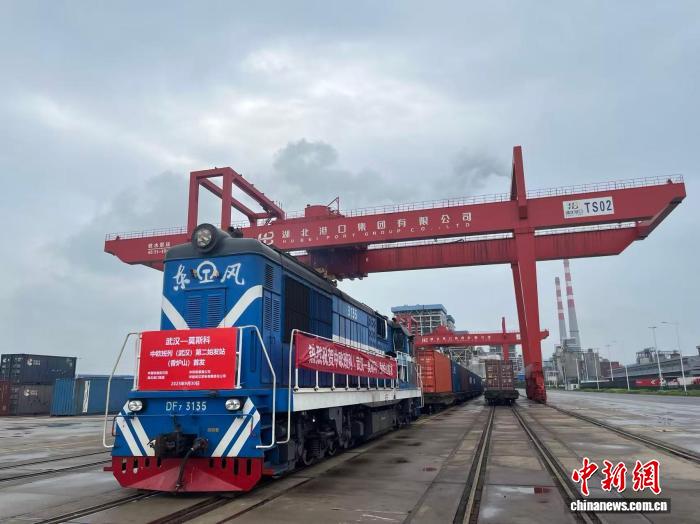
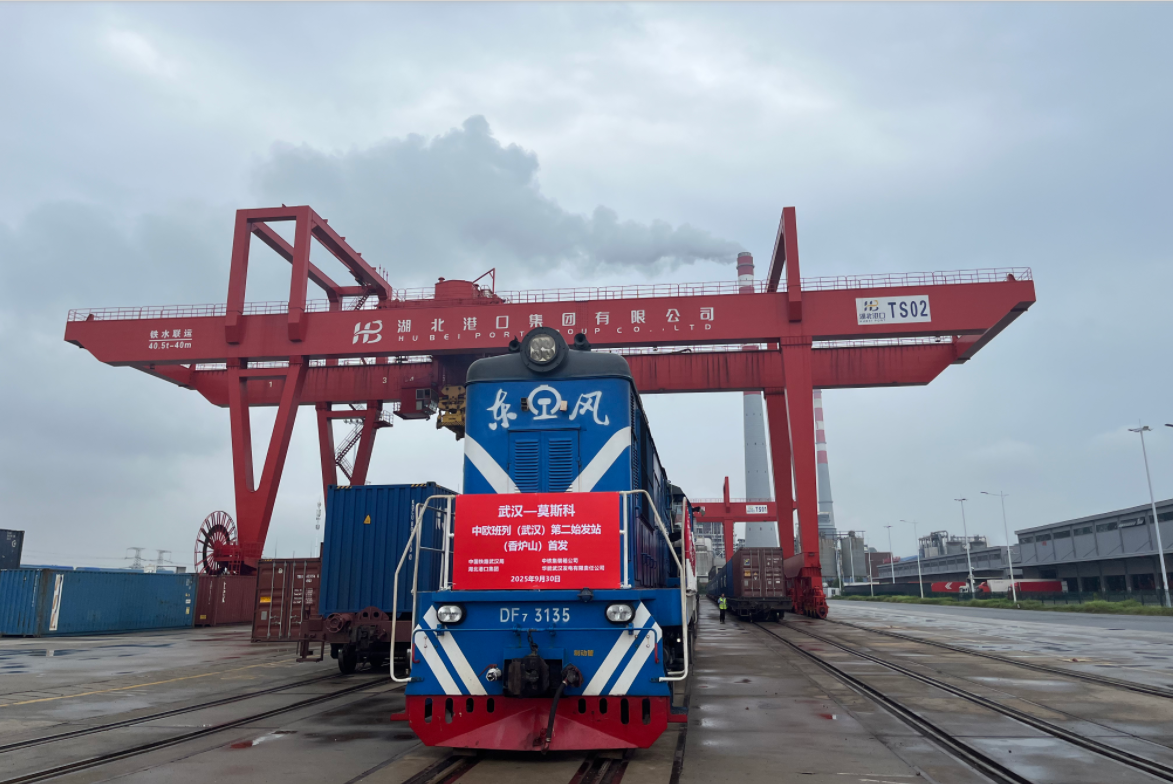
中欧班列(武汉—莫斯科)香炉山站首发
Chang Jiang Ri Bao· 2025-10-01 00:49
Core Insights - The launch of the new China-Europe (Central Asia) freight train service from Xianglu Mountain Station marks a significant development in logistics, enhancing trade routes to Russia and improving efficiency for foreign trade enterprises [1][2]. Group 1: Logistics and Infrastructure - The Xianglu Mountain Station has become the second starting point for the China-Europe (Central Asia) freight trains, complementing the existing Wujiashan Station, thus creating a "dual station launch" model that enhances the logistical advantages of the Wuhan route [2]. - The new service reduces transportation time by approximately 2 days and lowers overall costs by about 15%, providing a more stable and efficient logistics option for Hubei's foreign trade companies [2][3]. Group 2: Operational Efficiency - The freight train utilizes a "direct customs declaration, no transfer, one ticket to the sea" intermodal transport method, which streamlines the customs process and enhances the speed of cargo release [3]. - The implementation of a "green channel" for inspections and the coordination of resources by the Wuhan Railway Bureau ensure timely train assembly and punctual departures, significantly improving logistics efficiency for foreign trade enterprises [3].
中欧班列(武汉—莫斯科)首发
Zhong Guo Xin Wen Wang· 2025-09-30 12:22
中欧班列(武汉—莫斯科)首发 中新网武汉9月30日电 (梁婷 徐晨)由湖北港口集团组织的一列满载整车成套散件、医用物资、厨具用品 等货物的中欧班列(武汉)30日从香炉山站缓缓驶出,将经阿拉山口出境驶往俄罗斯莫斯科。中欧班列(武 汉)在香炉山站首发,形成香炉山站与吴家山站"双站齐发"格局,进一步释放中欧班列(武汉)的通道优势 与联动效应。 中欧班列(武汉—莫斯科)首发。徐晨 摄 此趟班列装载54个大柜,一部分大柜从江苏太仓经长江到达武汉,在阳逻港码头卸载装车,另一部分大 柜为湖北本地货,货物在阳逻国际港铁水联运一期集结后上班列,从香炉山站发出。 香炉山站与中欧班列(武汉)无缝对接,使长江中下游地区的货物通过阳逻港、再经中欧班列(武汉)流向 欧洲、中亚,同时,欧洲、中亚地区的货物经阳逻港"铁水联运"可以发往中国东部沿海地区。香炉山站 作为中欧班列(武汉)第二始发站,与之前必须中转吴家山站的模式相比,可实现运输时间缩短2天左 右,综合成本降低约15%,将为湖北外贸企业提供更加稳定、高效的物流选择。 此次发运采用"直接报关、无需中转、一票出海"的铁水联运方式。武汉新港海关通过"提前申报+预约查 验"机制,开通查检"绿 ...