
长三角区域一体化

Search documents
从圈到群:长三角区域一体化战略如何深化
Sou Hu Cai Jing· 2025-11-08 04:46
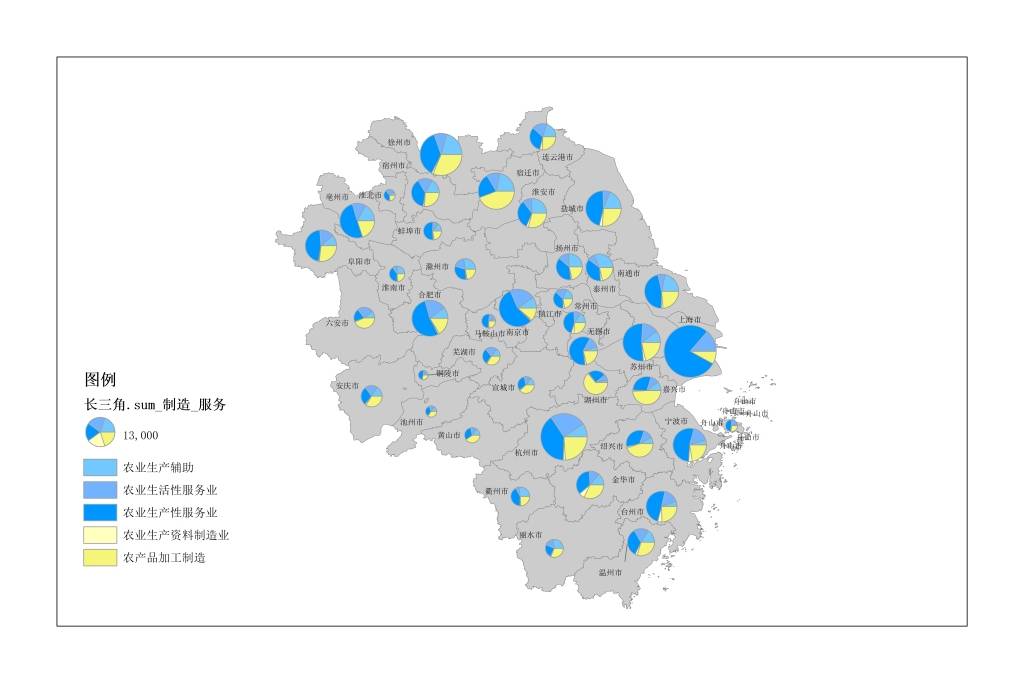
Core Insights - The release of the "Action Plan for Establishing and Improving the System and Mechanism for the Coordinated Development of Urban Agglomerations" marks a new phase in the integrated development of the Yangtze River Delta, focusing on urban agglomeration and coordinated development as the core driving force [1] Group 1: Urban Agglomeration and Economic Impact - The Yangtze River Delta region has a permanent population of approximately 238 million and a GDP of 33.17 trillion yuan, accounting for 24.6% of the national total [2] - The overall capability of urban agglomerations largely depends on the strength of core cities or urban circles, with stronger central cities attracting more population and fostering a positive cycle [2][3] - The plan emphasizes the need to "unleash and empower" core urban circles to activate the potential of the world-class urban agglomeration [2] Group 2: Industrial Development and Future Trends - There is a need to strengthen the synergy between "productive services and advanced manufacturing," leveraging the complementary relationship between modern services and advanced manufacturing [3] - The evolving consumption patterns led by younger demographics, such as live streaming and short videos, are reshaping the flow dynamics in central cities [3] Group 3: Competition and Integration - The unique structure of the Yangtze River Delta, with its six urban circles and large population, provides a natural environment for orderly competition among different urban circles [4] - The "Action Plan" aims to break down barriers and create a unified market through infrastructure connectivity and unified market rules, enhancing fair competition [4] Group 4: Cross-Department Coordination - Effective cross-department cooperation frameworks in areas like economic statistics and public service guarantees are essential for addressing coordination challenges in urban circle development [5] - The current transportation coordination between cities like Shanghai and Suzhou shows significant room for improvement, indicating a need for better integration [5] Group 5: Urban-Rural Integration - The construction of a unified urban agglomeration includes not only the integration of urban circles but also the collaboration between cities and counties [6] - Strategies for rural integration must consider the varying development levels of counties, focusing on enhancing public services and income levels for residents [6] Group 6: Implementation and Future Directions - The key to advancing integration in the Yangtze River Delta lies in execution, with urban circles serving as engines for coordinating population, land, and industry [9] - Achieving a tangible sense of "urban circle integration" for residents and predictable systems for businesses is crucial for transforming planning into reality [9]

到2025年底,长三角铁路预计新增2600公里路网
Guo Ji Jin Rong Bao· 2025-10-21 05:23
Core Insights - The Yangtze River Delta railway is expected to complete construction investments exceeding 600 billion yuan by the end of 2025, with 22 projects operational and over 2,600 kilometers of new railway added, significantly contributing to regional integration and high-quality development [1] Investment Trends - During the 14th Five-Year Plan period, railway construction in the Yangtze River Delta has maintained a high operational status, with construction investments rising from approximately 90 billion yuan in 2021 to 142.38 billion yuan in 2024, setting historical records [1] - In 2025, the railway construction investment is projected to exceed 140 billion yuan, with 25 ongoing projects and a total investment scale of over 800 billion yuan for ongoing projects, ranking among the top in the national railway sector [1]
“十五五“发展的重中之重,长三角都市圈如何同城化发展?
Zhong Guo Fa Zhan Wang· 2025-10-10 08:04
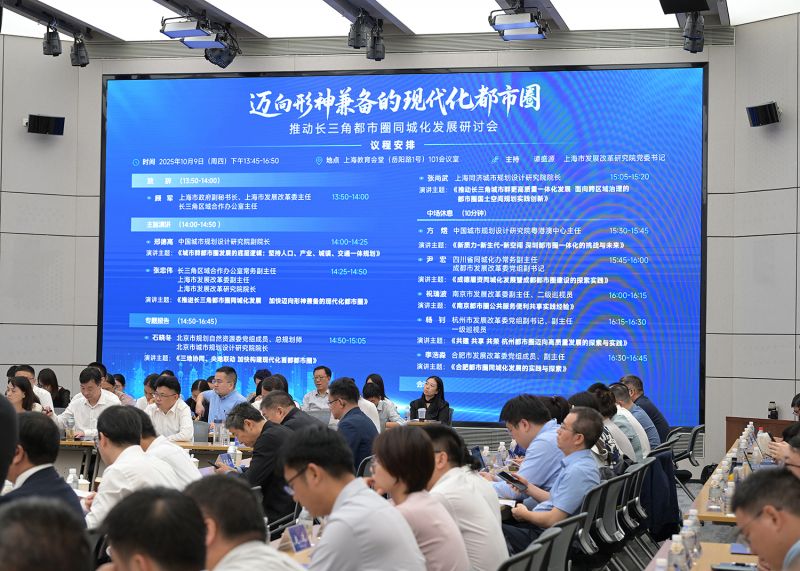
Core Insights - The seminar on promoting the integrated development of the Yangtze River Delta urban agglomeration highlighted the need for a systematic approach to achieve modernization and integration, acknowledging existing challenges and opportunities [1][3][5] Group 1: Development Strategy - The Yangtze River Delta has been exploring regional integration for seven years, with the newly issued "Action Plan" aiming to enhance urban agglomeration development by 2035 [3][9] - The focus is on breaking down administrative barriers to facilitate the flow of resources, reduce transaction costs, and enhance market efficiency [5][7] Group 2: Challenges and Solutions - Key challenges include improving the integration mechanism, enhancing planning coordination, increasing the capacity of central cities, and optimizing spatial layout [5][7] - The need for a common action plan for urban agglomeration construction is emphasized to unlock structural potential and improve spatial organization [13] Group 3: Economic Performance - The Yangtze River Delta region has shown strong economic growth, with an average GDP growth rate of 5.58% from 2018 to 2024, contributing approximately 26% of China's economic increment during this period [9] - The number of "trillion-yuan cities" in the region has increased from 6 to 9, indicating significant economic development [9] Group 4: Collaborative Efforts - The seminar included participation from various experts and officials from major urban agglomerations, focusing on sharing experiences and strategies for urban integration [12][10] - The collaborative approach aims to implement the "Action Plan" effectively and address the challenges faced by the Yangtze River Delta urban agglomeration [12][13]
六大都市圈“建群”,目标“世界级”
Mei Ri Jing Ji Xin Wen· 2025-10-09 23:13
Core Viewpoint - The "Action Plan for Establishing and Improving the System and Mechanism for Coordinated Development of Urban Agglomerations" has been officially issued, focusing on achieving "seven ones" and enhancing organizational implementation through 30 specific tasks [1][2]. Group 1: Urban Agglomeration Development - The first priority of the "seven ones" is to jointly build a cross-regional coordinated development "one group," which includes enhancing the radiation and driving role of central cities and promoting the construction of important nodes in urban agglomerations [1]. - The plan emphasizes the need for effective coordination among urban agglomerations, accelerating the construction of industrial innovation belts and corridors [1][2]. Group 2: Economic Contribution and Scale - In the previous year, the GDP of the Yangtze River Delta exceeded 33 trillion yuan, accounting for nearly one-fourth of the national economic total and contributing approximately 30% to national economic growth [2]. - The Yangtze River Delta has become the second-largest urban agglomeration in the world, highlighting its strategic position in the global economic landscape [2]. Group 3: Challenges and Shortcomings - Despite notable achievements, there are shortcomings such as the need for improved operational efficiency of existing mechanisms and insufficient implementation of planning guarantees [4]. - The coordination costs may exceed transaction costs, complicating the integration efforts within the urban agglomeration [4]. Group 4: Specific Tasks and Implementation - The "Action Plan" outlines specific tasks including infrastructure connectivity, collaborative innovation in technology and industry, and optimization of the market environment [4]. - It calls for the establishment of a multi-level work promotion mechanism, with the regional cooperation office and development reform departments playing a key role in coordination and responsibility allocation [4].
城市24小时 | 六大都市圈“建群” 目标“世界级”
Mei Ri Jing Ji Xin Wen· 2025-10-09 15:58
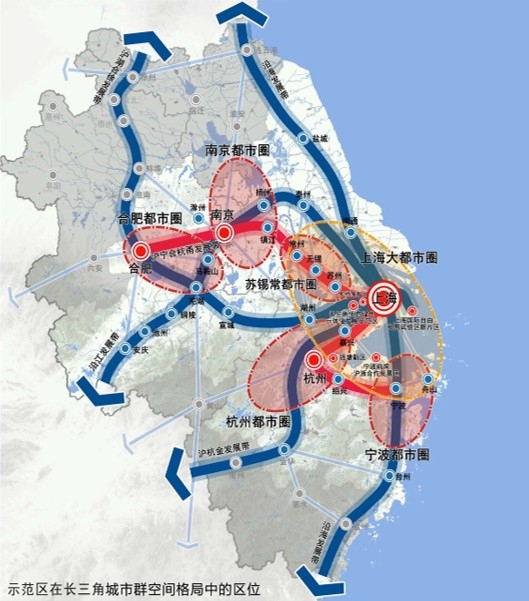
Core Viewpoint - The "Action Plan for Establishing and Improving the System and Mechanism for Coordinated Development of Urban Agglomerations" has been officially issued, proposing 30 specific tasks to enhance the integrated development level of the Yangtze River Delta urban agglomeration [1][2]. Group 1: Urban Agglomeration Development - The plan emphasizes the construction of a cross-regional coordinated development "one group," focusing on enhancing the radiation and driving role of central cities and improving the configuration of transportation, logistics, industry, employment, ecology, and public services [1][2]. - The Yangtze River Delta region has a GDP exceeding 33 trillion yuan, accounting for nearly 25% of the national economic output, with a contribution rate of about 30% to national economic growth [2]. - The region consists of six major urban agglomerations, including Shanghai, Nanjing, Hangzhou, Hefei, Suzhou-Wuxi-Changzhou, and Ningbo, with Nanjing, Hangzhou, and Hefei recognized as national-level urban agglomerations [2]. Group 2: Challenges and Solutions - Despite achievements, there are shortcomings such as operational efficiency, insufficient implementation of planning, and the need to enhance the capabilities of central cities [3]. - The "Action Plan" includes tasks such as improving infrastructure connectivity, promoting technological and industrial innovation, and optimizing the market environment, while also strengthening organizational implementation mechanisms [3]. Group 3: Broader Context - The development of urban agglomerations is crucial for achieving world-class city clusters, as seen in examples like the New York metropolitan area and the Tokyo metropolitan area [2]. - The plan aligns with the broader national strategy to promote high-quality urban development, as outlined in the "Opinions on Promoting High-Quality Urban Development" [1].
构建跨区域科创共同体 上海普陀:全面融入沿沪宁产业创新带建设
Shang Hai Zheng Quan Bao· 2025-09-10 18:48
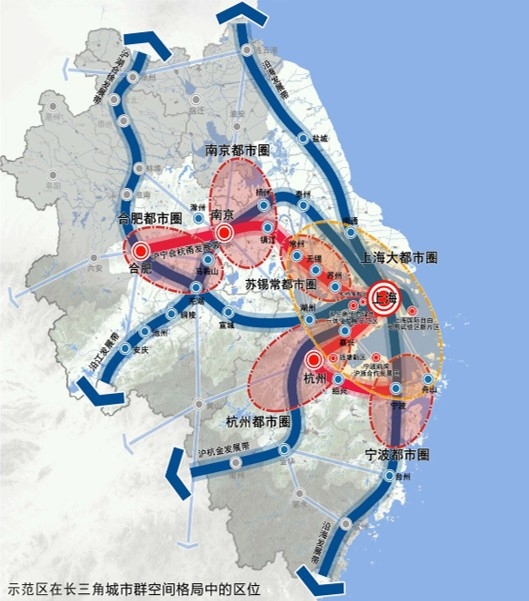
Core Viewpoint - The article emphasizes the strategic development of the Yangtze River Delta region, particularly the "Huhuning Industrial Innovation Belt," which connects major cities and enhances regional collaboration in technology and industry [1][2]. Group 1: Development Initiatives - The "Huhuning Industrial Innovation Belt" has been a focus since the 2019 national plan, with ongoing efforts to deepen its development through various governmental strategies [2]. - The Shanghai Putuo District has initiated a cooperation proposal to strengthen cross-regional collaboration in technology innovation and industrial development along the Huhuning belt [1][2]. Group 2: Resource and Demand Coordination - In 2023, Putuo District collaborated with eight cities along the Huhuning belt to compile three lists of resources, demands, and cooperation opportunities, identifying 310 key resources and 294 technical needs [4]. - An online platform called "Huhuning Collaborative Innovation Market" was launched, facilitating technology transactions that generated over 8 million yuan in revenue [4]. Group 3: Innovation and Technology Development - The establishment of the Wuning Innovation Community in Putuo District aims to leverage local scientific resources to drive innovation across the Yangtze River Delta [5]. - The Shanghai Chemical Research Institute has successfully developed a technology for the preparation of Carbon-13, breaking foreign monopolies and contributing to the biomedical sector [5]. Group 4: Future Plans and Investment Strategies - Looking ahead to the "14th Five-Year Plan," Putuo District aims to enhance long-term planning and focus on integrating industry, innovation, and market services [5]. - The district plans to utilize the Huhuning Industrial Fund Matrix to attract government and industrial capital, promoting efficient flow of key production factors such as technology, finance, and talent across cities [5].
协同发力,加强宁镇扬跨界纠纷联合调解协作
Xin Hua Ri Bao· 2025-08-25 22:27
Core Points - The meeting aims to implement the integrated development strategy of Nanjing, Zhenjiang, and Yangzhou, enhancing collaboration in cross-border dispute mediation to create a harmonious social environment for regional integration [1][2] - The focus is on establishing a coordinated and efficient mediation work pattern, integrating cross-border dispute mediation into the national strategy for the Yangtze River Delta [2][3] - A series of effective mediation mechanisms have been developed, resulting in the establishment of 24 cross-border mediation organizations and the resolution of 2,544 disputes [3][4] Group 1 - The meeting emphasizes the importance of political positioning and coordination to enhance the efficiency of mediation work [2] - It aims to break regional boundaries and improve communication and coordination among the three cities [2][3] - The goal is to create a "core brand" for regional cooperation among judicial administrative agencies [2][3] Group 2 - The establishment of various mediation committees and workstations has been highlighted as a significant achievement [3][4] - The meeting included discussions on the current status, challenges, and future plans for cross-border dispute mediation [4] - Observations of various mediation centers were conducted to showcase successful practices [4]
三大航,提前布局上海“第三机场”!
第一财经· 2025-08-17 05:48
Core Viewpoint - The establishment of the joint venture company for the Nantong New Airport indicates a strategic move to enhance Shanghai's international aviation hub status, with significant involvement from Shanghai Airport Group and local government [4][6]. Group 1: Company Formation and Structure - The newly formed Nantong New Airport Construction Investment Co., Ltd. is primarily engaged in civil airport operations and construction, with Shanghai Airport Group holding a 51% stake and Nantong Urban Construction Group holding 49% [3][4]. - The joint venture's establishment highlights Shanghai Airport's leading role in the development of the Nantong New Airport, often referred to as "Shanghai's third airport" [4][6]. Group 2: Airport Development and Planning - The Nantong New Airport is planned to have two long-distance runways and a terminal capable of handling 40 million passengers annually, with future expansion potential to accommodate 80 million passengers [9]. - The airport's location is approximately 100 kilometers from both Shanghai Hongqiao and Pudong airports, necessitating effective transportation network planning to integrate the three airports [6][9]. Group 3: Strategic Importance and Market Potential - Major airlines, including Air China, China Eastern Airlines, and China Southern Airlines, are proactively planning operations at the Nantong New Airport, recognizing its potential for local passenger traffic and spillover from Shanghai [9]. - The Long Triangle region already has seven major airports, and the development of Nantong New Airport is part of a broader strategy to optimize airport operations and enhance regional aviation competitiveness [10]. Group 4: Regional Collaboration and Integration - The establishment of the Nantong New Airport aligns with the Yangtze River Delta regional integration plan, which aims to create a coordinated airport system to avoid redundancy and improve efficiency [10]. - The East Airport Group's acquisition of several regional airports indicates ongoing efforts to streamline airport management and enhance service capabilities across the region [10].





苏超,快要踢散安徽?
Xin Lang Cai Jing· 2025-07-06 11:13
Core Viewpoint - The article discusses the regional disparities within Anhui province, highlighting the "scattered" nature of its cities and the lack of cohesion between the provincial capital, Hefei, and other cities like Wuhu, Ma'anshan, and Chuzhou, which tend to identify more with neighboring Nanjing than with their own provincial capital [1][10][20]. Group 1: Regional Dynamics - The recent Suzhou Super League match showcased the support from cities like Wuhu and Ma'anshan for Nanjing, while Hefei remained isolated, indicating a lack of unity within Anhui [2][4]. - Geographical proximity plays a significant role, with cities in southeastern Anhui being closer to Nanjing than to Hefei, leading to stronger economic and emotional ties with Nanjing [5][9]. - The historical context of Hefei's designation as the provincial capital has not fostered a strong identity or loyalty among other cities, leading to a perception of Hefei as a distant "big brother" [10][14]. Group 2: Economic Disparities - Hefei's GDP accounts for nearly 27% of the province's total, but the economic development is uneven, with cities like Wuhu and Chuzhou lagging significantly behind [19][21]. - The "strong provincial capital" strategy has led to complaints from other cities, which feel neglected and view Hefei as a "battery charger" that does not adequately support their growth [12][17]. - The economic gap is evident, with Wuhu's GDP being only 38% of Hefei's, highlighting the disparity in resource allocation and development opportunities [26][20]. Group 3: Cross-Provincial Strategies - In response to internal challenges, cities in Anhui are increasingly seeking to integrate into neighboring metropolitan areas, with several cities successfully joining urban circles in Jiangsu and Zhejiang [28][29]. - The push for cross-provincial integration aims to leverage resources and infrastructure improvements, enhancing connectivity and economic collaboration with more developed regions [32][33]. - While this strategy may provide short-term benefits, it also risks further fragmenting Anhui's identity and cohesion as a province, as cities align more closely with external regions rather than with Hefei [33].

淮安:从“内”到“外”重塑枢纽地位
Xin Hua Ri Bao· 2025-06-10 21:23
Core Viewpoint - Huai'an is re-establishing its position as a transportation hub, leveraging its comprehensive transportation network to enhance economic development and regional cooperation [1][2][3]. Transportation Infrastructure - Huai'an has a total road mileage of approximately 13,800 kilometers, serving as a vital passage for the Bohai Economic Zone, Yangtze River Delta, and eastern coastal regions [1]. - The city has established a significant high-speed rail hub, with the Xusuhai Salt Railway and Lianhuaiyangzhen Railway forming a cross-shaped railway network, connecting to over 120 major cities nationwide [1]. - Huai'an's waterways include 1,483 kilometers of navigable channels and 96 port terminals, leading the province in inland container throughput for 16 consecutive years [1]. - Huai'an Lianshui International Airport is developing into a key international air cargo hub in the northern Yangtze River Delta [1]. Economic Development - The logistics advantages of Huai'an are translating into economic benefits, with companies like Zhongtian Steel Group optimizing their operations through reduced transportation costs [2]. - The city is fostering a smart logistics hub, integrating transportation with logistics, commerce, and industry, attracting major logistics companies to establish regional distribution centers [2]. Regional Integration - Huai'an is actively aligning with the Yangtze River Delta regional integration strategy, significantly reducing travel time to Nanjing and facilitating industrial transfer and resource sharing [3]. Future Planning - The provincial government supports Huai'an in utilizing its transportation advantages for high-quality hub economic development, with ongoing infrastructure projects including highway expansions and new railways [4][5]. - Key projects include the expansion of Huai'an Airport, which will enhance passenger capacity to 7.5 million and cargo capacity to 250,000 tons [5].