
长江经济带发展战略

Search documents
从“十三五”到“十四五” 长江经济带10年发展取得“八大成效”
Xin Lang Cai Jing· 2026-01-04 16:56
Core Viewpoint - The report highlights the significant achievements of the Yangtze River Economic Belt over the past decade, emphasizing its increasing contribution to China's GDP and the successful implementation of various strategic initiatives aimed at sustainable development and regional coordination [2]. Group 1: Economic Contribution - During the 13th Five-Year Plan period, the GDP of the Yangtze River Economic Belt accounted for 45.37% of the national total, which increased to 46.43% during the 14th Five-Year Plan period, showing an improvement of over 1 percentage point [2]. - By September 2025, the GDP share of the Yangtze River Economic Belt is projected to reach 47.02%, indicating a clear "advancement" effect [2]. Group 2: Strategic Initiatives - The "Outline of the Development Plan for the Yangtze River Economic Belt" was officially issued in September 2016, outlining six major tasks including ecological protection, transportation corridor construction, and industrial innovation [2]. - Over the past decade, various ministries and 11 provinces have implemented policies and development plans to support the strategic objectives of the Yangtze River Economic Belt, resulting in eight significant outcomes [2]. Group 3: Environmental and Infrastructure Development - Efforts to protect the ecological environment have shown effectiveness, with a focus on collaborative protection and sustainable development, enhancing ecological restoration and value transformation [3]. - The construction of a comprehensive transportation corridor has been steadily advanced, optimizing the transportation layout to facilitate economic circulation [3]. Group 4: Urbanization and Open Economy - The promotion of new urbanization has been strengthened, with significant reforms aimed at poverty alleviation and rural revitalization, creating new economic growth spaces through urban-rural integration [3]. - The establishment of a comprehensive open economy has been emphasized, enhancing the overall effects of reform and opening up, and creating a competitive policy and institutional framework [3]. Group 5: High-Quality Development Strategies - The implementation of practical policy measures has been crucial for maintaining stable economic growth, focusing on expanding domestic demand and effective investment [4]. - The cultural heritage of the Yangtze River is being promoted, leveraging cultural parks to connect economic development with cultural empowerment [4]. Group 6: Future Development Trends - The 14th Five-Year Plan period will see the Yangtze River Economic Belt focusing on high-quality development through comprehensive innovation, with an emphasis on opening up as a core strategy [4][5]. - The development will involve effective interaction between local governments and central authorities, continuously adjusting development strategies to enhance growth potential [5].

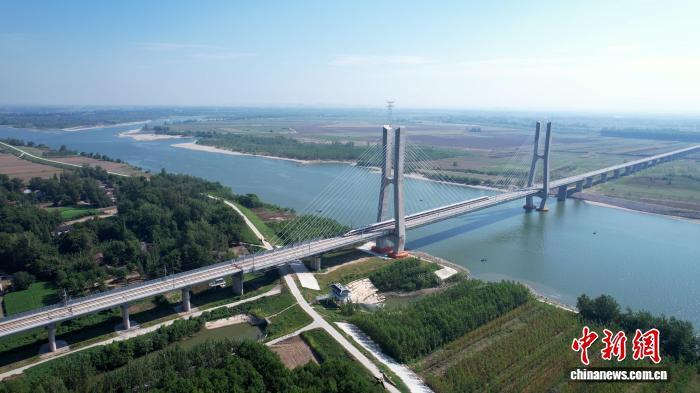
沪渝蓉高铁武宜段通车在即 长江经济带再添交通主动脉
Zhong Guo Xin Wen Wang· 2025-12-19 02:42
Core Viewpoint - The Wuhan-Yichang section of the Shanghai-Chongqing-Chengdu high-speed railway (Wuyihigh-speed railway) is set to open, significantly reducing travel time between Wuhan and Yichang from 2 hours to approximately 1 hour, enhancing the transportation network of the Yangtze River Economic Belt [1][4]. Group 1: Project Overview - The Wuyihigh-speed railway spans 311 kilometers within Hubei Province, featuring a design speed of 350 kilometers per hour, with 88 new bridges and 25 tunnels, achieving a bridge-tunnel ratio of 85% [3]. - The railway connects major cities such as Wuhan, Tianmen, Jingmen, and Yichang, facilitating a one-hour commuting circle among the "Golden Triangle" of Wuhan, Xiangyang, and Yichang, thereby boosting economic collaboration [4]. Group 2: Technological Integration - Advanced digital technologies have been extensively applied throughout the project lifecycle, including the use of intelligent surveying big data platforms and AI robots to enhance efficiency and precision during the design and construction phases [6]. - Over one million railway sleepers were produced with high precision using intelligent robots, ensuring quality control within millimeter levels [6]. Group 3: Economic Impact - The completion of the Wuyihigh-speed railway is expected to significantly improve transportation efficiency and reduce logistics costs, contributing to the high-quality development of the Yangtze River Economic Belt [6]. - Travel times from Yichang to major cities like Beijing, Shanghai, and Guangzhou will decrease from 7 hours to 4 hours, enhancing regional connectivity [6].
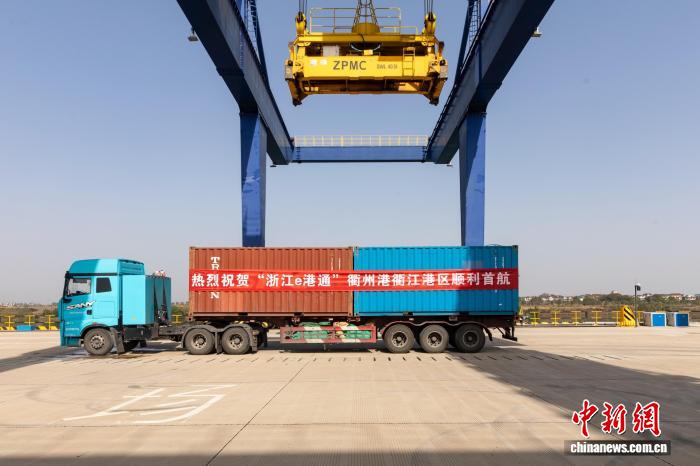
内陆开门直通世界港 “浙江e港通”传递开放新脉动
Zhong Guo Xin Wen Wang· 2025-12-19 01:05
Core Viewpoint - The "Zhejiang e-Port" initiative aims to enhance the efficiency and convenience of customs clearance for import and export goods in Zhejiang, with the recent launch of the "Quzhou-Jiaxing-Zhapu Port-Ningbo Zhoushan Port" CCA (multimodal transport "through bill of lading" model) route marking a significant step in this direction [1][2]. Group 1: Operational Efficiency - The "Zhejiang e-Port" has established 25 operational stations nationwide, significantly improving the customs clearance process for inland regions, which traditionally relied heavily on maritime transport [1][4]. - The initiative integrates customs, port, and shipping services, allowing businesses to complete all export procedures locally, thus addressing issues like container return and box shortages [1][2]. - The logistics process has been streamlined, with cargo entering inland ports treated as if they are already in the Ningbo Zhoushan Port area, enabling pre-port, pre-release, and pre-loading services that reduce logistics time [2][4]. Group 2: Cost Reduction and Efficiency Gains - The "Zhejiang e-Port" model has led to a reduction in cargo transit time from 35 hours to 24 hours for specific routes, alleviating logistics pressure in regions like Hubei [4]. - Companies utilizing the "Zhejiang e-Port" have reported a 15% to 20% reduction in overall logistics costs due to the elimination of unnecessary operational steps and the implementation of automated customs processes [5][7]. - The average time for container usage and adjustment has decreased by 2 days, and the on-time shipment rate has improved from 60% to over 90% [4]. Group 3: Strategic Development and Expansion - The "Zhejiang e-Port" initiative is part of a broader strategy to enhance Zhejiang's role in the domestic and international economic landscape, with plans for nationwide replication of the model [8][9]. - The initiative supports the "Belt and Road" initiative and the development of the Yangtze River Economic Belt, contributing to Zhejiang's goal of becoming a high-level open economy [4][8]. - The provincial government has set ambitious targets for further integration into the new development framework, emphasizing the importance of high-level openness and resource allocation efficiency [9].
江阴靖江长江隧道主体结构完工
Xin Hua Ri Bao· 2025-11-29 23:35
Core Viewpoint - The successful "millimeter-level" docking of two shield machines in the Jiangyin-Jingjiang Yangtze River Tunnel marks the completion of the main structure of this national key project, advancing deep, large-section, long-distance shield tunnel technology and providing critical technical achievements and practical experience for complex geological cross-river and sea super-engineering projects [1] Group 1 - The Jiangyin-Jingjiang Yangtze River Tunnel, constructed by China Communications First Public Bureau Group Tunnel Bureau, features a total length of 4,937 meters and a maximum excavation diameter of 16.09 meters, making it the largest diameter and highest water pressure shield tunnel under construction in China [1] - The project addresses world-class challenges such as shield machine stability and precise docking under high water pressure and strong permeable strata, offering a complete "Chinese solution" for similar global projects [1] - The tunnel is a key project in the comprehensive three-dimensional transportation corridor of the Yangtze River Economic Belt, which will significantly alleviate traffic pressure on the Jiangyin Yangtze River Bridge and enhance the crossing capacity of the Yangtze River trunk line [1]
抗日根据地·今昔巨变丨革命老区产业兴旺焕新生 民生不断改善
Yang Shi Wang· 2025-08-12 07:21
Group 1 - The article highlights the transformation of Taohua Mountain from a historical site of resistance during the Anti-Japanese War to a modern integrated tourism, leisure, and vacation forest park, leveraging red culture and ecological resources [6][10] - The local economy has diversified with the development of specialty agriculture and cultural tourism projects, leading to significant improvements in living standards and the eradication of poverty in 28 villages by 2017 [10][18] - The region has seen a substantial increase in agricultural productivity, with over 5,000 acres of wrinkled tangerines bearing fruit, indicating a successful agricultural initiative [8][10] Group 2 - Huarong County has actively aligned with the Yangtze River Economic Belt development strategy, enhancing its industrial layout, including the recent launch of a coal-water transport and storage base [12][14] - The county's industrial structure has evolved to focus on modern agriculture, green food processing, textile manufacturing, general equipment manufacturing, and biomanufacturing, with 60 national high-tech enterprises and 27 specialized enterprises [16] - The GDP of Huarong County has increased from 20.41 billion yuan in 2012 to 41.67 billion yuan in 2024, while rural residents' per capita disposable income has risen from 8,860 yuan to 30,296 yuan, marking a 241.9% increase [18]
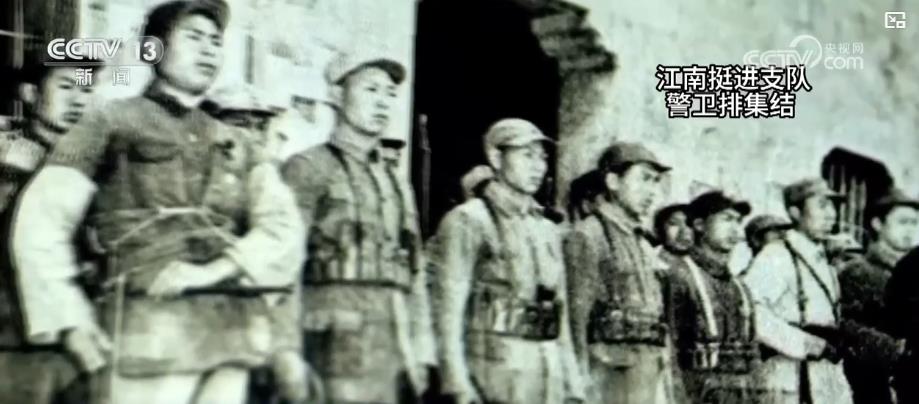
山乡巨变、产业红火 昔日敌后根据地焕发新生
Yang Shi Xin Wen Ke Hu Duan· 2025-08-12 05:54
Core Viewpoint - The article highlights the historical significance and current development of Taohuashan in Huarong County, Hunan Province, emphasizing its transformation into a tourism and agricultural hub while honoring its revolutionary past [1][8][20]. Historical Context - Taohuashan served as a base for the New Fourth Army during the Anti-Japanese War, expanding the anti-Japanese efforts in the region and contributing to the establishment of a stronghold in Hunan [5][6]. - The area witnessed significant military activity, with the New Fourth Army's Jiangnan Advance Detachment expanding from one company to five by spring 1945, effectively countering Japanese forces [5][6]. Economic Development - Since the 18th National Congress, local authorities have leveraged historical resources to develop unique industries, contributing to high-quality economic growth in the county [1][11]. - Huarong County has seen a transformation in its agricultural sector, with the development of specialty agriculture and cultural tourism projects, leading to the eradication of poverty in 28 villages by 2017 [11][20]. Infrastructure and Industry - The county has actively engaged in the Yangtze River Economic Belt strategy, enhancing its industrial layout, including the establishment of a coal-water transport base and various energy projects [13][16]. - Huarong's GDP increased from 204.1 billion yuan in 2012 to 416.7 billion yuan in 2024, while rural residents' per capita disposable income rose from 8,860 yuan to 30,296 yuan, marking a 241.9% increase [20]. Tourism and Community Impact - The transformation of Taohuashan into a forest park has spurred local tourism, with various businesses such as cafes and homestays emerging, attracting young entrepreneurs back to their hometowns [8][10]. - The local community has embraced the red culture and ecological resources, fostering a vibrant environment for both tourism and agriculture [11][18].
武汉全力打造长江中游航运中心 构建“黄金水道”发展新格局
Chang Jiang Shang Bao· 2025-07-08 23:19
Core Insights - Wuhan is positioning itself as a modern shipping center with significant growth in container throughput, aiming for 1.8763 million TEUs by 2024, which represents 33.7% of the container throughput in the Yangtze River middle and upper reaches [1][2] - The implementation of the "Three-Year Action Plan for Promoting High-Quality Development of the Yangtze River Middle Reaches Shipping Center" is accelerating Wuhan's development into a globally influential shipping hub [1][3] Group 1: Current Achievements - Wuhan Port's container throughput has shown stable growth since surpassing 1 million TEUs in 2014, with a projected throughput of 1.8763 million TEUs in 2024, accounting for 76.7% of the province's total [2] - Yangluo Port's foreign trade container throughput is expected to exceed 770,000 TEUs in 2024, making it the largest rail-water intermodal hub in inland areas [2] - The port has a total of 150 productive berths and an annual maximum container throughput capacity exceeding 4 million TEUs, with an annual handling capacity of 150 million tons [2] Group 2: Future Development Goals - The shipping center aims to enhance infrastructure, optimize port layout, and improve port area collaboration and access channels over the next three years [3] - The plan includes upgrading port-related industries, expanding bonded and cross-border e-commerce, and developing a green and intelligent shipping industry chain, targeting an annual growth rate of over 25% [3] - The initiative also focuses on enhancing shipping service capabilities, establishing a high-level shipping exchange, and developing refined shipping finance [3]
渝厦高铁重庆段7座站房全面完工亮相
Zhong Guo Xin Wen Wang· 2025-06-12 00:42
Core Points - The completion of the Chongqing section of the Yuxia High-speed Railway is a significant milestone in China's "Eight Vertical and Eight Horizontal" high-speed rail network, enhancing connectivity from Chongqing to Xiamen [1] - The project includes the construction of 7 stations, with 6 newly built and 1 renovated, showcasing local cultural and natural features [1] - The new railway will reduce travel time from downtown Chongqing to Qianjiang District from 4 hours to under 1 hour, promoting economic development along the route [2] Group 1 - The Yuxia High-speed Railway Chongqing section is an important part of the Yuxia corridor in China's high-speed rail network [1] - The project features 7 stations, including 6 new constructions and 1 renovation, with a focus on local landmark characteristics [1] - Innovative construction techniques were employed to address challenges such as complex geological conditions and limited space [1] Group 2 - The railway's completion will significantly shorten travel time, facilitating the implementation of the Yangtze River Economic Belt development strategy [2] - The new high-speed rail line is expected to enhance the overall layout of the high-speed railway network in the region [2] - The project aims to accelerate the formation of a main high-speed rail corridor between Chongqing and Xiamen, boosting economic and social development in the surrounding areas [2]
不断提升发展的辐射带动力——四论贯彻落实省委十四届九次全会精神
Xin Hua Ri Bao· 2025-06-01 02:55
Group 1: Economic Development Strategy - The emphasis on the responsibility of major economic provinces in implementing national development strategies and enhancing regional influence [1] - The focus on collaborative innovation, industrial cooperation, and infrastructure connectivity as key areas for development in the Yangtze River Delta and the Yangtze Economic Belt [1] - The intention to actively integrate into the Shanghai International Science and Technology Innovation Center and build a tighter regional innovation and industrial community [1] Group 2: Inter-Regional Cooperation - The need for enhanced cooperation with the Beijing-Tianjin-Hebei and Guangdong-Hong Kong-Macao Greater Bay Area to drive high-quality development [2] - The deployment of new cooperation initiatives in technology, industry, talent, and capital to create a more extensive innovation, industrial, and supply chain network [2] - Encouragement for cross-regional establishment of research bases and collaboration among key enterprises to strengthen high-level innovation platforms [2] Group 3: International Trade and Cooperation - The "Belt and Road" initiative as a crucial strategy for foreign trade expansion, focusing on connectivity, park construction, and economic cooperation [3] - The commitment to deepen cooperation with countries along the Belt and Road in talent, technology, and trade, while promoting international engineering contracting [3] - The importance of enhancing the quality and efficiency of overseas cooperation parks and promoting the "Silk Road Trade Promotion" plan [3] Group 4: Regional Support and Collaboration - The responsibility of providing support to regions like Tibet and Xinjiang, emphasizing a multidimensional interaction and mutual empowerment process [3] - The focus on enhancing technological collaboration, park co-construction, and industrial cooperation to assist in the development of counterpart regions [3] - The strategy to combine national requirements, local needs, and regional strengths for better cooperation and win-win outcomes [3] Group 5: Overall Development Goals - The necessity of a holistic approach to development and security, with a focus on food security and high-level ecological protection [4] - The aim to lead in implementing national development strategies and contribute positively to the overall national framework [4]
5月12日晚间央视新闻联播要闻集锦
Yang Shi Xin Wen Ke Hu Duan· 2025-05-12 13:58
Group 1 - The Yangtze River Economic Belt development strategy is a significant decision made by the central government, emphasizing ecological priority and green development, with a focus on technological innovation to promote high-quality development [2] - In 2024, the autumn grain purchase season has concluded with a total acquisition of 345 million tons, marking a relatively high level in recent years [7] - In the first four months of this year, China's automobile production and sales both exceeded 10 million units for the first time, with a year-on-year growth of over 10% [8] Group 2 - The State Development Bank issued over 250 billion yuan in green loans from January to April, supporting green infrastructure, clean energy, ecological protection, and pollution prevention [14] - The outdoor sports industry is experiencing robust growth, driven by the rich outdoor resources and broad participation across various regions [12] - The total installed power capacity in Xinjiang has surpassed 200 million kilowatts, with renewable energy accounting for 55.72% of the total installed capacity, reflecting a 2.8-fold increase since the beginning of the 14th Five-Year Plan [19]