
长臂管辖

Search documents
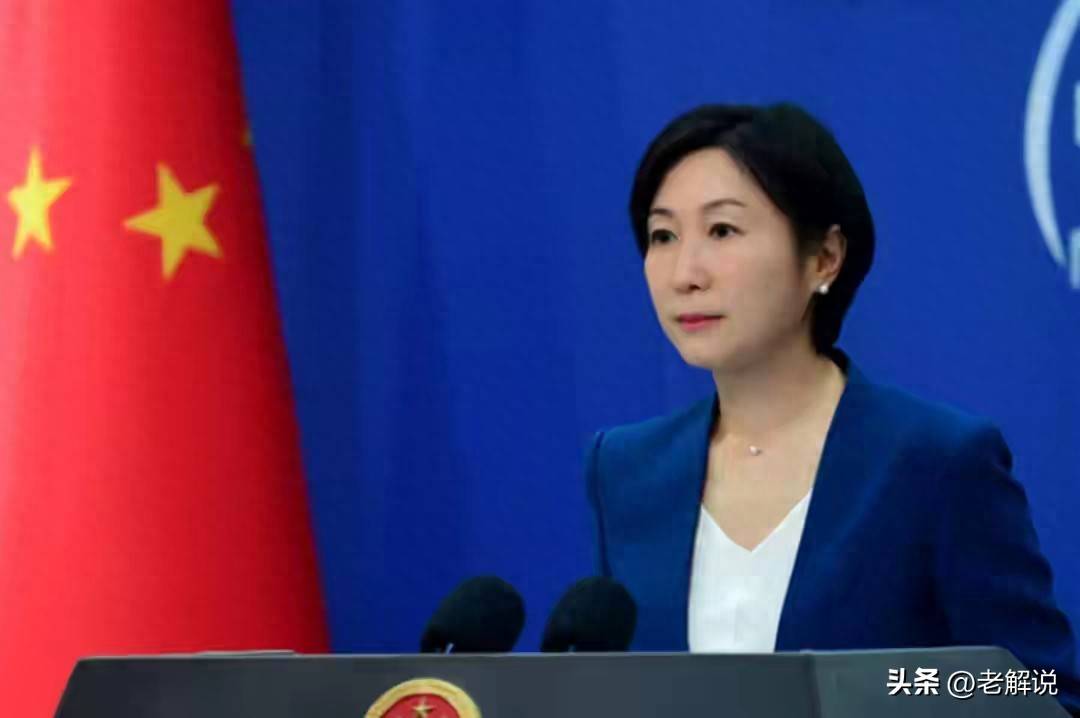
特朗普通告全球,不许3国购买俄石油,我国第一个表示不服
Sou Hu Cai Jing· 2026-01-10 11:57
Core Viewpoint - The U.S. Senate is moving forward with a bill that would impose severe tariffs, up to 500%, on countries purchasing Russian oil, gas, and uranium, specifically targeting China, India, and Brazil, as a means to pressure these nations to stop funding Russia amid the Ukraine conflict [2][6]. Group 1: U.S. Legislative Actions - Senator Lindsey Graham has indicated that President Trump has approved a strengthened sanctions bill against Russia, which could be voted on in the Senate next week [2]. - The bill aims to leverage tariffs as a tool to exert influence over major economies that continue to engage in energy trade with Russia [2][6]. Group 2: China's Response - China's Ministry of Foreign Affairs has firmly opposed the unilateral sanctions imposed by the U.S., asserting that their energy cooperation with Russia is legitimate and should not be interfered with [2][5]. - The Chinese government emphasizes that energy security is crucial for its economic stability, making it impractical for China to comply with U.S. sanctions that threaten its energy supply [3][5]. Group 3: Economic Implications - China’s energy imports from Russia are significant, with Russian oil constituting a large portion of its energy needs, making the U.S. sanctions a substantial risk for China’s energy security [3][5]. - The trade between China and Russia has increasingly moved towards "de-dollarization," with over 95% of transactions now conducted in local currencies, reducing the impact of U.S. sanctions that rely on the dollar [5][6]. Group 4: Broader Geopolitical Context - The U.S. strategy appears to aim at cutting off Russia's war funding while simultaneously attempting to assert dominance over emerging powers like China and India [6]. - The potential implementation of these tariffs could lead to significant trade confrontations, increased global energy prices, and disruptions in supply chains, ultimately affecting the global economy [6][7].

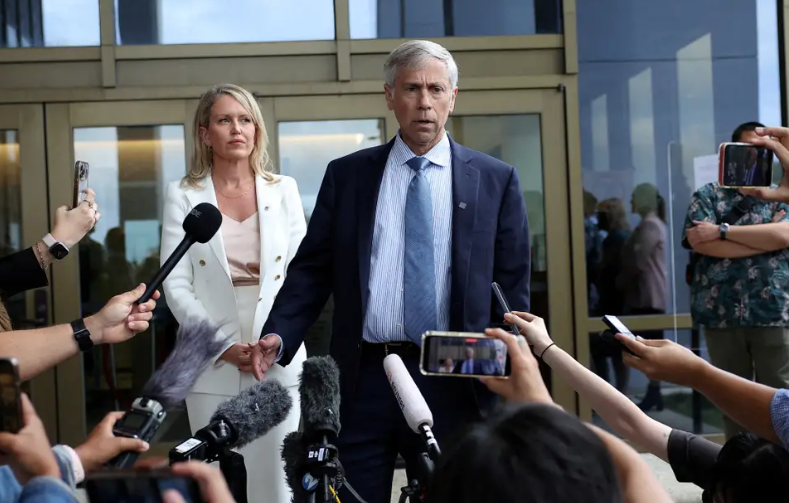
阿桑奇代理律师为马杜罗辩护
Xin Lang Cai Jing· 2026-01-07 04:53
Core Viewpoint - The article discusses the legal defense of Venezuelan President Nicolás Maduro by attorney Barry Pollack, known for his experience and success in high-profile cases, including representing Julian Assange. Pollack's defense strategy focuses on labeling U.S. military actions against Maduro as "military kidnapping" and asserting Maduro's sovereign immunity from foreign criminal charges [1][2]. Group 1 - Barry Pollack, a partner at a prominent U.S. law firm, is representing Maduro and plans to argue that U.S. actions are illegal [1]. - Pollack claims that as a head of state, Maduro should enjoy immunity from criminal charges from other countries [1]. - Legal experts express skepticism about the viability of the immunity defense due to the U.S. not recognizing Maduro's leadership following the disputed 2019 elections [1]. Group 2 - Pollack previously achieved a significant legal victory by negotiating a plea deal for Julian Assange, reducing multiple charges to one without requiring prison time [2]. - A lawyer who defended former Panamanian leader Manuel Noriega praised Pollack's suitability for the Maduro case but raised concerns about his resources to counter U.S. government efforts [2]. - The U.S. may utilize a cooperating witness, former intelligence chief Hugo Carvajal, to testify against Maduro, complicating Pollack's defense strategy [2].
外媒:“经验老到”,阿桑奇代理律师为马杜罗辩护
Huan Qiu Shi Bao· 2026-01-06 22:56
Core Viewpoint - The legal defense of Venezuelan President Maduro is being led by Barry Pollack, a well-known attorney recognized for his experience and success in high-profile cases, including representing WikiLeaks founder Julian Assange [1][3]. Group 1: Legal Defense Strategy - Pollack accompanied Maduro to court, labeling the U.S. military's actions against him as "military kidnapping" and indicating that this will be a central theme in their legal battles [3]. - Pollack argues that Maduro, as the head of a sovereign state, should enjoy immunity from criminal charges from other countries [3]. - Legal experts suggest that the defense based on "immunity" may face significant legal challenges, as the U.S. does not recognize the results of Venezuela's 2019 elections and does not acknowledge Maduro as the country's leader [3]. Group 2: Pollack's Background and Reputation - Pollack is a partner at a prominent U.S. law firm and has a notable track record, with his representation of Assange being a highlight of his career [3]. - In 2024, Pollack successfully negotiated a plea deal with the U.S. Department of Justice that reduced multiple charges against Assange to one, allowing him to avoid prison time in the U.S. [3]. - A lawyer who previously defended former Panamanian leader Noriega praised Pollack's suitability for the Maduro case but expressed concerns about Pollack's resources to counter the U.S. government's will [4]. Group 3: Potential Challenges - There is a concern that the U.S. may utilize a "cooperating witness" to testify against Maduro, specifically a former intelligence chief, Carvajal, which could complicate Pollack's defense strategy [4].
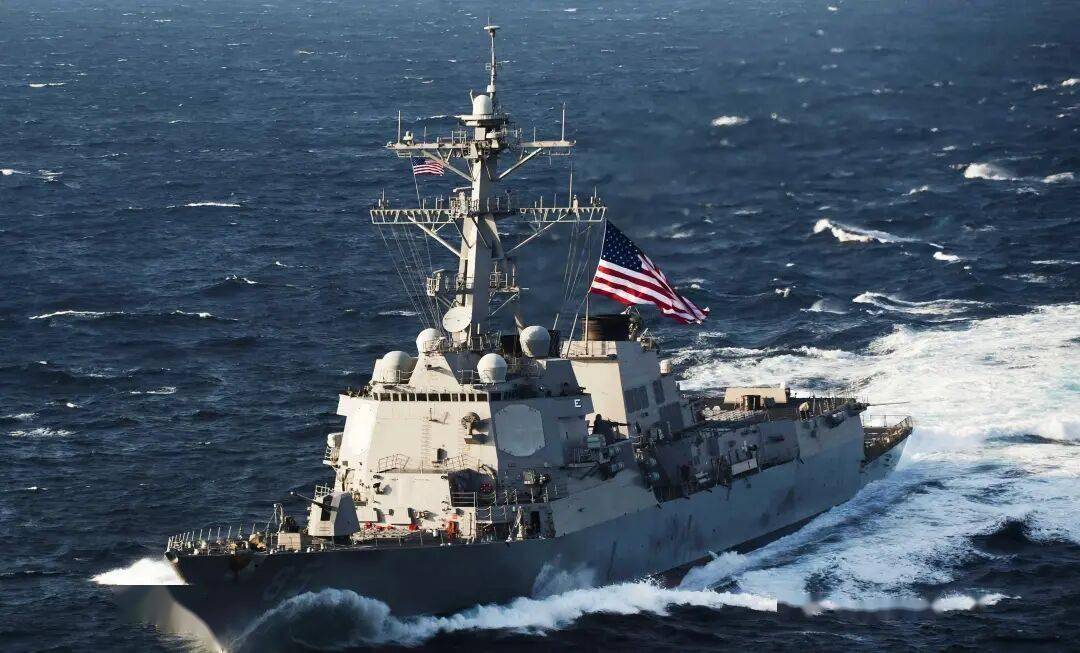
狮子搏兔亦用全力:“特朗普主义”露出獠牙
Xin Lang Cai Jing· 2026-01-04 16:56
Core Viewpoint - The military operation "Absolute Resolve" led by the U.S. against Venezuela is characterized as a significant display of power by President Trump, showcasing the overwhelming military superiority of the U.S. over Venezuela, which is described as a "one-sided dimensional strike" [2][5]. Military Operation Overview - The operation was a culmination of the "Southern Spear" initiative, which lasted over four months and involved extensive reconnaissance and testing of Venezuela's military defenses [3]. - The core challenge of the operation was locating the high-value target, Venezuelan President Maduro, who was well-guarded and mobile, necessitating a combination of human and technical intelligence to track his movements [4]. Execution of the Operation - The "Absolute Resolve" operation involved a multi-domain approach, starting with air campaigns, supported by special operations and amphibious landings [8]. - Key assets included F-22 and F-35A stealth fighters, B-1B bombers, and specialized helicopters from the U.S. Army's 160th Special Operations Aviation Regiment, which executed low-altitude night operations to infiltrate Venezuela [9][12]. Strategic Implications - The operation reflects a strategic shift in U.S. foreign policy, emphasizing the Western Hemisphere as a core interest and the use of military force to expand influence in Latin America [19]. - Trump's approach combines military action with domestic law enforcement tactics, indicating a low threshold for military engagement without formal congressional approval [20]. Political Context - The military action is seen as part of Trump's broader strategy to consolidate power domestically and assert U.S. dominance internationally, particularly in the context of countering Chinese and Russian influence in Latin America [22].

【明辉说油】中国和俄罗斯,谴责美国对委内瑞拉封锁
Sou Hu Cai Jing· 2025-12-26 15:30
Group 1: Market Impact - International crude oil futures were closed on December 25 due to the Western Christmas holiday, with no settlement price reported. The China INE crude oil futures contract 2602 rose by 0.4 to 443 CNY per barrel, and increased by 1.7 to 444.7 CNY per barrel in the night session [1] Group 2: U.S. Sanctions on Venezuela - A U.S. official stated that the White House has ordered the military to focus almost entirely on the "blockade" of Venezuelan oil for at least the next two months, emphasizing economic pressure through sanctions rather than immediate military action. The official warned of an "economic disaster" for Venezuela by the end of January unless significant concessions are made [3] - Venezuela's oil exports are crucial to its economy, and the Venezuelan National Assembly condemned U.S. actions as "piracy," passing a law to protect navigation and trade from such actions [3] - The Venezuelan representative to the UN asserted that the U.S. government poses a threat, not Venezuela [3] Group 3: China's Response - The Chinese Ministry of Commerce expressed strong opposition to unilateral sanctions and the so-called "long-arm jurisdiction" by the U.S., stating that the interception of foreign oil tankers could disrupt the normal operation of international energy markets and pose other security risks [4] - The Ministry emphasized that Venezuela's trade with other countries within the framework of international law is normal and should be respected [4] Group 4: Russia's Position - The Russian Foreign Ministry accused the U.S. of reviving "pirate behavior" in the Caribbean due to its blockade of Venezuela, leading to a state of lawlessness in the region. They called for a pragmatic approach from U.S. President Trump to avoid disastrous consequences [5] - The Russian spokesperson reiterated support for the Maduro government in defending national sovereignty and maintaining stability [5]
中国商务部回应稀土磁体出口等问题
Zhong Guo Xin Wen Wang· 2025-12-25 15:54
Core Viewpoint - The Chinese Ministry of Commerce emphasizes its commitment to maintaining the stability of global supply chains and facilitating compliant trade, particularly regarding rare earth magnet exports [1] Group 1: Rare Earth Magnet Exports - The majority of rare earth magnets are classified as general import and export goods, and fluctuations in trade data are considered normal market phenomena [1] Group 2: Sanctions and International Trade - The Chinese government firmly opposes unilateral sanctions and "long-arm jurisdiction" by certain countries, stating that the arbitrary interception of foreign oil tankers could disrupt the normal functioning of international energy markets and pose additional security risks [1] - It is deemed normal, reasonable, and legal for Venezuela to engage in economic and trade cooperation with other countries within the framework of international law, and this right should be respected and supported [1]
商务部密集回应!涉及301关税、TikTok将成立新合资公司
21世纪经济报道· 2025-12-25 13:26
Group 1 - The Chinese government firmly opposes the U.S. imposing 301 tariffs on Chinese semiconductor products, stating that such unilateral tariffs violate WTO rules and disrupt global supply chains, ultimately harming U.S. businesses and consumers [5][4] - The U.S. Trade Representative's office announced that tariffs on certain Chinese semiconductor products will initially be set at 0% and will increase after 18 months, specifically in June 2027 [5] - The Chinese government has expressed its willingness to engage in equal dialogue with the U.S. to resolve concerns while urging the U.S. to correct its actions and provide a fair business environment for Chinese companies operating in the U.S. [8][6] Group 2 - TikTok has signed agreements with three investors to establish a new joint venture in the U.S. to ensure its continued operations in the country [7] - The Chinese government emphasizes the importance of a fair, open, and transparent business environment for Chinese enterprises in the U.S., aligning with the consensus reached during discussions between the two countries' economic teams [8][6] Group 3 - The Chinese government opposes the U.S. practice of unilateral sanctions and "long-arm jurisdiction," particularly regarding the interception of Venezuelan oil tankers, which could disrupt international energy markets and pose security risks [10]
商务部密集回应!涉及301关税、TikTok将成立新合资公司
2 1 Shi Ji Jing Ji Bao Dao· 2025-12-25 12:45
Group 1 - The Chinese government firmly opposes the U.S. imposing Section 301 tariffs on Chinese semiconductor products, which currently have a tax rate of 0% but will increase after 18 months [4] - The Chinese side has raised serious concerns through the China-U.S. economic and trade consultation mechanism and does not recognize the conclusions of the U.S. Section 301 investigation [4] - The Chinese government urges the U.S. to correct its actions and provide a non-discriminatory business environment for Chinese companies operating in the U.S. [5] Group 2 - TikTok has signed agreements with three investors to establish a new joint venture in the U.S. to ensure its continued operation [4] - The establishment of the new TikTok joint venture aligns with the important consensus reached during the recent talks between the leaders of China and the U.S. [4] - The Chinese government hopes for a fair, open, and transparent business environment for Chinese enterprises in the U.S. to promote stable and sustainable development of China-U.S. economic and trade relations [5] Group 3 - The U.S. has recently ordered the blockade of all sanctioned oil tankers entering and leaving Venezuela, intercepting three tankers [6] - The Chinese government opposes unilateral sanctions and the so-called "long-arm jurisdiction" by other countries, emphasizing that such actions could disrupt the normal operation of the international energy market [6] - The right of Venezuela to conduct economic and trade cooperation with other countries within the framework of international law should be respected and supported [6]
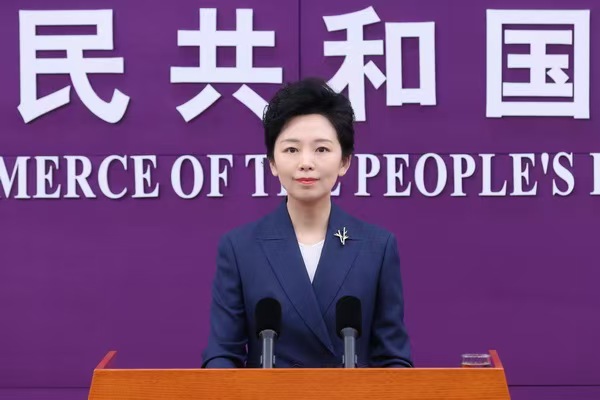
事关TikTok、美对华半导体产品加征301关税 商务部回应
Zhong Jin Zai Xian· 2025-12-25 12:26
Group 1: Semiconductor Tariffs - The Chinese government firmly opposes the U.S. decision to impose 301 tariffs on certain Chinese semiconductor products and has lodged a serious protest through the China-U.S. economic and trade consultation mechanism [1] - The U.S. tariffs are viewed as a violation of World Trade Organization rules, disrupting global supply chains and harming the interests of U.S. businesses and consumers [1] - China urges the U.S. to correct its actions and remove the tariffs, expressing willingness to resolve concerns through equal dialogue and consultation [1] Group 2: TikTok Joint Venture - The Chinese government supports the establishment of a joint venture by TikTok in the U.S. to ensure its continued operation, emphasizing the need for solutions that comply with Chinese laws and balance interests [2] - There is a call for the U.S. to fulfill commitments made during discussions between the two countries' economic teams, aiming for a fair and transparent business environment for Chinese companies in the U.S. [2] Group 3: Rare Earth Exports - The Chinese government is committed to promoting and facilitating compliant trade regarding rare earth magnets, indicating no immediate plans to relax export restrictions to the U.S. [3] - The emphasis is on maintaining the stability and security of global supply chains while facilitating compliant trade [3] Group 4: Sanctions on Venezuela - The Chinese government strongly opposes the U.S. unilateral sanctions and "long-arm jurisdiction" regarding the blockade of sanctioned oil tankers entering and leaving Venezuela [4] - The interception of oil tankers is seen as a potential disruption to the international energy market and could lead to other security risks [4] - China's trade relations with Venezuela are considered normal and legitimate under international law, and such rights should be respected [4]
美封锁进出委内瑞拉受制裁油轮,商务部:坚决反对“长臂管辖”
Xin Hua She· 2025-12-25 08:41
Core Viewpoint - The Chinese government opposes unilateral sanctions and the interception of oil tankers by the U.S., emphasizing that such actions could disrupt the international energy market and pose security risks [1] Group 1: Impact on Oil Trade - The U.S. has ordered the blockade of all sanctioned oil tankers entering or leaving Venezuela, having already intercepted three vessels [1] - China is one of the main buyers of Venezuelan crude oil, raising concerns about the potential impact on Sino-Venezuelan oil trade due to U.S. actions [1] Group 2: Legal and Diplomatic Stance - The Chinese Ministry of Commerce asserts that trade cooperation between Venezuela and other countries is normal, reasonable, and legal, and this right should be respected and supported [1]