
高精尖产业

Search documents
中国第二个5万亿城市来了,北京多项部署
2 1 Shi Ji Jing Ji Bao Dao· 2026-01-23 06:06
Core Insights - Beijing is projected to achieve a regional GDP of 52,073.4 billion yuan by 2025, marking it as the second "5 trillion city" after Shanghai, indicating a significant shift towards quality growth under strict constraints of "reduction development" [1][3] - The city plans to invest over 1.5 billion yuan in 2026 to support high-precision industries and small and medium-sized enterprises, focusing on over 25 policy support directions across key sectors such as integrated circuits, biomedicine, and digital economy [3][4] Economic Growth and Sector Contributions - In 2025, the information transmission, software, and IT services sectors, along with the financial industry, contributed over 70% to Beijing's economic growth, with the software industry alone achieving a value-added of 12,192.4 billion yuan, growing by 11.0% [2][9] - The manufacturing sector, particularly in computer and electronic equipment, saw a significant increase, with a 20.2% growth in value-added for the computer and communication equipment manufacturing industry [3] Policy Initiatives and Support Measures - The Beijing Municipal Economic and Information Bureau announced a "Create the Future" growth plan for 2026, focusing on six future industries: future information, health, manufacturing, energy, materials, and space [5][6] - The plan includes measures to support innovation in robotics, integrated circuits, and new materials, with specific funding support of up to 50% of project costs for qualifying initiatives [4] Digital Economy and Consumption Trends - The city aims to stimulate digital consumption and support the development of 2-3 leading AIGC digital content companies with revenues exceeding 10 billion yuan [2][10] - There is a strategic focus on integrating ultra-high-definition audio-visual technology with cultural tourism, promoting smart retail, and replicating metaverse business models to enhance service consumption [10][11] Infrastructure and Resource Development - Beijing plans to enhance its computing power resources, targeting a cumulative capacity of approximately 200,000 P by 2027, with initiatives to build super nodes and industry nodes in strategic locations [7][8] - The city has already allocated over 700 million yuan in computing power subsidies in 2023, supporting nearly 100 enterprises to reduce computing costs by over 15% [8]
中国第二个5万亿城市来了,北京多项部署
21世纪经济报道· 2026-01-23 06:04
Core Viewpoint - Beijing is set to achieve a regional GDP of 52,073.4 billion yuan by 2025, marking its transition to a "5 trillion city" alongside Shanghai, under strict constraints of "reduction development" and focusing on innovation-driven growth [1][4]. Group 1: Economic Growth and Industry Contribution - In 2025, the information transmission, software, and IT services industry, along with the financial sector, contributed over 70% to Beijing's economic growth [2][11]. - The GDP growth rate for Beijing in 2025 is projected at 5.4% year-on-year, with the industrial added value for large-scale industries increasing by 6.5% [4]. Group 2: Policy Support and Investment - Beijing plans to invest over 1.5 billion yuan in the first batch of high-precision industry development projects and support for small and medium-sized enterprises, covering over 25 policy support directions [3][4]. - The focus areas for investment include integrated circuits, biomedicine, material energy, information software, and the digital economy [4][5]. Group 3: Future Industry Development - The "Create Winning Future" growth plan will focus on six future industries: future information, future health, future manufacturing, future energy, future materials, and future space [7]. - The plan aims to support innovative products in robotics, integrated circuits, and new materials, addressing challenges in R&D and market validation [5][7]. Group 4: Digital Economy and Consumption - Beijing aims to stimulate digital consumption and cultivate 2-3 leading AIGC digital content companies with revenues exceeding 10 billion yuan [2][12]. - The city will promote the integration of ultra-high-definition audio-visual technology with cultural tourism, expanding smart retail and reverse customization applications [12][13]. Group 5: Computing Power and Infrastructure - By 2027, Beijing plans to build a computing power scale of approximately 200,000 P, enhancing its computing resource supply [8][9]. - The city will optimize the "Galaxy Computing Corridor" project to establish a collaborative computing power supply system, supporting the development of the AI industry [9].

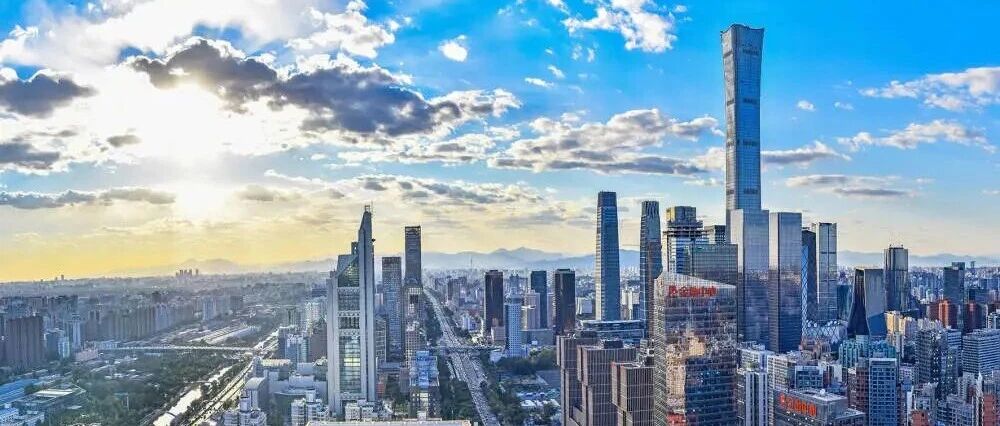
北京将投入超15亿资金助推高精尖产业升级
Xin Lang Cai Jing· 2026-01-22 18:09
昨日,北京市经济和信息化局(以下简称市经信局)举行"推动高精尖产业促升级、提质效、谋发展"新 闻发布会,系统介绍本市推动高精尖产业发展的重点举措。面向2026年,市经信局拟发布不少于25个政 策支持方向,支持领域涵盖集成电路、生物医药、材料能源、信息软件、数字经济等十余个重点产业, 计划投入资金超15亿元。 围绕高精尖产业领域重点任务 发布今年第一批实施指南 市经信局副局长、新闻发言人刘维亮会上介绍,2025年是"十四五"收官之年,全市高精尖产业发展稳中 有进,圆满完成年度各项目标任务,工业和信息软件业合计实现增加值突破1.8万亿元,占全市GDP比 重达到35.2%,对全市经济增长的贡献率达六成左右(59.1%)。工业增加值达6126.5亿元,同比增长 6.4%;信息软件业增加值12192.4亿元,增速11%,总量、增速均排名全市第一。2025年规模以上高技 术制造业和战略性新兴产业增加值分别增长7.5%和15.5%,工业和信息软件业在京新设企业数量同比分 别增长19.4%和47.7%,首都产业结构高端化态势显著。 2026年市经信局围绕企业核心诉求,编制了2026年第一批高精尖产业发展项目资金和支持中小企业 ...
成为第二个“5万亿之城”后,北京2026年将有这些新动作
2 1 Shi Ji Jing Ji Bao Dao· 2026-01-22 13:37
Core Insights - Beijing is projected to achieve a GDP of 52,073.4 billion yuan by 2025, becoming the second "5 trillion yuan city" after Shanghai, marking a significant transition towards innovation-driven growth and regional collaboration [1][3] Economic Growth and Industry Contribution - In 2025, the information transmission, software, and IT services sector, along with the financial industry, will contribute over 70% to Beijing's economic growth [2][10] - The GDP growth rate for 2025 is estimated at 5.4% year-on-year, with the industrial output value increasing by 6.5% [3] Policy Initiatives and Funding - Beijing plans to invest over 1.5 billion yuan in the first batch of high-precision industry development projects and support for small and medium enterprises in 2026, focusing on over 25 policy support directions [3][6] - The initiatives will target key industries such as integrated circuits, biomedicine, materials energy, information software, and the digital economy [3][6] Future Industry Development - The "Create the Future" growth plan will focus on six future industries: future information, future health, future manufacturing, future energy, future materials, and future space [7] - The plan aims to cultivate high-risk, long-cycle industries, with government support to mitigate early-stage risks and attract private investment [8] Digital Economy and Consumption - The digital consumption potential will be stimulated, with plans to nurture 2-3 leading AIGC digital content companies with revenues exceeding 10 billion yuan [10][11] - The strategy emphasizes the integration of technology breakthroughs with industry foundations to enhance consumption potential and establish Beijing as a global digital economy benchmark [11] Computing Power Infrastructure - Beijing aims to build a computing power scale of approximately 200,000 P by 2027, enhancing the supply of computing resources [8][9] - The "Galaxy Computing Corridor" project will create a collaborative computing power supply system, with significant investments in infrastructure across various regions [9]
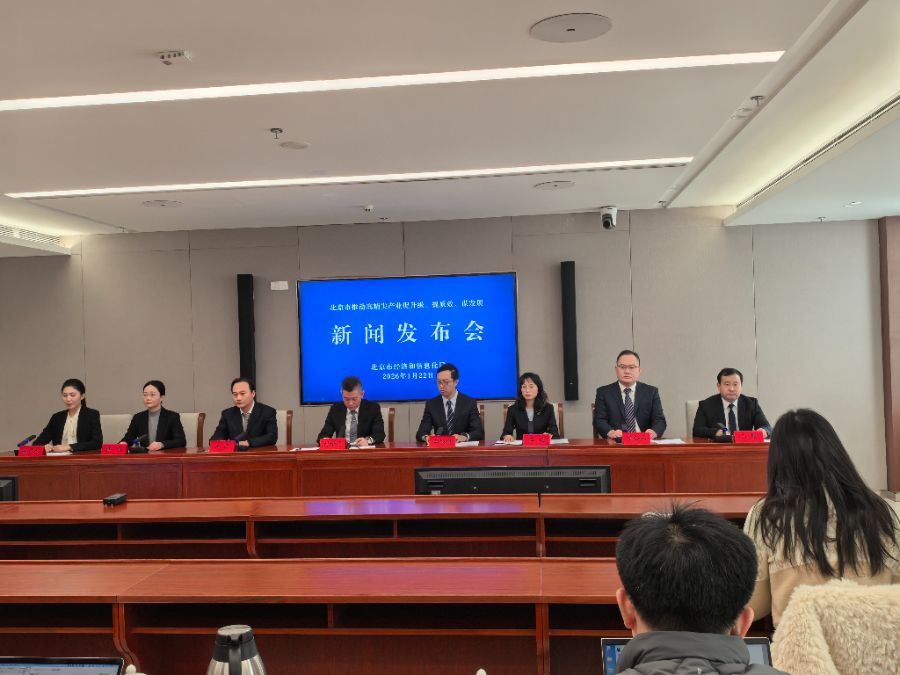
对全市经济增长贡献率约六成 2025年北京工业和信息软件业合计增加值突破1.8万亿元
Bei Jing Shang Bao· 2026-01-22 08:39
2025年,北京规模以上高技术制造业和战略性新兴产业增加值分别增长7.5%和15.5%,工业和信息软件 业在京新设企业数量同比分别增长19.4%和47.7%,首都产业结构高端化态势显著。 北京商报讯(记者 程靓)1月22日,在"推动高精尖产业促升级、提质效、谋发展新闻发布会"上,北京 市经济和信息化局副局长、新闻发言人刘维亮表示,2025年,北京工业和信息软件业合计增加值突破 1.8万亿元,占全市GDP的比重达到35.2%,对全市经济增长的贡献率达六成左右。其中,工业增加值达 6126.5亿元,同比增长6.4%;信息软件业增加值1.22万亿元,增速11%,总量、增速均排名全市第一。 2025年,北京工业重点产业及信息软件业完成投资2575.5亿元,对全市固定资产投资增长的贡献率达 162.4%;京津冀智能网联新能源汽车科技生态港(顺义)、中关村科学城国际医谷等重大项目如期开 工,为产业发展注入强劲动能。 ...
新华鲜报丨新跨越!北京成为我国第二个GDP超5万亿元城市
Xin Hua Wang· 2026-01-21 11:49
新华社北京1月21日电(记者张骁)继上海之后,北京正式成为我国第二个GDP突破5万亿元的城市。 北京市统计局1月21日发布,2025年,北京实现地区生产总值52073.4亿元,比上年增长5.4%。过去5年,北京经济增量约1.4万亿元,相当于 多造就了一个其经济最强的海淀区。 回望"来时路",北京这座古都曾经"大城市病"缠身。随着在全国超大型城市中率先实施以减量发展为特征的高质量发展,北京在框定总量、 限定容量等"硬约束"条件下,盘活存量、做优增量、提高质量。它用实践证明:经济总量大幅跃升同时,万元GDP能耗、水耗、碳排放等指标亦 能保持全国最优,最终得来"绿色的GDP"。 产业是经济社会发展的核心。无论从2025年经济报还是"十四五"成绩单来看,北京经济结构持续优化,得益于全面拥抱"高精尖"。数字经济 增加值占全市GDP比重超四成。全市前三大行业支撑有力,信息服务业规模稳居全国首位,金融业资产规模约占全国一半;制造业中,集成电 路、新能源汽车等尖端制造高速增长。 创新是经济社会发展的不竭动力,也是国际科创中心北京发展的最大优势。近年来,北京全社会研发经费投入强度常态保持在6%左右,平均 每天300多家科技企业 ...
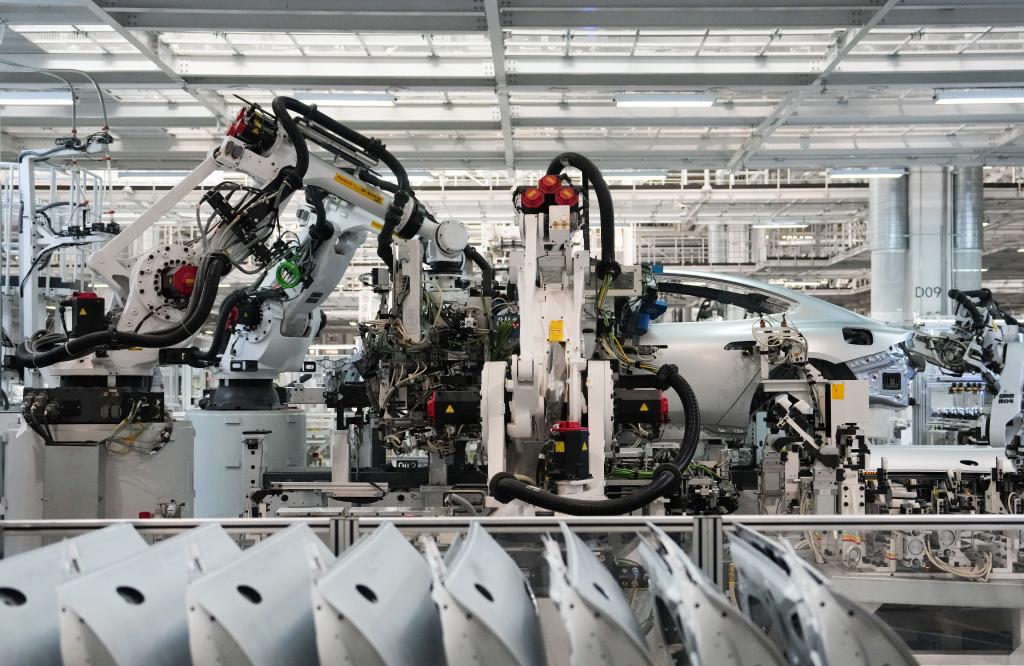
北京今年供地计划公布 严守“三条控制线”
Zhong Guo Xin Wen Wang· 2026-01-20 13:30
Core Viewpoint - Beijing plans to supply 3040-3540 hectares of new construction land by 2026, with a focus on affordable housing and strict adherence to three control lines: arable land, ecological protection, and urban development boundaries [1][2]. Group 1: Land Supply Plans - The plan includes 350 hectares designated for affordable housing to support new citizens and urban service personnel [1][2]. - A net reduction of 500 hectares in urban construction land is set for 2026, which is a decrease of 40 hectares compared to 2025 [1]. - Industrial land supply is planned at 480-540 hectares, an increase of 10-30 hectares from 2025, with at least 85% allocated to high-tech industries and key functional areas [1]. Group 2: Residential Land Supply - Residential land supply is set at 750-790 hectares, with flexible indicators for commercial residential land between 200-240 hectares [2]. - Development will prioritize areas around transit stations and regions with complete facilities to promote a balance of residential, commercial, and service functions [2]. - The plan aims to enhance the utilization of existing land, encouraging mixed-use development and flexible leasing options for industrial land [2].
去年北京写字楼租金价格累计跌幅超10%,高精尖产业或将带动市场修复
Sou Hu Cai Jing· 2026-01-16 13:47
Core Insights - The economic indicators for Beijing in 2025 show no significant improvement, with a vacancy rate of 19.1% in the office market and declining rental prices across various sectors [1][2] Office Market - The total new supply of office space in Beijing for 2025 was only 180,000 square meters, the lowest since 2015, which helped ease market de-stocking pressure [2] - The net absorption for the year reached 438,000 square meters, leading to a year-on-year decrease in vacancy rates by 1.9 percentage points [2] - Average rental prices in Beijing fell by 10.7% over the year, with the average price at 228.5 yuan per square meter per month [2] - Class A office projects are engaging in price competition to attract tenants, while Class B markets are experiencing more significant rental declines [2] Retail Market - The retail market in Beijing saw a supply peak in 2025, with 534,000 square meters of new retail space, all from urban renewal projects [5] - The "first store economy" is thriving, with various flagship stores opening across the city, indicating a shift towards new and differentiated retail offerings [5] - Despite the influx of new supply, a full recovery in consumer spending is expected to take time, with rental prices in secondary markets still under pressure [5] Warehouse and Logistics Market - The warehouse and logistics market faced severe challenges, with new supply reaching 1.4 million square meters and a vacancy rate soaring to 40.7%, both historical highs [7] - Demand has shifted to surrounding areas like Langfang and Tianjin, leading to a stark contrast in rental trends between Beijing and these regions [7] - Average rental prices in Beijing's warehouse market fell to 37.1 yuan per square meter per month, marking a 14.8% decline over the year [7]

最高100万支持!北京助推企业加快实现新三板挂牌上市
Sou Hu Cai Jing· 2026-01-06 09:46
Group 1 - The Beijing Municipal Science and Technology Commission and the Zhongguancun Science Park Management Committee announced a notification for collecting projects for the 2026 New Third Board listing subsidy support fund, aimed at providing financial support for enterprises to enhance R&D investment and promote innovation compliance development [1] - Eligible enterprises must be registered as national high-tech enterprises or Zhongguancun high-tech enterprises within the Zhongguancun National Independent Innovation Demonstration Zone, with similar conditions applicable to high-tech enterprises registered in other areas of Beijing [1] - Supported industries include advanced and future industries such as new generation information technology, integrated circuits, healthcare, smart equipment, energy conservation and environmental protection, new energy vehicles, new materials, artificial intelligence, software and information services, and technology services [1] Group 2 - The subsidy will be provided in a post-subsidy manner, with a maximum of 500,000 yuan for enterprises approved for listing in the basic tier, 500,000 yuan for those transitioning to the innovation tier, and 1,000,000 yuan for those directly entering the innovation tier [2] - The application process will be conducted online, with the submission period from January 5, 2026, to January 16, 2026, by 17:00 [3]
北京市科技型企业孵化器管理办法出台 市级孵化器在孵企业不少于30家
Xin Lang Cai Jing· 2026-01-03 22:19
Group 1 - The core focus of the incubators is on the development of high-tech industries and future industries, with capabilities in early-stage venture capital investment, self-funding investment, equity investment matching, and debt investment matching [1] - The newly issued "Management Measures for Technology-based Enterprise Incubators in Beijing" sets standards for municipal-level incubators, requiring them to have independent legal status, be registered and operational for at least one year, and focus on high-tech industry development [1] - Municipal-level incubators must provide entrepreneurial mentor training and guidance, possess early-stage investment capabilities, and have a professional and specialized operational team [1] Group 2 - The effectiveness of the incubators will be evaluated based on specific criteria, including having at least 30 incubated enterprises, with no less than 20% of newly registered enterprises in the previous year and at least 40% being technology-based SMEs [1] - At least five incubated enterprises should have been cultivated into national high-tech enterprises or unicorns in the previous year, with a national high-tech enterprise re-examination rate of over 75% [1] - The annual revenue or R&D expenditure of at least 30% of incubated enterprises should have increased by over 20% year-on-year [1] Group 3 - The application process for the 2025 municipal-level technology-based enterprise incubators in Beijing has commenced, with online application acceptance from January 26 to February 6, 2026 [2] - The recognition of municipal-level incubators is organized annually and is valid for three years, with the 2022 recognition period having expired and requiring re-evaluation according to the new management measures [2]