
信息服务

Search documents
2026年3月PMI点评:制造业供需两旺,价格指数加速上行
EBSCN· 2026-03-31 11:06
Manufacturing Sector - The manufacturing PMI for March 2026 is reported at 50.4%, an increase of 1.4 percentage points from the previous month, indicating a return to the expansion zone[2][4] - The production index rose by 1.8 percentage points, while the new orders index increased by 3.0 percentage points, reflecting a positive trend in manufacturing activities[4][12] - The proportion of companies reporting insufficient demand decreased to 48.5%, down 6.6 percentage points from the previous month, marking the first drop below 50% since July 2022[12] External Demand and Trade - The new export orders index surged to 49.1%, up 4.1 percentage points from the previous month, indicating a significant improvement in external demand[18] - The import orders index also rose to 49.8%, reflecting a synchronized recovery in trade activities[18] Price Trends - The raw material purchase price index increased by 9.1 percentage points to 63.9%, outpacing the factory price index, which rose by 4.8 percentage points to 55.4%, indicating rising cost pressures for businesses[21] - Both raw material and finished goods inventory indices saw a slight increase, with raw material inventory rising to 47.7% and finished goods inventory to 46.7%[22] Service Sector - The service sector PMI improved to 50.2%, a 0.5 percentage point increase from the previous month, driven by post-holiday resumption of work[24] - Key sectors such as transportation and financial services showed strong business activity indices above 55.0%, while retail and hospitality sectors experienced a decline[24]
PMI三大指数重返扩张区间!
证券时报· 2026-03-31 05:55
Economic Recovery - The economic sentiment in China is recovering, with the manufacturing PMI rising to 50.4% in March, an increase of 1.4 percentage points from the previous month, indicating a return to expansion after two months below 50% [1][3] - All 13 sub-indices of the manufacturing PMI showed improvement, with increases ranging from 0.2 to 9.1 percentage points, reflecting enhanced production and market activity [2][3] Manufacturing Sector - High-tech manufacturing PMI reached 52.1%, up 0.6 percentage points, marking 14 consecutive months above the threshold, indicating a positive development trend [6] - Equipment manufacturing and consumer goods PMIs were 51.5% and 50.8%, respectively, both rising into the expansion zone, with significant increases of 1.7 and 2.0 percentage points [6] - The proportion of manufacturing companies reporting insufficient demand fell to 48.5%, a decrease of 6.6 percentage points, the first time below 50% since July 2022 [6] Non-Manufacturing Sector - The non-manufacturing business activity index rose to 50.1%, up 0.6 percentage points, marking two consecutive months of increase [8] - The transportation sector, including rail, road, and water transport, showed significant improvement, while the financial sector maintained a strong performance with an index above 60% for four consecutive months [8] - The construction sector's business activity index was at 49.3%, still below 50 but up 1.1 percentage points, indicating a recovery in construction activities, particularly in civil engineering [9] Cost Pressures - Rising costs in raw materials and logistics, influenced by geopolitical tensions, have increased the proportion of companies facing high costs, which may erode profit margins [4][9]


2026年1-2月经济数据解读:供需两端均有所回暖
East Money Securities· 2026-03-19 06:06
Economic Overview - The economic data for January-February 2026 indicates a strong start, with industrial value-added increasing by 6.3% year-on-year, and the service production index rising by 5.2% year-on-year [1][6] - Retail sales of consumer goods grew by 2.8% year-on-year, while fixed asset investment (excluding rural households) increased by 1.8% year-on-year, marking a shift from negative to positive growth [1][6] Consumer Trends - Consumer spending showed significant improvement, with retail sales of consumer goods rising from 0.9% in December 2025 to 2.8% in January-February 2026, driven by the extended Spring Festival holiday and early subsidies for "trade-in" programs [6][8] - Excluding automobiles, retail sales increased by 3.7%, up 2 percentage points from December 2025 [6][8] - Service retail outperformed goods retail, with notable growth in tourism and leisure services, and restaurant income increasing by 4.8%, accelerating by 1.6 percentage points compared to the previous year [6][8] Investment Insights - Fixed asset investment turned positive with a cumulative year-on-year growth of 1.8%, compared to a decline of 3.8% in December 2025 [6][8] - Manufacturing and infrastructure investments rebounded significantly, with year-on-year growth rates of 3.1% and 11.4%, respectively, both exceeding December 2025 levels [6][8] - Real estate investment saw a year-on-year decline of 11.1%, but the rate of decline narrowed by 6.4 percentage points [6][8] Industrial Performance - The industrial sector demonstrated robust growth, with a year-on-year increase of 6.3% in industrial value-added, up from 5.2% in December 2025 [6][8] - Export delivery value also rose by 6.3% year-on-year, reflecting strong external demand [6][8] - High-tech manufacturing played a crucial role, with a year-on-year growth of 13.1%, surpassing the overall industrial growth rate [6][8] Service Sector Dynamics - The service sector maintained growth momentum, with the service production index increasing by 5.2% year-on-year, slightly up from December 2025 [6][8] - The cultural tourism and leisure entertainment markets were particularly active, benefiting from the extended holiday period [6][8] - The information transmission, software, and IT services sector saw a significant year-on-year growth of 10.1% [6][8] Real Estate Market - The real estate market remains weak, with declines in housing construction, new starts, completions, and sales continuing [6][8] - The price index for new residential properties in 70 large and medium-sized cities fell by 3.5% year-on-year, while second-hand residential prices decreased by 6.3% [6][8] Future Outlook - Economic growth momentum is expected to continue improving, supported by policy implementation and recovery in industrial activity [6][8] - The recent geopolitical tensions may lead to price increases in upstream resources, particularly in oil, which could have downstream effects on various sectors [6][8]
Gartner (NYSE:IT) 2026 Conference Transcript
2026-03-12 13:42
Gartner Conference Call Summary Company Overview - **Company**: Gartner - **Industry**: Information Services Key Points Industry Position and Client Value Proposition - Gartner focuses on helping senior operating executives make informed decisions regarding complex, multidimensional challenges, which cannot be addressed with publicly available information [4][5] - The company has over 2,400 experts and conducts more than 500,000 client interactions annually, providing a significant competitive advantage [5][6] Impact of AI on Business - Approximately 40% of Gartner's content and client interactions in 2025 are related to AI, indicating its growing importance across various enterprise functions [8] - Gartner has developed a database of several thousand AI use cases to assist clients in optimizing their AI strategies [9] - The company is leveraging GenAI to enhance user experience on its platform, with the AskGartner feature allowing clients to ask natural language questions and receive tailored insights [12][13] Contract Value and Growth Trends - Total contract value (CV) growth has moderated to flat or low single-digit growth, a shift from historical double-digit growth rates [20] - External factors, such as reduced spending from the U.S. federal business and budget constraints in tariff-affected industries, have impacted growth [21][23] - Despite these challenges, Gartner's client base continues to recognize the value of its offerings, with a resilient performance noted in the face of a difficult selling environment [24][25] Client Engagement and Retention - Client engagement has increased in 2025 compared to 2024, with improvements in various metrics such as AskGartner usage and analyst inquiries [26] - Engagement levels are seen as a leading indicator of retention, and Gartner is focused on delivering enhanced value to offset external spending constraints [27] Conference and Consulting Segments - The conference segment has shown strong pricing power and attendance recovery post-COVID, serving as a valuable tool for client engagement and retention [31][32] - The consulting business, which supports clients on technology strategy and project management, is experiencing variability, particularly in contract optimization related to AI implementation [33][34] Outlook on IT Spending - Gartner's growth is more closely tied to global expense trends rather than solely IT spending, with expectations of continued strength in technology spending across various sectors [35][37] - The company remains optimistic about the demand for technology and its ability to adapt to changing client needs, especially during times of budget constraints [29][30] Analyst Role and Value - Gartner analysts play a critical role in delivering insights, with about 90% of contract value derived from products that allow clients to interact with experts [17][18] - The AskGartner feature has improved clients' ability to find relevant insights quickly, leading to more impactful discussions with analysts [19] Additional Insights - Gartner's individualized relationship with clients is crucial for delivering value, and the company does not plan to shift to an enterprise model, maintaining its focus on individual licensed users [58][59] - The consultative sales approach is emphasized, with frontline salespeople playing a vital role in understanding client priorities and delivering tailored insights [60][61]

统一大市场夯实发展新格局,伊朗局势持续紧张
Southwest Securities· 2026-03-09 03:05
Domestic Developments - The Ministry of Science and Technology issued guidelines for the development of a comprehensive technology insurance system, aiming to support high-level technological self-reliance and innovation through 20 measures[9] - The National Development and Reform Commission held a meeting focusing on expanding domestic demand and stabilizing investment, with a commitment to accelerate targeted policies for private enterprises[10] - A tax data report indicated that by 2025, over 80% of provinces in China will see positive growth in inter-provincial sales, reflecting the progress in building a unified national market[12] International Developments - The U.S. and Israel launched strikes against Iran, leading to significant geopolitical tensions and fluctuations in asset prices, including a rise in oil prices above $80 per barrel[16] - In February, the U.S. manufacturing PMI remained in expansion territory at 52.4, but the input price index surged to a near four-year high of 70.5, indicating rising inflationary pressures[18] - The Eurozone's February CPI rose by 1.9% year-on-year, exceeding expectations, driven by increased service prices, particularly in Italy, which saw a 6.1% rise in restaurant and accommodation costs[21] Market Trends - Brent crude oil prices increased by 15.77% week-on-week, while iron ore prices rose by 0.72%, indicating upward pressure in commodity markets[25] - Real estate sales surged by 63.37% week-on-week, reflecting a strong recovery in the housing market[25] - The DXI index for storage DRAM prices increased by 2.15% week-on-week, suggesting a positive trend in emerging industries[33]
路桥信息:2025年年度业绩快报公告
Zheng Quan Ri Bao· 2026-02-27 13:39
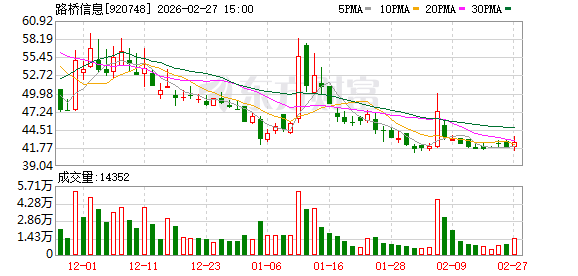
Group 1 - The company reported a projected operating revenue of 102,518,791.82 yuan for 2025, representing a year-on-year decline of 52.25% [2] - The net profit attributable to shareholders of the listed company is projected to be -60,485,649.59 yuan, compared to a profit of 3,721,515.85 yuan in the same period last year [2]
永争第一!中国最强省,出手了
Xin Lang Cai Jing· 2026-02-24 04:55
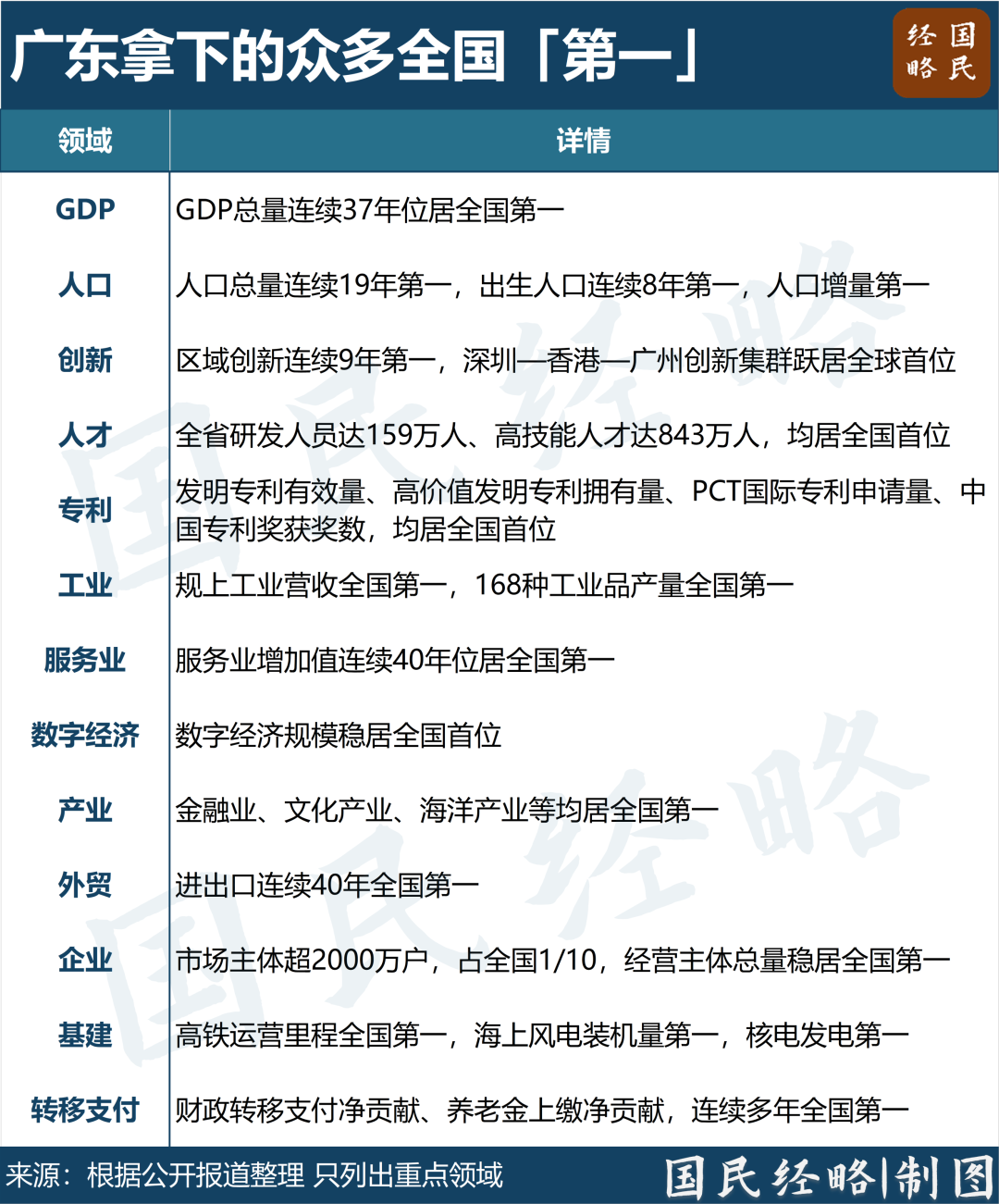
Core Viewpoint - Guangdong aims to double its economic output by 2035, reaching approximately 25.8 trillion yuan, showcasing its ambition to maintain its status as China's leading province in various sectors [1][11]. Economic Performance - Guangdong has maintained the highest GDP in China for 37 consecutive years, with a projected GDP of 14.58 trillion yuan by 2025, ranking 11th globally, surpassing countries like Australia and South Korea [3][11]. - The province's population reached 129 million in the previous year, with a net increase of 790,000 and a birth rate of 1.003 million, all ranking first in the nation [3][11]. Innovation and Competitiveness - Guangdong leads in regional innovation for nine consecutive years, with significant achievements in patent applications and awards, indicating a strong capacity for industrial technology integration [2][7]. - The "Shenzhen-Hong Kong-Guangzhou" innovation cluster is set to rank first globally by 2025, surpassing established tech hubs like Tokyo and San Francisco [8][7]. Industrial and Service Sector Leadership - The province's industrial revenue and service sector value added are both ranked first nationally, with Guangdong accounting for one-eighth of China's industrial scale [4][11]. - Guangdong has established ten trillion-yuan industrial clusters across various sectors, including electronics, information services, and new energy [4][11]. Fiscal Contributions - As the top fiscal contributor, Guangdong generates over 2 trillion yuan in domestic tax revenue annually, with a net contribution of approximately 800 billion to 1 trillion yuan after transfers [6]. - The province has contributed over 500 billion yuan in pension funds since 2018, exceeding the total contributions of all other provinces combined [6]. Future Growth Strategy - To achieve its 2035 GDP target, Guangdong needs to maintain an annual nominal growth rate exceeding 5%, which poses challenges given the current economic transition [11][13]. - The focus on the synergy between manufacturing and service industries is crucial for sustaining economic growth and enhancing competitiveness in a rapidly changing global landscape [9][11].
2025全国省GDP排名:上海5.6万亿仅第9,北京没进前十,第一太强
Sou Hu Cai Jing· 2026-02-20 03:09
Core Insights - The unexpected GDP ranking of provinces in China for 2025 has sparked significant online discussion, particularly regarding the surprising positions of major cities like Shanghai and Beijing, which did not make it into the top ten despite their strong economic performance [1][3][5]. Group 1: Economic Performance - Shanghai's GDP reached 5.67 trillion yuan, placing it ninth nationally, while Beijing surpassed 5.2 trillion yuan but failed to enter the top ten [5][9]. - The leading province, Guangdong, reported a GDP of 14.58 trillion yuan, significantly outpacing other provinces and cities, showcasing a clear economic gap [22][37]. Group 2: Comparative Analysis - The ranking highlights a stark contrast between the economic capabilities of Guangdong and the two major cities, with Guangdong's GDP being equivalent to 2.5 times that of Shanghai and 2.7 times that of Beijing [22][39]. - The population and land area differences play a crucial role in GDP comparisons, as Guangdong has a much larger population base of 128 million compared to the combined population of Shanghai and Beijing, which is under 50 million [27][39]. Group 3: Development Strategies - Shanghai and Beijing have shifted their focus from total GDP to high-quality development, emphasizing advanced industries such as integrated circuits and artificial intelligence, rather than competing solely on total output [19][31]. - Guangdong's economic strength is attributed to a balanced development across various sectors, including manufacturing, foreign trade, and emerging industries, which has allowed it to maintain its leading position for 37 consecutive years [37][49]. Group 4: Emerging Trends - The 2025 GDP rankings also revealed notable performances from provinces like Tibet and Gansu, which achieved significant growth rates, indicating a diversification of economic development across China [51][52]. - The overall GDP of China reached approximately 140.19 trillion yuan in 2025, reflecting a growth of 3.99% from the previous year, with Guangdong, Jiangsu, and Shandong entering the "ten trillion club" [46].

36氪上半年营收9320万元,净亏损收窄至480万元
Jing Ji Guan Cha Wang· 2026-02-13 17:47
Core Insights - The company is focusing on business progress and financial performance as key areas of interest [1] Financial Performance - For the first half of 2025, the company reported revenue of 93.2 million yuan, with a gross margin increase to 54.4% and a narrowed net loss of 4.8 million yuan [2] Business Development - The company plans to concentrate on upgrading original content, commercializing AI products, and scaling industrial services in the second half of the year to achieve a break-even point [3] Stock Performance - On January 8, 2026, the company's stock had a trading volume of 8,181.00 USD, with a stock price of 4.22 USD, reflecting a daily increase of 0.24%. Future events such as earnings reports have not been explicitly mentioned in public information, and it is advised to monitor official announcements for updates [4]

宏观经济周报:海外非农增长,国内通胀回升-20260213
BOHAI SECURITIES· 2026-02-13 08:51
Group 1: U.S. Economic Overview - U.S. retail sales unexpectedly stagnated in December 2025, with the control group retail sales showing a negative month-on-month growth, indicating high living costs suppressing consumption among low- and middle-income groups[1] - Non-farm employment rebounded unexpectedly, reversing the weak trend seen at the end of 2025, with private sector jobs supported mainly by education and healthcare, while financial and information sectors continued to decline due to AI substitution effects[1] - The unemployment rate decreased despite an increase in labor participation rate, with a slight rise in hourly wage growth, although the overall employment data may still be overestimated[1] Group 2: Domestic Economic Conditions - In January, the Consumer Price Index (CPI) month-on-month growth remained flat, with food prices slowing down but pork prices turning positive; core CPI continued to rise due to the upcoming Spring Festival[3] - Producer Price Index (PPI) showed an upward trend, with price changes in crude oil and non-ferrous metals causing a divergence in PPI growth across industries, while "anti-involution" policies positively impacted sectors like photovoltaics and lithium batteries[3] - Real estate transactions remained at a low point, with wholesale agricultural prices declining, and prices for steel and cement slightly decreasing, while upstream prices for coking coal and coking fell, and prices for non-ferrous metals and gold generally declined[3]