黄酒年轻化

Search documents
黄酒企业三季报业绩稳中向好 守正创新焕发行业活力
Zheng Quan Ri Bao Wang· 2025-10-31 12:37
Core Insights - The yellow wine industry has shown a recovery growth trend in 2023, with three A-share yellow wine companies reporting year-on-year profit increases in their Q3 results, indicating a stable growth trajectory driven by consumption transformation and cultural innovation [1] Group 1: Company Performance - Kuaijishan reported a Q3 revenue of 395 million yuan, a year-on-year increase of 21.09%, with a net profit attributable to shareholders of 22.39 million yuan, up 2.47% [2] - For the first nine months of the year, Kuaijishan's sales revenue from mid-to-high-end yellow wine, regular yellow wine, and other alcoholic products were 751 million yuan, 273 million yuan, and 150 million yuan respectively, with mid-to-high-end yellow wine sales increasing by 19.64% and other products surging by 109.20% [2] - Guyuelongshan achieved a cumulative revenue of 1.186 billion yuan in the first three quarters, with Q3 revenue of 293 million yuan and a net profit of 44.58 million yuan, reflecting a year-on-year growth of 11.78% [2] Group 2: Market Trends and Innovations - The growth in yellow wine companies' performance is attributed to product structure adjustments, marketing innovations, and brand rejuvenation, with product upgrades being the core driver of revenue growth [2] - Yellow wine, as a traditional Chinese beverage, is expected to continue making breakthroughs in high-end and youth-oriented markets due to deep cultural roots and a solid consumer base [2] Group 3: Innovation and Marketing Strategies - Kuaijishan has introduced innovative products like sparkling yellow wine and various flavored low-alcohol options to cater to younger consumers, while also expanding its e-commerce presence through platforms like Xiaohongshu and Douyin [3] - The company has created a closed-loop marketing model through Douyin live streaming, enhancing online sales growth by aligning product taste with consumer health preferences [3] - Guyuelongshan has opened 65 tasting and slow wine bars globally to promote yellow wine culture and engage with consumers, while also participating in music festivals and sports events to connect with younger audiences [4]


老“CP”有新思路 黄酒场景消费如何激活
Bei Jing Shang Bao· 2025-10-21 13:44
Core Insights - The consumption of yellow wine is experiencing a surge alongside the peak season for hairy crabs, with traditional products being complemented by younger, innovative offerings [1][2] - The market is characterized by intense competition among brands, both traditional and new entrants, as they seek to capitalize on the growing demand for yellow wine during the crab season [1][6] Market Trends - The introduction of youthful yellow wine products by leading brands such as Kuaijishan and Guyuelongshan is reshaping the traditional pairing of yellow wine with hairy crabs [2][11] - Sales data indicates that Kuaijishan's 8-degree sparkling yellow wine has surpassed 6,000 sales, while Guyuelongshan's similar product has exceeded 400 sales, highlighting a shift in consumer preferences towards innovative products [2][11] Industry Growth - The hairy crab market has shown significant growth, with production reaching a historical high of over 7 billion crabs in 2023, indicating a robust demand that supports the yellow wine market [7][11] - The yellow wine industry is projected to grow, with sales revenue reaching 21 billion yuan in 2023, a 2.1% increase year-on-year, and expected to exceed 30 billion yuan by 2025, maintaining a compound annual growth rate of over 5% [11][12] Consumer Behavior - The younger demographic is increasingly drawn to low-alcohol beverages, making yellow wine appealing due to its lower alcohol content and palatable taste [11][12] - Brands are focusing on expanding consumption scenarios beyond traditional dining, aiming to position yellow wine as a cultural lifestyle product through innovative venues like "slow wine bars" [12][13] Strategic Initiatives - Companies are encouraged to enhance their brand's appeal to younger consumers through innovative marketing strategies, including social media engagement and collaborations with influencers [13][14] - The establishment of experiential consumption spaces, such as slow wine bars, allows brands to gather consumer data and preferences, facilitating a deeper connection with the target audience [12][13]

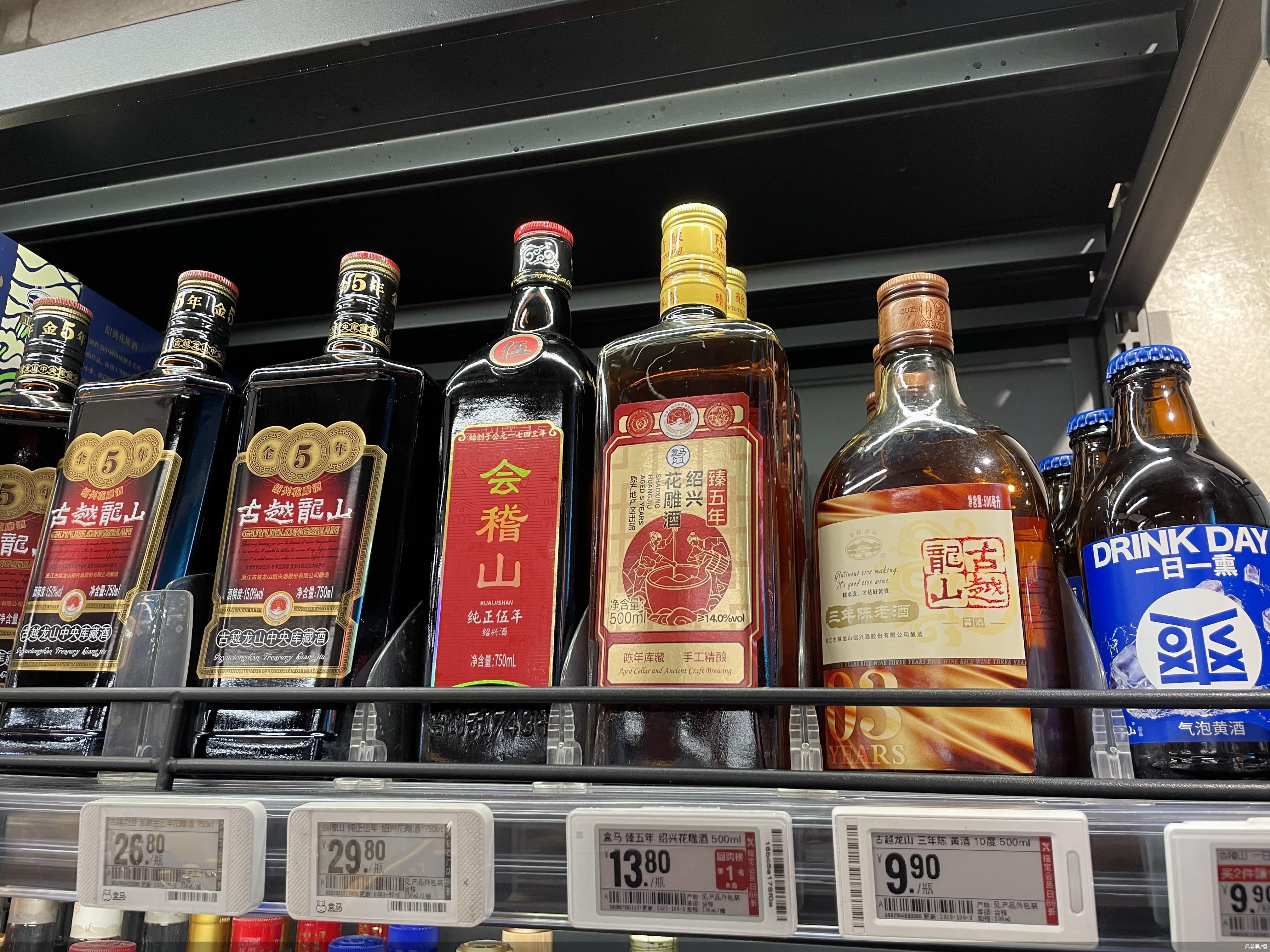
古越龙山反攻 与华润啤酒达成战略合作
2 1 Shi Ji Jing Ji Bao Dao· 2025-10-15 23:49
Core Insights - The strategic partnership between Guyue Longshan and China Resources Beer aims to innovate in the alcoholic beverage market by launching a new product, "Yellow Wine Brewed Beer," targeting a broader consumer base [1][2][3] - The collaboration is part of a larger strategic framework established between the Zhejiang provincial government and China Resources Group, focusing on high-quality development and consumer expansion [2] - The market for yellow wine has seen a resurgence, with companies like Kuaijishan experiencing significant stock price increases, while Guyue Longshan has lagged behind in growth [1][7][8] Company Collaboration - Guyue Longshan and China Resources Beer have signed a strategic cooperation agreement to leverage each other's strengths in marketing and product development [2][5] - The new product will first be launched in East China, with plans for nationwide expansion [3][5] - The partnership is expected to combine the youthful marketing strategies of China Resources Beer with the cultural heritage of Guyue Longshan [5][10] Market Dynamics - Kuaijishan has seen its stock price rise by over 120% this year, surpassing Guyue Longshan in market capitalization, which is currently around 9 billion [7][8] - Guyue Longshan's revenue growth has been slow, with a reported 0.4% increase in the first half of the year, while Kuaijishan's revenue exceeded 800 million with double-digit growth [8][9] - The yellow wine market is experiencing a shift, with innovative products like sparkling yellow wine gaining popularity, highlighting the need for Guyue Longshan to adapt quickly [7][9] Product Innovation - The new "Yellow Wine Brewed Beer" is positioned as a novel product that combines the characteristics of both yellow wine and beer, aiming to attract younger consumers [4][5] - Guyue Longshan has previously attempted to innovate with products like coffee yellow wine and yellow wine ice cream, but these efforts have not yet translated into significant market success [10] - The collaboration with China Resources Beer is seen as a crucial step for Guyue Longshan to enhance its product offerings and market presence [11]

黄酒行业深度:老树生新芽,行业向上空间大
2025-09-28 14:57
Summary of Huangjiu Industry Conference Call Industry Overview - The Huangjiu industry benefits from a favorable tax policy, with net profit margins superior to Baijiu under similar gross margins. Leading companies like Kuaijishan have achieved gross margins exceeding 60%, while Jimo Laojiu and Wuzhanmao have net profit margins of 18% and 15% respectively. If product structures stabilize and gross margins approach 70%-80%, net margins could easily reach 20% [1][2] Key Points and Arguments - **Market Size and Consumption Habits**: The Huangjiu market is relatively small, with consumption habits being regionally strong, primarily concentrated in Jiangsu, Zhejiang, and Shanghai. The lack of clear consumption scenarios, as Huangjiu is often viewed as a staple or cooking ingredient, poses a significant challenge for consumer education [1][4] - **High-End Development Strategies**: Leading companies are pushing for high-end development through product innovation and channel reform. For instance, Kuaijishan has launched the Benniang series, while both Kuaijishan and Guyuelongshan are actively promoting high-end strategies, achieving significant results through consumer engagement and high-end cultivation [1][5] - **Kuaijishan's Strategic Moves**: Since the shareholder change in 2022, Kuaijishan has restructured its organization, enhanced its sales team, and refined its product structure. The company has established a dual-brand strategy with Kuaijishan and Lanting, focusing on nationalization, high-end, and youth-oriented development [1][6] - **Current Policy Environment**: The current policy environment has a limited impact on Huangjiu, particularly high-end products like Lanting, which are not significantly affected by policy restrictions. However, the overall cautious consumption environment may slow the speed of new partnerships, although growth potential remains in the second half of the year [1][8] Challenges Facing the Industry - The Huangjiu industry faces challenges such as a small market size, strong regional consumption habits, and a lack of distinct consumption scenarios compared to Baijiu and beer, which have much larger market scales [4] Company Performance and Future Expectations - Kuaijishan's sales volume has reached last year's total, with the Lanting series benefiting from a high-profile strategy that provides profit margins for group buyers, leading to high channel enthusiasm. The 1,743 series has a clear positioning and good sales rhythm, expected to become a major profit source [3][9] - Guyuelongshan is integrating dispersed production facilities to reduce costs and improve efficiency. The company is also innovating products to attract younger consumers and expanding brand influence through platforms like Douyin [3][12] Future Growth Prospects - The Huangjiu industry shows a trend of upward development, with potential for significant improvement in net profit margins. If net profit margins gradually reach 20% or higher by 2026-2027, the industry could see a doubling of current profit levels [15][16] - New consumption attributes are emerging in the Huangjiu industry, with recent reforms attracting market attention. The upcoming peak season, especially around the Spring Festival, is expected to accelerate growth, supported by channel expansion and improved consumer demand [17]
黄酒半年报丨古越龙山“一哥”地位险被超,会稽山增收难增利
Bei Ke Cai Jing· 2025-09-16 09:09
Group 1: Industry Overview - The competition in the yellow wine market is intensifying, with the revenue gap between the leading company, Guyue Longshan, and the second-ranked company, Kuaijishan, narrowing year by year [1][2] - The yellow wine industry has a small market size, accounting for less than 2% of the total alcoholic beverage market, indicating significant future market potential [1] Group 2: Company Performance - Guyue Longshan reported a revenue of 893 million yuan in the first half of the year, a year-on-year increase of 0.40%, while its net profit decreased by 4.72% to 90.31 million yuan [2][3] - Kuaijishan achieved a revenue of 817 million yuan, a year-on-year growth of 11.03%, and a net profit of 93.88 million yuan, up 3.41% [2][3] - Jinfeng Wine experienced a revenue decline of 9.04% to 216 million yuan and reported a loss of 7.14 million yuan, although the loss has narrowed compared to previous periods [3][4] Group 3: Financial Dynamics - Kuaijishan's sales expenses reached 215 million yuan, a significant increase of 53.69%, which has impacted its profit margins despite revenue growth [6][7] - The company has been investing in advertising and promotions, including collaborations with celebrities, which has led to increased sales but also higher costs [6][7] Group 4: Market Strategies - Both Guyue Longshan and Kuaijishan are focusing on product innovation aimed at younger consumers, with new product lines being introduced to capture this demographic [8][10] - The companies are also pursuing national expansion strategies, although they face challenges in penetrating markets outside their traditional strongholds in Jiangsu, Zhejiang, and Shanghai [9][10] Group 5: Consumer Trends - The yellow wine industry is experiencing a shift towards high-end and younger consumer segments, but the transition is proving challenging and requires time for market acceptance [11] - The current main price range for yellow wine is around 20 yuan, which is significantly lower than that of white wine, suggesting room for product upgrades [11]

黄酒:积极求变,创新突围
2025-09-09 14:53
Summary of Huangjiu Industry Conference Call Industry Overview - The Huangjiu industry is experiencing significant challenges, including a sharp decline in scale and sales volume, with a need for transformation and upgrading due to unclear consumption scenarios, an aging consumer base, and low-end product offerings [1][2][3] - The market concentration is increasing, with leading companies such as Guyue Longshan, Kuaijishan, and Jinfeng Liquor significantly increasing their market share, yet overall sales revenue is still declining, indicating intensified market competition and survival pressure for companies [1][4] Core Insights and Arguments - The Huangjiu industry has reached a turning point towards high-end products and diversified consumption scenarios, with leading companies launching premium series and utilizing tasting promotions to expand their core consumer base. The price per ton of mid-to-high-end products has increased, with Kuaijishan's mid-to-high-end product ton price rising by 20% year-on-year and Guyue Longshan's by 10% [1][5] - Leading companies have begun to implement price increases on mass-market products, approximately 5%, reflecting their enhanced bargaining power due to increased market concentration [1][6] - Kuaijishan has introduced innovative products like sparkling Huangjiu and utilized e-commerce platforms and holiday promotions to attract younger consumers, achieving a breakthrough effect and providing new ideas for the industry's youth-oriented and social development [1][7] Challenges Faced - The Huangjiu industry faces several key challenges, including a lack of clear consumption scenarios compared to other alcoholic beverages, a severely aging consumer demographic, and a predominance of low-end products priced around 20-30 yuan, which hampers the expansion into high-end markets and brand value enhancement [3][9] - Despite the increase in market concentration, the overall sales revenue has decreased from 20 billion yuan in 2016 to around 10 billion yuan in 2023, indicating a need for strategic shifts [4][8] Market Performance and Trends - In 2023, the sales revenue of Huangjiu production companies was approximately 10 billion yuan, with total profits around 1.6 billion yuan. The industry has seen a 50% decline in scale and sales volume from 2016 to 2023, while other alcoholic beverages like Baijiu and beer have performed strongly [2][8] - Since the end of the pandemic in 2022 and 2023, leading companies have seen revenue growth rates increase from single digits to double digits, with Kuaijishan and Guyue Longshan achieving revenue growth rates of 10% and 9%, respectively [8][9] Future Directions - The future development of Huangjiu companies will focus on high-end product offerings and diversified consumption scenarios. Although the current channel profits for single bottles of Huangjiu are acceptable, there is still a gap in turnover rates and sales compared to Baijiu and beer [10] - Strategies such as product innovation, including the introduction of sparkling Huangjiu, are essential for improving consumer acceptance. Long-term, the high-end pricing strategy will be crucial, along with efforts to attract younger consumers [10][12] Capital Market Expectations - The capital market has high expectations for Huangjiu companies, with Kuaijishan's stock price doubling and Guyue Longshan's stock price increasing by 40%-50%. However, investors should be cautious regarding valuation, as current stock prices reflect significant expectations, with leading companies' valuations around 40 times earnings [11][12] Conclusion - The Huangjiu industry is at a critical juncture, requiring strategic innovation and market expansion efforts to overcome existing challenges and capitalize on emerging opportunities for growth and profitability [1][10][12]
会稽山(601579):25H1收入稳健增长 高端化成效显著
Xin Lang Cai Jing· 2025-08-27 00:30
Core Viewpoint - The company reported a stable revenue growth in the first half of 2025, driven by innovative marketing strategies and product upgrades, particularly in the high-end yellow wine segment [1][2][3] Revenue Performance - In H1 2025, the company achieved revenue of 820 million yuan, a year-on-year increase of 11.0%, and a net profit attributable to shareholders of 90 million yuan, up 3.3% year-on-year [1] - In Q2 2025, the company generated revenue of 340 million yuan, a year-on-year increase of 12.4%, with a net profit of 134,000 yuan, recovering from a loss of 1.397 million yuan in the same period last year [1] - Revenue from mid-to-high-end yellow wine, ordinary wine, and other wines in H1 2025 was 520 million yuan, 200 million yuan, and 70 million yuan respectively, with year-on-year growth rates of 7.2%, 2.5%, and 60.5% [1] Market and Product Strategy - The company focused on online business during the off-season, promoting its sparkling yellow wine products through collaborations with popular influencers and celebrities, targeting the younger demographic [1] - Revenue by region in H1 2025 showed significant growth in Zhejiang (520 million yuan, +19.3%) while other regions like Jiangsu and Shanghai experienced declines [1] Profitability and Cash Flow - The gross margin in H1 2025 increased by 5.4 percentage points to 55.4%, attributed to the rising proportion of mid-to-high-end yellow wine [2] - The overall expense ratio rose by 3.7 percentage points to 34.5%, with sales expense ratio increasing due to heightened brand investment [2] - Cash flow remained stable, with cash receipts in Q2 2025 amounting to 900 million yuan, a year-on-year increase of 22.1% [2] Industry Outlook - The yellow wine industry is witnessing a trend towards brand premiumization and product structure upgrades, presenting historical opportunities for brand and value recovery [3] - The company is leveraging cultural elements of yellow wine and pursuing breakthroughs in both youth-oriented and high-end markets, aiming for sustained growth [3] - Profit forecasts for the company indicate net profits of 240 million yuan, 300 million yuan, and 380 million yuan for 2025-2027, with corresponding dynamic P/E ratios of 42x, 33x, and 27x [3]
黄酒:龙头引领破局,黄酒复兴可期
Tianfeng Securities· 2025-08-14 05:13
Investment Rating - Industry Rating: Outperform the market (first rating) [5] Core Viewpoints - The yellow wine industry, as one of the three ancient wines in the world, is expected to revive due to the leadership of major brands and the transformation towards "high-end, national, and youth-oriented" strategies [1][3][19] - Historical constraints such as low pricing, regional limitations, weak social scenarios, and a lack of younger consumer engagement have hindered the development of yellow wine [2][10] - Recent breakthroughs include supportive policies, a shift towards high-end branding, national expansion, and targeting younger demographics, which are expected to drive the industry's revival [3][19] Summary by Sections Historical Constraints - Pricing limitations have led to a low-end product structure, with 60% of national sales coming from products priced below 40 yuan [11] - The primary market for yellow wine remains concentrated in the Yangtze River Delta, accounting for 79% of the overall market size [14] - Consumption scenarios are predominantly home-based, with social attributes being weak, as only 21% of consumption occurs in social settings [16] - The core consumer group is primarily males aged 40 and above, with younger consumers showing limited engagement [17] Breakthrough Changes - Policy support has emerged, with local governments establishing dedicated teams to promote the yellow wine industry [20] - Major brands are focusing on high-end product development, with successful launches like Gu Yue Long Shan's "Guo Niang 1959" and Kuaijishan's "Lanting" [21] - National expansion efforts have shown results, with Gu Yue Long Shan's sales outside Jiangsu, Zhejiang, and Shanghai increasing from 27% to 43% from 2018 to 2024 [22] - Innovations targeting younger consumers include new flavor profiles and lower alcohol content products, such as sparkling yellow wine and herbal-infused options [26] Investment Recommendations - The report suggests focusing on two leading brands, Kuaijishan and Gu Yue Long Shan, which have made significant progress in high-end, national, and youth-oriented strategies [28]
会稽山20250807
2025-08-07 15:04
Summary of the Conference Call for Kuaijishan Company Overview - Kuaijishan is undergoing modernization and diversification efforts, including acquisitions of Wuzhanmao and Tang Song, but has not yet established a core business from these attempts [2][4] - The company aims to become a benchmark for Chinese yellow wine through high-end, youthful, and fashionable strategies under the leadership of Zhongjianxin Holdings [5] Financial Performance - The proportion of mid-to-high-end revenue increased from 60% in 2022 to 67.3% in 2024, nearing the peak of 2019 [2][7] - The compound annual growth rate (CAGR) for mid-to-high-end yellow wine revenue is projected at 21.4% from 2022 to 2024, significantly outpacing the 3.7% growth for regular yellow wine [2][7] - Revenue is heavily concentrated in the Jiangsu, Zhejiang, and Shanghai regions, accounting for 88.8% of total revenue, with Zhejiang alone contributing 62.1% [2][8] Strategic Initiatives - The company has implemented a dual-brand strategy with Kuaijishan and Lanting, focusing on enhancing brand recognition through tasting events and factory tours [4][6] - Collaborations with KOLs on platforms like Douyin have attracted younger consumers, with notable sales increases in the Shaoxing region [4][17] Market Dynamics - The yellow wine industry is experiencing a recovery, with total revenue for large-scale yellow wine enterprises reaching 8.547 billion yuan in 2023, although still below 2022 levels [12] - The industry is characterized by a high market concentration, with the top three companies (Guyuelongshan, Kuaijishan, and Jinfeng Wine Industry) holding a combined market share of approximately 43% [13] Consumer Trends - The primary consumption scenario for yellow wine remains home drinking, accounting for about 55%, but there is potential for expansion into business banquets as economic conditions improve [11] - The company is exploring innovative product categories, such as sparkling yellow wine, to appeal to younger demographics [17][18] Governance and Management - Kuaijishan has a clear governance structure following the change of controlling shareholder and actual controller in 2022, enhancing execution efficiency [9] - A share repurchase plan was initiated to boost market confidence, with 9 million shares repurchased by February 2024 [9] Future Outlook - The company is expected to benefit from price elasticity due to coordinated price increases by distributors, which could enhance profitability [19] - Despite high current valuations, there is significant potential for profit expansion as reforms deepen and new products are launched [20]
年轻化迫在眉睫!古越龙山用破亿金额“杀入”威士忌领域
Nan Fang Du Shi Bao· 2025-07-03 14:07
Core Viewpoint - The domestic whiskey market is witnessing new entrants, with Gu Yue Long Shan making a significant investment in whiskey production to attract younger consumers amid stagnant growth and competitive pressure from peers [2][3]. Group 1: Company Strategy - Gu Yue Long Shan has signed an agreement to secure over 4,000 barrels of glutinous rice whiskey from Zhejiang Chuan Yan Shi Jiu Ye Co., with an order value exceeding 100 million yuan [2]. - The company has been developing its whiskey line for nearly six years, collaborating with Jiangnan University and Hong Kong Phoenix Group for product development and marketing [3]. - The company aims to enhance its brand appeal to younger consumers, focusing on product optimization and launching a "3+1" product matrix to drive sales [4][5]. Group 2: Market Context - The domestic whiskey sector is becoming increasingly competitive, with various brands like Da Qin and Qingdao Beer entering the market, and established players like Bai Run and Guo Tai also launching their products [6]. - The pricing strategy for domestic whiskey is under pressure, with many brands adjusting their prices downward to remain competitive against imported options [7][8]. - The market share of domestic brands is still limited, with the top five global whiskey brands holding a combined market share of 67.30%, indicating a challenging environment for domestic producers to gain traction [9].