
黄金税收政策调整

Search documents
实探水贝黄金市场:黄金税收新政引发金价跳涨 ,买卖价差扩至超百元
Xin Lang Cai Jing· 2025-11-06 12:38
Core Insights - The recent adjustment in gold tax policy has led to significant fluctuations in gold prices, causing a widening gap between buying and selling prices in the Shenzhen Shui Bei gold market [1] Group 1: Policy Impact - The Shanghai Gold Jewelry Industry Association has issued a notice to its members to accurately understand and comply with the new tax policy, emphasizing the need for internal compliance management [1] - The new tax policy was implemented on November 1, and within three days, the market has experienced a chaotic pricing environment due to the policy changes [1] Group 2: Market Reaction - The buying price and recovery price of gold have increased from a typical difference of around 20 yuan to over 100 yuan, indicating a significant market reaction to the new tax policy [1] - Merchants are cautiously adjusting their quotes while consumers are hesitant to purchase, resulting in a noticeable decline in buyers [1]
【新华财经调查】黄金税收新政重塑市场格局 终端涨价预期升温
Zhong Guo Jin Rong Xin Xi Wang· 2025-11-05 12:11
Core Viewpoint - The recent changes in gold tax policy in China have led to significant market reactions, including shortages of gold bars, rising jewelry prices, and declines in gold-related stocks, indicating a major shift in the gold investment landscape [1][12]. Investment Gold - The new tax policy differentiates between investment and non-investment gold, with investment gold transactions exempt from VAT at the trading level, but subject to different tax treatments upon physical delivery [1][2]. - Member units of the Shanghai Gold Exchange benefit from tax exemptions when purchasing investment gold bars, creating a closed-loop market that favors these members [5][12]. - The demand for investment gold bars has surged, with reports of sold-out stocks in major retail outlets shortly after the policy announcement [6][11]. Non-Investment Gold - Non-investment gold sectors are facing pressure, with significant declines in stock prices for gold retail companies following the policy announcement, indicating a negative market sentiment [12][15]. - The new tax structure has increased procurement costs for retailers, leading to higher prices for gold jewelry, with reports of price increases of approximately 70 yuan per gram [15][16]. - Smaller, non-member gold retailers may face greater challenges due to higher costs and competitive pressures, while larger firms can leverage their market position to mitigate impacts [16][18]. General Investor Insights - Investors are advised to adjust their strategies in light of the new tax environment, with a focus on purchasing through member units to avoid increased costs [17]. - The shift towards online gold investment products, such as ETFs, is expected to gain momentum as investors seek lower transaction costs and greater liquidity [18].


银行积存金业务火速变阵,黄金税收新政有何影响?
Guo Ji Jin Rong Bao· 2025-11-05 07:59
Core Viewpoint - The implementation of the new gold tax policy in November has led banks to adjust their gold accumulation and redemption services, impacting how these products are offered to consumers [1][4][7]. Group 1: Bank Adjustments - Major banks such as Industrial and Commercial Bank of China (ICBC) and China Construction Bank (CCB) quickly suspended certain gold accumulation services following the new tax policy [1][3]. - ICBC announced the suspension of its "Ruyi Gold Accumulation" service, affecting new account openings and physical gold redemption, although existing plans for current customers remain unaffected [3][7]. - China Merchants Bank (CMB) has also temporarily limited the types of gold products available for redemption, focusing on jewelry and high-cost gold bars [2][4]. Group 2: Tax Policy Changes - The new tax regulations, effective from November 1, differentiate between investment and non-investment gold, with specific tax implications for each category [5][6]. - Standard gold transactions on exchanges are exempt from value-added tax (VAT), while physical gold transactions incur a 13% VAT, which may shift investor preferences towards accumulation products offered by banks [6][7]. - The policy aims to enhance market order and transparency, encouraging investment in standard gold while regulating the consumption of physical gold [6][7]. Group 3: Market Implications - The adjustments in bank services are seen as necessary responses to the increased market volatility and the need for risk management in light of the new tax policy [4][6]. - Experts suggest that banks should communicate changes effectively to minimize potential impacts on investors, as the adjustments may lead to a temporary disruption in service availability [8].



税收新政落地后,怎么买金更划算?
Zhong Guo Xin Wen Wang· 2025-11-05 03:05
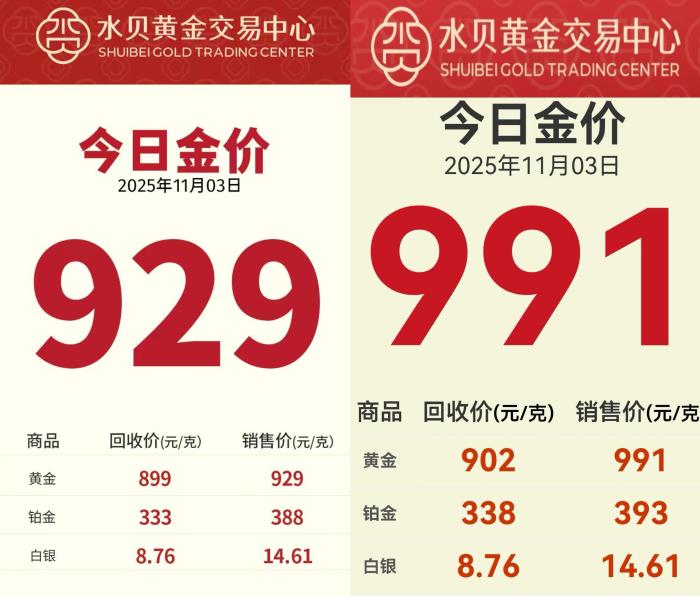
Core Viewpoint - The new tax policy on gold, effective from November 1, 2025, is expected to significantly impact gold prices and trading behaviors in the market, leading to increased price volatility and changes in consumer purchasing patterns [1][10]. Group 1: Tax Policy Details - The announcement from the Ministry of Finance and the State Administration of Taxation categorizes gold transactions into "investment use" and "non-investment use," with different tax implications for each [1][4]. - Gold that does not undergo physical delivery will not be affected by the new tax policy, while those that do will face tax changes based on their usage classification [1]. Group 2: Price Fluctuations - Following the announcement, the price of gold at the Shenzhen Shui Bei Gold Trading Center surged from 929 yuan per gram to 991 yuan per gram, an increase of 62 yuan [2][3]. - Major retailers like Chow Tai Fook adjusted their prices significantly, with gold jewelry prices rising from 1198 yuan per gram to 1259 yuan per gram, and investment gold prices from 1058 yuan per gram to 1120 yuan per gram [3][4]. Group 3: Market Reactions - Some banks, including Industrial and Commercial Bank of China and China Construction Bank, temporarily suspended certain gold accumulation services to comply with the new tax regulations and manage potential risks associated with high gold prices [5][7]. - The new policy is expected to encourage market-oriented gold trading and may lead to a shift in trading habits, with a focus on distinguishing between investment and non-investment uses [8][10]. Group 4: Industry Implications - Analysts predict that the price gap between investment gold bars and gold jewelry may widen due to the new tax policy, as costs for non-investment gold may increase significantly [4]. - The new tax framework is anticipated to reshape the gold market's ecosystem, leading to increased concentration in trading activities and a potential shift towards exchange-based transactions for institutional investors [10].

黄金税优惠没了!买黄金要“多掏腰包”了?普通人该囤还是该卖?
Sou Hu Cai Jing· 2025-11-05 02:57
Group 1 - The core point of the article is the cancellation of tax incentives for gold purchases in China starting November 1, which is expected to increase the cost of buying gold for consumers [3][5][9] - The new policy eliminates the ability for retailers to deduct value-added tax (VAT) when selling gold, affecting all forms of gold transactions, including bullion and jewelry [3][5] - The increase in costs is likely to be passed on to consumers, making gold purchases more expensive [3][5] Group 2 - The policy does not affect gold recycling, which helps stabilize the market and prevents speculative behavior [5] - The government aims to create a fairer tax system by clarifying the distinction between on-exchange and off-exchange transactions, thus reducing loopholes [5] - There is a transition period until the end of 2027, allowing time for adjustment for both retailers and consumers [5][9] Group 3 - The international gold price remains largely unaffected by the domestic tax changes, with current prices around $3955 per ounce [7] - The demand for gold as a safe-haven asset continues to be strong, driven by central bank purchases and geopolitical tensions [7][9] - The overall market is expected to develop healthily despite the increased costs, as fundamental factors supporting gold remain unchanged [9]

黄金税收新规实施后,工行如意金积存业务暂停又恢复!招行金条价格已含税
Xin Lang Cai Jing· 2025-11-05 01:00
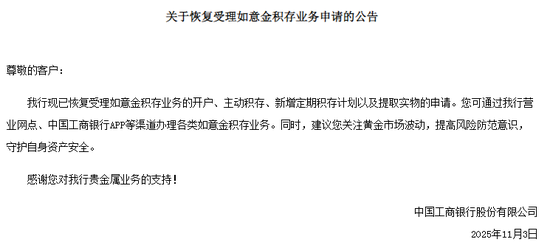
Core Viewpoint - Several banks have adjusted their gold accumulation businesses in response to recent macroeconomic policies and tax changes related to gold transactions, leading to temporary suspensions and subsequent restorations of certain services [1][17]. Group 1: Business Adjustments - On November 3, Industrial and Commercial Bank of China (ICBC) announced the suspension of its "Ruyi Gold Accumulation" business, which includes account openings, active accumulation, new fixed accumulation plans, and physical gold withdrawals [1][3]. - China Construction Bank (CCB) also announced similar suspensions on the same day, citing market volatility and risk management requirements [3][10]. - ICBC later restored its Ruyi Gold Accumulation services on the same evening, confirming that customers could resume various transactions through multiple channels [4][5]. Group 2: Tax Policy Changes - On November 1, the Ministry of Finance and the State Administration of Taxation released an announcement adjusting the value-added tax (VAT) policies related to gold transactions, which took effect on November 1 [1][17]. - The new tax policies specify that transactions involving standard gold at the Shanghai Gold Exchange and Shanghai Futures Exchange will be exempt from VAT under certain conditions, impacting how banks manage their gold accumulation services [17]. Group 3: Market Reactions - Following the announcement of tax policy changes, many banks, including ICBC and CCB, issued risk warnings regarding gold investments, advising customers to be cautious due to increased market volatility [16][18]. - As of now, ICBC's app indicates that physical Ruyi gold bars are temporarily out of stock, reflecting the impact of these adjustments on product availability [7][9]. Group 4: Customer Communication - Banks have been proactive in communicating changes to customers, with ICBC staff confirming the restoration of services and advising clients to stay informed about market fluctuations [5][6]. - Customer service representatives from various banks, including China Merchants Bank, have indicated that adjustments to gold bar prices now include tax costs, aligning with the new tax regulations [15].
品牌首饰金价再创新高 普遍突破1260元/克
Zhong Guo Zheng Quan Bao· 2025-11-04 20:17
Price Increase of Gold Jewelry - Major gold jewelry brands such as Lao Pu Gold and Chow Tai Fook have raised the price of gold jewelry, with prices exceeding 1260 RMB per gram, reaching a historical high [1] - As of November 4, 2023, Chow Tai Fook's gold jewelry prices were reported at 1265 RMB per gram for gold ornaments and 1170 RMB per gram for gold bars [1] Market Response and Consumer Behavior - Many consumers are currently adopting a wait-and-see approach due to high gold prices, leading to a relatively quiet atmosphere in gold retail stores [1] - Discounts offered by major brands are limited, with Chow Tai Fook providing a trade-in discount [2] Tax Policy Changes - A new tax policy announced by the Ministry of Finance and the State Administration of Taxation encourages trading in standard gold through exchanges by exempting value-added tax for certain transactions [2][3] - The policy aims to differentiate between investment and non-investment uses of gold, potentially increasing costs for non-investment gold jewelry companies [3] Impact on Gold Jewelry Industry - Analysts believe that the new tax policy will significantly impact non-compliant gold jewelry businesses, while established brands may see an increase in market share [4] - Short-term price increases may suppress consumer demand, but the long-term industry restructuring could benefit well-known jewelry brands [4] Performance of Mining Companies - Mining companies are experiencing significant revenue growth due to rising gold prices, with Western Gold reporting a 106.2% year-on-year increase in revenue for the first three quarters of 2025 [4] - Other companies like Chifeng Gold and Zijin Mining also reported substantial revenue and profit increases, benefiting from higher gold prices and stable production levels [4][5][6]




黄金税新政落地:周大福等品牌紧急调价
第一财经· 2025-11-04 12:23
Core Viewpoint - The recent tax policy changes regarding gold transactions have led to increased costs for businesses in the gold market, resulting in price hikes and a cautious market environment [3][5]. Group 1: Tax Policy Impact - The new tax policy, effective from November 1, differentiates tax management for investment and non-investment uses of gold, increasing the tax burden on businesses from a 13% to a 6% VAT deduction, leading to an approximate 7% increase in actual tax burden [3][5]. - Merchants in the Shui Bei market, previously relying on tax evasion practices, are now facing higher compliance costs, prompting them to raise prices to maintain profit margins [3][5]. Group 2: Market Reaction - On November 3, gold prices in Shui Bei surged from approximately 930 CNY per gram to 996 CNY per gram within a single day, marking a significant increase of over 66 CNY per gram, the largest daily increase in five years [3][4]. - Major jewelry brands, such as Chow Tai Fook, have begun adjusting their prices in response to the new tax policy, indicating a broader trend among retailers to reassess pricing strategies [5]. Group 3: Global Gold Demand Trends - According to the World Gold Council's Q3 2025 report, global gold demand reached a record high of 1,313 tons, with a total value of 146 billion USD, driven primarily by investment demand, which surged by 47% year-on-year [5][6]. - In China, retail gold investment and consumption demand totaled 152 tons in Q3, a 7% year-on-year decline, but the monetary value reached 120.4 billion CNY, reflecting a 29% increase year-on-year, marking the highest level for Q3 [6].

黄金税收新规落地,对市场影响几何
Qi Lu Wan Bao· 2025-11-04 11:24
Core Viewpoint - The new tax policy on gold, announced by the Ministry of Finance and the State Taxation Administration, aims to differentiate between investment and non-investment demand for gold, leading to significant market reactions and price fluctuations in gold products [2][5]. Market Reactions - The gold market has shown a clear division, with investment gold bars experiencing price increases and some products being taken off the shelves. For instance, the price of investment gold bars at certain stores has risen by over 100 yuan per gram compared to pre-policy levels [2][3]. - Different brands exhibit varied strategies; for example, Chow Tai Fook maintains its online prices while others like Century Origin have suspended sales of investment gold bars entirely [3]. Price Adjustments - The price of diamond-studded gold jewelry is also being adjusted due to rising raw material costs and the new tax policy. Some brands are temporarily halting sales to reassess pricing structures [4]. - The overall increase in gold prices has a cascading effect on related products, with some brands reporting price hikes of 5%-8% for gold jewelry [7]. Consumer Impact - The new tax policy has led to increased costs for consumers, particularly for those purchasing investment gold through non-exchange channels, where additional VAT burdens are passed on to buyers [6][7]. - Consumers are advised to consider purchasing gold through banks or exchange platforms to benefit from lower tax burdens and better pricing [7]. Tax Policy Details - The new tax policy specifies that from now until the end of 2027, transactions involving standard gold through the Shanghai Gold Exchange will be exempt from VAT, which is expected to influence market dynamics significantly [8]. - The policy also differentiates between investment and non-investment gold, applying different VAT treatments based on the nature of the transaction [8].
买黄金要“上税”了?记者探访发现,“以旧换新”暂不受影响
Yang Zi Wan Bao Wang· 2025-11-04 11:07
Core Viewpoint - The new tax policy on gold, effective from November 1, 2025, to December 31, 2027, will implement a series of value-added tax adjustments for standard gold traded on the Shanghai Gold Exchange and Shanghai Futures Exchange, potentially impacting gold market consumption and pricing dynamics [1][4]. Group 1: Impact on Gold Jewelry Pricing - The average price of gold jewelry has shown fluctuations, with current prices around 1265 CNY per gram, and some items priced significantly higher based on craftsmanship and branding [1][2]. - Retailers indicate that the new tax policy will lead to a cost increase, but they do not plan to raise prices immediately, suggesting a stable consumer demand despite the tax changes [2][4]. - Major gold brands have already increased their prices, with average prices now exceeding 1260 CNY per gram, indicating a market response to the anticipated tax adjustments [2][3]. Group 2: Tax Policy Details - The new regulation categorizes gold transactions into "investment" and "non-investment" uses, affecting how value-added tax is applied, with investment gold enjoying tax exemptions while non-investment gold faces increased costs [3][5]. - For non-investment gold, the input tax deduction has been adjusted, leading to an approximate 7% increase in costs for merchants, which may be passed on to consumers [4][5]. - Individuals frequently selling gold jewelry may be subject to taxation if their activities are deemed as "business sales," which could lead to a 3% value-added tax on sales [5]. Group 3: Market Dynamics and Consumer Behavior - The gold recovery market remains stable, with buyback prices around 900 CNY per gram, indicating a consistent demand for recycled gold despite the new tax policy [2][3]. - The new tax policy is expected to encourage consumers to opt for "old-for-new" exchanges, as this may present a more cost-effective option amidst rising prices [2][4]. - The policy aims to guide consumer and investor behavior towards compliance and professionalism in gold transactions, potentially reducing market volatility in the long term [5].