301关税

Search documents
沉默两天后,中方对美交底,美国76岁老将出面,特朗普派人传话
Sou Hu Cai Jing· 2025-06-06 13:40
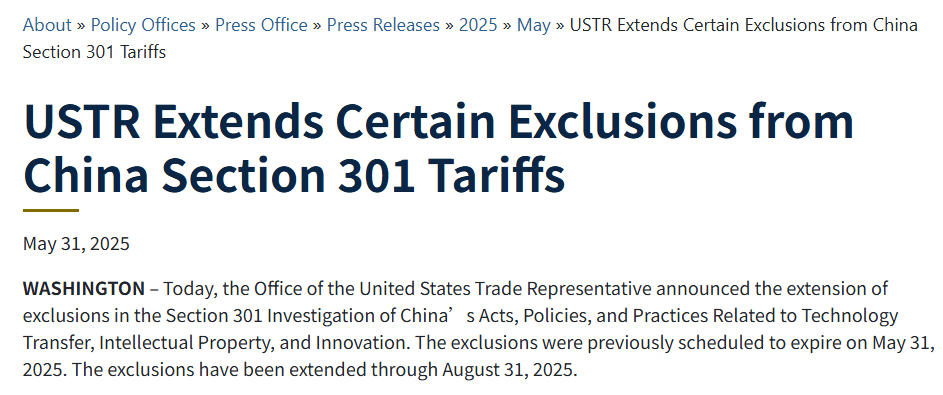
Group 1 - The core viewpoint emphasizes that equal respect is the premise for Sino-U.S. interactions, and dialogue and cooperation are the correct choices [1] - The Chinese Ministry of Commerce reiterated its opposition to the U.S. 301 tariffs, labeling them as unilateral trade protection measures that violate multilateral trade rules [1][3] - The U.S. Trade Representative announced an extension of the exemption period for the 301 investigation related to technology transfer from May 31, 2025, to August 31, 2025 [1] Group 2 - Recent developments in Sino-U.S. relations highlight their complexity and importance, with significant events including meetings between officials and actions undermining previous agreements [3][4] - The U.S. has shifted its stance towards China, viewing it as a "global competitor" and implementing various hostile measures, particularly in trade and technology [4][6] - China is accelerating its technological self-sufficiency and domestic substitution strategies in response to U.S. pressures, achieving progress in areas like EDA and aviation engines [4][6] Group 3 - The relationship between the two countries is at a critical juncture, with the new U.S. ambassador to China, Nicholas Burns, tasked with fostering communication and cooperation [6] - Both nations are urged to learn from history and work towards stabilizing their relationship, which is crucial for global peace and development [9] - Key recommendations for improving Sino-U.S. relations include adhering to established principles, returning to equal dialogue, abandoning Cold War mentalities, and enhancing people-to-people exchanges [10]


突发!美国宣布关税豁免延长
Sou Hu Cai Jing· 2025-06-03 01:39
Core Points - The U.S. Trade Representative's Office announced an extension of the tariff exemption period for certain products related to China's technology transfer, intellectual property, and innovation practices from May 31, 2025, to August 31, 2025 [1][3] Group 1: Tariff Exemption Extension - The extension of the tariff exemption is based on public feedback received by December 29, 2023, and ongoing evaluations during the four-year review process [3] - A total of 164 items from Attachment A and 14 items from Attachment B will have their exemptions extended for an additional three months [3] - The exemption applies to products listed in Attachments A and B, including chemical materials, electronic components, medical supplies, solar manufacturing equipment, and wafer handling equipment [4] Group 2: Historical Context and Economic Impact - Historical data indicates that during the Trump administration, four rounds of "301 tariffs" were imposed on China, with the first three rounds having a 25% increase and the fourth round at 7.5% [3] - The average weighted tariff rate on Chinese imports was 19.3% at the beginning of 2020, but is projected to decrease to 10.7% by the end of 2024 due to changes in export proportions and product categories [3] - The U.S. has faced criticism for its unilateral and protectionist measures, which have been deemed to disrupt international trade order and supply chain stability [4] Group 3: New Investigations and Responses - On April 17, the U.S. Trade Representative's Office initiated a 301 investigation into China's maritime, logistics, and shipbuilding industries, which has been met with strong opposition from China [5] - China's Ministry of Commerce criticized the U.S. for misrepresenting normal trade activities as threats to national security and for blaming its own industrial issues on China [5] - The Chinese government has urged the U.S. to respect facts and multilateral rules, calling for a return to a rules-based multilateral trading system [5]
对面最担心的事儿
格兰投研· 2025-06-01 14:34
Group 1 - The core viewpoint of the article is the extension of tariff exemptions under Section 301 by the U.S. Trade Representative's Office, which has been extended from May 31, 2025, to August 31, 2025, for certain products related to technology transfer, intellectual property, and innovation from China [1] - The 301 tariffs were initially imposed by Trump in 2018, targeting $34 billion worth of Chinese goods with a 25% tariff, and later increased by Biden in 2024 for categories like electric vehicles and semiconductors [2][3] - The contradiction of the U.S. imposing tariffs while simultaneously granting exemptions stems from its reliance on Chinese products in key sectors such as smartphones and semiconductors, which are areas of absolute advantage for China [3] Group 2 - The current U.S.-China negotiations are stagnating, with uncertainties surrounding judicial reviews of Trump's tariffs, which could undermine the rationale for negotiations if the courts rule against the tariffs [6][7][8] - The U.S. has shown a poor negotiating attitude, with restrictions on semiconductors and Chinese students, leading to a lack of willingness from China to engage in talks [9][10] Group 3 - The article discusses the volatility in the A-share market and the acceleration of sector rotation, noting that June typically sees a convergence in market trends after a challenging May [11][12] - Most domestic brokerages predict a focus on technology growth sectors in June, as these sectors have become more attractive after adjustments, with technology's trading volume dropping to historical lows of around 22-23% [13][14][16] Group 4 - The article highlights the increasing interest in AI, with a significant report from Meeker indicating a surge in AI user penetration, usage, and capital expenditure growth [17][19] - AI user penetration is expanding, with older demographics increasingly engaging with AI technologies like ChatGPT, which has reached 800 million users in just 17 months, surpassing historical growth rates of any technology [22][23][25] - Capital expenditures by major U.S. tech companies have increased by 63% over the past decade, reaching $212 billion, with Amazon's investment in AI infrastructure being particularly notable [33] - The competitive landscape in AI is shifting, with China emerging strongly, matching the U.S. in the number of large-scale AI systems and rapidly improving the performance of its models [36][39][42] - The article concludes that the AI competition is forming a bipolar structure between the U.S. and China, with both countries significantly outpacing others in the development of AI technologies [42][45]

刚刚!美延长对华301条款关税部分豁免
Wind万得· 2025-06-01 05:10
Core Viewpoint - The U.S. Trade Representative's Office has extended tariff exemptions on certain products related to China's practices in technology transfer, intellectual property, and innovation until August 31, 2025, based on public feedback and ongoing assessments [1][3]. Group 1: Tariff Exemptions - The extension of exemptions includes 164 items previously extended in May 2024 and an additional 14 items added in September 2024, now further extended by three months [3]. - The decision was influenced by public comments received regarding the December 29, 2023 announcement and ongoing evaluations during the four-year review process [3]. Group 2: Background on Section 301 Tariffs - Section 301 tariffs stem from the U.S. Trade Act of 1974, allowing the U.S. Trade Representative to investigate foreign trade practices deemed "unreasonable or discriminatory" and impose retaliatory measures such as increased tariffs [5]. - During the Trump administration, four rounds of Section 301 tariffs were imposed on China, with the first three rounds seeing a 25% increase and the fourth round a 7.5% increase, leading to an average weighted tariff rate of 19.3% in early 2020 [5]. - By the end of 2024, the average weighted tariff rate is projected to decrease to 10.7%, despite ongoing trade tensions and unresolved issues regarding these tariffs [5].