CCUS

Search documents
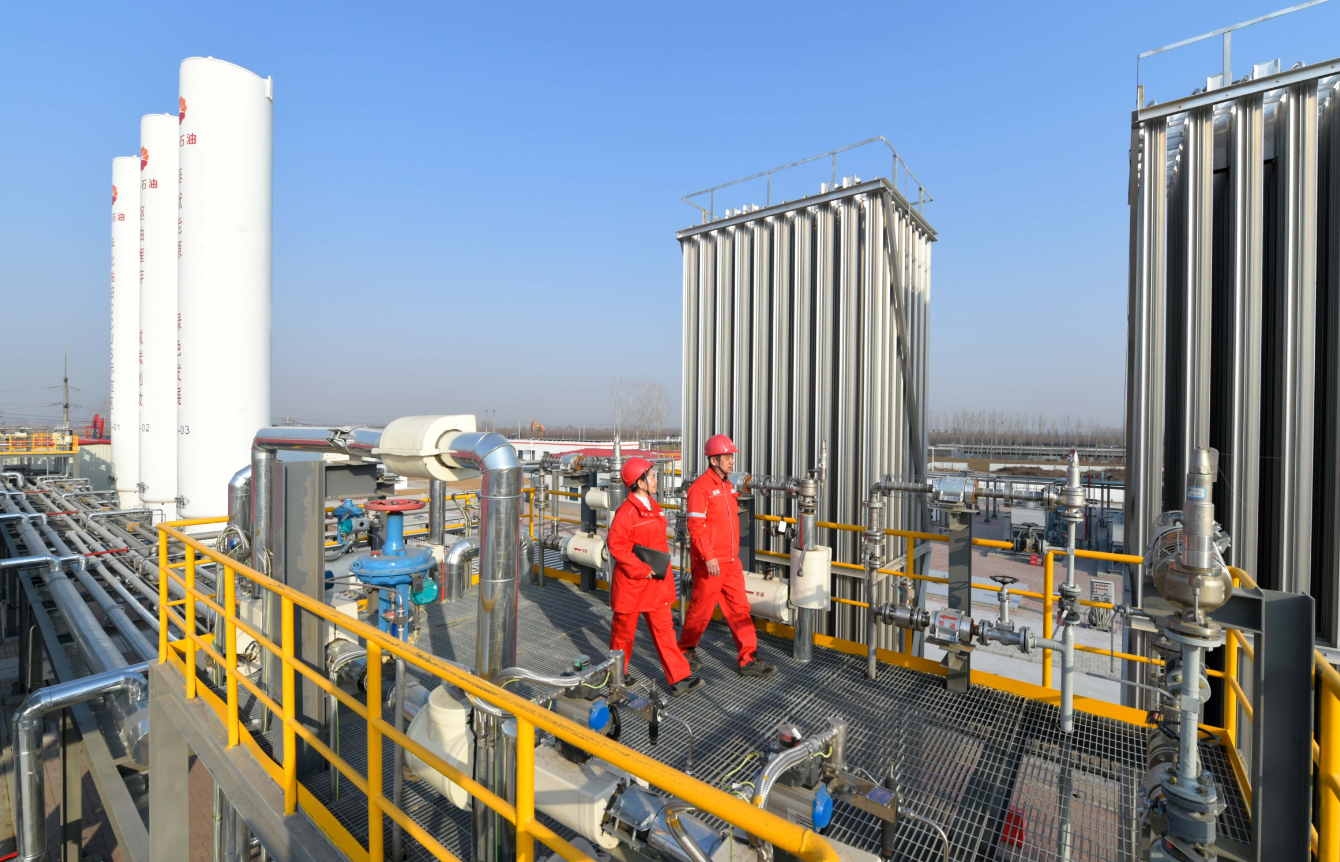
探访我国首个实现年注碳百万吨油田
Zhong Yang Ji Wei Guo Jia Jian Wei Wang Zhan· 2026-01-26 01:03
Core Viewpoint - The achievement of carbon peak and carbon neutrality is a significant strategic decision made by the central government, emphasizing the role of green low-carbon technology in transforming traditional industries and promoting high-quality development [1] Group 1: Carbon Dioxide Injection in Oil Fields - Xinjiang Oilfield is set to become the first oilfield in China to inject over 1 million tons of carbon dioxide annually by December 2025, marking a significant milestone in carbon management [1] - The process of injecting carbon dioxide into oil wells enhances oil recovery by increasing pressure and reducing viscosity, which helps extract oil trapped in rock formations [2][3] - Carbon dioxide injection can improve oil recovery rates by 10% to 20% compared to traditional water injection methods, potentially increasing total recovery rates to 40% to 60% [3] Group 2: CCUS Technology Implementation - Carbon Capture, Utilization, and Storage (CCUS) technology is crucial for achieving carbon neutrality goals, with a focus on efficient and economical utilization of captured carbon dioxide [4] - Xinjiang Oilfield has been exploring CCUS technology for over 20 years, with successful pilot projects demonstrating significant increases in oil production [5] - The use of tracers in the injection process allows engineers to monitor the flow and effectiveness of carbon dioxide in the underground environment [6] Group 3: Diverse Oil Reservoirs and Tailored Approaches - CCUS technology is being tested across seven major blocks in Xinjiang Oilfield, adapting to various types of oil reservoirs, including low-permeability and shale oil [7] - The development team faces challenges such as carbon source supply issues and complex geological structures, but they continue to innovate and improve monitoring techniques [7] Group 4: Carbon Utilization and Environmental Impact - The carbon dioxide used in Xinjiang Oilfield is sourced from nearby industrial facilities, ensuring a high purity level for effective utilization [8][9] - Approximately 80% of the injected carbon dioxide is permanently stored underground, while the remaining 20% is recycled for further use, contributing to a circular economy [9] Group 5: Broader Implications for Green Development - The central economic work conference emphasizes the importance of carbon neutrality in driving comprehensive green transformation across various sectors [10] - Innovations in carbon utilization are emerging in multiple industries, showcasing the potential for carbon emissions to be transformed into valuable assets [11]
胜利油田油气产量连续三年增长
Qi Lu Wan Bao· 2026-01-21 01:26
本报1月20日讯(大众新闻记者 顾松 通讯员 王维东 于佳) 2025年,中国石化胜利油田新增探明、控制、 预测三级储量连续保持"三个1亿吨",老油田勘探迎来新的增储高峰;油气产量连续三年保持"箭头向 上",生产原油2371.1万吨、天然气9.09亿立方米,实现了"十四五"胜利收官。 胜利油田强化生产、投资、财务"三大计划"深度融合,推进全产业链全要素全过程经营创效,实现油藏 经营价值最大化。油田、胜利石油工程公司、经纬公司深化"大生产、大运行"机制,钻井、压裂等工程 打造效率革命,作业、电力等专业化单位增强支撑保障能力,促进产业链协同发展、价值共生。对 比"十四五"初,2025年,钻井周期缩短39%,压裂效率提高44%、压裂初产提升44.8%。 以科技创新、数智化赋能产业转型升级,胜利油田谋划实施"十五五"期间高质量发展"十大工程",成 立"十大科技产业融合创新团队",推动产业高质量发展塑成新优势,奋力打造"第二增长曲线"。我国首 个百万吨级CCUS(碳捕集、利用与封存)示范区累计注入二氧化碳超230万吨,示范区日产油量从220吨 上升至460吨,产量实现翻番并持续增长;累计建成光伏装机572兆瓦,年发绿电 ...

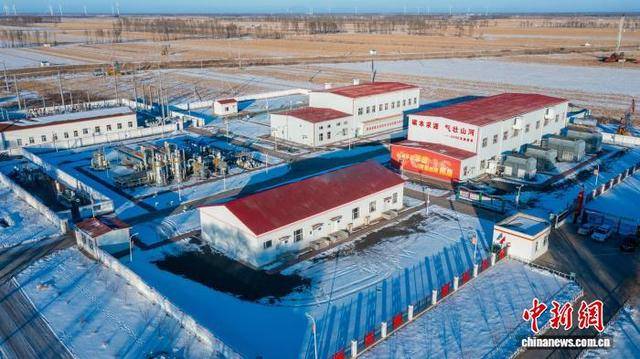
吉林油田建矿65年:迈向油气新能源综合发展之路
Sou Hu Cai Jing· 2026-01-19 06:47
Core Viewpoint - Jilin Oilfield is transitioning from a single crude oil production base to a comprehensive energy system that includes crude oil, natural gas, and renewable energy sources, addressing challenges such as declining reserves and increasing costs [2][3][5]. Group 1: Production and Historical Context - Established in 1961, Jilin Oilfield is one of the earliest developed oil and gas fields in Northeast China, having produced approximately 198 million tons of crude oil and 28.1 billion cubic meters of natural gas over 65 years [1][3]. - The discovery of the Fuyu Oilfield in 1959 marked the end of Jilin Province's "no oil" history, leading to gradual capacity formation despite material shortages and construction constraints [3]. - The oilfield is currently facing challenges related to low permeability and low abundance reservoirs, making stable production a long-term challenge, with annual crude oil production maintained at around 3.8 million tons during the 14th Five-Year Plan period [3]. Group 2: Natural Gas Development - The discovery of the Changling Gas Field in 2005 allowed Jilin Oilfield to have large-scale natural gas resources for the first time, leading to ongoing investments in tight gas and shale gas [5]. - By 2025, natural gas production is expected to reach 1.91 billion cubic meters, contributing to market supply and regional peak shaving tasks, with the operation of the Shuangtuozi gas storage enhancing its role in winter gas supply in Northeast China [5]. Group 3: Renewable Energy Initiatives - Renewable energy is viewed as a long-term option to address resource depletion and emission reduction pressures, with Jilin Oilfield exploring the "oil and gas + renewable energy" path to lower production energy costs and reduce carbon emissions [5]. - The oilfield is leveraging wind, solar, and geothermal resources in western Jilin to develop wind power, photovoltaic, and geothermal projects, aiming for a wind-solar power generation of 1.46 billion kilowatt-hours by 2025, with green electricity accounting for over 35% of production energy [5]. - Jilin Oilfield is transitioning from a single energy consumer to a regional clean energy provider, with centralized wind power projects supplying electricity to the community [5]. Group 4: Carbon Capture and Low-Carbon Initiatives - Jilin Oilfield has established a CCUS demonstration project that captures, transports, and stores CO2 emissions from industrial sources, aiming to sequester over 4 million tons of CO2 by 2025, thereby enhancing oil recovery and reducing net emissions [7]. - The oilfield is exploring "zero-carbon" or low-carbon production models by integrating wind, solar, geothermal, and energy storage with oil and gas production systems, with some blocks achieving comprehensive clean energy substitution for production [7]. - The company aims to balance crude oil stabilization, natural gas supply, and renewable energy expansion during the 15th Five-Year Plan [7].

全球能源转型步入关键调整年
Zhong Guo Hua Gong Bao· 2026-01-12 03:34
Core Insights - The global energy landscape in 2026 is characterized by a shift from short-term price volatility to long-term structural transformation and competitiveness building [2][6] - Traditional oil and gas companies are adopting a more cautious approach to capital expenditure, focusing on asset optimization and financial health amid concerns of oversupply and economic outlook [3][6] - The low-carbon technology sector is experiencing accelerated investment, with a clear "dual-track" approach emerging between traditional energy and low-carbon initiatives [4][6] Traditional Energy Market Pressures - International oil prices have not seen a positive start in 2026, primarily due to concerns over oversupply and economic prospects, despite ongoing geopolitical tensions [3] - The U.S. oil production remains at historical highs, contributing to a bearish sentiment in the market, with both New York and Brent crude futures declining over the week [3] - Companies are increasingly adopting strategic restructuring and maintenance to enhance operational efficiency and ensure financial stability in response to market uncertainties [3] Low-Carbon Technology Developments - 2026 is viewed as a pivotal year for Carbon Capture, Utilization, and Storage (CCUS), with several major projects expected to make final investment decisions, contingent on stable policy support [4] - The clean fuel and green hydrogen sectors are moving from conceptual stages to actual projects, with companies like Topsoe and Ecopetrol advancing initiatives aimed at reducing carbon emissions [4] - Engineering firms are strengthening their capabilities in sustainable fuels and circular chemistry through acquisitions and integrations [4] Carbon Policy and Market Dynamics - The global carbon management landscape is undergoing leadership reshaping and mechanism deepening, with major economies expected to take a more active role in climate discussions [5] - The EU's Carbon Border Adjustment Mechanism (CBAM) is set to implement carbon pricing, providing practical incentives for affected countries [5] - New compliance carbon pricing mechanisms are anticipated to launch in 2026, with the potential for accelerated international carbon trading [5] Overall Energy Transition Trends - The focus is shifting towards deep structural adjustments in the energy industry and systematic competitiveness building, moving away from short-term oil price fluctuations [6] - Traditional oil and gas companies are expected to refine their capital expenditures, concentrating on core asset efficiency and cost optimization [6] - The success of low-carbon technologies will depend on establishing scalable business models, supported by favorable policies and market conditions [6]
绿金周报0112|小米雷军:特斯拉确实强 但并非不可战胜 AI驱动全球核电需求增长
Xin Lang Cai Jing· 2026-01-12 02:30
Group 1: Solid-State Battery Innovation - Donut Lab introduced the world's first mass-producible solid-state battery, achieving an energy density of 400Wh/kg and a fast charging time of 10 minutes [1] - The Verge electric motorcycle, equipped with this battery, is set for user delivery this year, although the technology faces scrutiny over data verification and aggressive production expansion [1] Group 2: Industry Regulation and Collaboration - The Ministry of Industry and Information Technology (MIIT) held a meeting with multiple agencies to address issues in the power and energy storage battery industry, focusing on capacity control, price stabilization, and patent protection [1][2] - The meeting included 16 companies, primarily leaders in the power and energy storage battery sectors, indicating a collaborative effort to regulate industry competition [2] Group 3: Market Developments in Energy Storage - Shenzhen-based Yuanxin Energy submitted a listing application to the Hong Kong Stock Exchange and completed a 200 million RMB equity financing round, with a post-financing valuation of approximately 2 billion RMB [3] Group 4: Nuclear Power and AI Influence - AI is driving a significant increase in global nuclear power demand, with over 63% of surveyed investors considering AI-related consumption a structural change in electricity demand [4] Group 5: Advancements in Solar Technology - Research teams from Xiamen University and Xi'an Jiaotong University developed a new method to enhance the stability of perovskite solar cells, addressing critical defects that affect performance [5][6] Group 6: Future Energy Initiatives - Beijing Economic-Technological Development Area plans to establish a "Future Energy Town" focusing on new energy storage, clean energy, low-carbon transition, and fusion energy [7] Group 7: Electric Vehicle Market Adjustments - General Motors announced a $6 billion impairment charge to terminate certain electric vehicle investments, influenced by market demand fluctuations and policy changes [8] - Geely Holding Group projected a total sales volume of 4.116 million vehicles in 2025, with a 26% year-on-year increase, driven by a 58% growth in new energy vehicle sales [8] Group 8: Carbon Capture and Utilization Standards - China Huaneng Group released three national standards in the CCUS field, covering the entire process from carbon capture to geological storage, marking a significant advancement in carbon asset development [10] Group 9: Circular Economy Initiatives - Greeenme's project for recycling end-of-life vehicles received a carbon reduction certification, marking a significant achievement in carbon asset development [12] - The "Love Recycling" initiative reported a recycling volume of 945,000 tons in 2025, reflecting a 40% increase from the previous year [13]
同兴科技:公司已成立海外事业部、CCUS事业部
Zheng Quan Ri Bao Wang· 2026-01-08 14:09
证券日报网讯1月8日,同兴科技(003027)在互动平台回答投资者提问时表示,目前公司已成立了海外 事业部、CCUS事业部,公司将结合发展战略统筹规划国内外业务布局。 ...

阿联酋助力英国绿色氢能发展
Shang Wu Bu Wang Zhan· 2026-01-08 08:20
Core Viewpoint - The World Future Energy Summit will take place from January 13 to 15 in Abu Dhabi, focusing on green hydrogen and showcasing the UAE's expertise in renewable energy and CCUS (Carbon Capture, Utilization, and Storage) [1] Group 1 - The summit aims to support the UK in achieving its 2030 low-carbon hydrogen goals [1] - The event will lay the groundwork for deepening investment and technological cooperation between the UAE and the UK [1]
深度报告:化工新材料产业布局思路方向(附46页PPT)
材料汇· 2026-01-05 16:02
Global Petrochemical Industry Overview - The global petrochemical industry is valued at approximately $4.5-5 trillion, with basic chemical raw materials and polymers accounting for over 50% of the market share. High-value segments like fine chemicals and specialty chemicals are the main growth drivers [4] - Major petrochemical products include ethylene (21.8 million tons, ~$200 billion), polyethylene (11 million tons, ~$120 billion), and methanol (12.5 million tons, ~$32 billion) [4] International Market Dynamics - The competitiveness of major petrochemical products from Europe, Japan, and South Korea is declining due to significant shutdowns of chemical plants in Europe and reduced capacity utilization in Japan and South Korea [5][6] - South Korea's PX load factor is projected to drop from 99% in 2019 to 71% in 2024, while Japan's PX load factor is expected to decline from 84% to 61% in the same period [6] China's Petrochemical Market - China's petrochemical industry accounts for 45%-50% of the global market, leading the world, but profits have been declining since the 14th Five-Year Plan, with increased competition and reduced margins [7] - The industry is expected to generate revenues of 16.28 trillion yuan in 2024, a 2.1% increase year-on-year, but profits are projected to decline by 8.8% [8] Capacity Expansion and Utilization - Since 2019, China's petrochemical industry has seen a new round of expansion, with various projects leading to annual capacity growth rates exceeding 10% [10] - The average annual capacity growth for major products like ethylene and PX is significant, but overall capacity utilization rates are declining, from 80% in Q2 2021 to a projected 72% by Q2 2025 [11] Demand Trends - Domestic demand for petrochemical products is expected to maintain growth, driven by exports and import substitution, with significant increases in self-sufficiency rates for ethylene and PX [13] - Emerging sectors such as new energy and new consumption models are expected to drive demand for new materials and traditional plastics [14] Policy and Industry Trends - Policies aimed at eliminating outdated capacity and promoting high-end and new materials are emerging, creating opportunities for technologically advanced companies [22] - The shift towards "reduce oil and increase chemicals" is a strategic response to enhance competitiveness and extend the industrial chain [23] Fine Chemicals and Investment Opportunities - Fine chemicals represent a significant growth area, with a market size exceeding $1 trillion, but China still relies heavily on imports for high-end products [24] - Foreign investment in China's chemical industry is increasing, with major global companies focusing on high-end, integrated production to capture growth opportunities [26][30] Future Prospects - The long-term outlook for China's chemical industry is positive, supported by domestic demand recovery and external market expansion, with a focus on integrated cost advantages and global capacity shifts [17] - The rise of the semiconductor and AI industries is creating unprecedented opportunities for high-end chemical materials, driving the transformation of the petrochemical sector [35][36]




南海东部油田年油气产量连续四年稳超2000万吨
Zhong Guo Xin Wen Wang· 2025-12-30 11:49
Core Insights - The Nanhai Eastern Oilfield has maintained an annual oil and gas production exceeding 20 million tons for four consecutive years, contributing over 100 million tons during the 14th Five-Year Plan period [1][2] Group 1: Production Achievements - The oilfield's production surpassed 20 million tons of oil equivalent in 2025, marking a significant milestone since it first achieved this level in 2022 [1] - The oilfield has transitioned from an initial production of several hundred thousand tons to a stable output of over 20 million tons, significantly altering the energy landscape in southern China [1] Group 2: Operational Strategies - In 2025, the oilfield overcame challenges such as ten typhoons, optimizing operational efforts and maximizing production during peak periods [1] - The oilfield implemented a "few wells, high efficiency" exploration strategy, drilling nearly 50 wells and adding over 100 million tons of proven reserves [2] Group 3: Technological Innovations - The oilfield achieved breakthroughs in deep-water exploration and water control, with innovative theories leading to significant discoveries in deep-water oil and gas [2] - The first offshore CCUS project in China was successfully implemented, enhancing the recovery rate at the Liuhua 11-1 oilfield [2] Group 4: Economic Contributions - The oilfield is a key economic driver, ranking among the top three in industrial added value in Shenzhen during the 14th Five-Year Plan, and is projected to be the leading industrial enterprise in Nanshan District in 2024 [2] - The natural gas produced is processed and distributed to cover a large part of the Guangdong-Hong Kong-Macao Greater Bay Area, supplying nearly 5.8 billion cubic meters of clean natural gas annually [2]

京津冀最大碳驱碳埋存项目注碳30万吨
Zhong Guo Neng Yuan Wang· 2025-12-29 02:40
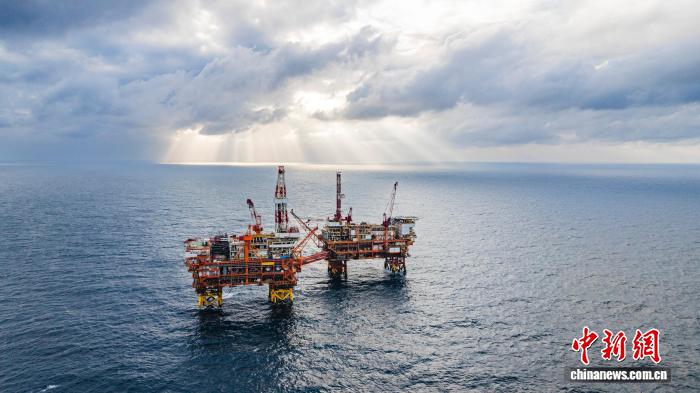
12月26日,在八里西潜山CCUS先导试验站内,工作人员正在巡回检查设备运行状况。 12月27日,中国石油华北油田"八里西潜山CCUS先导试验项目"已累计注入二氧化碳30万吨,减排效果现相当于植树约248万棵,标志着京津冀最大规模碳驱 油碳埋存项目推进"双碳"目标取得新成效。 八里西潜山CCUS先导试验区位于河北省沧州河间市,于2022年启动注气。潜山油藏作为华北油田的主力油藏,已进入特高含水开发后期,依据现有技术难 以有效动用巨量的剩余油。华北油田将CCUS作为绿色发展的发力点,一手抓油气生产一手抓科技攻关,优选八里西潜山油藏开展CCUS先导试验,攻关关 键技术瓶颈问题。先后进行二氧化碳混相重力驱油与埋存机理研究、地质建模及注采参数优化调整以及钻井、采油、地面、监测等配套工程技术攻关,新建 先导试验站1座、计量点1座、集油及二氧化碳管道20余公里,更在集团公司内部首次构建起"炼化排放—捕集提纯—油田利用"的绿色循环模式。预计全周期 将累计埋存二氧化碳847万吨,累计增油超300万吨,油藏采收率可提高27%。 八里西潜山CCUS先导试验项目被列入中国石油"四大六小"重点工程,是华北油田深入推进注气提高采收率工 ...