
数字中国

Search documents
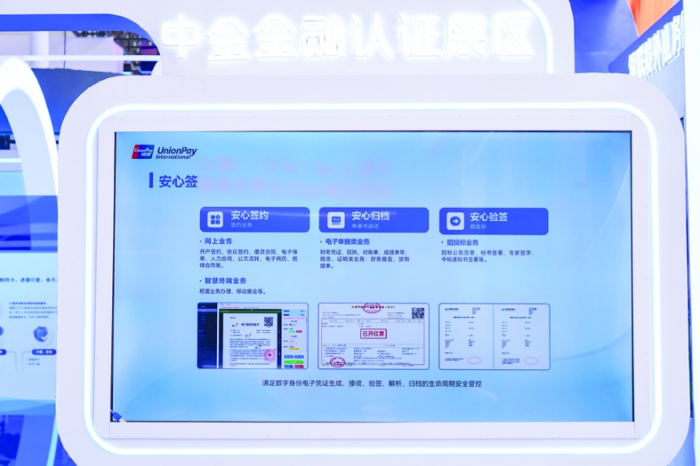
CFCA执金融科技之笔 绘就金融高质量发展新图景
Shang Hai Zheng Quan Bao· 2025-09-23 18:04
Core Viewpoint - The article emphasizes the importance of digital finance and the role of financial technology in driving innovation and efficiency in the financial sector, particularly through the development of a trusted digital identity system by CFCA [3][4]. Group 1: Digital Identity Development - The evolution of digital identity is crucial in a comprehensive digital environment, where proving one's identity in the digital world is a key challenge [5]. - Digital identity consists of three dimensions: identity subject, identity credential, and industry scenario, which together form specific applications of digital identity [5]. - CFCA categorizes trusted digital identities into three levels: legal trust basis level, third-party certification level, and business credential level, with decreasing legal validity from the first to the third level [6]. Group 2: Financial Technology Innovation - CFCA has played a significant role in the evolution of identity verification methods in banking, transitioning from face-to-face verification to online processes using digital certificates [7]. - The organization has developed a comprehensive trusted digital identity system that addresses high trust costs and complex processes in financial transactions, enhancing economic and social benefits [8]. - CFCA has issued over 900,000 professional reports to assist users in handling disputes and litigation effectively [8]. Group 3: Regulatory and Global Cooperation - CFCA participated in the development of the "Personal Credit Electronic Authorization Security Technical Guidelines," integrating its trusted digital identity system into practical business applications [9]. - The organization is actively involved in global digital governance, having established a LEI code cloud platform and becoming a vLEI authorized issuing agency, promoting trust and convenience in global digital trade [9]. Group 4: Future Directions and AI Integration - CFCA is committed to integrating its technology into UnionPay's global payment network, enhancing security across various domains such as cloud-based digital certificate services and cross-border payment security [10]. - The organization is implementing an "Artificial Intelligence+" initiative to enhance efficiency and innovation, exploring new service paradigms in the AI era [10]. - CFCA aims to leverage financial technology to support the vision of financial inclusivity and modernization in China [10].

全国首单践行东北振兴战略公募REITs获批 沈阳国际软件园项目助力区域高质量发展
Xin Hua Cai Jing· 2025-09-23 14:16
Core Insights - The "Shenyang International Software Park REIT" has received approval from the China Securities Regulatory Commission, marking it as the first public REIT in the country to implement the Northeast revitalization strategy, which signifies a new phase in infrastructure financing reform in Northeast China [1][2] Group 1: Project Overview - The REIT focuses on infrastructure projects located in Shenyang's Hunnan District, comprising 13 industrial buildings with a total property area of 201,200 square meters, primarily for research and office use [2] - The project has maintained a weighted average occupancy rate of approximately 84% over the past three years, with average contract rental prices for office space exceeding 46 yuan per square meter per month, indicating strong operational resilience [2] Group 2: Strategic Importance - The project aligns closely with national strategies such as "Digital China" and "Northeast Revitalization," leveraging Shenyang's robust industrial base and talent resources to promote high-quality regional development [1][3] - Shenyang International Software Park serves as the largest R&D office industrial park in the city, playing a crucial role in the implementation of the digital economy and supporting the local economic landscape [1][2] Group 3: Management and Future Prospects - The original equity holders, Shenyang International Software Park Industrial Development Co., Ltd. and Shenyang International Software Park Co., Ltd., are part of the Shenyang Angli Holding Group, which has over 30 years of experience in software development and technology park operations [2] - The REIT is expected to facilitate a virtuous cycle of investment and financing through asset securitization, enhancing social benefits and long-term value [2][3]
鸿蒙“天工计划”启动:10亿资金资源,鸿蒙AI生态全速进击
Huan Qiu Wang· 2025-09-23 07:58
Group 1 - Huawei announced that the number of HarmonyOS 5 terminal devices has surpassed 17 million, indicating rapid growth in the Harmony ecosystem and a comprehensive upgrade of AI experiences [1] - The "Tian Gong Plan" was officially launched, with an investment of 1 billion RMB to support innovation in the Harmony AI ecosystem, encouraging developers to collaborate [1][4] - Over 30,000 applications and meta-services have been launched, showcasing a collective effort in China's tech sector [1] Group 2 - The global tech competition has intensified, with countries increasing investments in R&D to secure key technological advantages, particularly in operating systems and AI [2] - The importance of operating systems as foundational support in the digital world is emphasized, as they manage hardware resources and software applications across various devices [2] Group 3 - Huawei plays a crucial role in the tech competition, having established a solid foundation with OpenHarmony, which now includes 130 million lines of code and over 9,200 community contributors [3] - OpenHarmony has led to the development of over 1,300 hardware and software products across multiple industries, establishing it as a digital foundation for various sectors [3] Group 4 - The "Tian Gong Plan" aims to cultivate over 10,000 AI-native meta-services and 1,000 intent frameworks, providing strong momentum for the Harmony system in the AI era [4] - AI Agents are identified as the next generation of AI, capable of executing complex tasks and enhancing user interaction with digital environments [4] Group 5 - The development of the Harmony AI ecosystem aligns with national strategies for "new quality productivity" and "Digital China," emphasizing the role of AI in driving economic growth and digital transformation [6][7] - The Harmony AI ecosystem is expected to foster new business models and enhance productivity across various industries, including manufacturing and agriculture [7] Group 6 - The growth trajectory of the Harmony ecosystem reflects China's tech industry's strategic focus on "independent innovation and open collaboration," with the ecosystem now accelerating its development [7][8] - The call for partners and developers to embrace Harmony and AI signifies a collective ambition for the future of China's tech industry [8]

电竞“苏超”要来了?江苏省城市电竞联赛工作推进会在南京举行
Yang Zi Wan Bao Wang· 2025-09-20 14:36
Group 1 - The Jiangsu Provincial Urban E-sports League aims to integrate local resources and promote club branding across thirteen cities in Jiangsu [3][4] - The league will adopt principles of "government guidance, industry collaboration, market operation, and social participation" to create a sustainable e-sports event system [4] - The initiative is aligned with the national "Digital China" strategy and aims to enhance the cultural and economic value of e-sports in Jiangsu [4] Group 2 - The meeting included representatives from local e-sports associations, enterprises, and universities, discussing various aspects of the league's planning and execution [3] - Key stakeholders, including Jiangsu Telecom and Suining E-commerce, provided practical suggestions for market operation and commercial development [3] - The league is expected to strengthen the sports attributes and cultural connotations of e-sports, improving its social recognition and positive image [4]
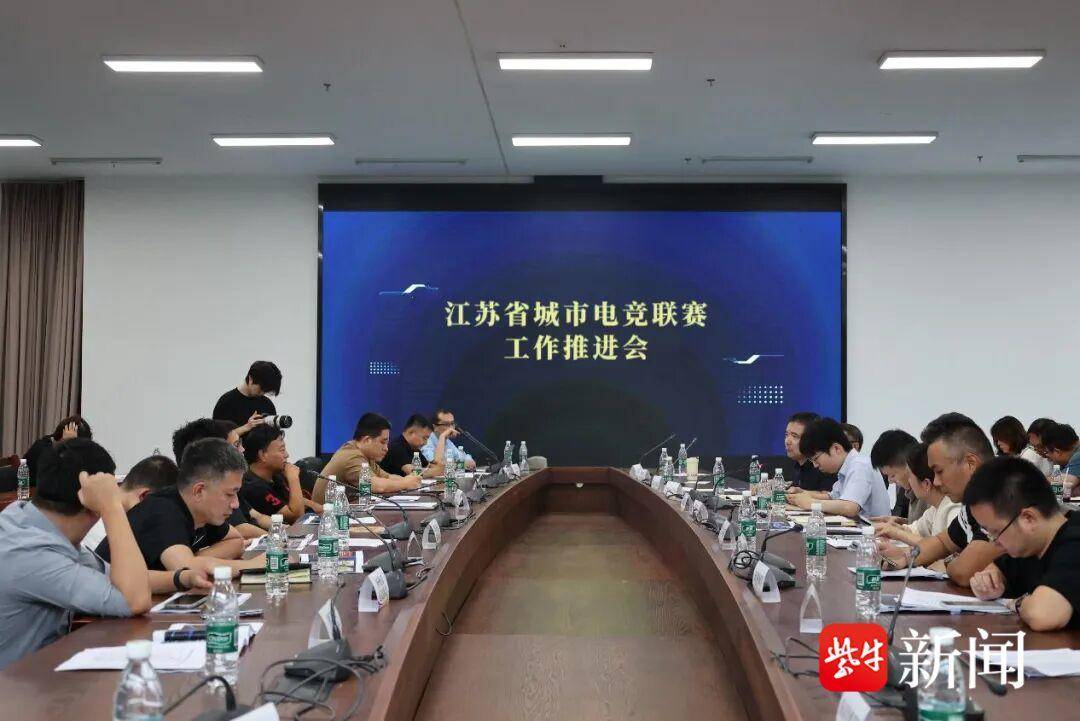
电竞“苏超”要来了!江苏省城市电竞联赛工作推进会19日在南京成功举行
Yang Zi Wan Bao Wang· 2025-09-20 14:28
Core Viewpoint - The Jiangsu Provincial Urban E-sports League, referred to as "E-sports Super League," is being developed to unify local e-sports resources and create a provincial e-sports brand, with significant participation from various stakeholders including government, industry, and academia [1][2][4]. Group 1: League Development and Structure - The league aims to establish an open, shared, and sustainable e-sports event system, guided by principles of government direction, industry collaboration, market operation, and social participation [4]. - The league will draw on successful experiences from the Jiangsu Provincial Urban Football League to create a model for regional e-sports league development [4]. Group 2: Stakeholder Involvement - Representatives from local e-sports associations expressed commitment to integrating local resources and supporting the overall league planning to enhance club branding [2]. - Corporate representatives from Jiangsu Sports Industry Group, Jiangsu Telecom, Jiangsu Bank, Suning.com, Vivo, and Huya Live provided practical suggestions from market operation and commercial development perspectives [2]. - Academic representatives from Jinling Institute of Technology, Nanjing University of Media and Communications, and Suzhou Vocational and Technical College emphasized the importance of integrating industry and education to cultivate professional talent for the league [2]. Group 3: Strategic Importance - The launch of the "E-sports Super League" is seen as a timely initiative to consolidate Jiangsu's e-sports strength and establish a provincial e-sports event brand [2][4]. - The league aligns with the national "Digital China" strategy and Jiangsu's digital sports development goals, aiming to enhance the role of e-sports in promoting the digital economy and youth culture [4].
智能驱动增长:人工智能客户关系管理(AICRM)系统研究报告
中国信通院· 2025-09-19 08:10
Investment Rating - The report does not explicitly state an investment rating for the AI CRM industry Core Insights - The AI CRM systems are evolving from traditional models to intelligent, personalized, and sustainable solutions driven by rapid advancements in artificial intelligence technology, particularly generative AI [7][8] - The integration of AI into CRM systems is not only a technological innovation but also a strategic choice for businesses to enhance customer value and achieve sustainable growth in response to macroeconomic trends [7][22] - The report emphasizes the importance of compliance with data privacy regulations and the need for businesses to embed compliance capabilities into their AI CRM systems to mitigate legal risks and enhance brand reputation [19][22] Summary by Sections 1. Research Background and Transformation Drivers - The global business landscape is undergoing significant changes due to structural economic adjustments, disruptive technologies, and evolving market dynamics, necessitating a shift in customer relationship management [14][15] - Traditional CRM systems are increasingly seen as limited in addressing modern business needs, prompting a transition to AI-driven CRM solutions [15][23] 2. Key Trends in AI Reshaping CRM - The interaction paradigm of CRM is shifting from passive response to proactive insights, enabled by advancements in large language models [31][32] - AI technologies enhance CRM systems' capabilities in understanding customer needs, automating processes, and providing personalized experiences [34][35] 3. Market Demand and Technological Drivers - There is a growing demand for intelligent CRM solutions as customer expectations evolve towards personalized and seamless interactions [24][25] - Traditional CRM systems face limitations in data management, interaction capabilities, and predictive analytics, which AI technologies aim to address [26][28] 4. AI CRM Market Status - The report outlines various technological routes for AI CRM, including traditional on-premise solutions, standardized SaaS models, and integrated PaaS/SaaS approaches [49][52][58] - The integration of AI capabilities into CRM systems is primarily achieved through functional point integration, allowing businesses to enhance existing systems with AI features [59]
调研速递|亿道信息接受开源证券等6家机构调研 聚焦业务模式与AI战略布局要点
Xin Lang Cai Jing· 2025-09-17 13:01
Group 1 - The core viewpoint of the news is that Yidao Information is actively engaging with various investment institutions to discuss its business model and AI strategic layout, highlighting its unique operational approach and future plans in AI technology integration [1][2]. Group 2 - Yidao Information differentiates itself from traditional ODM by focusing on product definition, R&D design, and utilizing a light asset operation model, which allows the company to concentrate on R&D while outsourcing production to external manufacturers [1]. - The company has established a strong flexible manufacturing capability, serving over 80 countries and regions, which aligns with the industry trend towards personalized and small-batch production in consumer electronics [1]. Group 3 - In terms of AI strategy, Yidao Information is elevating its AI + strategy to a top-level corporate strategy, aiming to integrate AI technology with smart hardware and vertical scenarios, while also focusing on customer needs and expanding its product offerings [2]. - The establishment of Yidao Digital Research Institute signifies the company's commitment to long-term investment in technology R&D, particularly in AI, perception technology, and spatial computing, to enhance its core competitiveness [2]. - The company aims to leverage opportunities in digital China, new productivity, AI, and Industry 4.0 to create new profit growth points, while also enhancing R&D in XR and AIoT products [2].
亿道信息(001314) - 2025年9月17日投资者关系活动记录表
2025-09-17 12:06
Group 1: Company Overview and Operations - The company differentiates itself from traditional ODMs by focusing on product definition, R&D design, and leveraging strong R&D capabilities while outsourcing major production processes to external manufacturers [2] - The company has served over 80 countries and regions, adapting to emerging trends in the electronics industry such as customization and flexible manufacturing, enhancing its risk resistance [2] Group 2: Future Development Plans - In May 2024, the company elevated its AI+ strategy to a top-level strategy, aiming to integrate AI technology with smart hardware and vertical scenarios [3] - The establishment of Yidao Digital Research Institute focuses on long-term technological investment in AI, perception technology, and spatial computing to build core competitiveness [3] - The company plans to enhance R&D in XR and AIoT, aiming to seize opportunities in digital China, new productivity, AI, and Industry 4.0 for new profit growth [3]
河南部署加快人工智能赋能新型工业化
Huan Qiu Wang· 2025-09-17 00:57
Group 1 - The core viewpoint is that Henan province aims to accelerate the integration of artificial intelligence into new industrialization, targeting an AI industry scale exceeding 160 billion yuan by 2027, establishing itself as a significant AI industrial hub and innovation application demonstration area [1] Group 2 - The China Academy of Information and Communications Technology highlights that the structural adjustment of the macro economy and the rapid evolution of generative AI technology are profoundly reshaping the relationship between enterprises and customers [3] - There is an urgent need for Customer Relationship Management (CRM) systems to transition from traditional models to intelligent, personalized, and sustainable new stages due to the evolving market demands for highly personalized and real-time services [3] - The ongoing national strategies such as "AI+" and "Digital China" create unprecedented opportunities for AI technology to empower core business processes and cultivate new productive forces [3] - Deploying AI-driven CRM systems and deeply embedding AI capabilities into business processes is now a key strategic decision for companies to build sustainable, differentiated advantages that are difficult for competitors to replicate [3]
电网数字化行业长坡厚雪 产业数智升级、南网数字迎广阔市场空间
Quan Jing Wang· 2025-09-16 08:37
Core Viewpoint - The digitalization of China's power grid is accelerating due to the dual drivers of the "dual carbon" goals and the Digital China strategy, with companies like Southern Power Grid Digital leading the innovation in this sector [1][2][8]. Industry Overview - The Chinese power energy digitalization market is projected to reach CNY 315 billion in 2024, with a year-on-year growth of approximately 14.55%, and is expected to grow to CNY 370 billion in 2025, reflecting a compound annual growth rate of 10.86% from 2020 to 2025 [2]. - The market is divided into two main categories: digital services (including smart grids, automation control, and energy management systems) and digital upgrades (involving big data, AI, cloud computing, and blockchain applications) [2]. Company Performance - Southern Power Grid Digital aims to build a world-class digital and intelligent innovation platform for the power grid, leveraging its accumulated technology and experience to expand into various sectors such as transportation, water, and urban construction [3]. - The company has shown strong revenue growth, with reported revenues of CNY 56.86 million, CNY 42.34 million, and CNY 60.90 million for the years 2022, 2023, and 2024 respectively, alongside corresponding net profits of CNY 5.09 million, CNY 3.68 million, and CNY 5.62 million [4]. Technological Advancements - Southern Power Grid Digital is focusing on key technological breakthroughs, including the development of proprietary systems and AI models, as well as specialized chips for the power industry, which are crucial for enhancing the digital infrastructure [6]. - The company has participated in 13 national key research projects, showcasing its commitment to innovation and technology development [6]. Investment and Future Prospects - The company plans to raise CNY 2.554 billion through its IPO, with funds allocated to various projects aimed at enhancing its digital capabilities and expanding its market presence [7]. - With the ongoing support from national policies and the backing of Southern Power Grid, the company is well-positioned to capitalize on the digital transformation in the energy sector and contribute significantly to the new power system construction and "dual carbon" goals [8].