OpenHarmony

Search documents
核心应用用户量破四千万,鸿蒙软件生态进化再度提速
Xuan Gu Bao· 2026-02-05 23:19
Group 1 - The installation of the WeChat HarmonyOS version App has officially surpassed 40 million, marking significant growth from 30 million in December last year, 20 million in October, and 10 million in July [1] - Huawei's hardware updates, including the Mate80 series and MateX7, are seen as a milestone in the evolution of the HarmonyOS ecosystem, which has grown rapidly over the past year with over 300,000 applications and services, achieving over 95% compatibility [1] - The HarmonyOS ecosystem has completed adaptation with major internet applications, and mid-tail applications are accelerating their launch across various sectors such as government services, finance, transportation, and entertainment [1] Group 2 - Huawei's open-source HarmonyOS products have exceeded 1,200 types, with a total of over 1.19 billion devices and more than 7.2 million developers contributing to the ecosystem [1] - The system-level intelligent agent, Xiaoyi, has been developed to achieve full-scene access through various entry points, with over 50 pioneering HarmonyOS intelligent agents currently in development [1][2] - Guokai Micro has completed the iteration of its smart vision, commercial display, and audio-visual solutions from OpenHarmony 3.1 to OpenHarmony 5.1, with eight open-source HarmonyOS chip platforms now in mass production across various industries [3] - Chipsea Technology is innovating in "Harmonyization" products through a full-link approach combining chips, algorithms, and systems [4]


从开发者中心到产业高地:厦门书写鸿蒙生态城市实践新范本
Huan Qiu Wang Zi Xun· 2026-01-29 12:33
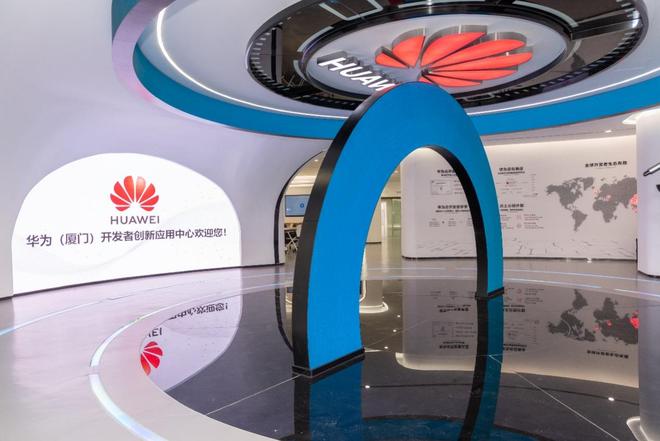
Core Viewpoint - The rapid development of the HarmonyOS ecosystem, driven by national strategies and technological advancements, positions it as a key player in the digital economy, with Xiamen emerging as a significant hub for its implementation and innovation [1][2][3]. Group 1: HarmonyOS Development - HarmonyOS has evolved from its debut in 2019 to commercial use in 2024, completing a decade's worth of development in just five years, showcasing remarkable speed in the industry [1]. - The ecosystem addresses traditional operating system challenges such as poor device compatibility and low development efficiency, facilitating a shift from functional hardware to scenario-based services [2]. - The strong policy support, including the "14th Five-Year Plan" and "15th Five-Year Plan," emphasizes the importance of foundational software and operating systems as key areas for breakthrough [2]. Group 2: Xiamen's Role in the Ecosystem - Xiamen has established the first HarmonyOS-themed developer innovation center in the country, which serves as a platform for enterprise empowerment, talent cultivation, and ecological aggregation [3][5]. - The center collaborates with nine local associations and has developed numerous local enterprises into Huawei's HarmonyOS ecosystem partners, fostering industry clustering [5]. - Xiamen's ecosystem includes applications in smart home, smart healthcare, smart shipping, and financial technology, demonstrating a diverse and growing application matrix [5]. Group 3: Achievements and Impact - Over three years, the center has empowered more than 110 enterprises and created over 20 benchmark cases in various industries, while also training over 1,300 certified HarmonyOS engineers [7][9]. - The center has played a crucial role in bridging the gap for traditional enterprises lacking the capability to adapt to new operating systems, facilitating their transition to HarmonyOS [8]. - Successful commercial cases, such as the significant sales growth of products upgraded to HarmonyOS, highlight the ecosystem's potential to drive new growth curves for businesses [11]. Group 4: Developer Opportunities - The expanding demand for HarmonyOS has created a wide range of opportunities for developers, from application adaptation to vertical industry solutions [13]. - The center provides systematic support for developers, including technical exchanges, training, and access to resources, enabling them to enhance their skills and participate in commercial projects [13]. - The success stories of local enterprises serve as a direct value guide for developers, indicating that engaging with HarmonyOS can lead to tangible business benefits [13]. Group 5: Future Prospects - The HarmonyOS ecosystem is expected to continue growing, with Xiamen positioned to leverage its existing strengths in areas like smart oceans and green buildings [14]. - The integration of cutting-edge technologies such as AIoT is anticipated to further expand the application space for HarmonyOS [14]. - Xiamen's experience demonstrates that with the right focus and execution, cities can become fertile grounds for innovation and digital transformation [14].

当开放成为共识,创新的边界正在被重新定义
Sou Hu Cai Jing· 2025-11-19 13:05
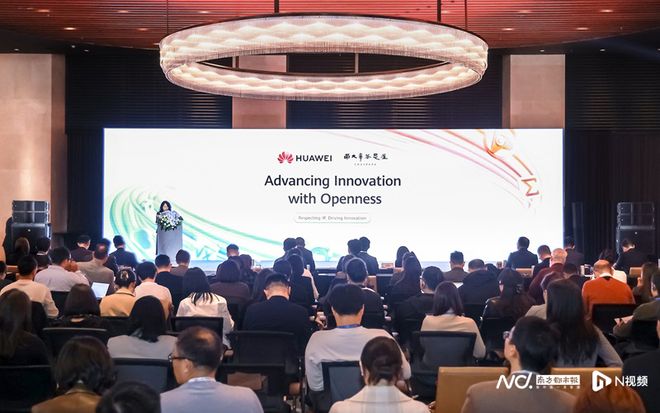
Core Insights - The core theme of the forum is "Open Drives Innovation," emphasizing the shift from competition to collaboration in the realm of intellectual property and innovation [1][10][12] Group 1: Forum Overview - The sixth Huawei Innovation and Intellectual Property Forum gathered representatives from various international organizations and companies to discuss the role of intellectual property in fostering collaborative innovation [1][2] - Huawei's Chief Legal Officer, Song Liuping, highlighted that the essence of intellectual property is not exclusivity but rather the orderly and efficient dissemination of innovative results [2][4] Group 2: Huawei's Contributions - As of the end of 2024, Huawei has obtained over 150,000 valid patents globally, with R&D investment exceeding 20% of annual revenue, totaling over 1.2 trillion yuan in the past decade [4][7] - The forum showcased Huawei's "Top Ten Inventions" for 2024, which include significant technological advancements such as the Scale Up ultra-large-scale computing platform and the HarmonyOS full-stack architecture [4][6] Group 3: Knowledge Sharing and Collaboration - The upgraded "Chasi Patents" platform was introduced, enhancing patent search and analysis capabilities, thereby accelerating knowledge flow and innovation [6][9] - Huawei's commitment to open innovation is reflected in its extensive participation in global ICT standards and its collaboration with international licensing platforms, generating over $630 million in patent licensing revenue in 2024 [8][9] Group 4: Open Innovation Strategy - Huawei's strategy emphasizes that knowledge sharing enhances social value rather than diminishing rights, promoting a cycle where patent protection leads to commercial returns that fund further R&D [9][10] - The forum underscored the importance of establishing standardized interfaces and shared platforms to make innovation more efficient and inclusive [10][12] Group 5: Future Implications - The discussions at the forum suggest that open innovation is becoming a dominant theme in global technological collaboration, with the potential to significantly enhance cross-industry integration [10][12] - The evolving landscape of technology, including AI and quantum computing, presents challenges in establishing sustainable cooperation mechanisms, highlighting the need for intellectual property to serve as a bridge rather than a barrier [10][12]
华为2024年专利许可收入超6亿美元,公开专利3.7万件
Nan Fang Du Shi Bao· 2025-11-12 10:25
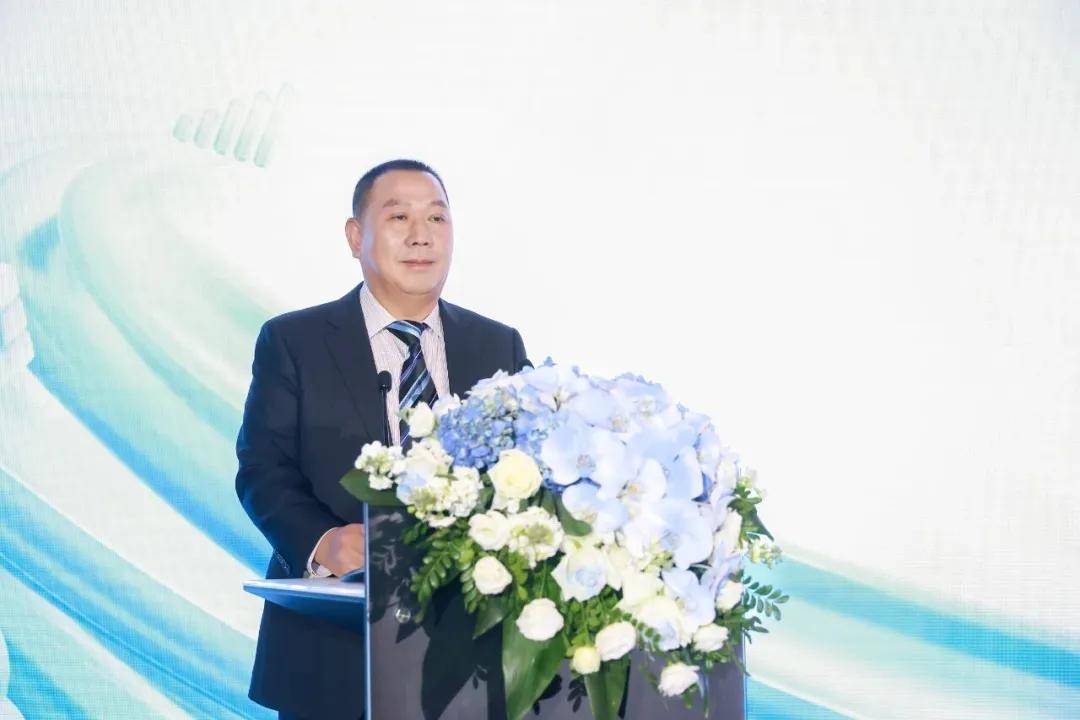
Core Insights - Huawei held its sixth Innovation and Intellectual Property Forum on November 11, focusing on the theme of "Open Innovation" and the importance of intellectual property in driving technological advancement and societal development [1][3] Group 1: Intellectual Property and Innovation - Huawei's Chief Legal Officer emphasized that open innovation is crucial for societal progress and is part of Huawei's core values, highlighting the company's commitment to protecting its own intellectual property while respecting others' rights [1] - In 2024, Huawei's patent licensing revenue is projected to be approximately $630 million, with historical patent licensing fees paid being three times the cumulative licensing income [3] - Huawei has consistently ranked first in the number of international patent applications under the Patent Cooperation Treaty (PCT) since 2014, with 6,600 PCT applications expected in 2024 [3] Group 2: Research and Development Investment - Huawei's R&D expenditure for 2024 is set at 179.7 billion yuan, accounting for 20.8% of total revenue, with expectations to exceed 200 billion yuan in 2025 [3] - Over the past decade, Huawei has invested more than 1,249 billion yuan in R&D, which supports the generation of innovative outcomes [3] - The sixth "Top Ten Inventions" awards highlighted key innovations in areas such as computing and the Harmony operating system, showcasing Huawei's focus on future-oriented technologies [3] Group 3: Patent Licensing and Ecosystem - By the end of 2024, over 2.7 billion 5G devices, 1.2 billion consumer electronics, and 3.2 billion multimedia devices will have received patent licenses from Huawei [4] - 48 Fortune Global 500 companies have directly or indirectly obtained licensing from Huawei, indicating the company's significant role in the global patent ecosystem [4] - The Vice President of Huawei's Intellectual Property Department stated the company's commitment to promoting technology openness through various means, including software open-source and standard contributions [3][4] Group 4: Future Outlook - Huawei aims to enhance the innovation and intellectual property environment through collaboration with industry partners, fostering a supportive atmosphere for intellectual property protection and mutual industry development [4]
优博讯:目前没有参与人形机器人的开发
Ge Long Hui· 2025-10-23 07:58
Core Viewpoint - The company has signed a cooperation framework agreement with Shen Kai Hong to integrate resources and collaborate on OpenHarmony technology development and ecosystem building, but is not involved in humanoid robot development [1] Group 1 - The cooperation framework agreement was signed on November 2, 2021 [1] - The collaboration focuses on integrating resources for technology development and ecosystem construction [1] - The company currently does not participate in the development of humanoid robots [1]


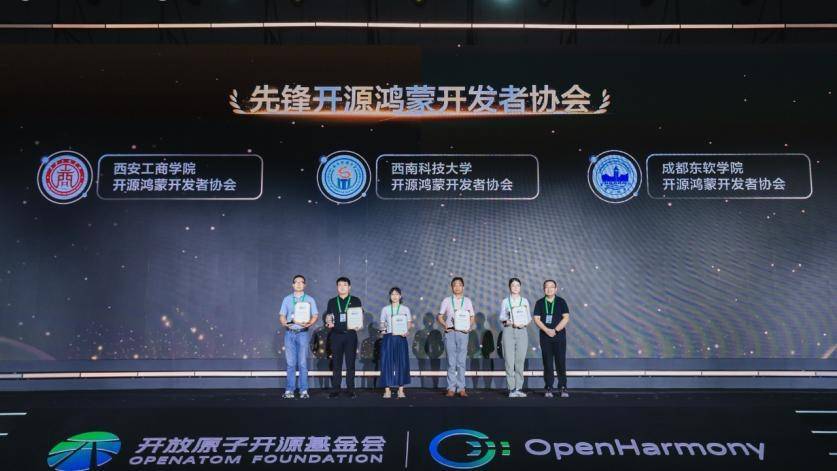
开源鸿蒙技术大会2025举行 成都东软学院载誉而归
Sou Hu Cai Jing· 2025-10-01 05:15
Core Insights - Chengdu Neusoft University has been awarded the title of "2025 Pioneer Open Source Harmony Developer Association" at the Open Source Harmony Technology Conference 2025, recognizing its excellence in open source operating system education, technical practice, and talent cultivation [1][2] Group 1 - The honor reflects the university's active role in promoting the open source Harmony ecosystem and its commitment to deep integration of industry, academia, research, and application [2] - The university collaborates with companies like Huawei to offer OpenHarmony application development courses, with nearly 1,000 students and faculty members certified in OpenHarmony, contributing skilled professionals to the open source ecosystem [2] - Chengdu Neusoft University focuses on integrating quality educational resources, forming specialized research teams in open source technology, and establishing industry-academia cooperation platforms to enhance technical skills and innovation among students [2][3] Group 2 - The Computer and Software College at Chengdu Neusoft University is the core force behind the promotion of open source Harmony education, with plans to deepen application-oriented education and cultivate more open source Harmony talents [3]
鸿蒙“天工计划”启动:10亿资金资源,鸿蒙AI生态全速进击
Huan Qiu Wang· 2025-09-23 07:58
Group 1 - Huawei announced that the number of HarmonyOS 5 terminal devices has surpassed 17 million, indicating rapid growth in the Harmony ecosystem and a comprehensive upgrade of AI experiences [1] - The "Tian Gong Plan" was officially launched, with an investment of 1 billion RMB to support innovation in the Harmony AI ecosystem, encouraging developers to collaborate [1][4] - Over 30,000 applications and meta-services have been launched, showcasing a collective effort in China's tech sector [1] Group 2 - The global tech competition has intensified, with countries increasing investments in R&D to secure key technological advantages, particularly in operating systems and AI [2] - The importance of operating systems as foundational support in the digital world is emphasized, as they manage hardware resources and software applications across various devices [2] Group 3 - Huawei plays a crucial role in the tech competition, having established a solid foundation with OpenHarmony, which now includes 130 million lines of code and over 9,200 community contributors [3] - OpenHarmony has led to the development of over 1,300 hardware and software products across multiple industries, establishing it as a digital foundation for various sectors [3] Group 4 - The "Tian Gong Plan" aims to cultivate over 10,000 AI-native meta-services and 1,000 intent frameworks, providing strong momentum for the Harmony system in the AI era [4] - AI Agents are identified as the next generation of AI, capable of executing complex tasks and enhancing user interaction with digital environments [4] Group 5 - The development of the Harmony AI ecosystem aligns with national strategies for "new quality productivity" and "Digital China," emphasizing the role of AI in driving economic growth and digital transformation [6][7] - The Harmony AI ecosystem is expected to foster new business models and enhance productivity across various industries, including manufacturing and agriculture [7] Group 6 - The growth trajectory of the Harmony ecosystem reflects China's tech industry's strategic focus on "independent innovation and open collaboration," with the ecosystem now accelerating its development [7][8] - The call for partners and developers to embrace Harmony and AI signifies a collective ambition for the future of China's tech industry [8]

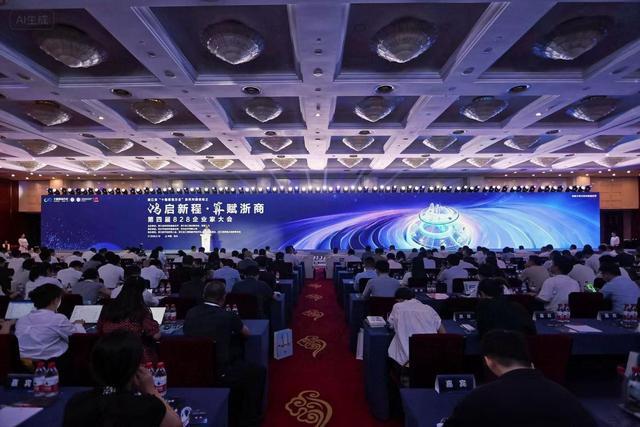
鸿蒙+AI双轮驱动,华为828企业家大会助力浙江企业转型升级
Huan Qiu Wang Zi Xun· 2025-09-17 06:09
Core Insights - The event "Huawei 828 Entrepreneur Day" aims to accelerate the integration of the HarmonyOS ecosystem and AI technology in Zhejiang, promoting new productive forces in the private economy [1][20] - The strategic significance of "Harmony + AI" for the transformation and upgrading of enterprises in Zhejiang was emphasized by government and industry leaders [3][5] Government and Industry Collaboration - Zhejiang has cultivated competitive AI enterprises since launching the "Digital Zhejiang" strategy in 2003, highlighting the province's role as a leader in digital economy [3] - The provincial government calls for optimizing ecosystems, breaking through technologies, and deepening scene applications to create a national AI innovation hub [3] Ecosystem Development and Achievements - The "Zhejiang Harmony Thousand Sails Ecological Achievements" was released, showcasing the penetration of the Harmony ecosystem across eight core scenarios including government, transportation, and healthcare [9] - The "Zhejiang Harmony and AI Industry Practice Achievements" recognized outstanding units in technology research, scene implementation, and talent cultivation, reflecting a solid foundation for integrated industry-academia-research [11] AI Initiatives and Upgrades - Huawei's "Cloud Zhejiang AI Pioneer Plan 2.0" was upgraded to provide over 30 free AI intelligent bodies and promote deep engagement in AI [13] - The establishment of the "Huawei Cloud Zhejiang AI Pioneer Plan Service Team" aims to assist enterprises in implementing AI solutions effectively [13] Real-World Applications and Innovations - Huawei Ascend has served over 400 enterprises in Zhejiang, enhancing medical model efficiency by 75% and reducing error rates to 1% [14] - OpenHarmony has gathered over 9,200 contributors and supports various devices, becoming a digital foundation for "Internet of Everything" [16] Education and Talent Development - Experts emphasized the need for collaboration between universities, enterprises, and research institutions to cultivate innovative talents for the digital economy [19] - The roundtable forum focused on how industry-education integration can accelerate technology transfer and innovation [17]
工信部:聚焦工业软件、人工智能等领域,加速开源项目孵化与落地
2 1 Shi Ji Jing Ji Bao Dao· 2025-07-25 07:26
Core Insights - The conference highlighted the importance of open source as a collaborative model that drives high-quality economic and social development, breaking down innovation barriers and fostering a cooperative innovation ecosystem [1][2] - Open source has expanded beyond software to various fields including cloud computing, big data, artificial intelligence, and robotics, becoming a crucial infrastructure for new production methods [1] - The Ministry of Industry and Information Technology (MIIT) is committed to building a domestic open source ecosystem and has achieved significant progress in collaboration with various sectors [1][2] Open Source Foundation Developments - The Open Atom Open Source Foundation has established a collaborative innovation platform that connects domestic and international efforts, facilitating the rapid construction and interconnectivity of code hosting platforms [2] - The "DeepSeek" innovation model has successfully stimulated an open source innovation atmosphere, leading to notable achievements in programming languages and operating systems [2] - The number of devices connected to the HarmonyOS ecosystem has surpassed 1.19 billion, with over 7.2 million developers contributing to this digital foundation [2] International Collaboration and Talent Development - China is deepening international cooperation by incorporating open source into bilateral and multilateral agreements, encouraging over 2.2 million developers to engage on the global stage [2][3] - The MIIT aims to enhance the open source talent evaluation system, promoting a contribution-oriented approach that influences career advancement and academic recognition [3] Strategic Focus Areas - The MIIT's strategy includes fostering co-creation mechanisms, driving innovation, and enhancing talent cultivation to unlock the potential of open source [3] - Emphasis is placed on leveraging China's vast market and complete industrial system to accelerate the incubation and application of open source projects in key areas such as AI and industrial software [3] Local Government Initiatives - The Beijing government plans to optimize open source public services, promote talent development, and establish evaluation and incentive mechanisms based on open source contributions [3] - The city aims to support the incubation of open source projects and enhance collaboration with international open source organizations [3][4] Open Source Project Applications - The conference showcased over 150 open source project application cases from more than 100 organizations, covering critical industries such as power, telecommunications, healthcare, education, finance, and transportation [4]
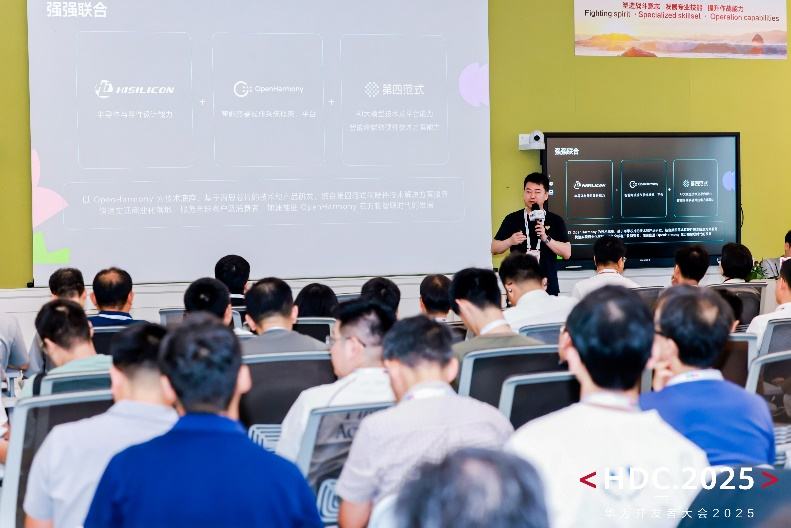
第四范式(06682)基于OpenHarmony+海思芯片打造Al智能硬件
智通财经网· 2025-06-23 03:45
Core Insights - Fourth Paradigm's Vice President Yu Hui presented at Huawei Developer Conference 2025, focusing on AI smart hardware development based on OpenHarmony and Hisilicon chips [1][6] - The company emphasizes the shift from traditional cloud models to edge models, highlighting benefits such as reduced latency, enhanced privacy, and offline capabilities [3][9] - Fourth Paradigm aims to contribute to the open-source Harmony ecosystem, inviting developers to participate in building a collaborative development environment [6][13] Edge Model Development - The edge model developed by Fourth Paradigm allows for local deployment, improving response speed and privacy while lowering costs compared to traditional cloud models [3][9] - The company has created an open platform that encourages participation from a wider range of developers, enhancing the potential for model performance [3][6] Product Development - Fourth Paradigm is developing a series of AI smart hardware products, including smartwatches, smart glasses, smart headphones, and smart speakers, leveraging OpenHarmony and Hisilicon chips [7][9] - The collaboration between Fourth Paradigm, OpenHarmony, and Hisilicon chips is seen as a significant step in integrating AI technology with operating systems and core chips [9][13] Industry Context - The Huawei Developer Conference serves as a major platform for technological advancements and trends in the ICT sector, showcasing innovations in distributed capabilities and smart interconnectivity solutions [10][11] - OpenHarmony is designed for seamless interconnectivity, allowing devices to share computational resources, thus creating a more integrated smart ecosystem [11][12]