
智慧养老

Search documents
赋能医药产业创新 完善生育保险制度
Zhong Guo Zheng Quan Bao· 2025-08-18 22:22
Group 1: Medical Insurance Development - The National Medical Insurance Bureau emphasizes the need to empower the pharmaceutical industry and implement measures to support high-quality development of innovative drugs [1][2] - By mid-2025, significant progress is expected in medical insurance, including an increase in the number of insured individuals under maternity insurance to 253 million, with expenditures reaching 67.832 billion yuan in the first half of the year [1] - The meeting highlighted the importance of direct settlement of medical expenses for drug procurement enterprises, with an average settlement cycle reduced to within 30 days [1][2] Group 2: Maternity Insurance and Long-term Care - The meeting encourages regions to include flexible employment workers, migrant workers, and new employment forms in maternity insurance coverage, while also exploring basic service packages for prenatal check-ups [3] - Long-term care insurance will be comprehensively implemented, with a focus on planning and supporting community-based care services [3] Group 3: Healthcare System Reform - The meeting calls for the reform of medical service pricing and the expansion of immediate settlement of medical insurance funds to healthcare institutions [2] - There is a push for the integration of technology in medical insurance, transitioning from passive payment to proactive empowerment and health investment [3]
赋能医药产业创新完善生育保险制度
Zhong Guo Zheng Quan Bao· 2025-08-18 20:14
Group 1: Medical Insurance Development - The National Medical Insurance Administration emphasizes empowering the pharmaceutical industry and implementing measures to support high-quality development of innovative drugs [1][2] - By mid-2025, significant progress is expected in medical insurance, including an increase in the number of insured individuals under maternity insurance to 253 million and total maternity insurance benefits expenditure reaching 67.832 billion [1] - The meeting highlights the need for a comprehensive adjustment of the national medical insurance drug catalog and the establishment of a commercial health insurance innovative drug catalog [2] Group 2: Maternity Insurance and Long-term Care - The meeting encourages regions to include flexible employment workers, migrant workers, and new employment forms in maternity insurance coverage, while also exploring basic service packages for prenatal check-ups [3] - There is a push for the implementation of long-term care insurance, with a focus on planning and supporting long-term care services at the community level [3] - The meeting calls for the integration of long-term care services with commercial insurance products to enhance accessibility and suitability of care [3] Group 3: Digital Transformation in Medical Insurance - The meeting aims to transition the medical insurance system from passive payment to proactive empowerment, focusing on health investment rather than just disease compensation [3] - There is an emphasis on promoting research in disease prediction modeling, pharmacoeconomics, and disease attribution analysis in collaboration with medical institutions and research organizations [3] - The integration of technology in medical insurance is encouraged to foster new medical services, AI health management, and smart elderly care [3]
新财观|商业银行创新服务智慧养老产业发展
Zhong Guo Jin Rong Xin Xi Wang· 2025-08-18 09:50
Core Insights - The smart elderly care industry is emerging as a vital sector that integrates modern technology into elderly services, addressing the diverse needs of the aging population in China [1] - Financial support from commercial banks is crucial for the development of the smart elderly care industry, especially during its initial and research phases [1] Group 1: Current Support Models by Commercial Banks - Cross-industry integration is being explored, with banks collaborating with insurance companies to innovate financial services for elderly care [2] - Diverse financial services are required due to the multifaceted nature of the smart elderly care industry, which includes rehabilitation equipment manufacturing and high-end medical technology [2] - Banks are establishing smart elderly care financial service systems by partnering with elderly service institutions and leveraging financial technology [3] Group 2: Risk Management and Credit Classification - Digital management of business risks is essential for enhancing the efficiency of elderly care financial services [4] - Commercial banks are categorizing credit applicants based on the characteristics of the smart elderly care industry, offering tailored financial products [5] Group 3: Financing Challenges in the Smart Elderly Care Industry - The industry faces challenges in securing precise financial services due to its diverse and specialized business models [6] - The valuation of intangible assets in smart elderly care companies is difficult, complicating the provision of bank services [7] - Many smart elderly care enterprises have limited financing sources and face challenges in adapting to traditional bank approval processes [7] Group 4: Strategic Recommendations for Commercial Banks - Banks should closely monitor national policies supporting the smart elderly care industry and align their services accordingly [8] - There is a need for banks to enhance their understanding of the market dynamics within the smart elderly care sector to better meet the financial needs of enterprises [9] - Large commercial banks should leverage their full-service capabilities to provide comprehensive financial solutions to smart elderly care companies [10] Group 5: Risk Prevention Strategies - Banks must implement various measures to enhance risk prevention capabilities for smart elderly care enterprises, utilizing policy financing tools to reduce costs [11] - The use of AI and big data technologies can help banks analyze industry data and identify potential risks [11]



进一步促进养老服务消费
Jing Ji Ri Bao· 2025-08-16 21:45
Core Viewpoint - China has entered a moderately aging society, with the population aged 65 and above expected to reach 220 million by the end of 2024, accounting for 15.6% of the total population. To better meet the service needs of the elderly, the Ministry of Civil Affairs and 24 other departments jointly issued measures to promote elderly care service consumption and improve the quality of life for seniors [1]. Group 1: Development of Elderly Care Services - The "14th Five-Year Plan" has promoted the coordinated development of elderly care services and the elderly care industry, combining responses to population aging with economic and social development [2]. - Home-based elderly care services have expanded significantly, with 441,000 family care beds constructed and 798,000 home care visits provided, addressing the needs of vulnerable elderly individuals [2]. - By the end of 2024, there will be 366,000 community elderly care service institutions and facilities across the country, with 75,000 elderly meal assistance points established [3]. Group 2: Institutional Care and Support - The total number of various elderly care institutions and facilities is projected to reach 406,000 by the end of 2024, with a total of 7.993 million beds, of which nursing beds account for 65.7% [3]. - The government has implemented consumption subsidies for elderly individuals with moderate to severe disabilities, allowing them to use electronic vouchers to offset costs for various elderly care services [4]. - A long-term care insurance system has been initiated, with over 14.6 million individuals benefiting from the program by the end of 2024 [6]. Group 3: Innovation in Elderly Care - The government has emphasized the development of "smart+" elderly care services, promoting new technologies and products to enhance elderly care [8]. - Various regions have launched platforms for elderly care service information, enabling easy access to over 400,000 elderly care institutions and community facilities [9]. - The integration of technology in elderly care is being accelerated, with significant investments in research and development of smart health products and services [10]. Group 4: Cross-Industry Integration - The government supports the integration of elderly care services with other industries such as healthcare, culture, and tourism, creating new consumption models [13]. - Cultural elderly care initiatives have been introduced, allowing seniors to engage in traditional cultural experiences, enhancing their social integration [14]. - The development of travel products tailored for seniors has gained traction, with specialized travel routes catering to their preferences [14]. Group 5: Education and Training for Seniors - There is an increasing focus on providing educational opportunities for seniors, with various programs aimed at enhancing their skills and interests [15]. - Local governments are establishing comprehensive educational systems for seniors, integrating resources to improve accessibility and participation [16]. Group 6: Challenges and Future Directions - Despite advancements, challenges remain in resource integration, talent supply, and service quality in the elderly care sector [17]. - The government aims to enhance the regulatory framework and support systems for the elderly care industry, ensuring sustainable development and improved service delivery [21].
激发医养结合需求 释放养老服务消费潜力
Xin Hua Ri Bao· 2025-08-14 22:00
Core Viewpoint - The integration of medical and elderly care services is essential for unlocking the potential of elderly care consumption, especially in the context of an aging population and consumption upgrades [1] Constraints on Consumption Willingness - Cognitive factors: Many elderly individuals have low awareness of integrated medical and elderly care services, often preferring home care due to traditional family values, which hinders the promotion of these services [2] - Economic burden: Over 40% of consumers perceive the pricing of elderly care institutions as reasonable, with a satisfaction rate of only 62.03% regarding service quality. Limited income makes it difficult for many elderly individuals to afford integrated services, compounded by an underdeveloped long-term care insurance system [2] - Service quality: Issues such as an imbalanced supply structure and lack of personalized services in many regions lead to a mismatch between service offerings and consumer needs, affecting willingness to consume [2] Administrative Management Issues - Despite supportive policies for integrated medical and elderly care, challenges such as inadequate policy implementation and fragmented management hinder effective coordination among relevant departments, affecting the participation of private entities in service provision [3] Demand Activation and Consumption Potential Release - Policy-driven framework: The government should leverage guiding opinions to integrate medical and elderly care into urban and rural development plans, enhance resource allocation, and improve service capabilities at the grassroots level [4] - Service innovation: With 90% of elderly individuals preferring home care, innovative models like "home hospital beds + home services" are being explored, alongside partnerships between medical and elderly care institutions [5] - Consumption environment: Strengthening market regulation and establishing a quality evaluation system can enhance trust in elderly care services, while expanding service facilities will create a more comfortable consumption space [5] Industry Cross-Sector Integration and Health Ecosystem Development - Integration with digital economy: Utilizing technologies like IoT and AI can innovate service models, enabling real-time health monitoring and emergency responses for the elderly [6] - Collaborative development: Regions like Jiangsu are leveraging ecological and cultural resources to create new health and wellness products, promoting integrated development across tourism, agriculture, and elderly care [6] - Financial innovation and talent support: The industry is exploring innovative financial products and partnerships with educational institutions to address workforce shortages and support the development of the integrated medical and elderly care sector [6]
能上学、能看病,北京首个社区养老综合体长啥样?
Bei Jing Shang Bao· 2025-08-14 14:13
Core Viewpoint - The article highlights the emergence of a new model in elderly care services, exemplified by the "Elderly Care Home" in Beijing, which aims to provide comprehensive, inclusive, and professional care services for the elderly in the community [1][3]. Group 1: Facility Overview - The "Elderly Care Home" is set to open in November 2024, featuring six floors with 125 furnished rooms and 300 beds, offering various functional areas including an elderly university, care services, community dining, and health service stations [3]. - The facility includes specialized areas for dementia and disability care, with a community dining area already designated as "Haidian Dining Hall" [3]. Group 2: Service Model - The care home operates on a model that combines government subsidies with self-payment from the elderly, aiming to provide sustainable care support [3]. - The "1+3+N" service model is being developed, which includes "1 platform," "3 major scenarios," and "N services," focusing on integrated smart elderly care services [3][8]. Group 3: Strategic Goals - The care home aims to serve not only institutional and community needs but also to extend services to families, emphasizing education and training for caregivers to enhance their skills in using smart technologies [4][12]. - The goal is to reach 10,000 families within a 10-kilometer radius, integrating various types of elderly care services into a standardized and replicable system [4][12]. Group 4: Technology Integration - A smart elderly care platform will be established, utilizing SaaS technology and connected health monitoring devices to provide personalized services based on individual needs [8][10]. - The integration of smart technology is expected to improve service efficiency and quality, allowing caregivers to monitor and respond to the needs of the elderly more effectively [10][13]. Group 5: Industry Trends - The article notes a trend towards smaller, personalized service providers in the elderly care sector, which will complement larger service groups by offering more flexible and individualized care [14]. - The industry faces challenges such as the need for product innovation and the integration of services, emphasizing the importance of "product as service" in meeting the needs of the elderly [15][16].


正元智慧股价下跌1.39% 公司推进智慧养老项目布局
Jin Rong Jie· 2025-08-13 17:18
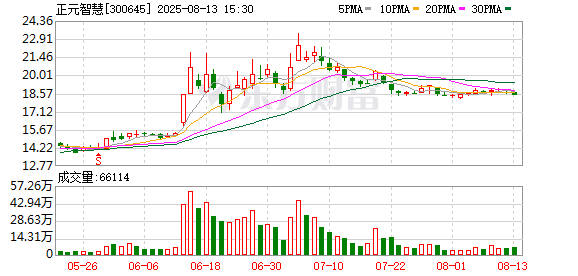
Group 1 - The stock price of Zhengyuan Wisdom closed at 18.43 yuan on August 13, 2025, down 1.39% from the previous trading day [1] - The trading volume on that day was 122 million yuan, with a turnover rate of 4.75% [1] - Zhengyuan Wisdom operates in the internet services sector, focusing on smart campus, smart park, and smart elderly care [1] Group 2 - The company has been actively promoting smart transformation projects, including the development of smart elderly care facilities and AI elderly care systems [1] - Zhengyuan Wisdom has reported progress in smart transformation projects for elderly care homes in Hangzhou, Wenzhou, and Ningbo, and has partnered with Japan's Junfu Aikikai for an AI elderly care project, completing the second phase of the smart elderly care system [1] - The company plans to continue increasing investments in the smart elderly care sector [1] Group 3 - On August 13, the net outflow of main funds was 25.15 million yuan, with a cumulative net outflow of 55.11 million yuan over the past five days [1]
正元智慧:公司近年来稳步推进杭州市、温州市、宁波市等多个县市养老院智能化改造项目建设
Mei Ri Jing Ji Xin Wen· 2025-08-13 15:47
Group 1 - The company has been steadily advancing smart elderly care projects in various cities including Hangzhou, Wenzhou, and Ningbo [2] - The company is collaborating with Japan's Junpu Aikikai on AI elderly care project integration and has completed the development of the second phase of the smart elderly care system [2] - The company plans to continue increasing efforts in the construction and implementation of smart elderly care projects in the future [2]
开启“供需对话”,海淀养老融智计划推动科技养老应用场景落地
Xin Jing Bao· 2025-08-13 14:21
Core Insights - The event "Smart Elderly Care - Haidian Elderly Care Intelligence Plan Exhibition and Exchange Conference" was held to facilitate dialogue between technology companies and community needs in elderly care [1] - Haidian District's "Intelligence Plan" aims to integrate technology, academia, industry, and experts to enhance cooperation and meet the demands of elderly care [1][2] - The application of embodied intelligence in elderly care is highlighted, showcasing its potential in daily care, health monitoring, and social interaction [2] Group 1 - The event introduced a supply-demand dialogue segment focusing on four application scenarios: smart home companionship, intelligent institutional elderly care, elderly mental health, and intelligent assisted care [2] - Various representatives from community and institutions shared successful experiences and explorations in the field of technology-enabled elderly care [1][2] - The event featured three exhibition areas: adaptive aids, smart elderly care, and opportunities for the elderly, showcasing technology products and handmade crafts by community volunteers [3] Group 2 - Haidian District is leveraging its technological resources to build a smart elderly care service system, aiming for high-quality development in elderly services [3] - The district is focused on creating a collaborative framework to promote technology-driven elderly care solutions and foster a senior-friendly society [3]
2025年智慧养老设备行业词条报告
Tou Bao Yan Jiu Yuan· 2025-08-13 12:13
Investment Rating - The report indicates a positive investment outlook for the smart elderly care device industry, driven by technological advancements and increasing demand due to aging population trends [3][10][19]. Core Insights - The smart elderly care device industry in China is rapidly evolving, leveraging AI and IoT technologies to address the needs of the aging population, with significant market growth anticipated [3][19]. - The market is characterized by a high growth rate, with a projected compound annual growth rate (CAGR) of 21.2% from 2020 to 2024, reaching a market size of 156.4 billion yuan by 2024 [33][36]. - The industry is supported by strong government policies aimed at promoting smart elderly care solutions, enhancing the overall market environment [11][36]. Summary by Sections Industry Definition - Smart elderly care devices utilize technologies such as AI, IoT, and big data to provide health management, safety monitoring, and daily assistance to the elderly, enhancing their quality of life [4][19]. Industry Characteristics - The industry is experiencing rapid growth, with a significant increase in the number of new elderly care products, reflecting a robust demand driven by an aging population [10][11]. - The industry exhibits a multi-polar regional development pattern, with eastern regions leading in enterprise concentration [12]. Market Dynamics - The market for smart elderly care devices is expanding rapidly, with a notable increase in product registrations and a growing elderly population, particularly those aged 60 and above [10][35]. - The report highlights a strong policy framework supporting the industry, including financial incentives and subsidies for smart elderly care products [11][36]. Development History - The industry has evolved through three phases: the nascent phase (2007-2017), the initiation phase (2017-2020), and the rapid development phase (2021-present), with increasing integration of technology and services [13][17]. Industry Chain Analysis - The industry chain consists of upstream technology suppliers, midstream manufacturers of smart devices, and downstream application scenarios, with a focus on enhancing user experience and product functionality [18][27]. Competitive Landscape - The competitive landscape is characterized by a diverse range of players, from large tech companies to smaller startups, with varying degrees of market share and technological capabilities [44][45]. - The report identifies three tiers of competition, with major tech firms leading the market, followed by mid-sized companies and smaller startups focusing on niche markets [44]. Market Size and Growth Forecast - The smart elderly care device market is projected to grow significantly, with estimates suggesting a market size of over 600 billion yuan by 2024, driven by demographic trends and technological advancements [33][37]. - The report anticipates continued growth in the sector, with a focus on improving product quality and expanding market reach through innovation and collaboration [38].