
碳减排

Search documents
日智再生资源利用(常德)有限公司成立 注册资本100万人民币
Sou Hu Cai Jing· 2025-08-28 05:17
Group 1 - The establishment of Rishizai Resource Utilization (Changde) Co., Ltd. has been reported, with a registered capital of 1 million RMB [1] - The company is engaged in various activities including recycling and processing of renewable resources, sales of renewable resources, and recovery of production waste metals [1] - The company also focuses on the research and development of technologies related to carbon reduction, carbon capture, and biomass fuel processing [1] Group 2 - The company’s legal representative is Jiang Ping, indicating a structured leadership [1] - The operational scope includes a wide range of services such as environmental consulting and technology transfer, showcasing its commitment to sustainability [1] - The company is involved in the recycling of used power batteries from new energy vehicles, emphasizing its role in the growing EV market [1]
知行集团控股完成碳信用资格PIN编号注册
Zhi Tong Cai Jing· 2025-08-27 13:18
Group 1 - The company has completed a climate consultant review of its EMC business and successfully obtained a PIN number, allowing it to generate certified carbon credits from its EMC operations globally [1] - For every ton of verified potential CO2 reduction achieved through the EMC business, the company earns one unit of carbon credit, which can be traded on recognized platforms for cash [1] - Companies are required by law to purchase carbon credits to offset their greenhouse gas emissions, with Singapore set to impose a carbon tax of 45 SGD per ton starting in 2026, while the current trading price for carbon credits in Europe is approximately 73 EUR per unit [1] - The company expects to generate around 42,400 tons of carbon credits annually from its EMC business over the initial ten-year period, with potential for further deployment to increase carbon credit certification [1] Group 2 - The company has appointed Tek Securities as its financial advisor for the proposed issuance of private climate Islamic bonds worth 200 million RMB, which will be used to fund the development of its EMC business [2]
一度电蕴藏绿意 一张签见证实力——“碳身份证”助力浙企出海
Xin Hua She· 2025-08-27 01:32
Core Viewpoint - The article discusses the implementation of a "carbon identity" system in Zhejiang, which allows products to display their carbon footprint and the amount of green electricity used during production, aiding local companies in meeting upcoming EU carbon tariffs [1][7]. Group 1: Carbon Identity System - The "carbon identity" system enables consumers to scan product labels to see the carbon footprint and production process in real-time [1]. - The system is being utilized by companies like Zhejiang Hars Company, which has seen a 27% reduction in carbon emissions during peak solar power production, saving over 1 million yuan in electricity costs annually [1][6]. - The platform developed by State Grid Jinhua Power Supply Company calculates hourly carbon factors, providing precise data for companies to monitor and reduce their carbon emissions [2][4]. Group 2: Impact on Export and Competitiveness - The EU's Carbon Border Adjustment Mechanism (CBAM) will impose tariffs of 60-100 euros per ton of carbon emissions starting in 2026, presenting a significant challenge for Jinhua's export businesses, which have an annual export value of 771.9 billion yuan [1]. - The introduction of the carbon identity system is expected to enhance the competitiveness of Zhejiang's products in international markets by demonstrating their low-carbon credentials [6][7]. - Feedback from international clients indicates that the carbon labels increase their recognition of the low-carbon capabilities of "Zhejiang manufacturing" [6]. Group 3: Technological Innovation and Future Prospects - The carbon management system acts like a "carbon microscope," providing real-time data on carbon emissions and energy consumption for companies [6]. - The transition from traditional electricity supply to a focus on carbon management represents a significant shift in the role of power companies in the context of carbon neutrality [7]. - The precise tracking of each unit of electricity's "green content" is seen as essential for maintaining the competitiveness of Zhejiang's manufacturing sector in the global market [7].


东方电气旗下工程设计公司增资至2.5亿
Zhong Guo Neng Yuan Wang· 2025-08-26 03:30
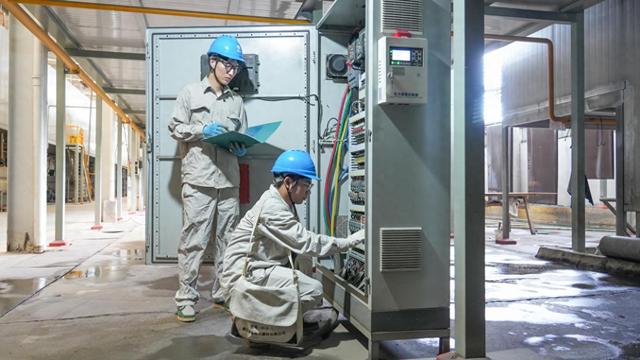
Group 1 - The company name has changed from "东方电气(成都)工程设计咨询有限公司" to "东方电气集团电力工程设计有限公司" [1] - The registered capital has increased from approximately 140 million RMB to 250 million RMB, representing an increase of about 78% [1] - The company was established in September 2017 and is led by legal representative 雷宇 [1] Group 2 - The business scope includes engineering management services, engineering cost consulting, planning and design management, power generation technology services, professional design services, energy-saving management services, and research and development in carbon reduction, transformation, capture, and storage technologies [1] - Shareholder information indicates that the company is jointly held by 东方电气 (600875) and its subsidiaries, including 东方电气集团国际合作有限公司, 东方电气集团东方汽轮机有限公司, and 东方电气集团东方锅炉股份有限公司 [1]
绿能世纪(厦门)能源管理有限公司成立,注册资本1000万人民币
Sou Hu Cai Jing· 2025-08-25 18:35
Core Viewpoint - Recently, a new company named Green Energy Century (Xiamen) Energy Management Co., Ltd. was established, focusing on energy management and renewable energy solutions [1] Company Summary - The legal representative of the company is Lin Mingzhang, with a registered capital of 10 million RMB [1] - The company is wholly owned by Green Energy Century Energy Technology (Xiamen) Co., Ltd. [1] - The business scope includes contract energy management, sales of solar thermal power products, photovoltaic equipment and components, energy-saving management services, carbon reduction, carbon conversion, carbon capture, and carbon storage technology research and development [1] Industry Summary - The company operates in the electricity, heat, gas, and water production and supply industry, specifically in electricity production [1] - The registered address is located at Room 231, 2nd Floor, No. 27 Jiyuan Road, Jimei District, Xiamen City [1] - The company is classified as a limited liability company with a natural person investment or holding [1]
中办、国办重磅发布!
Jin Rong Shi Bao· 2025-08-25 14:08
Group 1 - The core viewpoint of the article emphasizes the importance of the carbon market as a policy tool for addressing climate change and promoting a green transition in the economy and society [1] - The main goals set forth in the recent opinion include achieving basic coverage of major industrial sectors in the national carbon emissions trading market by 2027 and establishing a comprehensive voluntary emissions reduction trading market by 2030 [1][2] - The expansion of the national carbon emissions trading market will include new sectors such as steel, cement, and electrolytic aluminum, which are significant contributors to emissions and are heavily influenced by international green trade [2][3] Group 2 - The opinion outlines the need to improve the carbon emissions quota management system, including establishing a transparent quota management framework and gradually shifting from intensity control to total control of emissions quotas [4] - The introduction of carbon finance is highlighted as a key strategy to enhance market vitality, allowing financial institutions to develop green financial products related to carbon emissions rights [5][6] - The article references the EU carbon market as a model for integrating financial attributes into carbon markets, which has led to a diverse range of trading products and active market participation [7]
京能集团等新设数字科技公司,含区块链相关业务
Qi Cha Cha· 2025-08-25 09:08
Group 1 - Beijing Jingneng Yitan Digital Technology Co., Ltd. has been established with a registered capital of 10 million yuan [1] - The company's business scope includes blockchain technology-related software and services, supply chain management services, and research and development of carbon reduction, carbon conversion, carbon capture, and carbon storage technologies [1] - The company is jointly owned by Beijing Energy Group Co., Ltd. and Shanghai Yitan Digital Technology Co., Ltd. [1]
廉江都丰林业科技有限公司成立,注册资本1000万人民币
Sou Hu Cai Jing· 2025-08-22 03:28
Company Overview - Lianjiang Dufeng Forestry Technology Co., Ltd. has been established with a registered capital of 10 million RMB [1] - The legal representative is Jing Lixin, and the company is primarily owned by Zhongneng Ruiju (Chengdu) Energy Co., Ltd. with a 99% stake and Sichuan Jinghui Agricultural Technology Co., Ltd. with a 1% stake [1] Business Scope - The company’s business activities include technology services, development, consulting, and transfer related to forestry management, tree planting, ecological protection, and smart agriculture [1] - Additional services encompass project planning, hotel management, carbon reduction technologies, and various agricultural and forestry product sales [1] - The company is also involved in environmental protection monitoring, biomass energy technology services, and ecological resource monitoring [1] Regulatory Information - The company is registered under the National Standard Industry classification for agriculture, forestry, animal husbandry, and fishery, specifically focusing on forestry management and protection [1] - The business operations are subject to approval by relevant authorities, and specific projects will require necessary permits [1]
湖北开源节能科技有限公司成立,注册资本1000万人民币
Sou Hu Cai Jing· 2025-08-21 12:49
Group 1 - Hubei Kaiyuan Energy Conservation Technology Co., Ltd. has been established with a registered capital of 10 million RMB [1] - The legal representative of the company is Luo Zhuxi [1] - Shareholding structure includes Hainan Saifu Energy Technology Co., Ltd. (75%), Changsha Yituo Intelligent Technology Co., Ltd. (15%), and Wanjie Energy Conservation (Hainan) Co., Ltd. (10%) [1] Group 2 - The company's business scope includes energy management services, contract energy management, and research and development of efficient energy-saving technologies in the power industry [1] - Other services offered include online energy monitoring technology development, environmental protection consulting, carbon reduction technologies, and smart control system integration [1] - The company is registered in Wuhan, Hubei Province, and operates under the scientific research and technical service industry [1]
阜阳三餐四季生物科技有限公司成立 注册资本100万人民币
Sou Hu Cai Jing· 2025-08-20 02:23
Core Viewpoint - Recently, Fuyang Sancan Siqi Biotechnology Co., Ltd. was established with a registered capital of 1 million RMB, focusing on various agricultural and environmental technologies [1] Company Overview - The company is represented by Qiu Delin and has a registered capital of 1 million RMB [1] - The business scope includes technology services, development, consulting, and transfer related to agricultural science and environmental protection [1] Business Activities - The company engages in research and development of agricultural waste resource utilization, bio-organic fertilizers, and various types of fertilizers [1] - It also focuses on carbon reduction technologies, soil pollution remediation, and environmental monitoring services [1] - The company is involved in the production, sales, processing, transportation, and storage of agricultural products, including grains, vegetables, and fruits [1] Licensing and Regulatory Compliance - The company is authorized to produce fertilizers, raise poultry and livestock, and engage in aquaculture and food production, subject to regulatory approvals [1]